
Rucking Workout Guide: Plans and 3 Sessions | Combat Fitness
Rucking Workouts: How to Train, Program, and Progress Under Load
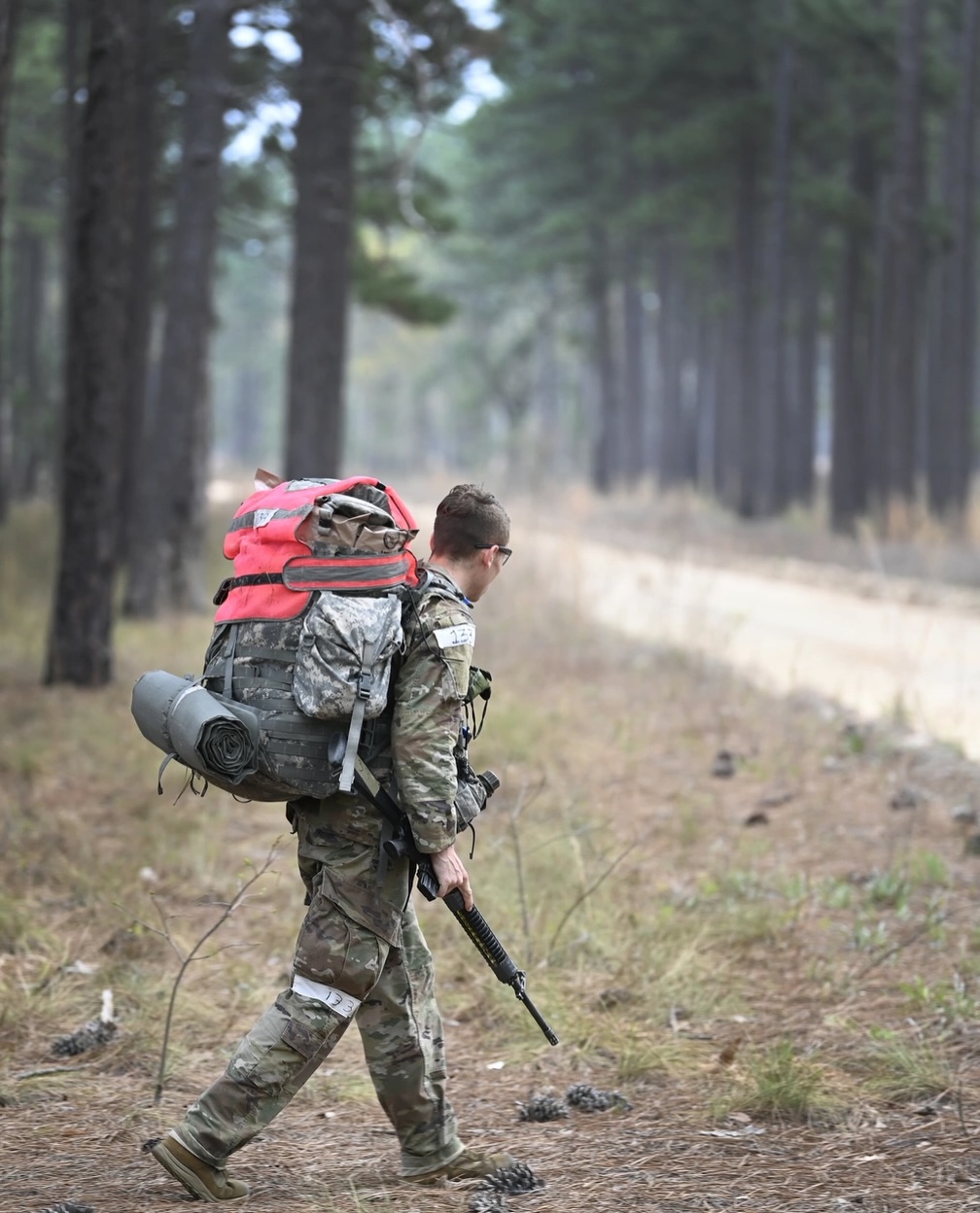
A rucking workout is loaded walking done on purpose: a weighted pack, a set time or distance, and a pace that makes your legs, trunk, and heart work together. For a soldier, operator, or firefighter, no other conditioning is closer to the job, and it is the backbone of the military fitness programs we build for people who carry weight for a living.
Decades of military load-carriage research point the same way: you get better at carrying weight by carrying weight, backed by strength and aerobic work. Below: the definition, the muscles worked, honest calorie numbers, a weekly plan, a beginner session, indoor options, and three sample rucking workouts.
What Is a Rucking Workout?
A rucking workout is a structured training session in which you walk with a weighted pack at a controlled pace to build aerobic capacity and load-carriage strength at the same time.
It trains the exact task you face under a ruck, a vest, or turnout gear. Walking keeps one foot on the ground, so impact stays below running while the load raises demand on your legs, hips, and trunk. Rucking as a workout spans steady base sessions, hill intervals, and strength circuits with the pack on. The fundamentals of pack fit, posture, and foot care are covered step by step in the tactical athletes rucking guide. Army doctrine treats foot marching as a core physical readiness task for the same reason (Headquarters, Department of the Army, 2020; 2022). This post stays on the sessions themselves.
Is Rucking a Good Workout?
Rucking is a good workout for anyone who has to carry load on the job, because it builds aerobic fitness and strength endurance in the same movement pattern the job uses. Research on soldiers shows load-carriage performance improves most when rucking is combined with strength and aerobic training.
A systematic review found progressive rucking, done a few times a month alongside resistance and aerobic work, reliably improved loaded march times (Knapik et al., 2012), and concurrent training studies in soldiers agree (Kraemer et al., 2004; Harman et al., 2008).
Rucking has limits. It will not build maximal strength or speed, and heavy loads done too often raise the risk of stress fractures, back pain, and foot injuries (Knapik et al., 2004; Orr et al., 2014). The best rucking workout sits inside a program, not in place of one. Our guide to choosing a ruck training program walks through the options. For a timed event, the Army ruck march standards set the target; the sessions below build the engine.
Is Rucking a Full-Body Workout? The Muscles It Works
Rucking is a lower-body-dominant workout with a strong trunk and upper-back component, so it is closer to full-body than walking or running, but it is not a complete strength session.
Muscle activity in the lower limbs rises as backpack load increases, and soldiers lean the trunk further forward as packs get heavier (Simpson et al., 2011; Attwells et al., 2006). That forward lean is why your spinal erectors and upper back feel a long ruck the next day.
The main muscles worked:
Quads and glutes: drive each step and control downhills.
Hamstrings and calves: propel you and absorb ground contact.
Hip flexors: lift a loaded leg thousands of times.
Core and spinal erectors: stabilize the torso under the pack.
Traps and upper back: resist straps pulling your shoulders forward.
Is rucking a good leg workout? For endurance, yes; for size and maximal strength, no, so we pair it with squats and deadlifts. A trap workout for rucking is simple: farmer carries, shrugs, and face pulls twice a week. The physiology is broken down in strength endurance for load carriage.
Rucking Workout Benefits and Calories Burned
Rucking workout benefits come from training several qualities at once, with low skill demand and less impact than running:
Aerobic base: the engine every other quality runs on.
Load-carriage capacity: tissue tolerance and muscular endurance under weight.
Bone loading: weighted-vest training helped preserve hip bone density in older women (Snow et al., 2000).
Job specificity: it matches a patrol, a search, or a stair climb in gear.
Rucking workout calories burned depend on body weight, load, pace, and terrain. These Pandolf-equation estimates assume a 180-pound athlete at 3.5 mph. Treat them as a floor, since newer research shows Pandolf underpredicts cost in many conditions (Pandolf et al., 1977; Looney et al., 2019).
Figure 1.1 - Energy cost of walking at 3.5 mph for a 180 lb athlete, computed from the Pandolf load-carriage equation across six pack-and-terrain conditions. All six published estimates reproduce to within 1–3 kcal/h; the decomposition shows a 5% incline adding 224 kcal/h (+55%) against just 28 kcal/h (+7%) for fifteen extra pounds of pack, because Pandolf's dedicated load term contributes only 1–2% of total cost while grade and terrain scale the whole movement term. Sources: Pandolf, Givoni & Goldman, J Appl Physiol 1977;43(4):577–581; Soule & Goldman, J Appl Physiol 1972;32(5):706–708; Drain et al., J Sci Med Sport 2017;20(S4):S104–S108; Looney et al., Med Sci Sports Exerc 2022;54(4):646–654.
Adding 15 pounds on flat ground changes little; a 5% grade adds over 200 calories an hour, and soft terrain raises the cost of every step (Soule and Goldman, 1972). Find a hill before you add weight.
How to Build a Rucking Workout Plan
A rucking workout plan for most tactical athletes runs one to three ruck sessions per week on top of two to three strength sessions and some unloaded aerobic work. One session is long and steady; a second is shorter and harder.
A sample rucking workout routine:
Figure 1.2 - A default seven-day ruck training week, with each day's session, stated purpose, and what it is recovering from when it starts. Three of the seven days begin with two hard sessions inside the previous 48 hours and none begins with a clean window; the measured recovery curve beneath shows why, after a 30 km march under 34 kg, Spanish marines' jump height was still 14.0% below baseline at 48 hours while two-minute pull-ups had recovered to within 5.6%. Sources: Orr et al., Int J Environ Res Public Health 2021;18(8):4010; Cáceres-Diego et al., Sports 2025;13(3):76; Schoenfeld, Ogborn & Krieger, Sports Med 2016;46:1689–1697.
A rucking workout program progresses one variable at a time: duration, then load, then pace. Take a lighter week every third or fourth week so feet, shins, and backs catch up with your lungs. The week-by-week logic lives in our ruck training progression guide.
If you want load, frequency, and recovery handled for you, structured tactical training programs remove the guesswork.
What Is the Best Rucking Workout for Beginners?
The best rucking workout for beginners is a 30-minute walk on flat ground with 10 to 20 pounds at a conversational pace. The first month builds tissue tolerance in your feet, hips, and shoulders, not fitness.
Your first session:
Pack 10 to 20 pounds, placed high and tight against your back.
Walk 5 minutes easy to warm up.
Ruck 20 minutes at a steady, conversational pace on flat ground.
Walk 5 minutes easy to cool down, then check your feet for hot spots.
Repeat twice a week for two weeks, then add time before weight; most beginner injuries come from loading too early. To pick a starting load, see how much weight to ruck with.
Rucking Workouts for Seniors and Older Adults
A rucking workout for seniors starts lighter: 5 to 10 pounds, flat routes, shorter sessions. Federal guidelines recommend older adults combine aerobic, strength, and balance work, and light rucking covers two of those (U.S. Department of Health and Human Services, 2018). Get physician clearance first if you have joint, heart, or bone concerns.
Treadmill, Indoor, and Backpack Rucking Workouts
A rucking treadmill workout is the best indoor option, because incline raises demand without adding weight or impact. Set 3.0 to 3.5 mph, 5 to 10% incline, and keep your hands off the rails, which unload your legs.
Treadmill rucking workout sample: 10 minutes at 3%, then 5 rounds of 4 minutes at 10% and 2 minutes at 3%, then a 5-minute cooldown.
An at-home rucking workout can use stairs or loaded step-ups onto a sturdy box, which train the same muscles as a hilly route.
A rucking backpack workout does not need a dedicated ruck at first. Any backpack works if you wrap plates, sandbags, or water jugs so the load sits high and stays put. Once you ruck weekly, a pack with a hip belt and plate sleeve saves your shoulders. Our breakdown of boots, packs and plates covers what is worth buying.
3 Sample Rucking Workouts to Run This Week
Workout 1: The Base Ruck
Load: 20 to 35 pounds
Time: 45 to 75 minutes
Pace: conversational, roughly 15 to 17 minutes per mile
Route: flat to rolling
The foundation: aerobic base and foot and hip durability. If you cannot hold a conversation, slow down.
Workout 2: Ruck Intervals
Load: 20 to 30 pounds (lighter than your base ruck)
Warm-up: 10 minutes easy
Main set: 6 to 8 rounds of 3 minutes hard (fast walk or uphill) and 2 minutes easy
Cooldown: 5 to 10 minutes easy
Intervals raise your sustainable pace under load. Walk fast rather than run; running with a pack multiplies impact on shins and feet.
Workout 3: The Strength-Ruck Circuit
Keep the pack on for 4 to 5 rounds:
Ruck 400 meters at a brisk pace.
10 ruck squats.
10 step-ups per leg onto a knee-height box or bench.
10 push-ups.
10 bent-over rows holding the pack by its handle.
40 meters of farmer carries (pack off).
This workout style rucking session builds strength endurance and grip under fatigue.
Should You Ruck Before or After Your Workout?
Ruck after lifting, or on a separate day, when strength is the priority; a long ruck before squats leaves your legs fatigued and technique worse. A meta-analysis found endurance work interferes with strength gains most at higher volumes and with running-type modes, so separate the two by several hours when you can (Wilson et al., 2012).
Frequently Asked Questions
What does a rucking workout do?
A rucking workout trains aerobic fitness and muscular endurance in the legs, hips, trunk, and upper back at the same time, while conditioning feet, bones, and connective tissue to tolerate load. For tactical athletes, the payoff is better load-carriage performance, especially when rucking is combined with strength and aerobic training.
How good of a workout is rucking?
Rucking is one of the most effective conditioning tools for people who carry weight on the job, because it matches the task. It burns more energy than walking, especially on hills, with less impact than running. It works best inside a program that also includes strength training and unloaded aerobic work.
Is rucking a good leg workout?
Rucking is a good leg endurance workout, especially on hills and stairs, because every step is loaded. It does not replace squats or deadlifts, since the load per step is too light to build maximal strength or muscle size. Pair one to three rucks per week with two lower-body strength sessions.
Is a rucking workout good for seniors and older adults?
A rucking workout is good for seniors when the load is light and the build is slow. Rucking is low impact, weight-bearing, and easy to scale, which suits older adults who want to maintain strength, bone density, and walking endurance. Start with 5 to 10 pounds on flat routes and get medical clearance first.
A rucking workout is the most direct way to get better at moving under load, as long as it sits inside a plan that also builds strength and an aerobic base. Start light, add time before weight, use hills to raise demand, and rotate the three sessions across your week. Run the base ruck this week, then build the program that carries you to your next standard.
References:
Attwells RL, Birrell SA, Hooper RH, Mansfield NJ. Influence of carrying heavy loads on soldiers' posture, movements and gait. Ergonomics. 2006;49(14):1527-1537.
Harman EA, Gutekunst DJ, Frykman PN, et al. Effects of two different eight-week training programs on military physical performance. Journal of Strength and Conditioning Research. 2008;22(2):524-534.
Knapik JJ, Reynolds KL, Harman E. Soldier load carriage: historical, physiological, biomechanical, and medical aspects. Military Medicine. 2004;169(1):45-56.
Knapik JJ, Harman EA, Steelman RA, Graham BS. A systematic review of the effects of physical training on load carriage performance. Journal of Strength and Conditioning Research. 2012;26(2):585-597.
Kraemer WJ, Vescovi JD, Volek JS, et al. Effects of concurrent resistance and aerobic training on load-bearing performance and the Army physical fitness test. Military Medicine. 2004;169(12):994-999.
Looney DP, Santee WR, Hansen EO, Bonventre PJ, Chalmers CR, Potter AW. Estimating energy expenditure during level, uphill, and downhill walking. Medicine and Science in Sports and Exercise. 2019;51(9):1954-1960.
Orr RM, Pope R, Johnston V, Coyle J. Soldier occupational load carriage: a narrative review of associated injuries. International Journal of Injury Control and Safety Promotion. 2014;21(4):388-396.
Pandolf KB, Givoni B, Goldman RF. Predicting energy expenditure with loads while standing or walking very slowly. Journal of Applied Physiology. 1977;43(4):577-581.
Simpson KM, Munro BJ, Steele JR. Backpack load affects lower limb muscle activity patterns of female hikers during prolonged load carriage. Journal of Electromyography and Kinesiology. 2011;21(5):782-788.
Snow CM, Shaw JM, Winters KM, Witzke KA. Long-term exercise using weighted vests prevents hip bone loss in postmenopausal women. Journals of Gerontology Series A. 2000;55(9):M489-M491.
Soule RG, Goldman RF. Terrain coefficients for energy cost prediction. Journal of Applied Physiology. 1972;32(5):706-708.
U.S. Department of Health and Human Services. Physical Activity Guidelines for Americans, 2nd edition. Washington, DC; 2018.
Wilson JM, Marin PJ, Rhea MR, et al. Concurrent training: a meta-analysis examining interference of aerobic and resistance exercises. Journal of Strength and Conditioning Research. 2012;26(8):2293-2307.
Headquarters, Department of the Army. FM 7-22: Holistic Health and Fitness. Washington, DC; 2020.
Headquarters, Department of the Army. ATP 3-21.18: Foot Marches. Washington, DC; 2022.
Disclaimer: This article is for general education and does not replace advice from a physician, physical therapist, or qualified coach. Rucking places significant load on the feet, joints, and spine. Consult a medical professional before starting a new training program, especially if you have a history of injury, joint problems, heart conditions, or low bone density. Calorie figures are estimates and will vary by individual.


