
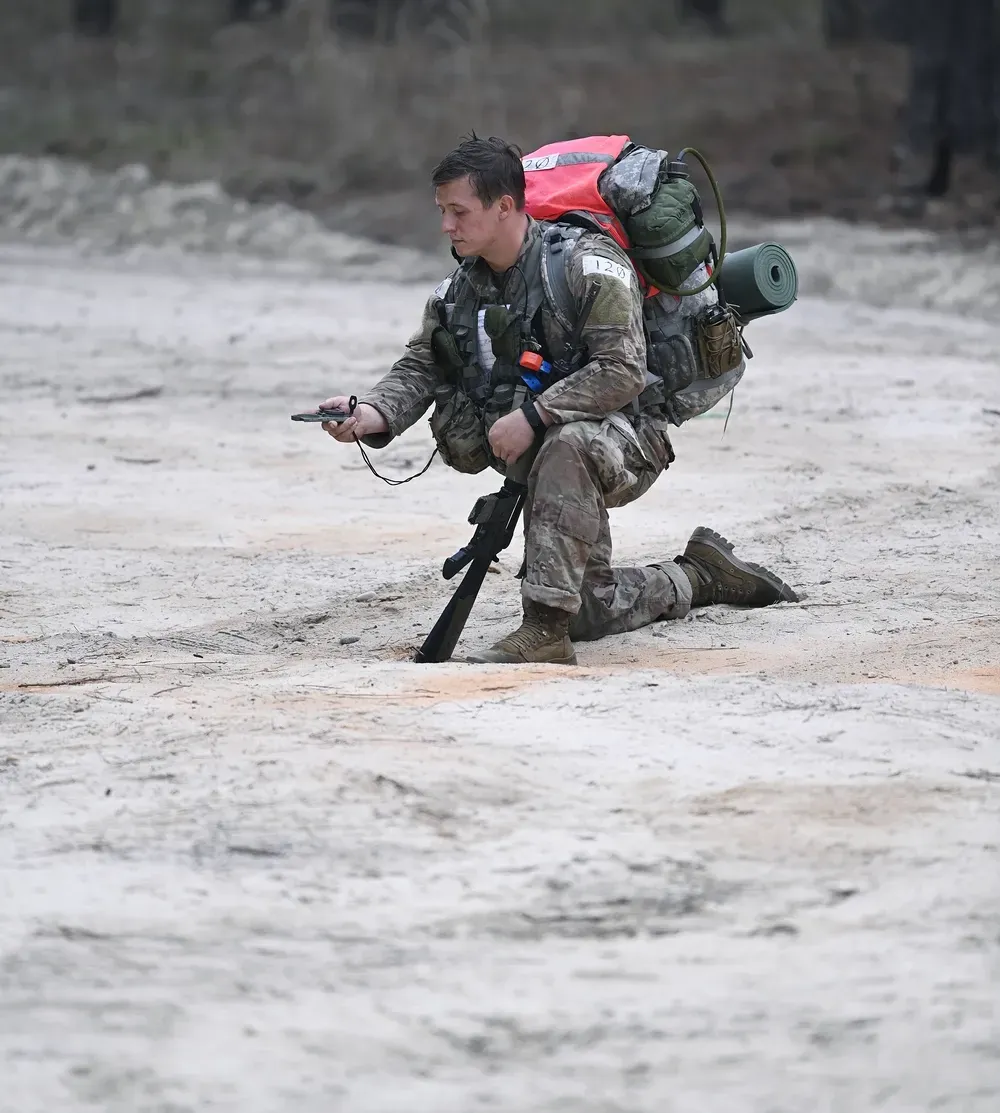
Tactical Rucking Gear: Boots, Packs & Plates Guide
Why Your Rucking Gear Makes or Breaks You
Choosing the right tactical rucking gear isn't about looking operator-cool, it's about function, durability, and protecting your body from preventable breakdowns. Whether you're training for selection, duty, or just to be harder to kill, your boots, pack, and plates decide whether the miles build you or break you. Cheap boots blister your feet. A flimsy pack wrecks your shoulders and back. Plates that sit low or shift around turn every ruck march into an endurance test against your own bad choices. Let's cut through the noise and cover what actually works, and why. Athletes who want a training program built around the same performance-first philosophy can find one through CF ONE training programs.
Feet First: Start With Boots That Protect and Perform
Your feet are literally the foundation of everything you do in tactical movement. They support your weight, absorb shock, transfer force, and endure miles of marching, rucking, sprinting, and hauling. For athletes specifically looking for structured rucking programs built around progressive load carriage, these rucking programs cover the full range of options available.
A few core principles for choosing boots:
Fit matters more than fashion - a boot that looks tactical isn’t necessarily biomechanically healthy.
Support protects joints and tissue - appropriate stiffness and structure can reduce musculoskeletal strain.
Boots interact with how you move - different soles, shanks, and ankle stiffness change your gait and impact forces.
Combat boots aren't interchangeable. A 2024 BMJ Military Health study by Yeo and colleagues found that boot type measurably changed in-shoe forces and perceived comfort during loaded walking, and that the most comfortable boot wasn't always the one with the lowest impact forces. Weight on the foot matters too: Knapik, Reynolds, and Harman (2004) found that every extra kilogram added to the foot raises energy expenditure by roughly 7 to 10 percent, far more costly than the same weight carried on your back. Footwear choice is more than feel; it's a measurable tax on every mile under load. For athletes evaluating which rucking program fits their preparation goals and training timeline, the rucking programs buying guide walks through exactly how to choose the right option.
Common Boot Types and When to Use Them
1. Fast & Light
Lightweight, great traction, minimal break-in time, ideal for mixed terrain and mobility-first training.
2. Heavy Load
Best for heavier ruck loads (> 50 lbs) or weak ankles as they lock the foot into place.
3. Standard Issue Compliance
Military-approved fit, rugged, dries fast, solid all-around choice for tactical training and duty-like movement.
Choosing between these comes down to load and terrain, not preference. If you're moving fast-and-light over mixed ground at lower weight, a lighter boot keeps you mobile and breaks in fast. The moment your loads climb past roughly fifty pounds, or your ankles have a history of rolling, the heavy-load boot's stiffer shank and higher cuff earn their weight by locking the foot in place. Standard-issue compliance boots split the difference and are the safe default when your training mirrors duty conditions, rugged, fast-drying, and proven across exactly the kind of mixed work most tactical athletes actually do. For athletes with specific questions about tactical fitness program structure and what to look for in a system that includes rucking and load carriage preparation, the tactical fitness program FAQ covers the most common questions in one place.
What Boot Selection Actually Costs You When You Get It Wrong
Poor boot selection is one of the most preventable sources of overuse injury in tactical training.
A boot that fits poorly creates friction points. Friction points create blisters. Blisters become infections. Infections remove people from training or duty.
A boot with inadequate stiffness under heavy load causes the foot to collapse inward with each step. This increases stress on the plantar fascia, the Achilles tendon, the ankle, and progressively up the kinetic chain to the knee and hip.
A boot with poor traction on the terrain you're training on increases fall risk and forces compensatory movements that increase energy expenditure and injury risk simultaneously.
None of this is dramatic. It is slow accumulation of the kind of damage that sidelines people not on one bad day but after weeks of ignored warning signs. Choose boots with the same intentionality you apply to every other piece of training equipment.
Packs: Designed to Protect Your Body
A cheap school bag will wreck your shoulders and lower back before you hit 10 miles. Tactical load carriage is a science, and your pack should shape weight distribution, not fight with it.
Here’s what good ruck design gives you:
Higher, tighter load close to the spine
Padded, adjustable straps that avoid nerve compression
Hip belt that transfers weight from shoulders to hips
MOLLE and modular pockets for sensible access
In their landmark Military Medicine review of soldier load carriage, Knapik, Reynolds, and Harman (2004) documented how poorly distributed weight raises energy cost, alters gait, and drives the blisters, back strains, and rucksack palsy that pull people out of training, risk that climbs sharply as loads approach or exceed body mass. Keeping the load's center of mass close to your own spine is the single biggest lever you have over that cost. Bottom line: don’t improvise. A purpose-designed pack that carries the weight ergonomically will save you pain and performance loss later.
What Good Pack Fit Actually Feels Like
A properly fitted ruck feels like part of your body, not like something fighting against it.
When a pack is correctly loaded and adjusted:
The weight sits high and close to your spine, keeping your center of mass intact rather than pulling you backward.
The hip belt carries 60-70% of the load, transferring it through your pelvis rather than hanging from your shoulders and cervical spine.
The shoulder straps guide the load rather than hold it, reducing compression on the brachial plexus nerves that cause the arm numbness many athletes experience under heavy packs.
The pack moves with you rather than shifting and bouncing, which reduces the rotational torque that accumulates in the lower back over long distances.
A pack that fails any of these tests is not a training tool. It is a liability that costs performance and builds breakdown.
How to Load a Pack Correctly
Pack loading order matters as much as pack selection.
Heavy items go closest to your back and as high in the pack as possible. This keeps the center of mass aligned with your spine.
Medium items fill around the heavy core.
Light items go in outside pockets.
Never put heavy items at the bottom. This creates a pendulum effect that pulls the pack away from your back with each step, amplifying spinal load and exhausting your posterior chain far faster than necessary. Understanding what is physical resilience gives the gear selection and loading principles in this post their full performance context, defining exactly what structural durability means and why gear that works with your body rather than against it is how that resilience is preserved over a training career.
Plates: Dense Weight That Saves Your Back
Sandbags have their place, they’re miserable and unpredictable, which makes them good tools for specific strength challenges. But for ruck-style training where consistency and load distribution matter, ruck plates win every time.
Plates:
Keep weight close to your center of mass
Avoid shifting slosh that leads to uneven loading
Allow controlled progression of weight for training adaptation
Sizing matters as much as material. A plate that's too small rattles inside the pocket and migrates as you move; one that's correctly sized sits flush and stays put for the entire ruck. Match the plate's footprint to your pack's dedicated compartment, seat it high and tight against the back panel, and pad any gap so it can't shift. A plate that stays exactly where you set it is the difference between training your posterior chain and fighting your own equipment for ten miles. Whether it’s cast iron or steel plate inserts, choose plates that won’t deform, shift, or create hotspots in your pack.
Why Predictable Resistance Matters for Training Adaptation
Sandbags produce random, shifting loads. The body responds to this unpredictability by using protective tension rather than smooth, efficient movement. This has value as an occasional challenge but is counterproductive as a primary training stimulus.
Plates produce consistent, predictable resistance. The body can adapt specifically to this load. Over time, consistent loading produces the specific musculoskeletal adaptations that make rucking more efficient: stronger posterior chain, more durable hip flexors, better postural stability under sustained load.
Progression is also cleaner with plates. Adding five or ten pounds to a plate is controlled. Adding five pounds to a sandbag is approximate at best. Controlled progression is how tissue adapts without breaking down.
How Load Interacts With Human Physiology
Carrying external weight isn’t just about physical strength, it’s about how your body integrates heavy load with normal movement mechanics.
Research on load carriage shows that:
Carrying external load increases physiological stress, respiratory demand, and fatigue compared to unloaded exercise.
This extra stress affects breathing, circulation, and neuromuscular coordination. Standard locomotion becomes more demanding with heavier packs or plates.
Improperly distributed load can increase mechanical forces on joints, which may heighten injury risk over time.
These aren’t bro-theory claims, they’re drawn from the occupational physiology literature on load carriage summarized in the references below. The specific physical qualities required to carry load efficiently and repeatedly without breakdown are covered in strength-endurance for load carriage, which explains exactly why strength-endurance is the most important physical quality to develop for anyone whose training or job involves carrying weight over distance.
Practical Gear Tips From People Who Actually Use Their Stuff
Break Your Boots In
Never wear brand-new boots for a long ruck or selection prep. Build up miles slowly so the leather, shank, and sole actually start performing, not causing blisters. Start with short walks in your new boots. Progress to loaded walks. Then progress to longer distances under load. Rushing this process is how day one of selection becomes day zero.
Use the Right Socks
Socks matter more than most people admit. Merino blends with proper cushioning improve moisture management and reduce blister risk. Wool-synthetic blends wick moisture away from the foot while maintaining warmth in cold conditions. Cotton kills feet. Never train in cotton socks for any significant rucking distance.
Choose Quality Over Trend
A $250 boot and a $300 pack isn't "expensive" in the context of avoiding injuries and missing training time. Missing three weeks of training due to a blister infection or shoulder nerve issue from a bad pack costs far more in preparation quality than the gear upgrade would have. Think about gear cost as a fraction of training investment. If your training program costs time, effort, and focus, protecting that investment with appropriate gear is not an optional luxury.
Test Gear Before You Need It
Never race in shoes you haven't trained in. Never ruck a timed event in a pack you haven't loaded and walked with. Gear requires familiarization before it performs as expected. Build break-in periods into your preparation timeline. The full rucking technique, progression, and training framework is covered in the tactical athlete's rucking guide, which connects gear selection to the training approach that produces durable, efficient ruckers rather than just tired ones.
Summary: Gear That Works
Boots that support load, protect joints, and fit your feet.
Packs that carry weight high and tight without wobble.
Plates that provide predictable resistance for rucking and conditioning.
Awareness that gear affects physiology as much as training choices.
This isn't cosplay, it's performance gear that keeps you functional, durable, and ready. Understanding what is tactical conditioning gives every tactical athlete the foundational operational framework for why gear selection, load carriage training, and physical preparation are all part of the same performance system rather than separate concerns.
Understanding what is a tactical athlete gives every reader the professional identity behind why these gear and training choices matter: defining exactly the kind of operator whose daily decisions about boots, packs, and programming are all building toward the same standard.
References
Knapik, J.J., Reynolds, K.L., & Harman, E. (2004). Soldier load carriage: historical, physiological, biomechanical, and medical aspects. Military Medicine, 169(1), 45–56.
Yeo, E.X.S., Chhabra, K., & Kong, P.W. (2024). Influence of combat boot types on in-shoe forces and perceived comfort during unloaded and loaded walking. BMJ Military Health, 170(1), 37–42.


