
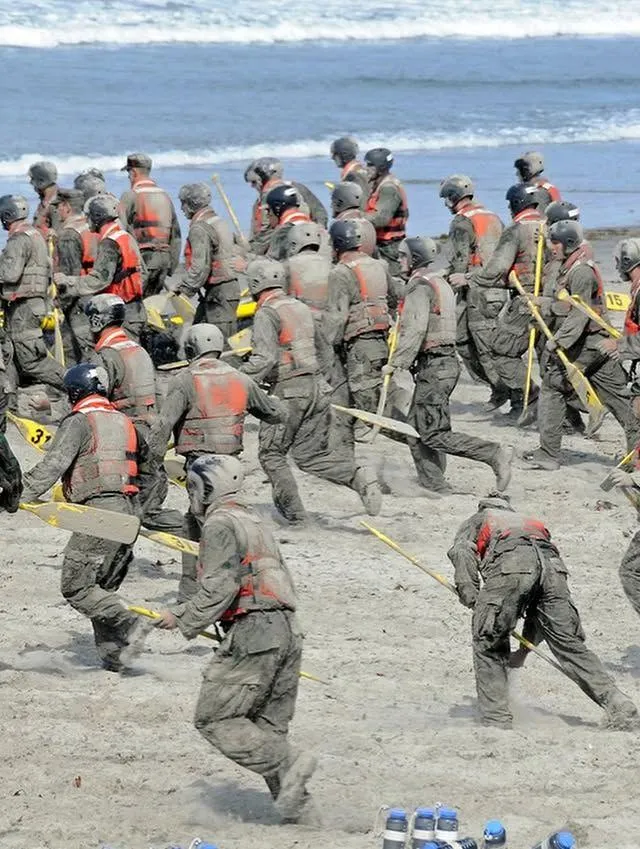
What Is Tactical Conditioning? Definition & Training
What Tactical Conditioning Actually Means
Tactical conditioning is a training approach designed to prepare individuals for unpredictable, high-stress physical demands that combine strength, endurance, speed, load carriage, and fatigue resistance. It prioritizes readiness, durability, and performance under real-world constraints rather than sport-specific optimization. Whether you're selecting kit or building a program, the CF ONE training collection is built around exactly these demands.
What separates tactical conditioning from civilian training is the absence of control over the variables. A powerlifter picks the bar weight; an operator inherits whatever the mission, the terrain, and the threat hand them. Conditioning has to hold up across cold, heat, sleep debt, body armor, and hours of low-grade exertion punctuated by short maximal bursts. The goal is not a personal record on any single lift or run. It is the ability to produce useful output, repeatedly, under load, after a bad night, at the moment failing to perform carries a real cost.
You will also see this called tactical strength and conditioning, or TSAC. The two terms get used interchangeably, and mostly that's fine, but there is a real distinction worth holding onto. TSAC is the professional field, the National Strength and Conditioning Association certifies practitioners as Tactical Strength and Conditioning Facilitators, and the discipline covers everything a coach does for a tactical population, including assessment, program design, and injury reduction. Tactical conditioning is the physical quality that work is trying to build. One is the job; the other is the outcome.
The Core Physical Qualities It Develops
Tactical conditioning integrates multiple physical qualities, including aerobic capacity, strength-endurance, power, work capacity, and movement efficiency. It accounts for load carriage, uneven terrain, environmental stressors, and limited recovery, factors common in military, law enforcement, and high-risk occupational settings. For operators requiring more advanced performance infrastructure, the CF PRO performance collection is designed to meet those elevated demands.
Each of these qualities earns its place for a reason. Aerobic capacity sets the size of the engine that recovers you between efforts. Strength-endurance keeps a heavy ruck or a casualty drag from degrading into a crawl. Power and work capacity govern the explosive, repeatable efforts, climbing, lifting, sprinting to cover, that decide outcomes in seconds. Movement efficiency lowers the energy cost of every step so fatigue arrives later. Trained in isolation, any one of these can be excellent while the system still fails. Tactical conditioning develops them together because the job demands them together.
Two of those get collapsed together constantly, and separating them matters. Endurance is your ability to sustain a submaximal output for a long time, the four-hour movement, the all-day fireline. Work capacity is your ability to repeat hard efforts with short, incomplete recovery between them, the stack of maximal bursts that a single shift or a single contact throws at you. A long slow run builds the first and barely touches the second. Train only endurance and you'll move all day and have nothing left the third time you have to sprint.
Load carriage deserves the same separation. Rucking is not running with extra weight; it is its own trainable quality with its own adaptations, and it degrades on its own timeline. Carrying 45 to 60 pounds changes your gait, shifts the work onto the posterior chain and the trunk, and raises the metabolic cost of every step well beyond what the added mass alone would predict. Armor does the same thing in a different way, a plate carrier restricts the ribcage and drives breathing cost up before it ever touches your legs. Firefighters carry the extreme version of this, moving in roughly 45 to 50 pounds of turnout gear and a breathing apparatus that limits air supply while heat drives heart rate up independently. The training implication is simple: if the job puts weight on you, some of your conditioning has to happen with weight on you.
Just as important is what tactical conditioning refuses to assume. It does not assume flat ground, mild weather, full hydration, or a good night's sleep, because the field rarely provides them. Heat drives up heart rate and accelerates fatigue; cold stiffens tissue and burns energy; altitude shrinks the aerobic margin; broken sleep degrades coordination and judgment before it ever touches raw strength. A program that only performs under good conditions has not been stress-tested against the variables that actually decide outcomes. Training that anticipates those stressors is what turns gym numbers into field-usable capacity.
How Tactical Conditioning Differs From Sport and General Fitness
Tactical conditioning is not bodybuilding, pure endurance training, or general fitness programming. It does not optimize a single performance metric (such as maximal strength or race speed) at the expense of others. It also differs from sport conditioning, which prepares athletes for predictable rules, surfaces, and recovery cycles, a distinction covered in depth in the tactical fitness program buying guide for anyone evaluating how to structure their training approach.
Sport conditioning is a fair comparison because it looks similar on the surface and breaks down for an instructive reason. An athlete knows the season, the opponent, the surface, and the recovery window. A tactical operator knows almost none of that in advance. Training built around a known competition calendar optimizes peaking; training built for operational reality optimizes the floor, the worst day you can still perform on. Bodybuilding chases appearance, pure endurance chases a single distance, and general programming chases nothing in particular. None of them is wrong. They are simply solving a different problem than the one you face.
Figure 1.1 - Tactical conditioning compared to sport conditioning, bodybuilding, and general fitness. The matrix above compares four training models across five variables. Known in advance: tactical conditioning knows almost nothing; sport conditioning knows the season, opponent, surface, and rules; bodybuilding and general fitness know everything. Optimizes for: tactical conditioning optimizes for the floor, the worst usable day; sport conditioning optimizes for the peak on competition day; bodybuilding optimizes for appearance; general fitness has no specific target. Recovery assumed: tactical conditioning assumes broken, incomplete recovery; sport conditioning assumes recovery is scheduled and protected; bodybuilding and general fitness both assume full recovery. Load conditions: tactical conditioning trains under armor, ruck, gear, and terrain; sport conditioning uses a standardized surface and kit; bodybuilding and general fitness both operate in a controlled gym. Failure looks like: in tactical conditioning, failure is capacity you can't express under fatigue; in sport conditioning it is missing a peak; in bodybuilding it is missing a look; in general fitness it is nothing measurable. The distinction that drives all five rows is predictability, tactical athletes cannot schedule the demand, so the training model optimizes worst-case usable capacity under load and sleep debt rather than peak output under ideal conditions.
In tactical populations we've worked with, chasing single-metric improvements (like max strength or race pace) often creates breakdowns rather than better performance. If you're unsure which type of program fits your role and schedule, the tactical fitness program FAQ addresses the most common questions about program selection for tactical athletes.
A concrete version of this shows up constantly. A soldier deadlifts well over twice bodyweight but gasses out on a four-mile ruck because the aerobic base never got the same attention. A distance runner turned recruit floats through the run, then can't carry a casualty fifty meters. Both are "fit" by a narrow measure, and both fail the task. Tactical conditioning treats that imbalance as the actual problem to solve, not an acceptable trade-off. The standard is not how high one number goes, it is how few weak links remain when the demands stack on top of each other.
If you've come up through a strength-and-conditioning background, this maps loosely onto the general and specific physical preparation model, GPP and SPP, that traces back through Bompa and Westside. The difference is that in sport, specific preparation narrows toward one known event. In tactical work, the "event" is a distribution of possible demands, so specific preparation means rehearsing the loaded, degraded, unpredictable version of general work rather than sharpening one skill.
Why It Matters for Tactical Athletes
Understanding what defines a tactical athlete's occupational demands helps clarify why conventional fitness models fall short. Conventional fitness models assume recovery you will not get and demands you can predict. Both assumptions break in the field. The consequence is downstream: a program designed around ideal conditions produces an athlete who performs well in ideal conditions and nowhere else. When the variable that ends a mission is a rolled ankle on hour six of a movement, raw strength and a fast mile time stop being relevant. Tactical conditioning matters because it optimizes for the moment performance is hardest to access — not the moment it is easiest, which is exactly the moment the occupation tends to demand it.
Performance failures often occur under fatigue, cumulative stress, or incomplete recovery. Tactical conditioning addresses this reality by developing adaptable capacity rather than peak performance in isolated domains. In practice we see performance failures not because someone lacks strength or endurance, but because they can't express either under fatigue, load or incomplete recovery.
The mechanism behind this is fatigue masking capacity. Strength and aerobic ability are real, but they are expressed through a nervous and metabolic system that degrades as stress accumulates. Under sleep loss, dehydration, and repeated effort, the same person who tested strong on Monday produces a fraction of that output by Thursday. Conditioning that is only ever tested fresh never reveals the gap. This is why durability — the ability to hold output as conditions worsen, is a separate trainable quality, not an automatic byproduct of being strong or being a good runner in isolation.
Common Conditioning Failure Patterns Under Load
In tactical settings, conditioning failures most often appear as gradual performance erosion rather than sudden collapse. Individuals may tolerate increasing demands initially, but without sufficient aerobic support and fatigue management, performance quality declines across repeated efforts and training cycles. This is why the tactical athlete performance pyramid structures development from the base up, aerobic foundation first, not last.
In practice the erosion looks like this: in week one of a selection course, candidates move well and recover overnight. By week three, with cumulative load and minimal sleep, the same movements cost more, form degrades, and minor injuries compound. The candidates who wash out rarely lack strength, they lack the aerobic and recovery base to keep expressing it. That is the difference between peak fitness and sustained readiness. A test score captures the first; the job tests the second. Building from the aerobic foundation upward is what keeps performance from collapsing once the easy days run out.
One caveat on the compounding part: pain that is building week over week is information, not something to train through. If something is getting worse rather than settling, get it looked at by a qualified professional before you add load to it. Working around an injury is a coaching problem; diagnosing one is not.
How Tactical Conditioning Is Measured
Tactical conditioning is measured by testing each quality on its own and then re-testing the important ones under accumulated fatigue. A workable battery covers relative strength, aerobic capacity, work capacity, and loaded movement, something like a trap bar or back squat expressed as a multiple of bodyweight, a 1.5- or 2-mile run, a repeat-effort interval set, and a weighted ruck over a fixed distance. The fresh numbers give you a ceiling. The retest gives you a floor, and the floor is what the job hires.
Published benchmarks exist if you want external reference points. The part almost nobody tests is the one that matters most here. Run the same battery on a Monday after a rest day, then run an abbreviated version at the end of a hard training week, after a heavy session, a poor night's sleep, and a long movement. The gap between the two is your durability score, and it is the only number in this article that predicts what happens on hour six. A wide gap means you have built capacity you cannot access. That is a programming problem, not a toughness problem, and the section below is how you fix it.
Practical Implications for Training Design
Effective tactical conditioning balances concurrent development of strength and endurance, manages fatigue deliberately, and emphasizes long-term durability over short-term performance gains. A useful lens here is whether tactical athletes can train like endurance athletes, the answer shapes how hybrid programming is structured entirely. Concurrent development is harder than it sounds because strength and endurance adaptations partly compete, a tension documented as far back as Hickson's 1980 work on the interference effect, where training both qualities hard at the same time blunted strength gains. Tactical conditioning does not ignore that interference; it manages it through deliberate sequencing, intensity control, and recovery rather than throwing both at the athlete on the same day and hoping. The practical implication is that more is not better. Volume that builds a marathoner can erode an operator's strength, and strength work that builds a lifter can starve the aerobic base. Balance is the skill.
Programs that ignore this balance tend to produce short-term and long-term injuries or burnout. This same tension between aerobic and strength demands is central to hybrid training methodology and why it requires deliberate periodization rather than casual cross-training. Understanding the relationship between these qualities begins with knowing what aerobic capacity actually means in a tactical context, and why it underpins every other physical quality on this list. The distinction between tactical and general fitness programming is where most commercially available programs fail the people who need them most.
How to Structure a Tactical Conditioning Program
A tactical conditioning program is built in phases, and most of the year sits in one of them. A long base phase develops aerobic capacity and general strength. A shorter conversion phase adds load, terrain, and mission-specific work on top of that base. A maintenance phase holds what you built through operational periods when training time collapses. Recovery blocks sit between them. The base phase gets the majority of the calendar because aerobic capacity is the quality that decays fastest and takes longest to rebuild, you can recover a squat number in weeks; you cannot recover an aerobic base in weeks.
This phase vocabulary is fairly standard across the field. Science for Sport's review of tactical periodization models describes cycles running through recovery, transition, base, tactical, and deployment phases. Inside a given week, the interference effect decides the layout. Hard strength work and hard aerobic work compete for the same recovery, so they get separated, by hours at minimum, by days where the schedule allows. A practical version looks like two to three strength sessions, one hard conditioning session, two to three easy aerobic sessions, and one loaded movement that grows in distance or weight over the block. Easy aerobic work should feel easy. The most common mistake we see is turning every session into a hard one, which produces a training week where nothing is truly hard and nothing is truly recovered, and the aerobic base never actually builds.
Progress the loaded work slowest of all. Ruck distance and load are where overuse injuries accumulate, and the tissue adapts on a longer timeline than the cardiovascular system does. Your legs will tell you they can handle more before your feet, shins, and hips can.
Injury Risk and Why Conditioning Is the Prevention Tool
Injury is the most common way a tactical career gets interrupted, and most of those injuries are not traumatic. They are overuse, feet, shins, knees, hips, and low backs that accumulated more load than they were prepared for. Science for Sport's review of the tactical literature reports injury rates in the range of 25 per 100 operators per year. Whatever the exact figure, the pattern behind it is consistent: the damage comes from volume applied faster than tissue adapts, not from one bad rep.
This is why conditioning and injury prevention are the same conversation rather than two adjacent ones. An athlete with a deep aerobic base recovers between efforts, holds form longer into a movement, and spends less of the day near their limit, and form breaking down under fatigue is where most overuse injuries actually originate. Building the base is prevention. So is progressing loaded work slowly, and so is taking the easy days easy so the hard days can be hard.
None of that replaces medical judgment. If you're carrying an existing injury, coming back from one, or dealing with pain that isn't resolving, get cleared by a qualified professional before you add load. The goal is capacity you can keep, and there is no version of that which runs through an untreated injury.
Who Tactical Conditioning Is For
Tactical conditioning is not a niche for special operations alone. A patrol officer who sprints once a shift and then wrestles a suspect, a firefighter hauling charged line up three flights in full kit, a National Guard soldier balancing a civilian job against drill weekends, all face the same core problem: occasional, unpredictable, high-consequence physical demands layered on top of fatigue and poor recovery. The specifics differ, but the training logic does not. Anyone whose performance has to survive contact with the real world, rather than a controlled gym or a scheduled race, is a tactical athlete in the sense that matters here.
That said, the logic being shared doesn't mean the emphasis is. What the job asks for most, and what tends to break first, varies by role, and knowing which column you're in tells you where the extra training time should go.
Figure 1.2 - Dominant physical demand and first failure point by tactical role. The table above profiles seven tactical occupations. Infantry and special operations personnel face loaded movement over hours followed by a maximal effort at the end of it; aerobic base under load fails first. SWAT and SRT operators face short maximal bursts in armor after long static waits; repeat-effort work capacity fails first. Law enforcement patrol officers and detectives face one unpredictable maximal effort per shift, from cold; anaerobic capacity from a cold start, and grip, fail first. Corrections officers face sudden grappling and restraint from standing in close quarters; upper-body strength-endurance and grip fail first. Urban fire rescue personnel face sustained hard work in roughly 55 pounds of turnout gear and self-contained breathing apparatus, in heat; work capacity plus heat tolerance fail first. Wildland firefighters face all-day low-grade output on uneven terrain, days on end; movement efficiency and durability fail first. National Guard and Reserve members face readiness held around a full civilian job; consistency, then aerobic base, fails first. Equipment weights are drawn from NIOSH-published testing, which puts a structural turnout ensemble at 9.4 kg (20.7 lb) and an NFPA 1981-compliant SCBA at 16 kg (35 lb) fully charged. The federal wildland benchmark, the NWCG Arduous Work Capacity Test, requires 3 miles carrying a 45-pound pack in 45 minutes. Role demand profiles are a conceptual framework; individual assignments vary widely.
The Bottom Line
Tactical conditioning is best understood as training for unpredictability. It develops strength, aerobic capacity, work capacity, and durability together, manages the interference between them deliberately, and measures success by the floor of your performance rather than the ceiling. For military personnel, law enforcement, firefighters, and anyone whose job punishes a weak link, that distinction is not academic, it is the difference between a program that looks impressive in testing and one that holds up when the conditions turn against you. Build the base, train the qualities concurrently, and protect durability, and the capacity is there when it counts.
Common Questions About Tactical Conditioning
Is Tactical Conditioning the Same as Tactical Strength and Conditioning?
Close, but not identical. Tactical strength and conditioning, or TSAC, is the professional discipline, the coaching field, with its own certification through the NSCA and its own body of research. Tactical conditioning is the physical quality that discipline exists to build. In everyday use people treat them as the same thing, and in most conversations that's harmless.
Is Tactical Conditioning Just CrossFit?
No, though they overlap in that both train mixed qualities rather than one. The difference is what each optimizes for. CrossFit is a sport with a scored competition, standardized movements, and a known event calendar. Tactical conditioning has no competition day, so it optimizes the worst day you can still perform on rather than a peak. It also weights aerobic base and loaded movement far more heavily than most mixed-modal training does.
How Long Does It Take to Build Tactical Conditioning?
The qualities build on different timelines, which is why the honest answer is "it depends what's weakest." Strength responds relatively quickly. Aerobic base takes months and is usually the limiting factor. Tissue tolerance for loaded movement takes longest of all. If you're starting from a strength background, budget the most time for the aerobic side; from an endurance background, the reverse.
Do You Need a Gym for Tactical Conditioning?
A gym makes the strength side easier and faster, but it isn't the constraint most people think it is. The aerobic base, loaded movement, and work capacity components need distance, a ruck, and something heavy to carry. The limiting factor for most tactical athletes is training time and consistency around a shift schedule, not equipment access.
What Should You Test to Know Where You Stand?
Test relative strength, a run of 1.5 to 2 miles, a repeat-effort set, and a loaded ruck over a fixed distance, then retest an abbreviated version of the same battery at the end of a hard week. The fresh scores tell you your ceiling. The gap between fresh and fatigued tells you your durability, and that gap is the number worth tracking.


