
What Is a Tactical Athlete? Definition, Demands & Standards
A tactical athlete is a professional whose physical performance must be sustained under unpredictable, high-stress operational demands, most commonly military servicemembers, law enforcement officers, firefighters, and emergency responders. Unlike sport athletes who peak for known events on a known schedule, the tactical athlete trains to remain operationally ready across long careers, irregular shifts, and conditions no one can rehearse. The definition matters because the wrong training model, bodybuilding splits, CrossFit metcons, marathon plans, sport-specific peaking blocks, actively works against the demands the job imposes.
This guide breaks down what the term actually means, the physiological capacities the role requires, how tactical athletes differ from every other athletic population, and what training built for this work looks like in practice. Professionals serious about building this kind of readiness can start with the CF ONE training programs, which is structured around exactly these principles.
The Tactical Athlete, Defined
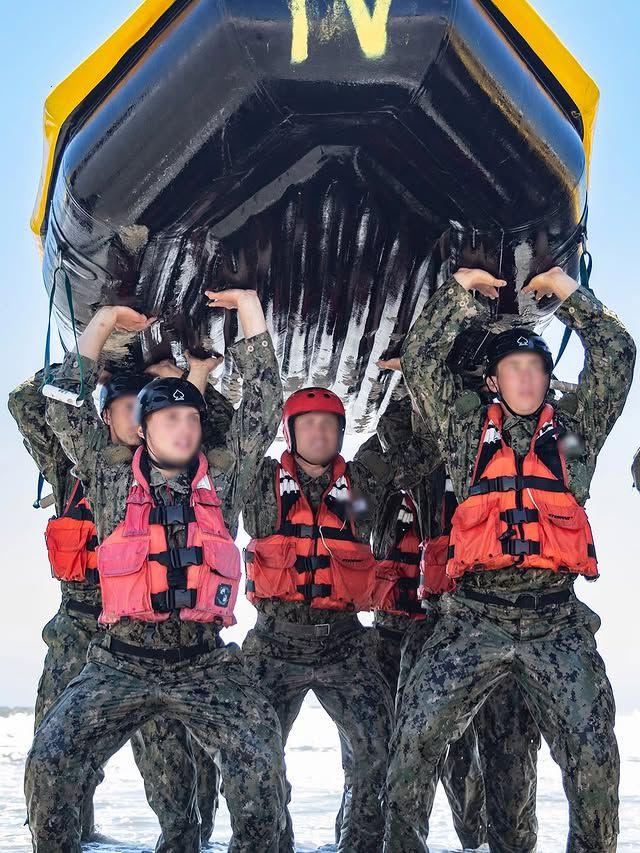
The shortest working definition: a tactical athlete is a person whose job requires sustained physical performance under operational stress. That definition holds across uniforms. An infantry soldier carrying 80 pounds across rough terrain, a patrol officer sprinting after a suspect at the end of a twelve-hour shift, a firefighter advancing a charged hose line up six flights of stairs, and a search-and-rescue technician hauling a litter through alpine snow are all doing the same fundamental thing, producing physical work, repeatedly, under conditions that punish anything fragile.
What distinguishes the tactical athlete from a recreational athlete or a competitive sport athlete is the unpredictability of the demand. There is no off-season. There is no taper. The day the body is needed is rarely the day the body feels good. Training has to assume incomplete recovery, broken sleep, and stress imposed before the first rep, because those are the conditions performance has to survive.
This is also why the term "tactical athlete" is more than branding. The National Strength and Conditioning Association's Tactical Strength and Conditioning (TSAC) program treats the population as a distinct athletic category for a reason: the physiological demands, injury profile, and career-longevity considerations don't map cleanly onto any other athletic group. Calling these professionals "athletes" reframes how they should be trained, as performance athletes whose performance arena happens to be operational rather than competitive.
The term has a traceable origin in the literature rather than in marketing. Scofield and Kardouni laid out the case for it in the Strength & Conditioning Journal in 2015, defining tactical athletes as military, law enforcement and rescue personnel who need distinct physical training strategies because the threat arrives without notice and persists for an unpredictable duration. You will also see the same population described as the operational athlete, which is arguably the more accurate label, the defining feature is the operational context, not the tactics.
Not everyone accepts the term, and the objection is worth taking seriously. The strongest version of it, argued at length by coaches with real operational backgrounds, is that "tactical athlete" has been stretched until it means nothing, that it gets used to sell programs on the strength of a coach's service record rather than their coaching, and that "responder" would describe the population more honestly. The criticism of the marketing is fair. The category still holds, because the training problem it names is real: a population with no off-season, no taper, and a twenty-year horizon needs a different programming logic than one built around a competition calendar. Use whichever word you like. The physiology doesn't care what you call it.
Core Characteristics of a Tactical Athlete
Tactical athletes require unusually broad physical capacity. No single quality is decisive, every quality has to be developed simultaneously and held simultaneously, often for decades. Five capacities define the population:
Aerobic capacity sits at the foundation. Sustained low-to-moderate intensity work, patrolling, climbing, carrying, swimming, working under load, depends entirely on the cardiovascular system's ability to deliver oxygen and clear waste over hours, not minutes. A tactical athlete with a weak aerobic base will physiologically fail at the precise moment the job asks the most.
Strength is non-negotiable. The job imposes external loads, body armor, breaching tools, downed teammates, fire equipment, suspects in custody, and those loads scale to the threat, not the operator. Absolute strength buys margin. Relative strength (strength per pound of bodyweight) buys agility.
Power and rate of force development matter because the moments that decide outcomes are usually short and explosive: closing the last ten yards, breaching a door, climbing over an obstacle, getting up off the ground. Strength alone, expressed slowly, is not enough.
Work capacity, the ability to do hard physical work, recover incompletely, and do it again, is the quality that separates tactical athletes from every other athletic population. Sport athletes recover between events; tactical athletes do not. Work capacity is the engine that lets a 90-minute event become an 8-hour shift.
Resilience and durability are the quiet capacities that determine career length. The tactical athlete who can sustain training and operational demand across a 20-year career without breaking down, joints intact, back intact, shoulders intact, outperforms the one who peaked at 25 and was broken by 32.
Underneath all five is the requirement to perform repeatedly. Tactical athletes face repeated stress exposure across days, weeks, and years, often despite limited sleep, irregular nutrition, and compressed recovery windows. Choosing the right program structure for these demands is not straightforward, the tactical athlete program buying guide breaks down what to look for and what to avoid when evaluating programming for this population.
Who Counts as a Tactical Athlete
Tactical athlete is an umbrella term, but the populations it covers share a common feature: physical capacity is part of the job description, not a hobby running alongside it. The four primary populations are:
Military servicemembers, across every branch and every role that imposes physical demand, from infantry and special operations to combat engineers, MPs, pararescue, and combat support roles that routinely operate under load. The U.S. military formally tests this readiness through standardized assessments, most recently with the Army Fitness Test (AFT) replacing the older ACFT in June 2025.
Law enforcement officers, patrol, SWAT, federal agents, corrections, and tactical units. The physiological profile of LEO work is uniquely uneven: long periods of low-intensity duty interrupted by short, maximal demands. Aerobic capacity in law enforcement roles is one of the most consistently undertrained variables in this population.
Firefighters and emergency responders, structural fire suppression, wildland fire, urban search and rescue, paramedic and EMS work. The combined load of protective equipment, environmental heat, and the physical demands of the work itself imposes one of the highest occupational physiological loads of any civilian job.
That claim is measurable, and the measurement is the clearest single argument for the whole tactical athlete framing. Fire service physicians assessing duty fitness under NFPA Standard 1582 have generally treated roughly 12 METs, twelve times resting metabolic rate, as the threshold for sustained fireground work, with search and rescue under smoke pushing toward 16. For comparison, professional football sits in the range of 15 to 16 METs and professional soccer 17 to 18. The firefighter is doing professional-sport-level metabolic work in roughly 50 pounds of gear, in heat, breathing bottled air, with no substitutions and no scheduled kickoff. The number is not the point on its own. The point is that the occupational demand is not a softer version of athletic demand, it is athletic demand plus constraints.
Selection candidates and pipeline trainees, soldiers preparing for SFAS, RASP, BUD/S, SOF assessment programs, special agent academies, and other selection events. This sub-population trains under a different time pressure than career operators, but the underlying capacity requirements are the same.
Two adjacent populations sometimes called tactical athletes deserve a sharper line. Hybrid athletes, civilians training across multiple modalities for general physical preparedness, share methodology with tactical athletes but not occupation. Recreational "tactical-style" trainees train like tactical athletes by choice. The training principles transfer, but the consequences of underperformance do not.
A third term worth separating out is the combat athlete. In common use it means one of two different things, and they pull in opposite directions. Sometimes it means a combat-sport competitor, a fighter, a wrestler, a grappler, who is a sport athlete in the strictest sense, with a known opponent, a known date, a weight class, and a camp built around peaking for it. Sometimes it means a servicemember in a combat role, which is squarely a tactical athlete. The first has an off-season; the second doesn't. If you're using the term, say which one you mean, because the training implications are close to opposite.
How Tactical Athletes Differ from Sport Athletes
The distinction between tactical and sport athletes is not academic, it directly determines what kind of training program will and won't work for this population. Five differences matter most.
Predictability of demand. Sport athletes prepare for known rules, known schedules, and known recovery windows. A marathoner knows the race date six months out. A powerlifter knows when they're hitting a max. A football team knows the season starts in September. Tactical athletes do not know any of this. The demand arrives unannounced. Training has to assume the worst-case-scenario day, not the best.
Recovery assumptions. Sport athletes train to peak; their programming assumes complete recovery between sessions, between competitions, between seasons. Tactical athletes operate with incomplete recovery as a baseline condition, shift work, deployments, multi-day operations, and call-outs all impose work on a body that hasn't recovered from the last round. Training has to teach the body to perform when it isn't fresh, not when it is.
Specialization vs robustness. Sport athletes specialize. Marathon runners do not need to deadlift; powerlifters do not need a five-mile pace; volleyball players do not need to ruck. Tactical athletes need all of it. Programming that builds elite outputs in one domain at the cost of capability in another is a liability for this population, not a feature.
Career length. Most professional sport careers run five to fifteen years. Tactical careers commonly run twenty to thirty. The metrics that look good on a 25-year-old can wreck a 40-year-old. Training decisions made for this population have to be evaluated on a 20-year horizon, which is why programming for tactical athletes places unusual weight on longevity, joint health, and the sustainable training volume that lets capacity hold across a full career rather than peak briefly.
Stakes of underperformance. The consequence of a sport athlete underperforming is losing. The consequence of a tactical athlete underperforming is significantly more serious, for themselves, their teammates, and the people they're responsible for. Training has to reflect that asymmetry.
Together, these five differences explain why tactical athletes need programming that emphasizes robustness, adaptability, repeatability, and sustainability over specialization, peaking, and absolute performance maximization. If you're navigating common questions about how military and tactical fitness programming actually works in practice, the military fitness program FAQ covers the most frequently misunderstood aspects of training for this population. Understanding what tactical conditioning actually requires makes this distinction far more actionable.
Why the Distinction Matters
Applying sport-specific or aesthetic fitness models to tactical populations doesn't just produce suboptimal results, it actively produces injury, burnout, and operational performance degradation. The mismatch shows up in predictable ways. A six-day bodybuilding split builds size but leaves the operator gassed inside two minutes of work. A CrossFit-style metcon program builds raw work capacity but neglects load-bearing strength and slow aerobic development. A marathon training plan develops the engine but strips the strength reserves needed to carry equipment, restrain a suspect, or climb a ladder under load. Each of those models is excellent for its intended population and dangerous when applied to this one.
The error is rarely the program itself, it's the mismatch between the program's assumptions and the tactical athlete's reality. Programs built around predictable recovery, single-event peaking, optimal nutrition timing, and uninterrupted training blocks will work as advertised in the conditions they were built for. None of those conditions exist on shift work, in pre-deployment workups, during selection, or in the weeks following a call-out that ran long. Tactical athletes require programming that prioritizes readiness and durability over maximization of isolated metrics, because readiness is the metric the job actually scores.
To fully appreciate this gap, it helps to examine the tactical athlete vs hybrid athlete contrast directly, since the two training identities are frequently conflated. They share methodology, both train multiple capacities, both reject single-discipline specialization, both prize broad capability, but they diverge on the question of why. The hybrid athlete chooses the demand. The tactical athlete inherits it.
In practice, the breakdowns are predictable. We see them most often when training assumes predictable recovery or single-event peaking, conditions that simply don't exist in operational environments, or when programs designed for civilian general fitness get layered onto operators without modification. The result is athletes who are technically "in shape" but who fall apart the moment the demand looks anything like their job. Many practitioners find it useful to revisit what training readiness actually means before designing any block of work for this population, because readiness is the only output that ultimately matters in this context.
Practical Implications
Training decisions for tactical athletes should be guided by operational demands, not competitive calendars or aesthetic outcomes. This single principle reshapes most of the standard decisions a recreational lifter would make.
Volume distribution shifts. Instead of concentrating volume in one or two qualities (strength-heavy, or cardio-heavy, or hypertrophy-heavy), tactical programming distributes volume across strength, aerobic work, anaerobic work, and load-bearing capacity inside the same training week. The aim is sufficiency across the board, not excellence in one domain.
Intensity is managed, not chased. Maximal lifts and maximal efforts have a place, but they are deployed sparingly. The bulk of weekly training sits in submaximal ranges where the cost-to-benefit ratio favours repeatability over peak output. A tactical athlete who can train hard four days a week for five years will outperform one who trains brutally for six months and then breaks.
Recovery is built into the architecture, not bolted on. Sleep variability, shift work, deployment cycles, and unpredictable demand all mean the program has to flex. Training that requires perfect recovery to function is fragile by definition.
Loaded movement is non-negotiable. Rucking, weighted carries, sled work, and load-bearing complexes appear in tactical programming at frequencies that would seem excessive in a recreational context. They are excessive, relative to recreational demand. Relative to operational demand, they are baseline.
Exposure to operational stressors is rehearsed deliberately. Heat, cold, sleep restriction, fasted work, work under fatigue, and consecutive-day demand are introduced in controlled doses so the first time the athlete encounters them is not in the field. This is the practical content of what we mean by readiness: the body has been there before.
Above all, the training calendar runs on a sustainability horizon. Training choices often trade peak outputs for consistency and injury resistance across weeks or months, and across years, of cumulative stress. The metric of success is not the best six-week block; it is the floor the athlete can hold for a career.
For those wondering precisely what makes an athlete "tactical" by definition, a deeper breakdown of the qualifying criteria is worth reviewing. Law enforcement professionals, in particular, face unique physiological demands that shape how these principles are applied aerobic demands in law enforcement roles represent one of the more frequently overlooked variables in programming for this audience.
The broader question of how hybrid athlete training compares to the tactical model is one that practitioners frequently return to, particularly as more general-fitness methodologies get applied to operational contexts.
Common Misconceptions About Tactical Athletes
Three misconceptions distort how this population gets trained, and all three appear regularly in commercial programming aimed at this market.
The first is that tactical athletes need to look a certain way. Aesthetic outcomes, visible abs, narrow waist, dense upper body, are not predictive of operational capability. Some of the most capable operators are not lean by physique-sport standards, and some of the leanest physiques cannot sustain a 90-minute load carry. Body composition matters; aesthetics are a side effect, not a target. It's still a fair question, so here's the honest answer to "what does a tactical athlete's body look like." Usually: moderately lean, moderately muscular, and unremarkable in a gym. Not because leanness doesn't matter, but because it's constrained from both directions. Carry too much mass and the aerobic cost of moving it, and of cooling it, goes up, every extra pound is a pound you ruck whether you wanted to or not. Carry too little and you lose the strength reserve and the tissue that absorbs load and impact. The useful range sits between those, which is why waist-to-height tends to be a better working marker than body-fat percentage or a mirror. The physique is an output of training for capacity. It is not a specification, and chasing it directly is how people end up with the six-day split described above.
The second is that "tactical fitness" means CrossFit in tactical clothing. The two share a vocabulary, work capacity, varied modalities, conditioning, but they diverge on time horizon, injury tolerance, and specificity to operational demand. CrossFit-style training is one tool that can serve tactical preparation when used with discipline; it is not a complete training model for the population, and treating it as one consistently produces overuse injuries that shorten careers.
The third is that tactical athlete training is the same as special operations selection prep. SOF pipeline preparation is one subset of tactical training, optimized for a specific time-bound event. Career-long programming for a serving infantryman, a patrol cop, or a structural firefighter is a different beast, it has to hold up across decades, not weeks. The question of which programming applies to which moment in a career is what the training framework on this site is built to answer.
Tactical athletes are not bodybuilders, CrossFit competitors, marathoners, or selection candidates, though at various points in a career they may need to train like all four. The correct frame is to treat tactical preparation as a meta-discipline that draws on every other modality without belonging to any of them.
Tactical Athlete Training Is Career-Length Training
The defining feature of tactical athletes, the one that should drive every programming decision made for this population, is that the career is long, the demand is variable, and the worst day is the day that decides everything. Training cannot peak for it; training has to be ready for it on a Tuesday in year fifteen.
That means longevity is not a soft consideration to revisit when joints start hurting. Longevity is the primary design constraint. The athlete who is still strong, still aerobically capable, still durable, still uninjured at age 42 has produced more operational value than the one who was peerless at 26 and broken by 34. Building this kind of staying power requires programming that respects what the job is actually like, not what a competitor's training week looks like, not what looks impressive on social media, and not what works for a population whose careers end at thirty.
That is the standard the term "tactical athlete" should mean. It is the standard the training at Combat Fitness is built around, programming for serving military, law enforcement, fire and emergency professionals, and the serious civilians who train alongside them. The CF ONE collection is the entry point; the broader programming on this site builds out from there for athletes whose roles, career stage, and selection demands require something more specific.
Common Questions About Tactical Athletes
What Are Tactical Athletes, in One Sentence?
Tactical athletes are professionals whose jobs require sustained physical performance under unpredictable, high-stress conditions, military servicemembers, law enforcement officers, firefighters, and emergency responders. The label exists because this population trains for readiness across a long career rather than for a scheduled competition, which changes almost every programming decision that follows from it.
What Is Tactical Training, and Is It the Same as Tactical Fitness?
Tactical training in a fitness context means physical preparation built around occupational demands rather than a competition calendar: broad capacity across strength, aerobic base, work capacity and loaded movement, developed together and held for years. It's used more or less interchangeably with tactical fitness. Note that in sport science, "tactical" usually means something different, decision-making and game strategy rather than physical preparation.
Do You Have to Be Military or Law Enforcement to Be a Tactical Athlete?
By the strict definition, yes, the occupation is what makes the label apply, because the occupation is what removes your control over the demand. Civilians who train the same way are hybrid athletes or tactical-style trainees. The methodology transfers completely. What doesn't transfer is the consequence of not being ready on a given Tuesday.
How Is a Tactical Athlete Tested?
Through occupational standards and general capacity benchmarks, which are not the same thing. Occupational standards are set by the employer, the Army Fitness Test, agency academy standards, fire service duty-fitness assessments under NFPA 1582. Capacity benchmarks like the reference set above tell you where you're short before the official test does. Passing the first while failing the second is common, and it's usually the aerobic base or loaded endurance that's missing.


