
Training Load Friction Model: Why Recovery Drives Gains
A Framework for Managing Stress, Recovery and Adaptation
Most training models focus on how much work is done. The Training Load Friction Model, Combat Fitness's framework for managing training load and recovery, focuses on how efficiently that work is absorbed. It explains why two athletes can run the same program and get opposite results: one adapts, the other breaks down. Training load does not exist in isolation. The same workout can drive adaptation in one context and create breakdown in another. The difference is friction. This model explains why training outcomes vary even when programs look identical on paper. It is the same principle underneath every one of Combat Fitness's tactical fitness programs.
That gap between the program on paper and the result in the body is the whole problem this model solves. Load is only half the equation. The other half is everything working against it, fatigue, lost sleep, life stress, a nagging joint, a brutal week at work. Call that resistance friction. When friction is low, load turns cleanly into adaptation. When friction is high, the exact same session digs a hole instead of building capacity. Read friction wrong and you either undertrain a fresh athlete or bury a fried one.
What the Model Represents
The model isn't abstract theory, it's a lens for the decision you make every training day: push or preserve. To use it, you treat training stress not as a single number but as a tug-of-war between what you're asking the body to do and what's standing in the way of doing it. Get the two forces straight and programming stops being guesswork. You stop chasing yesterday's numbers and start training the athlete who actually showed up today. It is also the difference that shows up the moment you compare two tactical systems side by side, as in this breakdown of Combat Fitness versus other training programs.
The Training Load Friction Model describes training stress as the interaction between two forces:
Training Load - the external and internal demands placed on the athlete (volume, intensity, density, frequency, effort).
Friction - the resistance that limits how effectively that load can be expressed, tolerated, and recovered from.
Friction includes:
Accumulated fatigue
Poor sleep or inconsistent recovery
Psychological stress (work, life, pressure)
Nutritional shortfalls or dehydration
Joint irritation, soreness, or low-grade injury
Environmental stressors (heat, cold, travel, shift work)
As friction increases, the cost of producing the same output rises. None of those friction sources are exotic, they're Tuesday. What matters is that they're additive and largely invisible on a training log. A spreadsheet shows sets, reps, and load; it shows none of the recovery debt stacking up underneath. This is the same blind spot that derails load tracking in the research: workload monitoring tools quantify what you did, not what it cost you. The Friction Model exists to put that hidden cost back into the decision, so you're programming against the real internal price of the work, not just its external size.
Why Friction Changes Training Outcomes
When friction is low, training load is absorbed efficiently. Movement quality stays high, recovery is predictable, and adaptation occurs as intended.
When friction is high, the same training load:
Feels harder than expected
Produces disproportionate fatigue
Degrades technique and coordination
Extends recovery time
Increases injury risk
This explains why athletes can suddenly struggle with workloads they previously handled without issue. Fitness hasn’t disappeared, friction has increased. The sports-science literature backs this up bluntly: load by itself isn't the enemy, the relationship between recent load and the capacity you've built to absorb it is. Gabbett's work on the acute:chronic workload ratio showed that spikes in short-term load against an underprepared base drive injury risk, while load built gradually on a deep base is protective rather than dangerous (Gabbett, 2016). Friction is what shrinks that base in real time. A well-built athlete carrying high friction is, functionally, an underprepared athlete that day, same load, higher cost, worse outcome. The same logic separates program structures built to protect that base from those that ignore it, a contrast laid out in this Combat Fitness app versus Unit PT comparison.
Fitness vs Friction
A key insight of the model is that fitness and friction are independent variables, and the classic fitness-fatigue model says the same thing in different words. Banister's systems model framed performance as fitness minus fatigue: a slow-building fitness trace offset by a faster-moving fatigue trace (Banister et al., 1975). Friction is that fatigue trace plus everything outside the gym that feeds it. Fitness is the bank balance; friction is the day's withdrawals.
An athlete can be:
Highly fit but high-friction (poor sleep, high stress, recovery debt)
Moderately fit but low-friction (well-recovered, consistent habits)
In practice, the second athlete often performs better on that day. This is why readiness, not raw fitness, should set the day's ceiling. Two athletes with identical test numbers are not interchangeable on a Monday after one slept five hours and the other slept eight. Train them the same and you've mismatched the load to the athlete in front of you twice over, overcooking one, shortchanging the other. The fitter athlete still has more long-term ceiling; they just can't access it on a high-friction day. This is why programming solely off fitness metrics, without accounting for readiness and friction, leads to stalled progress and unnecessary breakdown.
Practical Coaching Application
Reading friction doesn't require a lab. The signals are already in front of you: resting heart rate, sleep quality, morning mood, warm-up feel, bar speed on the first working set, and how a known load rates on perceived effort. None is perfect alone; together they triangulate the day's friction well enough to act on. The goal isn't a precise score, it's a directional call. Is friction low enough to push, or high enough that today's job is protecting quality and living to train hard tomorrow?
The Training Load Friction Model changes how training decisions are made:
Load does not need to be reduced every time performance dips
Volume and intensity should be adjusted based on friction, not emotion
Some days require pushing load
Other days require preserving quality
Effective programming aims to:
Apply enough load to stimulate adaptation
Minimize unnecessary friction that blunts the stimulus
This approach allows athletes to train consistently without relying on extremes.
The same friction read also shifts with time, since older athletes carry and clear it differently, which is what makes training load adjustments with age a category of their own. Consistency is the entire point. The athlete who never has a great week but never has a wrecked one out-progresses the athlete who alternates heroic sessions with forced layoffs. Managing training load through the friction lens isn't about training soft, it's about spending hard days where they actually convert to adaptation and refusing to spend them where they'll only deepen the hole. Over a training year, that discipline is the difference between compounding fitness and treading water through an injury-deload-rebuild cycle.
Why This Matters for Tactical and High-Stress Athletes
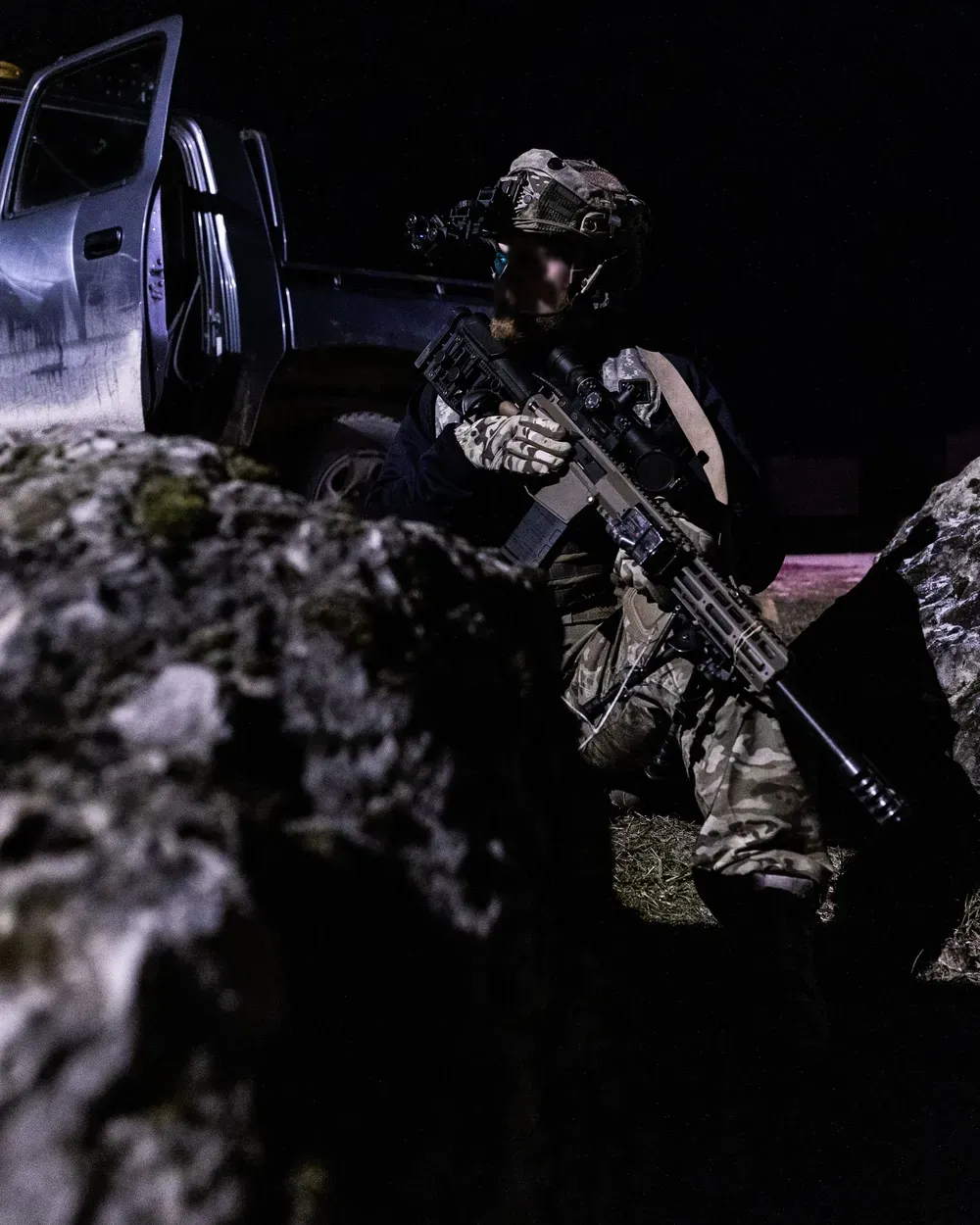
Tactical athletes operate in environments where friction is rarely low. Sleep disruption, irregular schedules, psychological stress, and environmental demands are the norm. And the stress doesn't stay in your head, it lands in the muscle. Controlled research found that athletes carrying higher life-event and perceived stress recovered measurably slower from a hard resistance session, with the effect holding even after adjusting for fitness and workload (Stults-Kolehmainen & Bartholomew, 2012). For a soldier, cop, or firefighter, that's not a footnote, it's the operating environment. Carried long enough, that unpaid recovery becomes a kind of durability debt the body eventually collects on. A deployment, a rotating shift, or a bad stretch on the job raises friction in ways a percentage-based program can't see, which is exactly why those programs stall when life gets loud.
The Training Load Friction Model acknowledges this reality and provides a framework for:
Sustaining performance under stress
Reducing injury risk without undertraining
Maintaining readiness alongside long-term fitness development
It explains why rigid, percentage-based programs often fail in real-world settings. The fix for the tactical athlete isn't a softer program, it's a program that flexes with friction instead of pretending it doesn't exist. That means building a deep aerobic and strength base when conditions allow, then auto-regulating volume and intensity down (without stopping) when shift work, sleep loss, or operational stress spike friction. Capacity is preserved, injury risk stays in check, and readiness holds even when the calendar is hostile. Long-term fitness still climbs; it just climbs on a schedule the real world will actually permit.
Key Takeaway
Training load drives adaptation.
Friction determines whether that adaptation actually occurs.
Better training outcomes don’t come from blindly adding load. They come from understanding when friction is low enough to push and when it must be managed to preserve progress.
The most effective programs don’t eliminate friction, they account for it.
So the working rule is simple: measure friction before you add load, and let the day's friction, not yesterday's plan and not today's mood, decide whether you push or preserve. Do that consistently and the same program that breaks an unmanaged athlete will build a managed one. That's the whole model. Training load supplies the stimulus; friction decides whether the body ever cashes it in. Master the second half of that equation and you stop guessing why progress stalls, and start programming for the athlete who actually showed up to train.
References
Banister, E. W., Calvert, T. W., Savage, M. V., & Bach, T. (1975). A systems model of training for athletic performance. Australian Journal of Sports Medicine, 7, 57–61.
Gabbett, T. J. (2016). The training–injury prevention paradox: should athletes be training smarter and harder? British Journal of Sports Medicine, 50(5), 273–280.
Stults-Kolehmainen, M. A., & Bartholomew, J. B. (2012). Psychological stress impairs short-term muscular recovery from resistance exercise. Medicine & Science in Sports & Exercise, 44(11), 2220–2227.


