
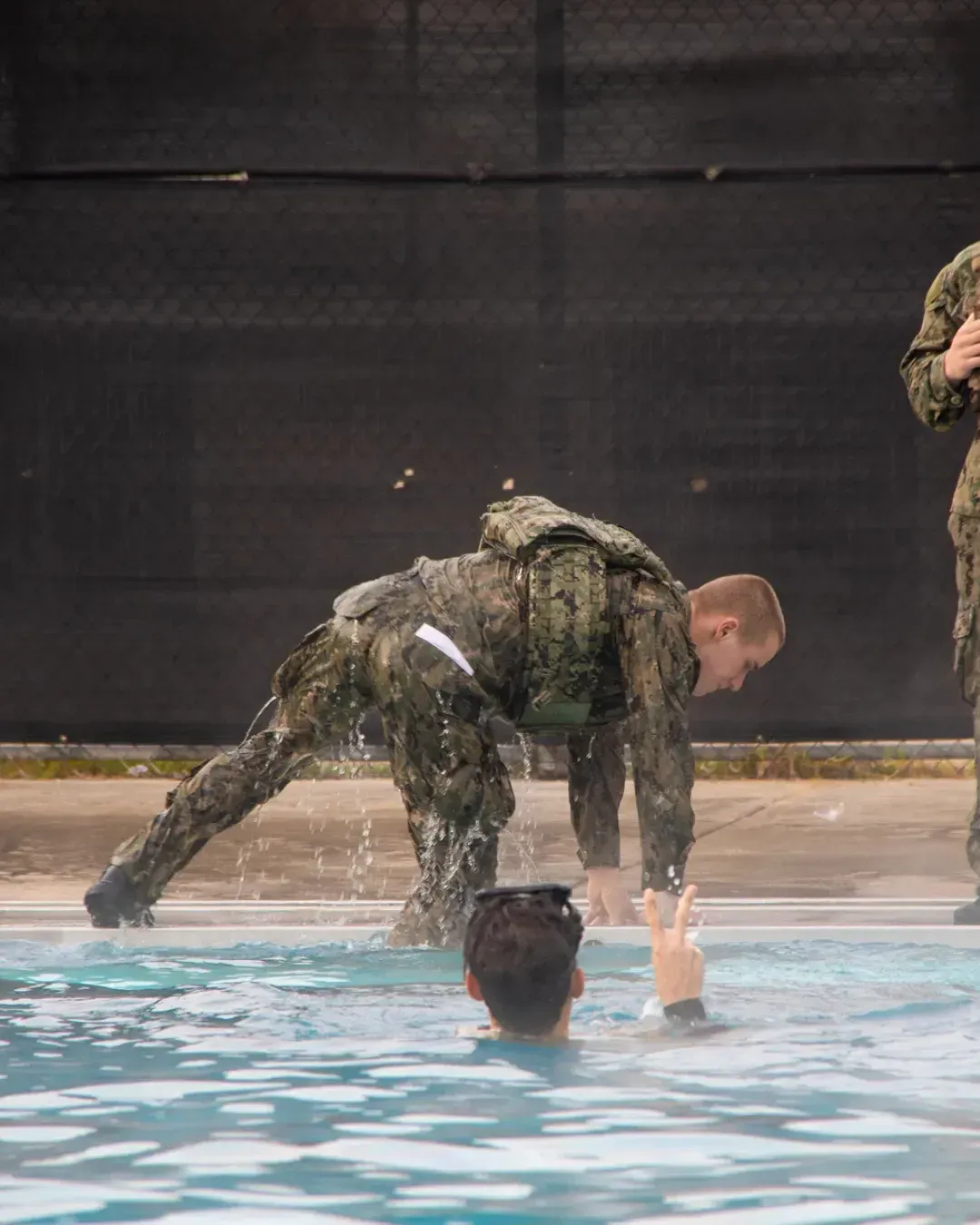
What Is Aerobic Capacity? The Engine of Tactical Endurance
Aerobic capacity is your body’s ability to take in oxygen and turn it into sustained energy, the single quality that underwrites endurance, recovery, and durability under load. This is best developed inside a structured tactical athlete training system like Combat Fitness ONE. Yet it’s often misunderstood or overshadowed by more visible metrics like strength numbers or sprint times.
In reality, aerobic capacity forms the foundation of nearly all physical performance, especially for tactical athletes, endurance athletes, and hybrid performers. For a broader look at how to choose a system that develops this quality well, see this military fitness program buying guide. Many common questions about conditioning, endurance development and programming are also covered in this tactical fitness program FAQ.
The Basic Definition
Aerobic capacity refers to your body’s ability to:
Take in oxygen, transport it, and use it to produce energy during sustained activity.
This is not one organ doing the work, it's a chain, and the chain is only as strong as its weakest link. Oxygen has to be pulled in, loaded onto the blood, pumped to working muscle, and then actually used at the cellular level to produce energy. A breakdown anywhere along that line caps how long and how hard you can work. This process involves several systems working together:
Lungs bringing in oxygen
Heart pumping oxygenated blood
Blood vessels delivering oxygen to muscles
Muscles using oxygen to produce energy
The more efficient this system is, the longer and harder you can work without excessive fatigue.
VO₂ Max vs Aerobic Capacity
Aerobic capacity is often associated with VO₂ max, which is the maximum amount of oxygen your body can use during intense exercise.
VO₂ max is:
A measurable laboratory value
Often expressed in ml/kg/min
A strong predictor of endurance performance
However, aerobic capacity is broader than just VO₂ max. It also includes:
Efficiency at submaximal intensities
Ability to recover between efforts
Long-duration energy production
Fatigue resistance
An athlete can have a moderate VO₂ max but still perform very well if their aerobic system is highly efficient. Think of VO₂ max as the size of your engine and aerobic capacity as how well you actually drive it. A big engine that burns fuel inefficiently loses to a smaller one that's been tuned to sip. For tactical athletes, the day-to-day payoff lives in that efficiency, holding a pace, recovering between efforts, and resisting fatigue, far more than in a single lab number measured to exhaustion.
Aerobic Power, Aerobic Capacity, Aerobic Endurance
Three related terms get used loosely, and if you've met them in a textbook rather than a gym, the distinctions matter.
Aerobic power is the rate at which your body can use oxygen, how much you can process per minute at maximum. In practice this is what VO₂ max measures, which is why the two terms are often treated as interchangeable.
Aerobic capacity is the total amount of sustainable aerobic work you can produce. Power is the ceiling; capacity is the area underneath it. Two athletes with the same aerobic power can differ substantially in capacity depending on how efficiently they operate below that ceiling.
Aerobic endurance is how long you can hold a given submaximal intensity before fatigue forces you to slow down. It's the practical expression of the other two.
For a lab, the distinction between power and capacity is precise and useful. For an athlete deciding what to train on Tuesday, the honest summary is that aerobic power responds to hard interval work and takes you only so far, while capacity and endurance are built by volume at easy intensities and are the qualities that actually determine how a long day feels.
How Aerobic Capacity Is Measured
The laboratory standard is a graded exercise test to exhaustion, on a treadmill or bike, breathing through a mask that measures oxygen consumed and carbon dioxide produced. That gives a true VO₂ max in millilitres of oxygen per kilogram of bodyweight per minute. It's accurate, it's uncomfortable, and most people will never do one.
Field tests estimate the same thing well enough to be useful:
The Cooper test. Run as far as you can in twelve minutes on a flat, measured course. Distance covered estimates VO₂ max. It's the most widely used field test in the world and the one most military and school PE programmes are built around.
The multi-stage shuttle run, also called the beep or bleep test. Twenty-metre shuttles at a pace that increases with each level until you can't hold it. Common in team sport and law enforcement selection.
The Rockport walk test. A one-mile brisk walk with heart rate taken at the finish, then run through a formula with age, sex and bodyweight. Designed for people whose fitness or joints don't suit a maximal run, which makes it the right starting point for a lot of people.
Wearable estimates.Most modern watches produce a VO₂ max figure from the relationship between your heart rate and your pace. Treat these as a trend line rather than a number. The absolute value can be off by a meaningful margin, but the direction of travel over months is informative and it costs you nothing.
Roughly what the numbers mean. VO₂ max varies with age and sex, and published reference ranges differ between sources, so treat the following as orientation rather than a standard. For a man in his twenties or thirties, the low-to-mid 30s in ml/kg/min is below average, the low 40s is around average, the high 40s to low 50s is good, and above the mid-50s is genuinely strong. For women the equivalent bands run roughly seven to ten points lower. Elite endurance athletes reach the 70s and 80s. Most military and law enforcement selection standards sit in the range that a well-built aerobic base produces without anyone needing a lab.
The more useful number for a tactical athlete isn't the peak at all. It's whether your pace at a given heart rate improves across months, and whether you can repeat a hard effort sooner than you could last quarter. Those move before VO₂ max does, and they matter more on the job.
Why Aerobic Capacity Matters
Aerobic capacity influences far more than long-distance running.
It affects:
Recovery between sets
Work capacity
Fatigue resistance
Injury risk
Overall training consistency
One of the closest related concepts here is work capacity development.
This isn't a soft claim. In a synthesis of decades of U.S. military training data, Jones and Hauschild (2015) identified low aerobic capacity as the fitness component most strongly and consistently linked to higher injury risk among trainees, and earlier work by Knapik and colleagues (1993) found that higher aerobic fitness was directly protective against injury in infantry soldiers. The effect is measurable: in a West Point cohort, every additional minute on the two-mile run carried roughly a 30% higher risk of musculoskeletal injury. Higher aerobic fitness is associated with:
Lower injury rates
Improved performance
Better recovery
Reduced fatigue during prolonged activity
This makes aerobic capacity essential for:
Military personnel
Law enforcement
Firefighters
Hybrid athletes
Endurance athletes
The Energy System Behind Aerobic Capacity
The body uses three main energy systems:
ATP-PC system – short, explosive efforts
Anaerobic glycolytic system – hard efforts lasting seconds to minutes
Aerobic system – longer, sustained efforts
The aerobic system:
Uses oxygen to produce energy
Relies heavily on fat and carbohydrates
Produces less fatigue per unit of energy
Supports long-duration activity
The simplest way to hold the distinction: aerobic means with oxygen, anaerobic means without. Anaerobic work produces energy fast without waiting on oxygen delivery, which is why it powers a sprint or a heavy set, and why it can only last seconds to a couple of minutes before byproducts force you to stop. Aerobic work produces energy more slowly but can continue for hours, because oxygen keeps arriving. The trade is rate against duration. Neither system is better; they answer different questions, and the aerobic one is what determines how much of the day you can spend working.
These systems aren't separate gears you switch between, they overlap constantly, with the aerobic system running underneath everything as the default. The harder and shorter the effort, the more you lean on the first two; but the moment intensity drops, the aerobic system takes over to clear byproducts and restore readiness. That's why it matters even in work that doesn't feel "aerobic." It also plays a major role in recovery, even during high-intensity efforts.
For example:
Between sprint intervals
Between strength sets
Between tactical tasks
This is one reason aerobic development also supports strength-endurance performance. A stronger aerobic system improves how quickly the body returns to a ready state.
Key Adaptations From Aerobic Training
Consistent aerobic training produces several important changes in the body. These adaptations stack across three levels, the heart and vessels that move oxygen, the muscle cells that extract and use it, and the metabolic machinery that decides which fuel gets burned. None of them happen overnight, but together they are what separate an athlete who fades in the back half of a long effort from one who holds form to the end.
Cardiovascular adaptations
Increased stroke volume
Lower resting heart rate
Improved blood circulation
Muscular adaptations
Increased mitochondrial density
Improved oxygen extraction
Better energy efficiency
Metabolic adaptations
Greater fat utilization
Reduced reliance on glycogen
Improved endurance performance
These changes improve both performance and recovery. A more detailed breakdown of these changes is covered in how aerobic capacity adapts.
How Aerobic Capacity Is Trained
Aerobic capacity is primarily developed through low- to moderate-intensity training.
This typically includes:
Zone 2 running
Cycling
Rowing
Swimming
Rucking
Brisk walking
These sessions are usually:
Conversational in pace
Sustained for 30–90 minutes
Performed multiple times per week
For the underlying mechanics of this style of work, see how Zone 2 training works.
The defining feature is restraint. Most athletes train this quality too hard, turning what should be easy aerobic work into a moderately hard grind that builds fatigue without building the base. The pace should feel almost too easy, you should be able to hold a conversation throughout. Volume and consistency, not intensity, are what move the needle here. This type of training:
Builds the aerobic base
Improves recovery
Supports long-term performance
One caveat before anyone starts. If you're returning to training after a long layoff, carrying a known cardiovascular or metabolic condition, or you experience chest pain, unusual breathlessness, dizziness or an irregular heartbeat during exertion, get cleared by a qualified professional before building volume. Maximal field tests like the Cooper test and the shuttle run are exactly the sort of effort that surfaces an underlying problem, which is a good reason to establish a base with easy work first rather than testing cold.
Common Mistakes in Aerobic Training
Many athletes neglect aerobic capacity because:
It feels too easy
It’s less exciting than high-intensity workouts
Progress is slower and less visible
Common mistakes include:
Too much intensity
Running every session hard
Frequent high-intensity intervals
Little true low-intensity work
This often leads to:
Chronic fatigue
Plateaued performance
Increased injury risk
The pattern is almost always the same: training that lives in the "moderately hard" middle ground, too hard to build a true aerobic base, too easy to drive real high-end adaptation. The athlete works hard every session, feels productive, and stalls anyway. The fix is uncomfortable for competitive people: slow most of your easy work down, and save real intensity for the sessions that are meant to be hard.
Not enough volume
Short, inconsistent sessions
Sporadic conditioning
No aerobic base development
This limits:
Recovery capacity
Endurance performance
Work tolerance
Signs You Need Better Aerobic Capacity
You may need more aerobic work if:
You fatigue quickly during longer efforts
Your heart rate stays elevated between sets
Recovery between sessions is slow
Easy efforts feel harder than expected
You struggle with sustained activity
Any one of these in isolation can have another cause, but when several show up together, an underbuilt aerobic system is usually the common thread. The tell is that the problem isn't your maximum, it's your durability. You can hit the effort once, but you can't repeat it, recover from it, or sustain it. A useful distinction here is aerobic capacity vs work capacity.
Aerobic Capacity in Tactical Environments
Tactical athletes rely heavily on their aerobic systems.
They must:
Work for long durations
Carry external loads
Recover between tasks
Perform under fatigue
Sustain operational readiness
A strong aerobic base supports:
Injury resistance
Faster recovery
Better endurance
Improved decision-making under stress
The operational reality is that tactical work is rarely a single maximal effort, it's repeated effort under load, often with poor sleep and no clean recovery between tasks. That profile punishes athletes who built only strength or only speed, and rewards the ones with a deep aerobic engine to fall back on. When the aerobic base is there, everything else holds together longer under fatigue. In many cases, aerobic capacity is the foundation of tactical performance. A common question is whether zone 2 is enough for tactical performance.
The Long-Term Perspective
Athletes who prioritize aerobic development often:
Stay injury-free longer
Train more consistently
Recover faster
Reach higher performance levels over time
Those who neglect it often:
Rely on intensity
Burn out quickly
Plateau early
Struggle with durability
The difference compounds. Aerobic adaptations are slow to build but durable once established, so the athlete who invests early keeps drawing on that base for years. The athlete who skips it is forced to manufacture fitness through intensity again and again, a strategy that works briefly and breaks down predictably. Over a career, the aerobic engine is the difference between building on a foundation and constantly rebuilding from scratch. Many athletes also ask how long it takes to build aerobic capacity.
The Key Takeaway
Aerobic capacity is not just for endurance athletes.
It is the foundation of:
Recovery
Work capacity
Fatigue resistance
Long-term performance
Build the aerobic system first, and everything else becomes easier to develop.
References
Jones, B.H., & Hauschild, V.D. (2015). Physical training, fitness, and injuries: Lessons learned from military studies. Journal of Strength and Conditioning Research, 29(11S), S57–S64.
Knapik, J., Ang, P., Reynolds, K., & Jones, B. (1993). Physical fitness, age, and injury incidence in infantry soldiers. Journal of Occupational Medicine, 35(6), 598–603.
Hando, B.R., et al. (2025). The relationship between self-efficacy, aerobic fitness, and traditional risk factors for musculoskeletal injuries in military training: A prospective cohort study. International Journal of Sports Physical Therapy.


