
Endurance Training for Tactical Athletes: What Works
Can Tactical Athletes Train Like Endurance Athletes? What the Research Says
Endurance training for tactical athletes is one of the most misunderstood topics in tactical training circles. The question comes up constantly: can someone whose job demands bursts of power, load carriage, strength, and agility really train like a marathoner or triathlete and still perform optimally in the field? It's the right question, but the answer hinges on a distinction most cardio-heavy plans miss.
The short answer: tactical athletes absolutely need endurance qualities, but the way they build them must be tailored to occupational demands that look nothing like a sport endurance athlete's. A marathoner optimizes one repeatable output. A soldier, cop, or firefighter has to sprint, lift, carry, drag, and think clearly under fatigue, often in the same incident. That gap is why tactical professionals need a hybrid blend of strength, work capacity, and tactical readiness that traditional endurance training alone can't deliver, and why borrowing a distance runner's program wholesale tends to erode the exact qualities the job depends on, which is precisely the balance purpose-built military fitness programs are designed to protect.
What Endurance Looks Like in Tactical Populations
Traditional endurance training, long runs, high mileage, steady state cardio, builds cardiovascular fitness and metabolic efficiency. Endurance athletes train to optimize oxygen delivery and sustain sub-maximal efforts over long durations. This creates a very specific physiological profile suited to:
Lower heart rate at given workloads
High aerobic power (VO2max)
Efficient metabolic fuel usage
Sustained rhythmical movement
Because that profile is built around volume rather than output, athletes chasing it often see body composition shift in ways the job never asked for it, which is why tactical athlete fat loss programming treats leanness and performance as one problem instead of two. That does not make running useless to a tactical athlete, it makes the details of the plan decisive, and structuring a running program around occupational demand rather than race pace is where most people get it wrong.
That physiological profile is genuinely impressive, it's just narrowly tuned. A trained distance runner can hold a steady output for hours because their system has specialized around oxygen delivery and economy at sub-maximal effort. The trade-off is that this specialization rewards consistency and punishes variability. The moment the task demands a near-maximal lift, a loaded sprint, or a violent change of direction, the pure-endurance engine is operating well outside the range it was built for. For a tactical athlete, that range is the job.
The Reality of Tactical Demand
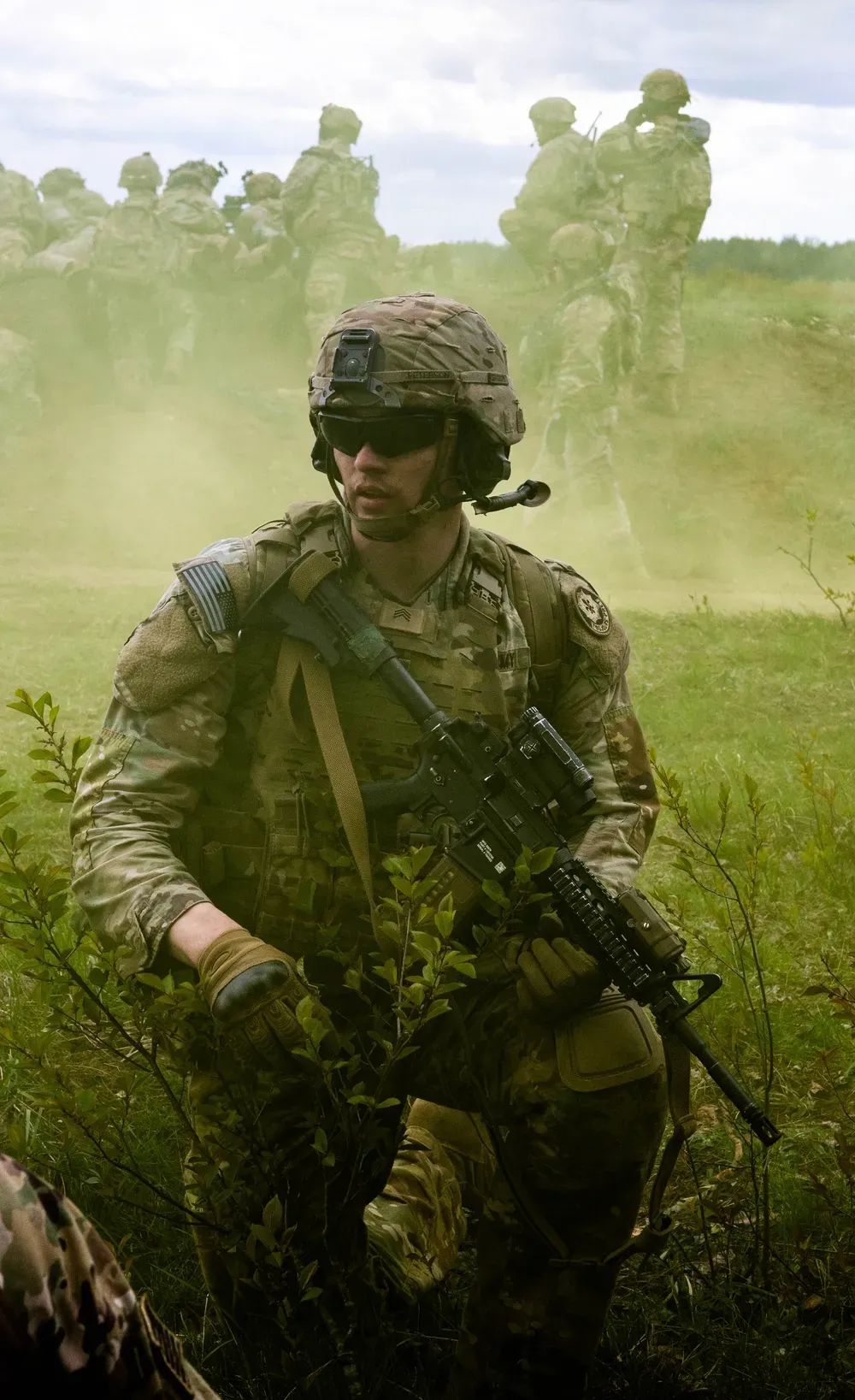
Tactical athletes, whether soldiers, police officers, firefighters, or rescue teams, face highly variable and unpredictable physical tasks:
Sudden sprints followed by static holds
Load carriage under uneven terrain
Obstacle negotiation
Rapid changes of direction
Short and repeated intense efforts
Cognitive stress under fatigue
A 2023 systematic review of tactical-population training programs (Pereira et al., Healthcare) found that these occupations demand multiple fitness qualities simultaneously, strength, speed, agility, endurance, and flexibility, and that programs blending several exercise types over at least eight weeks produced the most meaningful fitness gains. No single quality, trained in isolation, prepares an operator for the full range of the work.
In other words: tactical fitness isn’t one skill, it’s many skills trained together in a way that transfers to real-world performance.
Why Pure Endurance Training Doesn’t Transfer Directly
Traditional endurance athletes train for steady rhythms and steady metabolic loads. Their systems adapt to sustained stress, but often at the expense of other qualities tactical athletes need.
There are a few key differences:
1. Specificity Matters
Physical adaptation is highly specific to the movement patterns and energy demands of the training stimulus, the body adapts to exactly what you ask of it, and little else. Tactical athletes must be ready for intermittent high loads, unpredictability, and load carriage under stress, often with a heart rate already spiked from the previous task. Endurance athletes optimize a narrower set of capacities that simply don't transfer to dragging a casualty, scaling an obstacle, or fighting through a doorway, and the hybrid athlete vs endurance athlete comparison makes that divergence in training targets unusually clear. Train only for steady-state output and you get very good at steady-state output, and measurably worse at everything the mission actually requires.
2. Strength and Load Matter
Tactical work often includes carrying gear, lifting, dragging, climbing, or breaking contact, all requiring absolute and relative strength, core stability, and power. Endurance training typically does not produce these qualities on its own. that raises the obvious follow-up for anyone entering a heavy conditioning block, and the honest answer to whether maintaining strength while training endurance is realistic depends almost entirely on how the two stimuli are sequenced.
3. Work Capacity vs Endurance
Work capacity, the ability to repeatedly perform meaningful work under incomplete recovery, is arguably more relevant to tactical performance than traditional endurance. It's the difference between running a clean 10K and clearing four floors in kit, then still being able to lift, decide, and shoot. Work capacity blends aerobic fitness with muscular strength and metabolic tolerance, so it degrades gracefully under fatigue instead of falling off a cliff, and separating strength endurance vs muscular endurance is the cleanest way to see which of those qualities a given drill is actually building. That resilience under accumulated stress, not raw mileage, is what separates a capable operator from a well-conditioned runner who gasses the moment the task stops being rhythmic.
How Tactical Endurance Should Be Trained
This doesn’t mean no traditional endurance training. It means contextualizing it to tactical demands:
Mixed Modal Conditioning
Shorter bursts interspersed with strength efforts, like interval circuits with load. This is where mixed-modal work earns its place: alternating a heavy carry, a short sprint, and a strength movement inside the same circuit trains the body to switch energy systems on demand, exactly what a real incident demands. The goal isn't a soul-crushing metcon for its own sake; it's repeatable competence across modalities under fatigue. Programs built around this style, like Combat Medicine, structure that variability deliberately rather than leaving it to chance.
Work Capacity Drills
Repeated efforts with brief recovery to mimic burst-and-recover tasks. This is the single most job-specific way to train endurance, because almost no tactical task is one long steady effort, it's a hard burst, a short pause, then another burst, repeated until the situation resolves. Drills that pair a heavy effort with deliberately incomplete recovery teach the body to clear fatigue fast and produce again, which is exactly what work capacity is. The dose matters: too much rest turns it into a strength session, too little turns it into junk volume. Programmed correctly, these drills build the repeatable output that holds up when the third or fourth demand arrives back-to-back.
Ruck and Load Specific Movement
Carrying weight over varied terrain directly improves task-specific endurance. Rucking is the most occupationally honest form of endurance a tactical athlete can train, because it loads the spine and hips the way the job does and builds aerobic capacity without the joint cost of high-mileage running. Progressing load and terrain gradually, not just adding distance, is what turns a ruck into a durability builder rather than an injury risk. A structured rucking block such as Dismount handles that progression, and the broader rucking library collects the full approach.
Aerobic Base Development
Low-to-moderate intensity sessions that support recovery and oxygen utilization between high-intensity tasks. An aerobic base is the quiet infrastructure behind everything else: it's what lets a tactical athlete recover between hard efforts within a single shift and across a training week. Easy, conversational-pace work, not constant high intensity, develops the cardiovascular efficiency that buys faster recovery, lower resting strain, and more usable energy when a task suddenly spikes. Skipping it is the most common mistake in tactical conditioning, leaving athletes powerful but unable to repeat their best output when it counts most. These forms reflect real operational demands much better than simply doing long slow distance runs.
The Role of Concurrent Training
Tactical athletes often engage in concurrent training, where strength and endurance stimuli are both present in the training plan. This approach reflects the hybrid nature of their occupational needs, but it must be programmed intelligently to avoid interference effects that can blunt gains if not managed properly.
Done carelessly, concurrent training triggers the interference effect, endurance volume blunting strength and power adaptations when the two compete for the same recovery, a problem laid out in practical detail in concurrent training for firefighters, where shift work compresses recovery even further. Done well, the two qualities reinforce each other. The key is not to train like an endurance athlete, but to train endurance qualities in a tactical context, sequenced and dosed alongside strength, work capacity, and recovery management. That deliberate integration is the entire premise of a hybrid program like Hybrid Elite, and of broader hybrid-focused training built for athletes who need to be strong and durable at once.
Performance Outcomes: What Research Shows
A systematic review and meta-analysis of military training research (*Military Medicine*, 2022) found that the most effective way to improve overall physical performance in complex operational environments is combined endurance and strength training, not either alone, integrated programs consistently produced better functional outcomes than single-focus training. For tactical athletes, that's not a preference; it's the evidence-backed default.
This supports the idea that tactical athletes must develop:
Muscular strength
Aerobic capacity
Power
Load tolerance
Work capacity
Movement efficiency
All in the same training ecosystem.
Bottom Line
Tactical athletes cannot train like traditional endurance athletes if they want peak functional performance in their jobs. They must train endurance, but in ways that preserve strength, agility, power, load tolerance, and durability. The goal isn’t to run a marathon faster, it’s to be capable, adaptable, and resilient under unpredictable stress.
Training that blends strength and endurance, intelligently, specifically, and with genuine tactical context, is the most reliable way to build real readiness. If you want a system that already programs that balance for the demands of military, law enforcement, and first-responder work, that's exactly what the full library of training programs is built to do.


