
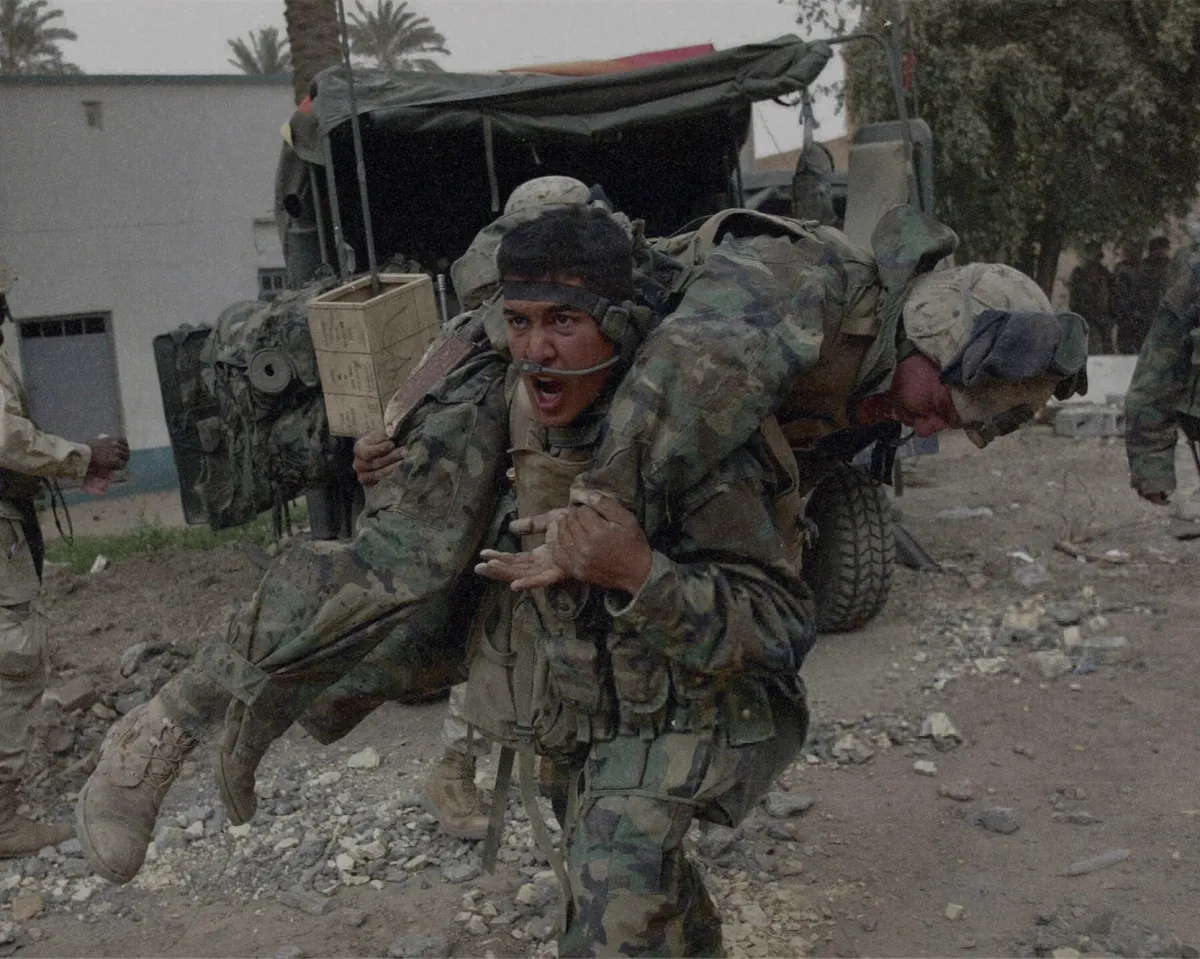
Physical Resilience: Meaning, Signs, and How to Build It
Physical resilience is your body's ability to absorb a physical stressor, return to baseline afterward, and keep performing without breaking down. In training terms, it is the difference between a body that handles the work and a body that merely survives it.
What Is Physical Resilience? Why It Beats Peak Performance
Physical resilience is the quality that separates tactical athletes who last from those who break down, and most training programs ignore it entirely. Many athletes chase performance numbers:
Faster run times
Heavier lifts
Better test scores
But performance alone doesn’t determine long-term success. What truly matters is whether an athlete can handle stress, recover, and keep performing over time. Athletes who want programming built around this principle can explore our CF ONE resilience-focused programs.
That’s where physical resilience comes in.
The Basic Definition
Physical resilience refers to:
The body’s ability to absorb stress, recover from it, and continue performing without excessive breakdown.
It includes:
Injury resistance
Recovery capacity
Fatigue tolerance
Adaptability to stress
Long-term training consistency
In simple terms, physical resilience answers one question:
how well can your body handle physical stress and keep going?
The word that does the real work in that definition is baseline. A stressor, a hard session, a heavy ruck, a bad night's sleep, drops you below your normal level of function. Resilience is how completely and how quickly you climb back to it. An athlete who returns to baseline by the next morning can train again. One who is still below it three days later cannot. Everything in this article is downstream of that single idea.
Physical Resilience vs Mental Resilience
Search "physical resilience" and you will get three different subjects wearing the same name. It is worth knowing which one you have landed on.
The military behavioural-health meaning. Army and Air Force resilience programs use "physical resilience" as one pillar of a broader psychological resilience framework, sleep, exercise, and nutrition treated as inputs to mental toughness and stress tolerance. The physical work is real, but the target is the mind.
The clinical and geriatric meaning. In medicine and ageing research, physical resilience is a formal construct describing how well a person recovers function after a health stressor, surgery, illness, a fall. It is measured against concepts like physiologic reserve and margin of safety, and it is studied mostly in older adults.
The training meaning. This is the one this article is about: your body's capacity to absorb repeated physical loading, return to baseline, and keep producing output over months and years.
The three overlap more than they compete. Mental resilience and physical resilience feed each other, a body that recovers well is easier to stay disciplined in, and a mind that tolerates discomfort trains more consistently. The clinical construct and the training construct describe the same underlying property at different ends of the lifespan. But they are not interchangeable, and advice written for one does not automatically transfer to the others.
Resilience vs Performance
Performance is about what you can do at your best.
Resilience is about:
How often you can do it
How well you recover afterward
How long you can sustain it over time
An athlete may:
Run a very fast race
Lift extremely heavy weights
Perform well in short tests
But if they:
Get injured frequently
Struggle to recover
Burn out quickly
They lack resilience. Picture two operators on the same selection course. One posts the fastest ruck time on day one but is limping by day three and pulls out with a stress reaction. The other never tops a single event yet finishes every task, every day, still moving well at the end. On paper the first athlete is "better." In the field, the second one is the asset. Resilience is the difference between a performance you can show once and a performance you can repeat on demand, under fatigue, for as long as the mission requires. In tactical and real-world environments, resilience often matters more than peak performance.
The Four Components of Physical Resilience
Physical resilience is built from several interacting systems.
Structural - governs tissue tolerance to load and impact. It adapts over weeks to months, driven by strength training and gradual progression.
Aerobic - governs recovery between efforts and your buffer against fatigue. It adapts in weeks, off the back of consistent low-intensity conditioning.
Recovery - governs how fast you return to baseline. It moves in days, but it's habit-dependent: sleep, nutrition and aerobic fitness are what drive it.
Workload - governs how much total training stress you can tolerate. It builds over months, from chronic load accumulated without spikes.
1. Structural resilience
This refers to the strength and durability of:
Muscles
Tendons
Ligaments
Bones
Connective tissues
Structural resilience allows the body to:
Handle repeated impacts
Tolerate heavy loads
Resist overuse injuries
It is developed through:
Strength training
Gradual workload progression
Consistent training over time
Connective tissue adapts on a much slower clock than muscle. Tendons, ligaments, and bone remodel over weeks and months, not days, because they carry far less blood flow than the muscles pulling on them. This timeline mismatch is exactly why so many athletes get hurt: their strength outpaces the tissue meant to transmit it. Building structural resilience means respecting that lag, loading consistently and progressing patiently so the slowest-adapting tissues are never asked to do more than they're ready for.
2. Aerobic resilience
A strong aerobic system:
Improves recovery between efforts
Reduces fatigue accumulation
Supports long-duration activity
Enhances overall work tolerance
Many highly resilient athletes have:
Strong aerobic bases
Consistent low-intensity training habits
The mechanism here is largely cardiovascular plumbing. Aerobic training increases mitochondrial density and capillary networks in working muscle, so oxygen and fuel arrive faster and metabolic byproducts clear faster between efforts. Practically, that's why a well-conditioned tactical athlete can sprint to cover, recover on the move, and sprint again, while an under-conditioned one is still gasping. Seiler and Kjerland's 2006 research on training-intensity distribution found that durable endurance athletes accumulate the bulk of their training at low intensity, building exactly this kind of recovery engine.
3. Recovery resilience
Recovery resilience refers to:
How quickly the body returns to baseline
How well it handles repeated training days
How effectively it adapts to stress
It depends on:
Sleep quality
Nutrition
Aerobic fitness
Stress management
Training structure
Athletes with strong recovery systems can train more consistently. Of every input on that list, sleep does the heaviest lifting. It's when growth hormone peaks, tissue repair accelerates, and the nervous system shifts back toward its parasympathetic "recover and rebuild" state. Skimp on it and every other recovery strategy fights uphill. The encouraging part is that recovery resilience is trainable: the fitter your aerobic base and the more consistent your sleep and nutrition, the faster you return to baseline, which in turn lets you absorb more training and compound the whole cycle.
4. Workload resilience
This refers to your ability to:
Tolerate higher training volumes
Handle increased intensity
Perform repeated efforts
Avoid breakdown under sustained stress
Research consistently shows that:
Athletes with higher chronic workloads often have lower injury rates.
Sudden spikes in workload increase injury risk.
This isn't gym-floor folklore, it's one of the most replicated findings in sports science. Tim Gabbett's 2016 research in the British Journal of Sports Medicine introduced the acute-to-chronic workload ratio, the comparison between what you did this week and what you have been averaging over the preceding weeks. Athletes carrying a high, well-built chronic training load were better protected from injury than those doing less, provided they avoided sudden spikes. The danger isn't hard training; it's unaccustomed training. A body gradually exposed to heavy demands becomes hard to break, while one that jumps from idle to maximal is asking to get hurt.
This suggests that resilience is built through consistent exposure to manageable stress. The concept of durability in performance training sits directly alongside this, explaining what it means to build a body that tolerates repeated stress without breakdown.
That principle has a name: hormesis, the biological rule that a dose of stress large enough to disturb a system, but small enough to be recovered from, leaves that system stronger than it was. It is the same logic behind the SAID principle (Specific Adaptation to Imposed Demands): the body becomes resilient to precisely what you expose it to, and nothing else. Ruck under load and you build ruck resilience. Nobody gets durable in the abstract.
How Physical Resilience Is Measured
Resilience is not a single number, which is why it gets less attention than the qualities that are. But it is not unmeasurable either, and the research world has settled on a handful of ways to get at it.
Return-to-baseline time. The cleanest measure. After a known stressor, a hard session, a long ruck, a test, how long until your output, your morning readiness, and your subjective state are back where they started? Shortening that window across a training block is direct evidence of rising resilience.
Physiologic reserve. The gap between what a system can do and what daily life asks of it. Clinical researchers describe this as a margin of safety: the buffer between your capacity and the demand placed on it. Two athletes can post the same test score while one is operating at 60% of ceiling and the other at 95%. The first has reserve. The second has none, and the first unexpected demand is the one that breaks them.
Response to a deliberate stressor. Rather than measuring a resting state, researchers increasingly test resilience by applying a controlled challenge and watching the recovery, the same logic as a cardiac stress test. In training, a repeat-effort session or a standardised time trial run under fatigue tells you far more about resilience than the same effort run fresh.
The acute-to-chronic workload ratio. Tracking this week's training stress against your recent average is the most practical field proxy for workload resilience. A large gap between the two is the warning; a chronic load that has climbed steadily is the goal.
Consistency itself. The least sophisticated measure and arguably the most honest one. Sessions completed as prescribed over twelve weeks, weeks lost to injury or illness, and blocks finished rather than abandoned. Resilience is what those numbers are made of.
Why Physical Resilience Matters
In many environments, performance isn’t a one-time event.
Tactical athletes must:
Work long hours
Carry heavy equipment
Perform repeated efforts
Recover quickly
Stay operational for years
Endurance athletes must:
Train daily
Handle high mileage
Avoid overuse injuries
Maintain long-term consistency
Consider a firefighter twenty years into the job. No single shift is the test, the test is whether the body can keep answering the bell, year after year, without the cumulative wear forcing an early exit. The same logic governs a soldier moving through deployment cycles or an officer working a full career on patrol. In every case the demand isn't one heroic effort; it's thousands of ordinary ones, stacked over time. Resilience is what keeps that long accumulation from quietly grinding a career to a halt.
In both cases, resilience determines training consistency, injury risk, career longevity and real-world performance. The broader concept of performance longevity frames why these qualities compound into something greater than any single fitness metric.
Examples of Physical Resilience
Resilience is easier to recognise than to define. Here is what it looks like in practice.
The soldier who finishes the block. Two athletes start the same twelve-week programme. One completes eleven of twelve weeks as written. The other posts better numbers in weeks one and two, misses week four to a tweaked back, week seven to fatigue, and abandons the block in week nine. The second athlete was fitter on day one. The first is the resilient one, and by week twelve is also the fitter one.
The firefighter on the third call. Anyone can work the first call of a shift. Resilience is the fourth one at 3 a.m., after two hours on a hose line, still moving with control and making sound decisions under load.
The athlete who recovers on the move. Sprint to cover, drop into position, sprint again. The resilient athlete's heart rate and breathing settle enough between efforts to repeat the work. The non-resilient one is still recovering from the first sprint when the second is called for.
The lifter who never has a bad week from a good session. Training hard on Monday and being useless until Thursday is not strength, it is a recovery deficit. Resilience is being able to train hard Monday and train again Wednesday.
The runner who adds mileage without adding injuries. Progressive weekly increases absorbed over months, no forced layoffs. That is workload resilience being built in real time.
The twenty-year career. The clearest example and the slowest to observe. Somebody who entered the job at twenty-two and is still passing the standard at forty-two, without a surgical history that ended someone else's career at thirty-one.
Notice what none of these examples are: a personal record, a test score, or a single impressive day. Every one of them is about repeatability.
How Physical Resilience Is Built
Resilience is not created through a single workout or program. It develops through long-term training habits.
1. Consistent weekly training
Regular sessions
Minimal long layoffs
Gradual progression over months and years
Consistency is the foundation of resilience.
2. Gradual workload progression
Increase:
Volume
Intensity
Frequency
Slowly over time.
Sudden spikes in training load are one of the strongest predictors of injury. A practical rule of thumb many coaches borrow from the running world is to grow weekly training load by roughly ten percent at a time, then hold and absorb before the next bump. The exact number matters less than the principle: change should be a ramp, not a cliff. Most overuse injuries trace back to a single aggressive week, a sudden mileage jump, a crash diet stacked on hard training, or a return from time off at the volume you left at rather than the volume you can currently handle.
3. Aerobic base development
Low-intensity conditioning:
Improves recovery
Reduces fatigue
Supports long-term training
This is one of the most important and overlooked components of resilience. It's overlooked because it's unglamorous. Low, conversational-pace conditioning doesn't leave you wrecked or feeling heroic, so athletes chasing intensity skip it, and then wonder why they stall and break down. But the aerobic base is the platform every other quality stands on. It speeds recovery between hard sessions, buffers fatigue across a long week, and makes high-intensity work both safer and more productive. For tactical athletes especially, it's the difference between being fit for one event and being fit for an entire operational tempo.
4. Strength training
Strength work:
Builds structural support
Improves joint stability
Increases tissue tolerance
Stronger athletes are often more resistant to injury. Strength is armor for the connective tissue described earlier. A stronger muscle pulling across a joint shares load that would otherwise concentrate on tendons and ligaments, and progressive loading thickens and toughens those tissues over time. This is why stronger athletes tend to tolerate impact, carry external loads, and absorb awkward positions that would injure a weaker one. You don't need elite numbers, you need enough reserve strength that everyday operational demands sit well below your ceiling rather than at it.
5. Planned recovery phases
Effective programs include:
Deload weeks
Reduced training blocks
Stress management strategies
Recovery is part of resilience, not separate from it.
Signs of Low Physical Resilience
You may lack resilience if you experience:
Frequent injuries
Chronic soreness
Long recovery times
Inconsistent training weeks
Performance drop-offs under fatigue
These are signs that:
Stress is exceeding your current tolerance.
The useful thing about these signs is that they're a dashboard, not a verdict. Chronic soreness, stalled sessions, and a body that feels permanently behind are feedback telling you the input has outrun your current capacity, and capacity is exactly the thing you can build. The fix is rarely to push harder. It's to widen the base: more consistent low-intensity work, more sleep, smoother progression, and the patience to let chronic load climb gradually until today's overload becomes tomorrow's easy day.
One caveat worth taking seriously. This same list, persistent fatigue, soreness that won't clear, recovery times that keep stretching, is also how several medical conditions present, and no amount of smarter programming fixes those. If the symptoms persist after you've genuinely corrected sleep, fuelling, and load progression, or if pain is sharp, localised, or worsening rather than diffuse and improving, get assessed by a qualified medical or sports-medicine professional before you troubleshoot it further as a training problem.
Signs of Strong Physical Resilience
Resilient athletes typically show:
Consistent weekly training
Low injury rates
Fast recovery between sessions
Ability to handle long training blocks
Stable performance over time
They may not always be the fastest or strongest in a single event, but they are:
Reliable, durable, and consistent.
The Tactical Perspective
In tactical environments, resilience is critical.
Operators must:
Perform under fatigue
Carry external loads
Train year-round
Recover between operations
Maintain readiness for years
In these environments, the most effective athletes are often not the strongest or the fastest, but the most resilient. They stay healthy, train consistently and perform reliably under stress. When injury does disrupt that consistency, the post-injury training phase guide outlines how tactical athletes can rebuild resilience without losing long-term progress.
The Key Takeaway
Physical resilience is the ability to:
Absorb stress
Recover from it
Continue performing over time
Performance shows what you can do once.
Resilience shows what you can do repeatedly.
In most real-world environments, resilience is what ultimately determines long-term success. Two posts that build directly on this foundation: the performance longevity model provides a structured framework for developing resilience over a career, while pain vs productive discomfort draws a critical distinction that shapes every training decision along the way.
Frequently Asked Questions
What is physical resilience?
Physical resilience is your body's ability to absorb a physical stressor, return to baseline function afterward, and continue performing without excessive breakdown. It is built from four interacting systems: structural, aerobic, recovery, and workload.
What does "physically resilient" mean?
A physically resilient person recovers quickly from physical stress, tolerates repeated demands without breaking down, and sustains that capability over years. It describes repeatability rather than peak output, a physically resilient athlete is not necessarily the strongest or fastest, but is the one still training in month twelve.
What are examples of physical resilience?
Completing a twelve-week training block without forced layoffs; recovering enough between repeated efforts to produce the next one; training hard twice in a week rather than once; adding running volume across months without accumulating overuse injuries; passing an occupational standard at forty-two that you first passed at twenty-two.
What is body resilience?
"Body resilience" is used interchangeably with physical resilience, the body's capacity to withstand and recover from physical stress. It is the informal phrasing of the same idea.
Is physical resilience the same as mental resilience?
No, though they reinforce each other. Physical resilience describes the body's capacity to absorb and recover from physical load. Mental resilience describes psychological adaptation to adversity and stress. Military resilience programs treat physical training as one input to mental resilience, which is why the two terms often appear together.
How long does it take to build physical resilience?
There is no single timeline, because the four components adapt at different rates. Aerobic and recovery qualities respond within weeks. Structural resilience is the slow one, tendon, ligament, and bone remodel over weeks to months because they carry far less blood flow than the muscles pulling on them. Workload resilience is slower still, since it depends on a chronic training load accumulated without spikes. Consistency across months, not intensity across weeks, is what moves it.
References
Seiler, S., & Kjerland, G. Ø. (2006). Quantifying training intensity distribution in elite endurance athletes: is there evidence for an "optimal" distribution? Scandinavian Journal of Medicine & Science in Sports.
Gabbett, T. J. (2016). The training - injury prevention paradox: should athletes be training smarter and harder? British Journal of Sports Medicine.


