
FBI Hostage Rescue Team: Selection and Pay | Combat Fitness
FBI Hostage Rescue Team (HRT): Mission, Selection, Requirements and Pay
The FBI Hostage Rescue Team is the Bureau's full-time counterterrorism and hostage rescue unit, built to deploy anywhere in the United States within four hours. If you are building toward federal tactical work, our tactical fitness programs are structured around the same gates this unit uses.
HRT has selected fewer than 300 operators in its first three decades, according to the FBI, and every one of them was already an FBI special agent. This guide covers what the unit does, how it is organized, who qualifies, how selection and training run, what operators earn, and how to prepare. We start with what the team is.
Key Takeaways:
The FBI Hostage Rescue Team was formed in 1983, is based at Quantico, Virginia, and sits inside the Critical Incident Response Group (CIRG).
You cannot apply from outside the Bureau. You must already be an FBI special agent, and candidates are generally expected to have field time first.
Selection is a two-week assessment, followed by roughly eight months of New Operator Training School.
Operators are paid as FBI special agents on the federal scale with 25% law enforcement availability pay, not on a separate tactical scale.
The real first gate is the FBI Physical Fitness Test. Train for that, then build load carriage, swimming, and work capacity on top.
What Is the FBI Hostage Rescue Team?
The FBI Hostage Rescue Team is a full-time federal tactical unit that handles hostage rescue, terrorist incidents, and the highest-risk arrests in the country. The FBI stood it up in 1983, bases it at Quantico, and runs it through the Critical Incident Response Group.
The unit was conceived after senior FBI leadership watched a Delta Force demonstration in the late 1970s and concluded the Bureau needed a civilian equivalent. The FBI states that the team has deployed nearly 800 times since its founding, at home and abroad. Its motto is Servare Vitas, "to save lives."
What separates it from every other police tactical team is status. Most tactical teams train part-time around a primary job. The Hostage Rescue Team does nothing else, which is why it is called when a crisis exceeds the capabilities of local and regional teams. That full-time status drives everything below: the readiness standard, the pay, the selection, and the training volume. It also explains the "HRT military" searches, since the unit's training model was patterned on military special operations.
What Does HRT Stand For?
In law enforcement and the military, HRT stands for Hostage Rescue Team. In a federal context, the term almost always means the FBI Hostage Rescue Team at Quantico. Outside that context, the letters are used more loosely, so the meaning depends on who is speaking.
HRT meaning in the FBI
Inside the Bureau, HRT refers to one unit: the national-level team within CIRG. When a news report says "FBI HRT," it means this team and not a field office SWAT element.
HRT meaning in police and SWAT work
Some state and local agencies label their tactical elements a hostage rescue team, or use "HRT" as a mission label inside a SWAT unit. In those cases the letters describe a task, not the FBI unit. That loose use is why people search "what is an HRT team" and get mixed answers.
HRT meaning in the military
In military usage, hostage rescue is a mission set assigned to special operations forces, not a unit name. Military hostage rescue falls to units such as Delta Force and the Naval Special Warfare Development Group. When a service member says HRT, they usually mean the FBI team or the mission, depending on context.
What Does the FBI HRT Do?
The FBI HRT handles the incidents that local teams cannot. Its published mission set covers:
Hostage rescue and barricaded subjects
Terrorist incident response
High-risk arrests and warrant service
Protection of dignitaries and special events
Tactical support to FBI field offices, including overseas deployments
The best-known standard is readiness. The unit is held ready to deploy within four hours, with part or all of its personnel and equipment, to any location in the United States or its territories. After 2001, FBI agents also took part in operations in Iraq and Afghanistan alongside military special operations units, which is where the "FBI HRT Afghanistan" interest comes from.
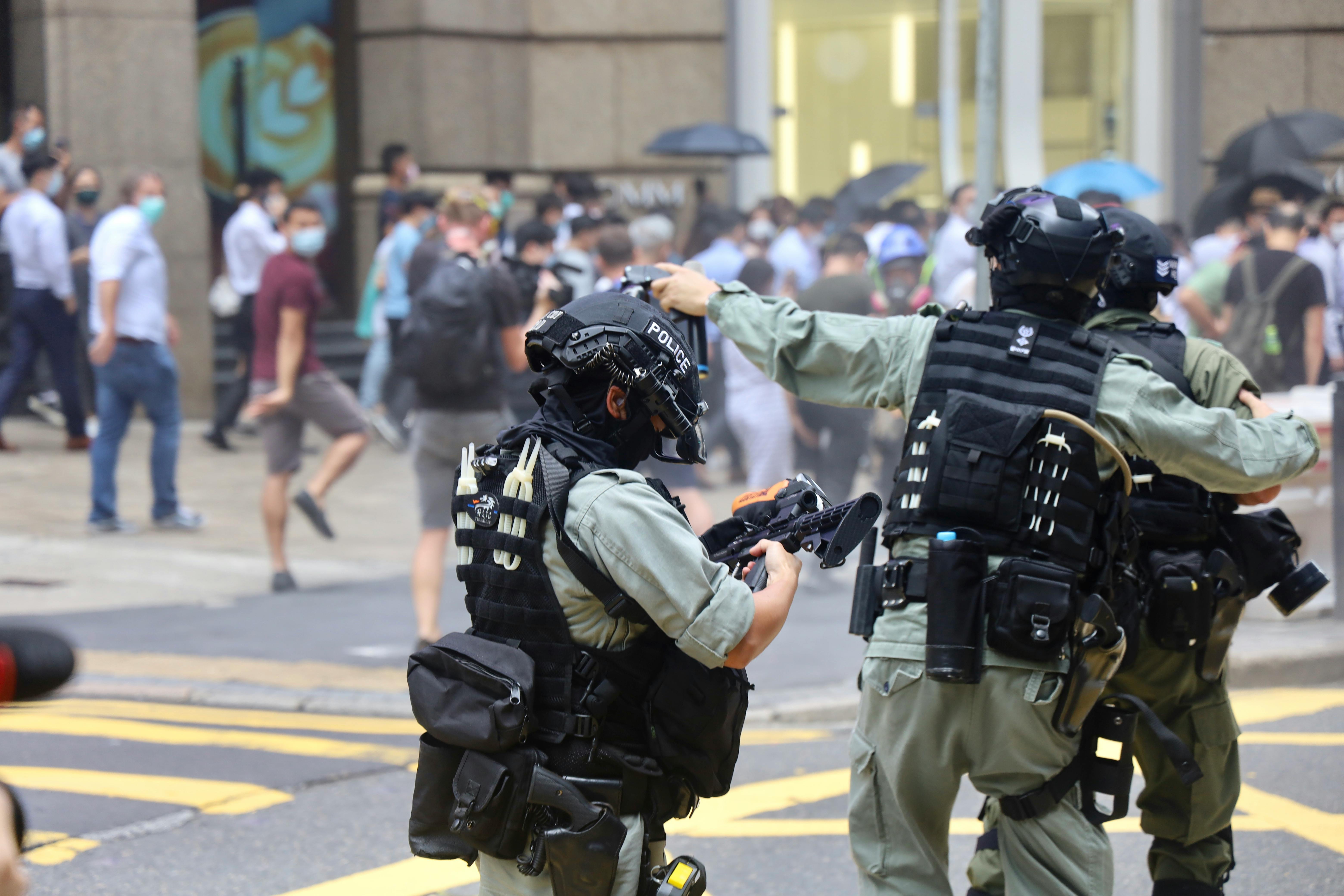
Holding that readiness indefinitely is a physical problem as much as a logistical one. Operators train and deploy under body armor, a helmet, a weapon, breaching tools, and medical kit, so the loadout people search for is also a daily load on the spine and joints. That is the core of the durability demands of the job, and it is why conditioning for load-bearing tactical work matters more than gym numbers. Research on body armor shows measurable drops in speed, agility, and endurance once the load goes on, so the unit's fitness has to hold up under that weight.
How Is the FBI HRT Organized?
The FBI HRT is organized into squadrons, supported by sniper, aviation, and specialist elements. Public reporting describes three assault squadrons, each with a primary environment:
Gold Squadron: maritime operations
Silver Squadron (formerly Red): buildings and hardened structures
Blue Squadron: tubular assaults on buses, trains, and aircraft
Alongside the squadrons, the unit fields sniper-observer teams and a Tactical Aviation Unit staffed by special agents, which operates specially modified helicopters. After New Operator Training School, operators develop a specialty such as breacher, communicator, or medic.
Some details, including exact team sizes, rotation schedules, and current headcount, are not fully public. We list only what the FBI or credible public reporting has documented. Anything beyond that would be guesswork, and guesswork has no place in a guide to a real unit.
FBI HRT Requirements and Qualifications
You must already be an FBI special agent to try out for the FBI HRT. The unit does not recruit from outside the Bureau. That single fact reshapes every other requirement, because your path starts with the special agent hiring process, not with a tactical application.
Requirements as of September 2026, based on FBI hiring standards and public reporting:
Serve as an FBI special agent. Candidates are generally expected to have about two years or more of field experience before applying.
Meet special agent entry standards: U.S. citizenship, age 23 to 36 at appointment (exceptions may apply), a bachelor's degree, and a Top Secret clearance.
Pass the FBI physical fitness test and maintain fitness well above the minimum.
Qualify on firearms and hold strong performance ratings in the field.
Complete the application, medical review, and selection board.
The FBI also runs a Tactical Recruitment Program, created in 2007, which targets applicants with military or police tactical backgrounds. Those recruits still go through the special agent process and still serve in the field before they can attempt selection. There is no shortcut around the agent requirement.
The current FBI PFT has four events, taken in order with no more than five minutes of rest between them:
Figure 1.1 - the FBI Physical Fitness Test: four events taken in one fixed order with no more than five minutes of rest between them, maximum continuous pull-ups or chin-ups untimed, a timed 300-meter sprint, maximum continuous push-ups untimed, and a timed 1.5-mile run. Finishing the four is not the standard: every event returns a point score, and passing requires at least one point in each of them and ten points in total, so the weakest event can end an attempt on its own. Both rep events are continuous-motion, meaning resting between repetitions is not permitted, and walking on the run is a disqualification scored at minus two points. The test was revised in November 2025, when the one-minute sit-up event was dropped, pull-ups became a scored event, and the passing total fell from twelve points to ten. Sources: fbijobs.gov Special Agent physical requirements and event pages; November 2025 revision per published reporting on the change.
Applicants need at least 1 point in every event and at least 10 points total, per FBI Jobs (as of September 2026). Pull-ups replaced sit-ups as a scored event in 2025. Treat the minimum as the floor for the academy, not the standard for this unit.
HRT Selection and New Operator Training
FBI hostage rescue team training starts with a two-week selection course designed to find out how candidates think when they are exhausted. Published accounts describe runs, swims, stair climbs, and obstacle work carried out in a weighted vest with a battering ram, plus long days on limited sleep.
The two-week selection course
The first day opens with a pre-dawn physical test, and the stress does not let up. Sleep is restricted, the events are unannounced, and cadre watch how you solve problems, not only how fast you move. A two-week assessment with a board at the end is built on the same logic as SFAS selection: performance under accumulated fatigue reveals more than a fresh test ever will.
That is why managing fatigue in law enforcement training matters so much here. Military field research shows that sleep loss combined with calorie deficit sharply degrades cognition and mood within days. Candidates who arrive rested, fueled, and robust hold their decision-making longer.
New Operator Training School
Candidates who pass move to New Operator Training School (NOTS) at Quantico. The FBI describes NOTS as a 32-week course, roughly eight months, covering close-quarters battle, fast-roping from helicopters, SCUBA, tactical driving, and operations in extreme weather. After graduation, new operators spend their first year building their specialty. The FBI has not published an official attrition figure, so we do not quote one.
HRT in Wider Law Enforcement: HRT vs SWAT vs SRT
HRT in law enforcement usually means the FBI's national team, which sits at the top of a tiered system. Local SWAT teams handle most tactical calls, federal special response teams cover their own agencies, and the FBI Hostage Rescue Team takes the incidents that exceed both.
The difference is scope and status:
Local SWAT: usually part-time, drawn from patrol, and responsible for one jurisdiction.
FBI field office SWAT: agents who train on a part-time basis and support their own field office.
Federal SRTs: agency teams such as those at DEA, ATF, CBP, HSI, and the U.S. Marshals, focused on their own missions.
FBI HRT: full-time, national, held at four-hour readiness, and trained for maritime, aviation, and overseas work.
Most police departments do not have an HRT, even when they use the term. For the full picture of local teams and the federal response teams, see our guide to SWAT and federal response teams.
FBI HRT Salary and Career Path
FBI HRT salary follows the special agent pay system, not a separate tactical scale. Agents typically enter at grade GL-10, can progress to a full-performance GS-13, and receive law enforcement availability pay (LEAP) worth 25% of base and locality pay, per FBI job postings and OPM rules (as of September 2026).
A recent FBI special agent posting listed a total range of about $103,000 to $197,000, including locality and availability pay. Where an operator lands in that band depends on grade, step, locality, and leadership roles such as team leader, which can carry higher grades. The FBI does not publish a separate hostage rescue team salary table, so treat any single "HRT pay" figure you see online with caution.
This is the structural reason HRT has a pay question at all while local SWAT mostly does not. A SWAT officer is usually a patrol officer with a collateral duty. An HRT operator holds a full-time federal position, so the career path runs from academy, to field agent, to selection, to operator, and later to leadership, instructor, or field office tactical roles.
FBI HRT vs Delta Force and DEVGRU
The FBI HRT vs Delta Force and HRT vs Navy SEALs comparisons come down to legal authority more than tactics. HRT operates under domestic law enforcement authority. Military units are generally barred from civilian law enforcement at home by the Posse Comitatus Act, with narrow exceptions.
Figure 1.2 - FBI HRT, Delta Force and DEVGRU compared on the factor that actually separates them: not tactics or standards but legal authority. HRT sits under the FBI's Critical Incident Response Group and its operators are sworn special agents with arrest powers; Delta and DEVGRU are JSOC special mission units under the Army and Navy respectively. Selection runs widest to narrowest, Delta assesses from across the entire Army, HRT from serving FBI special agents, DEVGRU only from qualified SEALs who already have deployments. The legal line is sharper than it looks: the Posse Comitatus Act is a criminal statute carrying up to two years' imprisonment, and until Public Law 117-81 was signed on 27 December 2021 it named only the Army and the Air Force, leaving Navy units restrained by Defense Department policy rather than by the statute itself. And "domestic" describes HRT's authority rather than its geography, the team has deployed overseas alongside JSOC units and passed 900 deployments by its fortieth anniversary. Sources: 18 U.S.C. § 1385 and its 2021 amendment; fbi.gov on the Hostage Rescue Team; GAO-20-710 for HRT strength.
HRT's training model was patterned on Delta Force, which is why the two are compared so often. For the naval counterpart, see our breakdown of SEAL Team 6. When both could respond, jurisdiction decides: a domestic hostage crisis is a law enforcement matter, and that makes it HRT's job.
How to Prepare for FBI Hostage Rescue Team Selection
Prepare for FBI Hostage Rescue Team selection in layers. The PFT is the gate you pass first, and selection then tests everything the PFT does not measure. A serving agent should work through this progression over roughly twelve months:
Own the PFT. Train pull-ups, push-ups, the 300-meter sprint, and the 1.5-mile run as a scored test, and push each event well past the minimum. A high score buys margin when fatigue arrives.
Build strength that transfers. Prioritize squats, hinges, presses, pull-ups, and carries two to three days per week. Strength protects joints under armor and makes breaching and casualty drags manageable. Our guide to strength training for law enforcement covers the programming.
Add work capacity under load. Progress weighted vest work, stair climbs, sled pushes, and carries. Load carriage research links heavy loads with injury risk, so increase weight and volume gradually.
Get comfortable in the water. Swim technique and confined-water confidence both matter, given the unit's maritime role. Build distance before intensity.
Shoot tired. Pair short, hard conditioning bouts with dry-fire or range work so your fundamentals hold when your heart rate is high.
Rehearse sleep loss and fatigue safely. Practice long training days and early starts, but taper for the final two to three weeks so you arrive fresh.
Concurrent strength and endurance training works when you manage the dose. Research shows running volume and frequency drive most of the interference with strength gains, so keep hard runs away from heavy lower-body days.
Where FBI HRT Prep Fits in a Tactical Program
For a serving agent, or a soldier planning to become one, the base matters more than the peak. A two-week selection rewards the candidate who absorbed years of consistent training, not the one who crammed a hard block into the final month.
That base comes from a structured plan that balances strength, conditioning, load work, and recovery. Paid HRT plans exist, and it is fair to compare them. See how Mountain Tactical compares before you commit. If you are weighing options for a federal career, our guide to choosing a tactical program sets out what to look for, and the broader guide to choosing a military fitness program explains how to match programming to your timeline.
FAQ: Frequently Asked Questions
What is the FBI Hostage Rescue Team?
The FBI Hostage Rescue Team is the Bureau's full-time counterterrorism and hostage rescue unit, formed in 1983 and based at Quantico, Virginia. It is part of the Critical Incident Response Group and handles hostage rescues, terrorist incidents, and high-risk arrests that exceed the capabilities of local and regional tactical teams.
What does HRT stand for?
In law enforcement and the military, HRT stands for Hostage Rescue Team. In a federal context, it almost always means the FBI unit at Quantico. Some local agencies also use the label for a tactical task or team, so check the context before assuming which unit is meant.
What does HRT mean in the military?
In military usage, hostage rescue is a mission, not a unit name. Units such as Delta Force and DEVGRU hold the military hostage rescue mission overseas. When service members say HRT, they usually mean the FBI team, whose training model was patterned on Army special operations.
What is the difference between HRT and SWAT?
SWAT teams are usually part-time and serve one jurisdiction. The FBI HRT is a full-time national unit held at four-hour readiness, with maritime, aviation, and overseas capability. Most police departments do not have a true HRT, even when they use the term loosely.
Do you have to be an FBI agent to join HRT?
Yes. Only FBI special agents can attempt HRT selection, and candidates are generally expected to have field experience first. Even applicants from the Tactical Recruitment Program must complete the special agent hiring process and serve in the field before they are eligible.
How long is HRT selection and training?
Selection is a two-week assessment course. Candidates who pass attend New Operator Training School, which the FBI has described as a 32-week course of roughly eight months. New operators then spend their first year developing a specialty such as breacher, communicator, or medic.
What is the FBI HRT four-hour response standard?
The FBI HRT is held ready to deploy within four hours, with part or all of its personnel and equipment, to any location in the United States or its territories. That standard is why the unit trains full-time and keeps its operators at a constant readiness level.
How much does an FBI HRT operator get paid?
HRT operators are paid as FBI special agents. Agents enter at GL-10, can progress to GS-13 and above, and receive 25% law enforcement availability pay on top of base and locality pay. There is no separately published HRT salary table (as of September 2026).
The FBI Hostage Rescue Team is the most demanding full-time tactical job in federal law enforcement, and the path to it runs through the special agent academy and the field first. The candidates who make it arrive with a high PFT score, real strength under load, water confidence, and the durability to perform on little sleep. Start building that base now, and put it on a structured plan that takes you from the PFT to selection readiness.
References:
Federal Bureau of Investigation. "The Hostage Rescue Team: 30 Years of Service." FBI News, February 1, 2013.
Federal Bureau of Investigation. "Hostage Rescue Team: Training for Every Contingency." FBI News, February 19, 2013.
FBI Jobs. "Special Agent Physical Requirements Overview." Accessed September 2026.
FBI Jobs. "Special Agents." Accessed September 2026.
FBI Jobs. "Physical Fitness Test (PFT): Self-Evaluation Form." 2024.
FBI. "Special Agent (GL-10)" job announcement, via ClearanceJobs. Accessed September 2026.
U.S. Office of Personnel Management. "Fact Sheet: Law Enforcement Availability Pay."
5 U.S.C. § 5545a. Availability pay for criminal investigators.
18 U.S.C. § 1385. Use of Army, Navy, Marine Corps, Air Force, and Space Force as posse comitatus.
Coulson D, Shannon E. No Heroes: Inside the FBI's Secret Counter-Terror Force. New York: Pocket Books; 1999.
Knapik JJ, Reynolds KL, Harman E. Soldier load carriage: historical, physiological, biomechanical, and medical aspects. Military Medicine. 2004;169(1):45-56.
Orr RM, Pope R, Johnston V, Coyle J. Soldier occupational load carriage: a narrative review of associated injuries. International Journal of Injury Control and Safety Promotion. 2014;21(4):388-396.
Tomes C, Orr RM, Pope R. The impact of body armor on physical performance of law enforcement personnel: a systematic review. Annals of Occupational and Environmental Medicine. 2017;29:14.
Pryor RR, Colburn D, Crill MT, Hostler DP, Suyama J. Fitness characteristics of a suburban special weapons and tactics team. Journal of Strength and Conditioning Research. 2012;26(3):752-757.
Lieberman HR, Bathalon GP, Falco CM, Kramer FM, Morgan CA, Niro P. Severe decrements in cognition function and mood induced by sleep loss, heat, dehydration, and undernutrition during simulated combat. Biological Psychiatry. 2005;57(4):422-429.
Nindl BC, Barnes BR, Alemany JA, Frykman PN, Shippee RL, Friedl KE. Physiological consequences of U.S. Army Ranger training. Medicine and Science in Sports and Exercise. 2007;39(8):1380-1387.
Wilson JM, Marin PJ, Rhea MR, Wilson SMC, Loenneke JP, Anderson JC. Concurrent training: a meta-analysis examining interference of aerobic and resistance exercises. Journal of Strength and Conditioning Research. 2012;26(8):2293-2307.
Disclaimer: This article is for general education and does not represent the FBI or any government agency. Hiring requirements, fitness standards, and pay change over time; confirm current details with FBI Jobs and official sources before applying. Consult a qualified medical professional before starting a new training program. Training content does not guarantee selection or any performance outcome.


