
SEAL Team 6 (DEVGRU): Missions & Joining | Combat Fitness
SEAL Team 6 (DEVGRU) Explained: History, Structure, Missions, and How to Join
SEAL Team 6 is the informal name for the Naval Special Warfare Development Group, the Navy's Tier 1 special mission unit and the maritime counterterrorism force under Joint Special Operations Command. It is the unit that killed Osama bin Laden, rescued Captain Richard Phillips from Somali pirates, and fought the highest-altitude battle of the Afghanistan war. Getting there is not a recruiting option you sign up for. It is a screening you earn after years in the Teams, and the physical baseline starts long before that. Our military fitness programs are built for the standards that gate that path. This guide covers what the unit is, how it is organized, what it has done, how the joining pipeline works, and what the job pays. One disambiguation first: this post is about the military unit, not the CBS television drama with a similar name.
Key Takeaways:
SEAL Team 6 and DEVGRU are the same organization. The formal designation has been Naval Special Warfare Development Group since 1987, but the original name never died in public use.
The unit runs assault squadrons identified by color (Red, Blue, Gold, Silver), plus a boat squadron and a reconnaissance and surveillance squadron, from Dam Neck Annex in Virginia Beach, Virginia.
You cannot enlist into it. The path is BUD/S, then SEAL Qualification Training, then several years and at least one deployment in a regular SEAL Team, then a Green Team screening course with heavy attrition.
Pay is set by rank and time in service under the standard Department of Defense pay tables, plus special and incentive pays. There is no separate DEVGRU salary.
The unit is active, its members' identities are protected, and most of its operational record stays classified.
What Is SEAL Team 6?
SEAL Team 6 is a United States Navy special mission unit tasked with counterterrorism, hostage rescue, direct action, and special reconnaissance at the national level. It sits under Joint Special Operations Command rather than the conventional Naval Special Warfare chain, which is the practical difference between a Tier 1 unit and the rest of the force. Its missions are assigned by national command authority, not by a theater commander looking for a raid force.
"Tier 1" gets thrown around loosely. It means the unit is designated and funded as a national mission force with a standing counterterrorism and counterproliferation charter. In practice, DEVGRU trains for the scenarios nobody else is expected to solve: a hijacked vessel, a loose nuclear device, a hostage in a country the United States is not at war with.
So who are the SEAL Team 6 operators? Every one is a career Navy SEAL who completed the full SEAL pipeline and served in a conventional SEAL Team before screening. The unit does not build operators from scratch. It selects them from a pool that is already the top of Naval Special Warfare, then spends close to a year retraining them.
Why is it called SEAL Team 6? When the unit stood up in 1980, the Navy had only two active SEAL Teams. Founder Richard Marcinko named the new one "Six" as a deliberate deception, so Soviet analysts counting American SEAL Teams would count three more than existed. The name stuck, outlived the deception, and outlived the original unit.
DEVGRU: The Official Name
DEVGRU is the working abbreviation for Naval Special Warfare Development Group, sometimes written NSWDG. It is the same organization people mean when they say SEAL Team 6, and both names are current in different contexts: DEVGRU in official and defense reporting, SEAL Team 6 in public memory and headlines.
The naming is not decoration. "Development Group" reflects a real secondary mission: the unit tests, evaluates, and develops tactics, equipment, and procedures for the wider SEAL force. That gives it a legitimate administrative identity that does not advertise the operational one. Similar logic produced Delta Force's rotating cover designations.
Is DEVGRU SEAL Team 6? Yes. There is no separate unit hiding behind the second name. Treat any source that describes them as two organizations as unreliable on everything else it says. We will publish a dedicated breakdown of the DEVGRU name and its relationship to the wider SEAL community as its own reference post.
History and Formation: Why the Original Unit Was Disbanded
The unit exists because of a failure. In April 1980, Operation Eagle Claw, the attempt to rescue 52 American hostages in Tehran, collapsed at a desert refueling site called Desert One. Eight service members died and no hostages were reached. The Holloway Commission report found the joint force had been assembled ad hoc from units that had never trained together.
The Navy's answer was a standing maritime counterterrorism force held at permanent readiness. Richard Marcinko, then a commander with two Vietnam tours, was given the job of building it. SEAL Team Six was activated in October 1980 and declared mission-ready roughly six months later, an aggressive timeline that shaped the unit's early culture: enormous ammunition budgets, constant shooting, and almost no conventional oversight.
When was SEAL Team 6 formed? October 1980. What happened to SEAL Team 6 after that is the part most articles get wrong. The unit was not shut down for failure in the field. In 1987 it was redesignated as Naval Special Warfare Development Group during a period of scrutiny over its founding leadership, its accounting, and its procurement practices. Marcinko was later convicted on charges connected to a government contract and served federal prison time.
Why was SEAL Team 6 disbanded, then? It was not, in the sense most people mean. The original organization was reorganized, renamed, and brought under tighter institutional control. The mission, the personnel base, and the readiness requirement carried straight through the change.
Structure: Squadrons, Colors, and Size
DEVGRU is organized into squadrons rather than platoons, and the assault squadrons are publicly identified by color. Open-source defense reporting consistently describes four line assault squadrons: Red, Blue, Gold, and Silver. Each is generally reported at around 50 operators, broken into troops and then into assault and sniper elements.
SEAL Team 6 Red Squadron is the best known because it was the element associated with the bin Laden raid. Squadrons cycle through a readiness rotation: deployment, refit and leave, individual and unit training, then back to alert status. That cycle is why the unit can hold a standing no-notice response requirement without burning itself out in a year.
Two more squadrons appear consistently in credible reporting. Gray Squadron handles maritime mobility, meaning the boats, insertion craft, and waterborne delivery that make a maritime counterterrorism unit maritime. Black Squadron performs reconnaissance, surveillance, and advance force operations, the low-visibility work that sets conditions before an assault element ever launches.
How many people are in SEAL Team 6? Nobody outside the command can give you a verified number, and anyone who quotes one precisely is guessing. Published estimates put the assault element in the low hundreds of operators, with total assigned personnel including intelligence, communications, medical, logistics, and technical support running several times that. How big SEAL Team 6 is depends entirely on whether you count the shooters or the organization.
Where is SEAL Team 6 based? Dam Neck Annex, part of Naval Air Station Oceana in Virginia Beach, Virginia. Is SEAL Team 6 still active? Yes. It remains a standing unit under JSOC with a continuous alert commitment. The day-to-day reality of that commitment, the rotations, the training load, and the family cost, is closer to what we describe in life as a special operator than to anything in a movie.
Notable Operations
Three operations account for most of what the public knows about the unit, and each one shows a different capability.
Battle of Takur Ghar, March 2002. During Operation Anaconda in Afghanistan's Shahikot Valley, a DEVGRU reconnaissance element inserting onto a 10,000-foot peak took fire on landing. Petty Officer Neil Roberts fell from the helicopter ramp and was killed on the mountain. The rescue attempts that followed, including a Ranger quick reaction force whose helicopter was shot down on the same landing zone, cost seven American lives across the day. It remains the clearest public case study in a reconnaissance insertion onto a compromised objective.
Maersk Alabama rescue, April 2009. Somali pirates held Captain Richard Phillips in an enclosed lifeboat under tow behind the destroyer USS Bainbridge. DEVGRU snipers, firing from the Bainbridge's fantail at a moving target on a moving sea state, killed three pirates in near-simultaneous shots. Phillips was recovered unharmed. That is a marksmanship problem no conventional unit is resourced to solve.
Operation Neptune Spear, May 2011. A hand-picked element drawn largely from Red Squadron flew from Jalalabad into Abbottabad, Pakistan, aboard modified stealth-configured Black Hawks of the 160th Special Operations Aviation Regiment. One aircraft suffered a vortex ring state on insertion and was destroyed on the ground before extraction. Reporting at the time put the total force at roughly 79 personnel and a military working dog. Osama bin Laden was killed in the compound.
A note on the reporting you will find elsewhere: DEVGRU's association with Korean peninsula contingency planning has been widely reported but never officially confirmed in detail, and most of what circulates online is speculation stacked on a few news stories. We do not repeat unverified operational claims.
SEAL Team 6 vs Delta Force
Delta Force and SEAL Team 6 are peer units. Both are Tier 1, both answer to JSOC, both hold standing counterterrorism and hostage-rescue missions, and both draw from an already-selected population. The differences are in origin, environment, and personnel base, not in tier.
Figure 1.10 - SEAL Team 6 (DEVGRU) and Delta Force (1st SFOD-D) compared.DEVGRU is a U.S. Navy unit based at Dam Neck Annex, Virginia Beach; Delta Force is a U.S. Army unit at Fort Bragg, North Carolina. Both report to Joint Special Operations Command. SEAL Team Six was established in 1980 under Richard Marcinko and operational from 1981, dissolved in 1987, with its mission passing to the newly created Naval Special Warfare Development Group, so DEVGRU as an organisation dates to 1987. Delta Force was established in 1977 by Colonel Charles Beckwith on the model of the British 22 SAS, with continuous lineage since. Fort Bragg was named Fort Liberty from June 2023 until 14 February 2025, when the Army redesignated it for World War II veteran PFC Roland L. Bragg. DEVGRU is oriented toward maritime and coastal work, ship boarding, oil-platform takedowns, over-the-beach infiltration, and Delta toward land and urban operations, austere overland infiltration and hostage rescue, though both have operated everywhere across two decades of land campaigns. The more consequential difference is the pipeline: DEVGRU draws only from career Navy SEALs already in the Teams, while Delta recruits Army-wide, primarily from Special Forces and the 75th Ranger Regiment. DEVGRU candidates attend Green Team, roughly six to nine months; Delta candidates attend Assessment and Selection, then the Operator Training Course. Both field assault squadrons with reconnaissance elements, DEVGRU adding a dedicated boat squadron. "Tier 1" denotes direct national-level funding and JSOC tasking, not a ranking of quality. Sourcing: the Department of Defense does not confirm the composition, organisation, basing or operations of either unit. Formation dates and the Fort Bragg redesignation are officially documented; squadron structures and selection timelines come from open-source reporting, and credible sources disagree on some details. Verified July 25, 2026.
Is Delta Force more elite than SEAL Team 6? They are graded on different problems. Delta's assessment and selection is widely described as more psychologically isolating, built around long solo land navigation under load with no feedback. Green Team is closer to a continuous performance evaluation among peers who are already SEALs. Is SEAL Team 6 the most elite unit in the military? It is one of two or three units in that conversation, and every serious answer includes Delta.
For the Army side of this comparison, our Delta Force explained breakdown covers the unit's origin, structure, and selection in detail. We will also publish dedicated head-to-head posts covering Delta Force against the SEAL Teams generally, and the narrower Delta versus SEAL Team 6 comparison, as their own references.
How to Join SEAL Team 6
You do not join SEAL Team 6 directly. There is no contract, no rating, and no recruiter path that ends at DEVGRU. Every operator arrives the same way: qualify as a Navy SEAL, serve and deploy with a regular SEAL Team, build a reputation, then screen for Green Team.
The sequence looks like this:
Meet Navy enlistment and NSW contract requirements. Age, citizenship, ASVAB and Computerized-Special Operations Resilience Test scores, medical and vision standards, and a passing Physical Screening Test.
Complete BUD/S. Basic Underwater Demolition/SEAL training, including the first-phase conditioning block and Hell Week.
Complete SEAL Qualification Training. SQT is where you earn the Trident and a SEAL rating.
Serve in a SEAL Team. Expect several years and at least one, usually more than one, operational deployment before you are competitive.
Be screened and invited. Command endorsement, performance history, and reputation carry as much weight as any test score.
Survive Green Team. The DEVGRU selection and training course, roughly six to nine months, with attrition applied throughout rather than at a single gate.
What is Green Team? It is the SEAL Team 6 screening and training pipeline: advanced marksmanship under time and stress, close quarters battle, free-fall parachuting, driving and mobility, and repeated high-pressure evaluation where instructors assess judgment and temperament as much as shooting. Candidates who are physically capable get dropped for decision-making. Those who pass are assigned to a squadron.
The published SEAL Team 6 requirements and qualifications are, in practice, the SEAL requirements plus a service record that makes senior operators want you in their troop. There is no separate published DEVGRU physical standard, because everyone screening cleared the Naval Special Warfare ones years earlier. We will cover the joining pathway, entry requirements, and qualifications in their own dedicated posts.
If you are earlier in the decision and comparing training routes, the special forces training buying guide walks through how to choose a program that matches your pipeline instead of a generic strength plan. The SOF training FAQ answers the questions candidates ask most often about timelines, volume, and recovery.
One thing worth naming: the reason most candidates fail is not baseline fitness, it is arriving already broken from an unstructured buildup. Timing matters as much as capacity, which is why peaking for special ops selection is a programming problem and not a motivation problem.
Selection and Training Pipeline: BUD/S, SQT, and Green Team
The SEAL pipeline is the only door into the unit, so the standards that gate it are the ones that matter to anyone reading this with intent. The screening instrument is the Physical Screening Test.
Figure 1.2 - Navy SEAL Physical Screening Test (PST) standards. The PST is five events run continuously: a 500-yard swim using the combat sidestroke, then push-ups, sit-ups and pull-ups at two minutes each, then a 1.5-mile run, with a 10-minute rest after the swim and two minutes between the remaining events. Official minimum standards are a 12:30 swim, 50 push-ups, 50 sit-ups, 10 pull-ups and a 10:30 run. Elevated PST (EPST) standards, which may qualify a candidate for the Enlisted Bonus for Shipping program, are a 9:30 swim, 75 push-ups, 75 sit-ups, 15 pull-ups and a 9:30 run. Older charts still circulating online list a 42 push-up minimum, a 6 pull-up minimum, an 11:00 run and no pull-up time limit; those figures are out of date. Meeting the minimum makes a candidate eligible to compete for a SEAL contract, not competitive for one, and the PST is a rested, fresh-state test that does not measure how capacity holds up under fatigue in BUD/S. Source: official U.S. Navy SEAL career page (navy.com). Standards change without notice - confirm with a Naval Special Warfare recruiter before testing. Verified July 25, 2026.
Rest is fixed: 10 minutes after the swim, 2 minutes between calisthenics events, 10 minutes before the run. Published minimums qualify you to compete for a contract. They do not predict you will finish BUD/S. Candidates who arrive at competitive numbers have margin when the sleep goes away in Hell Week, and margin is the whole game.
The pipeline runs BUD/S, then parachute training, then SEAL Qualification Training, then a SEAL Team. Attrition in BUD/S has historically run well above half of each class, concentrated in first phase. The failure mode is rarely a single event. It is accumulated cold, accumulated load, and a cardiovascular base built on short high-intensity sessions instead of years of aerobic volume.
That base is the part most candidates under-build. Long swims, fin work, and sustained low-intensity conditioning develop the oxygen delivery and fatigue resistance that surf torture and boat carries tax directly, which is why we treat aerobic capacity for maritime operators as the foundation of any water-based pipeline plan rather than an afterthought.
Two comparisons help calibrate. Against the Army pipeline, the pre-RASP PT test standards show how a land-centric selection screens for the same qualities through different events, which is useful if you are still choosing a branch. Against the commercial training market, our Combat Fitness vs SEALFIT comparison covers the difference between a program that tests you and a program that builds you. SEAL Team 6 training itself, and the wider SEAL training pipeline, will get their own detailed reference posts.
SEAL Team 6 Pay and Salary
There is no SEAL Team 6 salary. Every member of the unit is paid from the same Department of Defense basic pay table as every other service member of the same rank and time in service. A senior enlisted operator with 14 years in earns what any E-7 with 14 years earns. Assignment to a Tier 1 unit does not create a separate pay scale.
What changes the number is the stack of special and incentive pays a SEAL qualifies for: special duty assignment pay, diving duty pay, parachute duty pay (higher for military free-fall), demolition duty pay, and hazardous duty incentive pay, plus imminent danger pay and tax exclusions in a designated combat zone. Retention bonuses in Naval Special Warfare have at times been substantial, because the Navy is keeping someone the private sector wants.
How much does SEAL Team 6 get paid, then? Rank plus years plus qualifying special pays plus housing allowance for the duty location. Rates are set annually and change with each pay raise, so treat any dollar figure online as a snapshot rather than a standard. The Defense Finance and Accounting Service publishes the current tables.
SEAL Team 6 Weapons and Gear
The loadout is not fixed, and that is the point. As a development group, DEVGRU evaluates and fields equipment ahead of the wider force, so what an assaulter carries this year may not match what was photographed five years ago.
Widely reported categories include short-barreled 5.56mm carbines in the HK416 and Mk 18 families, suppressed sidearms, belt-fed machine guns in the Mk 46 and Mk 48 pattern, precision rifles for the sniper elements, and breaching tools. Supporting equipment matters more operationally: panoramic night vision, team communications, ballistic and maritime personal protective equipment, and diving and parachute systems.
Anyone claiming a definitive current SEAL Team 6 weapons list is describing photographs, not a fielding document. We will publish a dedicated weapons and loadout breakdown as its own post rather than pretend to inventory a classified unit here.
Insignia, Logo, and Emblem
There is no single official public SEAL Team 6 logo. The authorized insignia every member wears is the Special Warfare Insignia, the Trident: an eagle clutching a flintlock pistol, an anchor, and a trident, awarded on completion of SQT and worn across the entire SEAL community, not just DEVGRU.
The DEVGRU emblems circulating online, including squadron devices tied to the color designations, are morale and unit patch designs rather than official heraldry. Some are genuine squadron artwork, many are commercial reproductions, and the two are hard to tell apart in a search result. The Naval History and Heritage Command is the authoritative source for official Navy insignia.
Members and Notable Operators
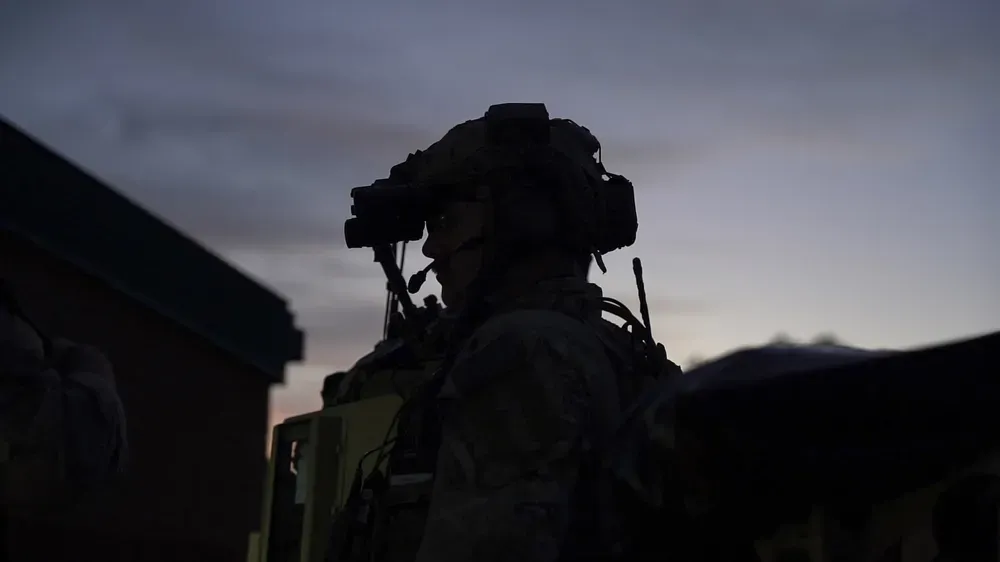
Current SEAL Team 6 members are not publicly identified, and that is deliberate. Assignment to a special mission unit carries operational security requirements that extend to names, faces, and family. Department of Defense photographs that include unit personnel are routinely blurred or cropped.
A small number of former members are public by choice or by valor citation. Richard Marcinko founded the unit and wrote about it. Britt Slabinski received the Medal of Honor for his actions at Takur Ghar. Edward Byers received the Medal of Honor for a 2012 hostage rescue in Afghanistan. Several others have published memoirs, some over Department of Defense objections, which remains a live argument inside the community.
We do not publish rosters, casualty lists, or unverified name claims. If a page offers you a current membership list, it is either recycling open-source speculation or fabricating it.
FAQ: Frequently Asked Questions
Is DEVGRU the same as SEAL Team 6?
Yes. Naval Special Warfare Development Group is the formal name of the organization activated in 1980 as SEAL Team Six and redesignated in 1987. Official documents use DEVGRU or NSWDG. The public and the press still use SEAL Team 6. Both refer to the same Tier 1 Navy special mission unit under Joint Special Operations Command.
How many people are in SEAL Team 6?
Exact strength is classified. Credible open-source estimates place the assault element in the low hundreds of operators across four color-designated squadrons, with total assigned personnel several times larger once intelligence, communications, medical, logistics, and technical support are counted. Any source quoting a precise figure is estimating, not reporting.
Where is SEAL Team 6 based?
The unit is headquartered at Dam Neck Annex, part of Naval Air Station Oceana in Virginia Beach, Virginia. That location has been public for decades and appears in Navy and congressional documents. Squadrons train and stage elsewhere depending on the mission, but Dam Neck is the home station.
Is SEAL Team 6 still active?
Yes. Naval Special Warfare Development Group remains an active, standing unit under Joint Special Operations Command with a continuous alert commitment. The 1987 redesignation changed the name and the oversight structure, not the existence of the unit. Current operations are rarely disclosed.
How much does SEAL Team 6 get paid?
Pay is set by rank and time in service under the standard Department of Defense pay tables, identical to any other service member at the same grade. On top of basic pay, SEALs draw special and incentive pays for dive, parachute, demolition, and special duty assignment, plus housing allowance and combat-zone tax exclusions. There is no unit-specific salary.
Why are SEAL Team 6 members' faces blurred?
Operational security. Members of special mission units carry identity protection requirements because exposure creates risk to them, to their families, and to missions that depend on low visibility. The Department of Defense routinely obscures faces, name tapes, and unit identifiers in imagery involving special operations personnel.
SEAL Team 6 is not a career you apply for. It is the far end of a pipeline that starts with a Physical Screening Test, runs through BUD/S and SQT, and takes several operational years in a SEAL Team before anyone at Dam Neck reviews your name. Everything upstream of that is a training problem you can start solving today. The candidates who make it built an aerobic base and a durable body years before selection instead of peaking six weeks out. Pick the standard you are chasing, program backward from it, and train it on a schedule instead of a mood.
References:
U.S. Naval Special Warfare Command, official command and unit information.
Naval Special Warfare Development Group unit overview, GlobalSecurity.org.
DEVGRU squadron organization and mission set, AmericanSpecialOps.com.
Naval History and Heritage Command, Special Warfare Insignia (Trident) history and authorization.
Holloway Commission, Rescue Mission Report (Special Operations Review Group, August 1980), on the failure of Operation Eagle Claw and the recommendation for a standing counterterrorist joint task force.
U.S. Naval Institute, coverage of Operation Eagle Claw and its effect on U.S. special operations force structure.
Congressional Research Service, U.S. Special Operations Forces (SOF): Background and Issues for Congress.
Operation Neptune Spear operational summary, including force composition, 160th SOAR aircraft, and the loss of one helicopter to vortex ring state.
National September 11 Memorial and Museum, Operation Neptune Spear digital exhibition.
U.S. Department of Defense, Medal of Honor citations for Senior Chief Special Warfare Operator Britt K. Slabinski and Senior Chief Special Warfare Operator Edward C. Byers Jr.
U.S. Army Center of Military History and Department of Defense after-action reporting on Operation Anaconda and the Battle of Takur Ghar, March 2002.
U.S. Navy public affairs reporting on the April 2009 rescue of Maersk Alabama Captain Richard Phillips by Naval Special Warfare personnel from USS Bainbridge.
Naval Special Warfare Physical Screening Test minimum and competitive standards.
Navy SEAL and SWCC official recruiting information on the SEAL contract pipeline, BUD/S, and SEAL Qualification Training.
Defense Finance and Accounting Service, current military basic pay tables.
Office of the Under Secretary of Defense (Comptroller), Military Compensation: Special and Incentive Pays.
DoD Financial Management Regulation 7000.14-R, Volume 7A, on diving duty pay, parachute duty pay, demolition duty pay, and special duty assignment pay.
Written by the Combat Fitness Team, coaches who program for active military, law enforcement, and first responders preparing for real occupational and selection standards.
Disclaimer: This article is for general informational purposes and reflects publicly available reporting and official standards as of the published date. Combat Fitness is not affiliated with, endorsed by, or speaking for the U.S. Department of Defense, the U.S. Navy, Naval Special Warfare Command, or Joint Special Operations Command. Physical standards, selection requirements, and pay rates change; confirm current requirements with an official Navy recruiter or the relevant command before making decisions. Training carries risk of injury. Consult a qualified medical professional before beginning any new training program, particularly if you have an existing injury or medical condition. Nothing here is a guarantee of selection, qualification, or performance outcomes.


