
Aerobic Capacity for Maritime Operators: Build the Engine
Maritime special operations, combat swimmer missions, maritime interdiction, vessel board-search-and-seizure (VBSS), and amphibious operations impose aerobic demands that are physiologically distinct from land-based tactical work, in ways standard tactical fitness programming almost never accounts for. Aerobic capacity for maritime operators is its own training problem, not a subset of general endurance.
Cold water immersion, sustained swimming effort, and the physiological transition from aquatic to land-based high-intensity performance are specific stressors that require specific preparation. The maritime operator who arrives at a ship or target vessel after a prolonged combat swim and immediately executes a high-intensity tactical action is asking the body to perform a transition that no amount of land-based conditioning fully prepares it for.
This post is about the aerobic capacity maritime operations specifically demand. Not generic endurance fitness, but the targeted physiological platform that water-based tactical performance is built on. CF-ONE maritime operator programs are designed around exactly that specificity, integrating swim-based aerobic development alongside land-based tactical conditioning. For maritime operators with questions about SOF program selection and preparation standards, the special forces program FAQ covers the most common SOF training and selection questions in one place.
Before Any of This: What Cold Water Actually Does
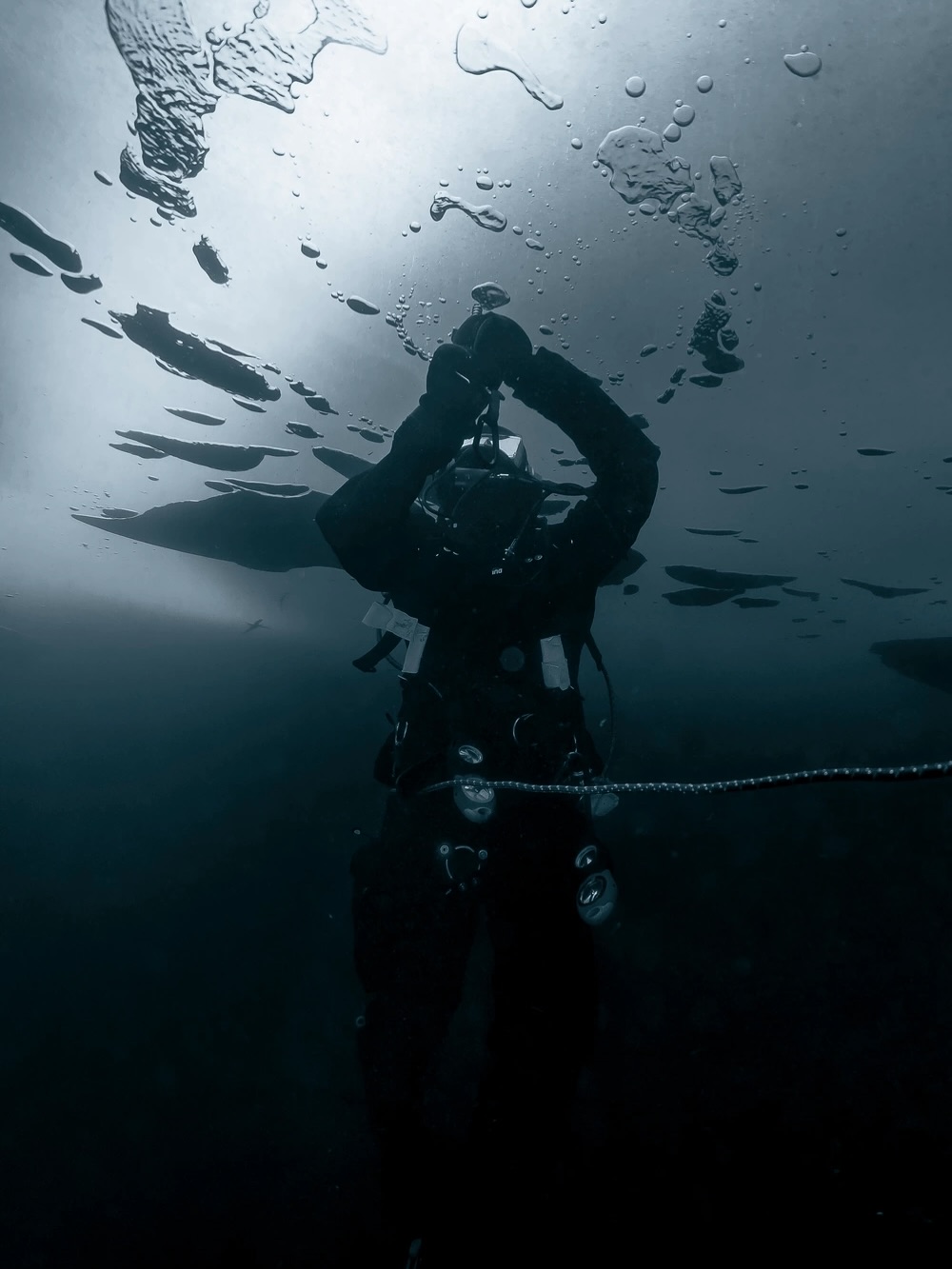
Everything below involves getting into cold water deliberately and repeatedly. That is legitimate training and it is how maritime units build the adaptation. It also has a failure mode that kills strong, fit swimmers, and most people have the mechanism wrong.
The danger is not hypothermia. Hypothermia is the fourth thing that happens and it takes half an hour to become relevant. Immersion runs in four stages:
Figure 1.1 - The four stages of cold water immersion. Cold shock, swim failure, hypothermia and post-rescue collapse, with the timing and mechanism of each. Most immersion deaths occur in the first three minutes, before hypothermia is physiologically relevant. Not safety training and not medical advice, deliberate cold water immersion carries a risk of death even for strong, fit swimmers. Never enter cold water alone or unsupervised, never without qualified rescue capability present, and seek instruction from a competent authority first. Sources: United States Coast Guard, Cold Water Survival & Hypothermia; Golden & Hervey on circum-rescue collapse; Tipton on the physiological responses to cold-water immersion.
Three specifics that matter operationally.
The gasp is not under your control. It is a reflex triggered by cold water on a large area of skin. If your face is in the water or you go under when it fires, you inhale water. The literature's phrasing is blunt: "if your head is underwater when you gasp, you will immediately drown." The hyperventilation that follows can persist for many minutes, and swimming even six to ten feet during it is often impossible for good swimmers.
Breath-hold collapses, and this matters enormously for subsurface work. In 5°C water, average breath-hold time in one study fell from 45 seconds to 9.5 seconds, and one subject dropped to two-tenths of a second. Below about 15°C, expect roughly a third of your warm-water breath-hold. Any subsurface approach planned on warm-water breath-hold numbers is planned wrong, and any breath-hold training in cold water carries a real risk of shallow water blackout, which gives no warning before it takes you.
Swimming makes you colder faster. Moving feels like it should generate heat. It increases the rate at which you lose it, by 30 to 40 percent, because it disturbs the insulating layer of warm water against the skin and drives circulation to the limbs.
So the rules for everything below are not optional:
Never train in open cold water alone. Buddy in the water, competent observer on shore or in a boat, every session, no exceptions.
Build cold exposure progressively and supervised, in controlled water, with defined exposure limits, not by seeing how long you last.
Get medically cleared before beginning any cold exposure protocol. The cardiac response to cold shock is significant and it finds pre-existing problems.
Follow your unit's standing orders over anything on this page. Any organization that trains maritime operators has supervision, temperature, and buddy protocols, and those take precedence.
The specific performance and safety implications of cold and water stress are covered in depth in cold and water stress in maritime training, which should be read alongside this article rather than after it.
The Unique Aerobic Demands of Maritime Operations
Maritime operations require sustained aerobic output across multiple distinct phases that each impose different physiological demands. The insertion phase, whether surface swim, subsurface approach, or small boat transit, requires sustained aerobic output at controlled intensity. The intensity must be controlled because arriving at the objective in an anaerobic state degrades the high-intensity performance that the action phase demands.
The action phase (boarding, clearing, controlling) requires brief explosive outputs similar to land-based tactical work. The transition between these phases, however, is physiologically unique: the operator must shift from sustained aquatic aerobic effort to explosive land-based tactical action while simultaneously managing the thermoregulatory stress of cold water immersion.
Cold water accelerates metabolic rate, increases the energy cost of maintaining body temperature, and, in prolonged exposure, progressively impairs fine motor control and muscular force production. The aerobic system is working harder in cold water at any given effort level than on land. Building aerobic capacity sufficient for cold-water sustained effort requires training that accounts for this elevated metabolic cost.
Swimming as Aerobic Training: What Transfers and What Doesn't
Swimming develops aerobic capacity through the same fundamental mechanisms as running or cycling: improved cardiac output, greater mitochondrial density, and higher aerobic enzyme activity. The cardiovascular adaptations from high-quality swim training transfer meaningfully to other aerobic activities. A well-trained swimmer has aerobic capacity that supports land-based performance.
What doesn't transfer as directly: the biomechanical efficiency and structural adaptations specific to running. Swim-trained aerobic capacity supports land-based performance, but it does not fully replace running-specific structural conditioning for land-based tactical work. Maritime operators need both swim-specific and running-specific aerobic development.
The practical programming implication: maritime operators should train aerobically in both water and on land. A training week that includes three swim sessions and two running or rucking sessions develops both the swim-specific efficiency and the land-specific structural capacity that maritime operations demand. The foundational physiology behind why both are necessary is explained in what is aerobic capacity: the mechanisms that make aerobic fitness transferable, and where the limits of that transfer lie.
Building Swim-Specific Aerobic Capacity
Swim aerobic capacity is developed through a similar zone distribution as land-based aerobic training, with adaptations for the aquatic environment. Zone 2 swim work, long, controlled-effort continuous swimming that is sustainable and conversational in effort level, forms the aerobic base. For most tactical swimmers, this means paced continuous swims of fifteen to forty-five minutes at a speed where effort is controlled and sustainable.
"Controlled and sustainable" needs a number, because the land-based cues do not work in water. You cannot use the talk test while swimming, and immersion suppresses heart rate by roughly ten beats per minute at a given effort, so a watch will flatter you.
Use pace instead. Swim a 400 metre time trial and a 200 metre time trial on separate days, both hard. The difference in your pace per hundred metres between the two gives you a workable threshold pace, and your zone 2 swim pace sits comfortably slower than that, typically ten to fifteen seconds per hundred metres easier. Retest every eight to twelve weeks. A pace you can hold and check is worth more than an effort level you have to guess at, particularly in cold water where perception degrades along with everything else.
Threshold swim work introduces higher-intensity sets that develop the capacity to sustain faster paces before crossing into anaerobic function. Structured interval sets, repeated efforts of one hundred to four hundred meters at a sustained hard effort with controlled recovery, develop this threshold capacity. For combat swimmers who need to execute prolonged swims at mission-relevant paces under load, threshold swim training is the specific aerobic development tool.
Combat swimmer-specific conditioning also requires adaptation to equipment (fins, dry suits, underwater breathing apparatus) each of which changes the biomechanics and metabolic demands of swimming significantly. Time in mission-specific equipment is not optional training enhancement. It is specific adaptation development that cannot be replaced by unequipped swim training.
The Swim-to-Action Transition
The most challenging and most undertrained component of maritime operator fitness is the transition from sustained aquatic effort to explosive land-based action. This transition involves several simultaneous physiological challenges: shifting energy systems from sustained aerobic to anaerobic explosive function, managing core temperature stabilization after cold water immersion, transitioning from horizontal aquatic movement mechanics to upright land movement, and doing all of this while carrying kit and being expected to perform at a high level immediately.
Training this transition explicitly is the difference between a maritime operator who performs effectively at objective arrival and one who requires a recovery period that operational situations don't allow.
Practical swim-to-action training: complete a sustained swimming effort at mission-relevant duration and intensity, exit the water, and immediately execute a structured performance task (sprints, simulated tactical movements, strength exercises, or decision-making drills).
Two conditions on that, and they are not negotiable. This protocol deliberately produces swimming fatigue, which is the exact state in which swim failure occurs, so it is run with a buddy in the water and a competent observer out of it, every time. And in cold water it is run with a defined maximum exposure time set before you get in, not by feel, because the fine motor degradation that makes the land task hard is the same degradation that makes self-rescue hard.
The transition itself is the training stimulus, and the good news is that it does not take much volume to move. Two dedicated sessions per month provide substantial adaptation relative to never training it at all, which is where most operators sit.
That said, treat two per month as the floor rather than the target. If this transition is genuinely the limiting factor in your operational performance, and for most maritime operators it is, it deserves weekly attention during a maritime-focused block and monthly maintenance outside of one. The specific stress of the transition must be practiced to be managed. There is no substitute.
The specific conditioning demands of the land-based action phase that follows the aquatic insertion are covered in conditioning for water-based operations, which addresses this full operational performance arc.
Aerobic Capacity and Cold Water Performance
Cold water immersion imposes a specific physiological stress that aerobic training partially mitigates. Operators with higher aerobic capacity and greater cardiovascular efficiency maintain performance better across cold water exposure than operators with lower aerobic fitness, partially because the metabolic cost of thermoregulation represents a smaller proportion of their total aerobic capacity.
Cold water acclimatization is an additional adaptation that complements aerobic conditioning without substituting for it, and it is worth doing for a specific reason: repeated short cold immersions blunt the cold shock response itself. The gasp and the hyperventilation that make the first three minutes lethal get measurably smaller with habituation. That is the single most valuable adaptation available to anyone who works in cold water.
It is also the training with the highest consequence for getting the process wrong, so run it properly:
Supervised, with a buddy, in controlled water. Not a lake, not alone, not to see how long you last.
Short and repeated beats long and occasional. Habituation of the shock response comes from frequency of exposure, not from duration of any single one.
Progressive on temperature and time, with both decided before entry rather than during it.
Medically cleared first, and stopped immediately for chest pain, palpitations, or confusion.
Maritime operators who regularly train in the water conditions they will operate in develop thermoregulatory adaptations that operators who only train in comfortable conditions do not possess.
This is the operational training principle at its most direct: train in the conditions you will operate in. Not exclusively, not at the expense of structured physiological development, not without supervision, but consistently and deliberately. The adaptation to specific environmental stress only comes from specific environmental exposure. Operators who need to understand how the strength-endurance demands of amphibious tasks interact with the aerobic base built here will find that in strength-endurance for amphibious tactical operations: the two fitness qualities are directly interdependent in maritime contexts.
Frequently Asked Questions
How much swimming is needed per week to maintain combat swim fitness?
For maintaining swim-specific aerobic fitness in trained operators, three sessions per week totaling ninety to one hundred twenty minutes in the water is a practical minimum. Building combat swim fitness from a lower base requires more volume, four to five sessions per week for eight to twelve weeks, before dropping to maintenance levels.
Can land-based aerobic training substitute for swim training in maritime operator preparation?
Partially. Land-based aerobic training develops the cardiovascular foundation that supports swim performance, but it does not develop swim-specific biomechanical efficiency, breath control under load, or the aquatic proprioception that effective combat swimming requires. For maritime operators, both are necessary. Land training develops the aerobic engine; water training develops the specific skill and efficiency to deploy that engine effectively in an aquatic environment.
How do fins affect the aerobic demands of swimming?
Fins significantly alter swim biomechanics: the primary propulsion shifts to lower body hip and knee drive rather than the upper-body-dominant mechanics of unfinned swimming. The cardiovascular demand at a given speed is generally reported as lower with fins, because propulsive efficiency improves, though most operators experience this as swimming faster at the same effort rather than as an easier swim. What is not in question is the muscular demand: the load on hip flexors and quadriceps is substantially higher, and finned swimming produces a specific local fatigue that unfinned swimming does not. Finned swim training develops the specific muscular endurance and efficiency for fin-dependent combat swim missions, and it is not interchangeable with unfinned volume.
What are the signs that aerobic capacity is limiting maritime operational performance?
Three signals, and all of them point at the engine rather than at technique or equipment:
Slow recovery at the objective. Arriving with heart rate still significantly elevated after the swim phase, and needing more than sixty to ninety seconds before feeling cognitively sharp and physically ready to perform.
Degraded fine motor control immediately post-swim. Note that in cold water this can also be a cold effect rather than an aerobic one, and the two look identical from the inside. If it resolves with better conditioning, it was aerobic. If it tracks water temperature, it was cold.
Poor pace management on sustained swims. Inability to hold a mission-relevant pace without crossing into anaerobic function, which is what the time-trial pacing above exists to diagnose.
References
Cold Water Safety. Cold shock: gasping, hyperventilation and sudden drowning.
United States Coast Guard. Cold water survival and hypothermia. Office of Commercial Vessel Compliance.


