
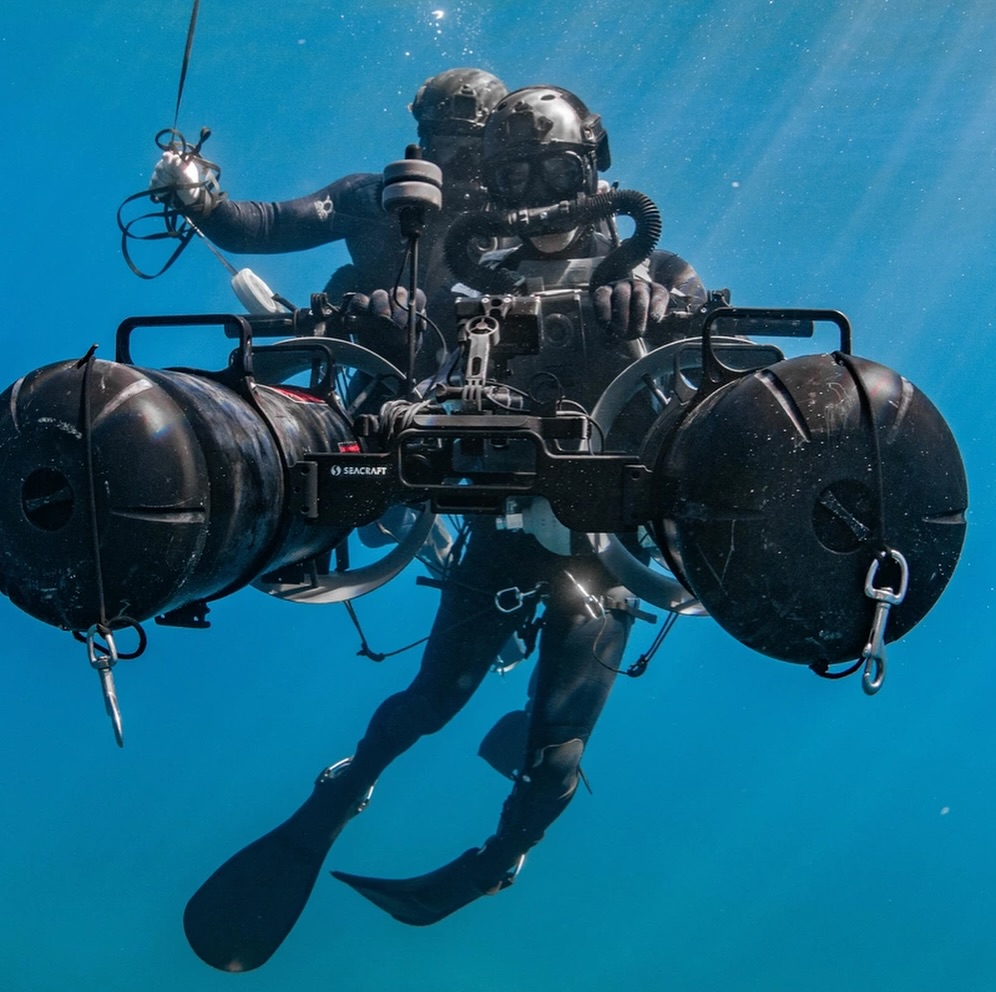
Water-Based Operations: The Conditioning Dry-Land Misses
Conditioning for water-based operations is the part of tactical fitness most programs quietly skip. The modalities, movement patterns, and loading schemes in standard training are all built for one environment: solid ground, normal gravity, and air to breathe on demand. For maritime operators whose missions happen on, in, or transitioning through water, that leaves a preparation gap that surfaces exactly when the mission punishes it most.
Maritime interdiction, combat diving, amphibious assault, and water rescue all impose conditioning demands that are distinct from land-based ones and that reward specific preparation. This isn't about bolting swim laps onto a dry-land plan. It's about understanding the physiological demands of water-based operations and building the conditioning that actually meets them, which is exactly what CF-ONE maritime operator programs are structured around. For operators deciding which SOF training program best fits their maritime pipeline and preparation timeline, the special forces program buying guide walks through how to evaluate your options.
The Specific Physical Demands of Water-Based Operations
Water-based operations compress multiple demanding physical tasks into close temporal proximity in ways that are physiologically unusual. Consider the physical sequence of a typical maritime interdiction operation: small boat transit under variable sea state (continuous proprioceptive challenge, core stability demand under movement), followed by a sustained swim or climb to access the target vessel (sustained aerobic effort, upper body pulling demand), followed by immediate tactical action aboard the vessel (explosive short-burst performance), followed by potential casualty extraction or emergency egress (maximal strength under fatigue). Each of these phases makes specific and different physical demands. The conditioning program that prepares an operator for each phase individually, but not for the cumulative sequence and the transitions between them, leaves a performance gap that the mission will expose.
The transitions are where conditioning quietly fails. An operator can own each task in isolation and still degrade at the seams: grip going at the top of a caving ladder because the swim in already taxed the forearms, or a boarding sprint landing flat because the legs spent the whole transit fighting the deck. Maritime conditioning has to train the hand-offs, not just the events, with back-to-back circuits that chain a pulling effort straight into an unstable-surface task into a loaded carry, with no reset between them. The foundational framework for understanding what tactical conditioning actually requires, and why water-based demands fall outside standard definitions, is laid out in what is tactical conditioning for operators who want the conceptual grounding before the application.
A transition circuit does not need water to be useful. Chain four stations with no rest between them and only a full recovery between rounds: weighted pull-ups at kit weight for five reps, straight into a loaded carry over uneven ground for sixty to ninety seconds, straight into a single-leg or balance-board stability task for thirty seconds, straight into a thirty-second all-out effort on a rower or ski erg. Three to five rounds. The point is not the total work. The point is that every station arrives with the previous station's fatigue already in the system, which is the only condition under which the seams show up in training rather than on the objective.
Proprioception and Stability Under Dynamic Conditions
Small boat movement, ship deck movement, and the unstable surfaces that characterize maritime environments impose proprioceptive demands that don't exist in land-based tactical training. The ability to maintain balance, execute precise movements, and produce force under a moving platform is a specific physical skill that requires specific training.
Developing this capacity doesn't require a boat. Unstable-surface work, single-leg movements on progressively less stable bases, loaded carries over uneven terrain, and strength exercises that force dynamic stabilization all build the neuromuscular competency that moving platforms demand. Balance-board and suspension training, folded into an existing strength program rather than tacked on, drive the specific proprioceptive adaptations that pitching decks and small-boat transits expose.
This is an undervalued component of maritime operator conditioning. Operators with excellent stable-ground numbers (heavy squats, fast runs, clean lifts) can still carry significant proprioceptive gaps that only surface once the platform moves under them. The fix is deliberate exposure: program unstable-surface and single-leg work year-round, not as a pre-deployment afterthought, and progress it the way you progress load, in small and consistent increases in instability and complexity, until balance under fatigue stops being a variable you have to think about.
Upper Body Pulling Strength as a Tactical Necessity
The ability to climb is a fundamental maritime operator capability: a rope, a caving ladder, the side of a vessel, a cliff face. Climbing is a technical skill, but it is also directly capped by upper-body pulling strength. An operator who can't haul their own bodyweight plus operational kit through a climbing sequence, repeatedly and under fatigue, becomes a tactical liability the moment the team has to go vertical.
The pulling standards that underwrite maritime climbing are concrete. We treat multiple sets of ten or more strict bodyweight pull-ups as the entry point; weighted pull-ups carrying twenty to thirty pounds, roughly kit weight, for sets of five to six as the working target; and a full rope climb completed with that same kit weight added as the standard that says an operator is genuinely ready for vertical work in the water.
Figure 1.1 - Maritime pulling standards by tier. Strict bodyweight pull-ups, weighted pull-ups and loaded rope climb, with the capability each certifies. These are Combat Fitness house standards drawn from boarding and climbing task demands, not published selection minimums, official pipeline standards take precedence where they differ. Source for comparison: MILPERSMAN 1220-410, MyNavyHR, 2021 (SEAL PST minimum 10 pull-ups; SWCC minimum 6).
These are Combat Fitness house standards drawn from the demands of boarding and climbing tasks, not published selection minimums. Your pipeline's official standards take precedence where they differ.
These standards require deliberate and progressive development. Pull-up volume and weighted pull-up progression should be a consistent component of maritime operator conditioning programs, not an afterthought. No aerobic program substitutes for the specific upper body pulling strength that vertical and boarding climbs demand.
Sustained Upper Body Aerobic Endurance
Maritime operations are among the few tactical contexts that place sustained aerobic demand specifically on the upper body, through paddling, swimming, and climbing over extended durations. The upper body aerobic system (the specific mitochondrial density and aerobic enzyme activity in the shoulder girdle, lat, and arm musculature) is underdeveloped in most tactical fitness programs that prioritize running-based aerobic work.
Developing upper body aerobic endurance requires upper-body-dominant aerobic training: sustained swimming, paddle ergometer work, rope climbing intervals, and rowing at sustained moderate effort. These modalities develop the specific aerobic capacity in upper body musculature that maritime operations demand. Running builds general cardiovascular fitness and lower body endurance. It does not build the upper body aerobic endurance that distinguishes effective maritime operators from those who degrade in the water. The full aerobic development framework for maritime operators, including how swim-specific and land-based aerobic training interact, is covered in aerobic capacity for maritime operators.
Swim Standards, Stroke Selection, and Session Structure
Telling an operator to swim is not a program. The stroke matters, the distance matters, and the session structure matters, and this is where most self-built maritime plans stall.
Stroke. For maritime tactical work the combat sidestroke is the default, and it is the stroke used on the Naval Special Warfare Physical Screening Test and throughout BUD/S. It is efficient, it is sustainable over distance, it keeps the head position low, and it works with fins and with kit. Freestyle still belongs in a program as a conditioning tool and as a speed stroke, but it is not the stroke most maritime pipelines test. Train the one you will be assessed on, and train the other for fitness.
Distance and time. The most useful published benchmarks come from selection standards rather than from training theory. Coast Guard Rescue Swimmer minimums include a 500-yard crawl swim within 12 minutes, a 25-yard underwater swim repeated four times, and a 200-yard buddy tow. The same source lists a recommended-for-success band of 500 to 750 yards in a 12-minute swim. Naval Special Warfare pipelines assess the 500-yard swim as well. If you have no benchmark at all, a timed 500 is where to start, because it is the number almost every maritime pipeline will ask you for.
Session structure. Three session types cover most of what maritime conditioning needs, and prescribes them with usable numbers:
Figure 1.2 - Three maritime conditioning session types. Long slow distance, long interval and short interval prescriptions with intensities, work-to-recovery ratios and the session and weekly volume ceilings attached to each. Source: Naval Special Warfare Physical Training Guide, Naval Special Warfare Center. Prescriptions come from a general preparation guide, not from any current selection standard.
A shorter alternative from the same tradition alternates 50-meter swims with brief calisthenics sets across 10 to 15 rounds, which builds the swim-to-task transition tolerance the mission actually requires.
Treading. Treading water without hands is a trainable capacity and a tested one. Build toward 10 minutes of continuous no-hands treading, and use shorter 5-minute holds as a warm-up before swim work. Treading is what turns a bad situation into a survivable one when kit is heavy and the boat is not where you expected it.
Fins. Almost every maritime pipeline swims in fins, and fins load the ankle and the anterior shin in a way nothing on dry land does. Specifically flags that fins cause ankle injuries when used without proper pre-conditioning. Introduce them gradually. Short fin sets inside an otherwise unfinned session, built up over weeks, not a first full session in fins the week before a course.
Buddy tow. In-water casualty handling is its own skill and its own conditioning demand, and it is a graded event on rescue-swimmer standards at 200 yards. Towing a person in the water is not the same stimulus as towing a sled. Practice it with a training partner in a supervised, lifeguarded facility before you ever need it.
Breath Control and Hypoxic Tolerance
Combat diving and swimming under adverse conditions require breath control and hypoxic tolerance that are specific physiological adaptations. The ability to function effectively under breath-hold conditions, to manage panic responses to hypoxic stimulus, and to maintain performance when breathing is constrained are skills that can be trained, but only through deliberate, supervised exposure to the specific stimulus.
The specific mechanism worth naming is shallow water blackout, also called hypoxic blackout. Hyperventilating before a breath-hold lowers arterial carbon dioxide, which delays the urge to breathe long enough for oxygen to fall to critical levels before the respiratory drive ever fires. The result is that the swimmer loses consciousness underwater with no preceding distress and no warning to anyone watching, which is what separates it from ordinary drowning. It carries a high fatality rate, and it disproportionately affects fit males under 40. Between 2008 and 2015 the Marine Corps recorded 24 drowning fatalities and the Navy 46. This is not a civilian problem that happens to touch the military. It is a military training problem.
Two rules follow directly. First, never hyperventilate before a breath-hold, in training or in the water. Second, train CO2 tolerance on dry land wherever possible, because the adaptation transfers and the risk does not. If you are going to do breath-hold work in the water at all, do it with a buddy who is watching you specifically and who knows how to pull you out.
Hypoxic training carries real risk and should only be conducted under qualified supervision with appropriate safety protocols in place. Static apnea practice, dynamic apnea in controlled conditions, and controlled hypoxic loading during swimming are the primary training tools. These are not conditioning methods to be casually self-programmed. They require expert instruction and consistent safety support.
For operators in maritime roles who will encounter breath-hold or hypoxic conditions, the technical skill and physiological tolerance for these conditions must be specifically trained. No land-based conditioning program develops them.
Heat and Cold Stress in Water-Based Environments
Maritime operations often involve significant thermal stress, either from cold water immersion that drives heat loss faster than the body can produce it, or from operations in hot and humid maritime environments that impair heat dissipation. Both extremes impose conditioning demands that dry training environments don't replicate.
Cold water conditioning: progressive cold water exposure develops peripheral vasoconstriction efficiency, improves cold tolerance, and reduces the performance impact of cold immersion. This acclimatization is a genuine physiological adaptation that makes a measurable difference in performance during cold water operations. Operators who regularly train in cold water tolerate it significantly better than those who only encounter cold water operationally. The full physiological picture of how cold and water stress affect maritime training performance is covered in cold and water stress in maritime training for operators who want the complete framework.
Before programming any of it, understand what the first ninety seconds do. The cold shock response is not discomfort. It is an involuntary gasp, followed by uncontrollable hyperventilation and an acute cardiovascular stress response, and it fires within roughly thirty to ninety seconds of skin cooling. That window is the highest drowning risk period of a cold water entry, and it is high risk for strong swimmers too, because if your head is under when you gasp, swimming ability is irrelevant. Hypothermia is the slower threat that follows, developing as core temperature falls toward thirty-five degrees Celsius, and swimming accelerates the cooling rather than slowing it.
So the rules for cold water exposure are not optional extras. Never enter cold water alone. Have someone on the bank or the deck whose only job is watching you, with the means to get you out. Enter progressively and let the cold shock response pass before you start swimming. Have rewarming arranged before you get in, not after you get out. And get medical clearance first if you have any cardiac history, any blood pressure condition, or any respiratory condition, because the cold shock response is a cardiovascular event and it is the reason cold water kills people who were not going to drown.
Cold water acclimatization is real and it is worth having. It is also the one adaptation on this page where getting the progression wrong has a consequence measured in minutes rather than in training weeks.
Heat and humidity conditioning: maritime operators in tropical environments face heat-humid combinations that are more physiologically demanding than dry heat at equivalent temperatures. The primary adaptation tool is heat acclimatization, meaning deliberate training in heat and humidity, built over the ten-to-fourteen-day window that heat-physiology researchers (Périard and colleagues, 2015) identify as the point where the core adaptations are essentially complete. Aerobic fitness provides partial heat tolerance, but specific heat acclimatization provides adaptations that aerobic fitness alone does not.
Frequently Asked Questions
How do I build climbing and boarding strength without a rope or a wall?
Weighted pull-ups are the backbone: load a belt or vest toward your operational kit weight and work strict sets of five to six. Add towel or rope-segment hangs for grip endurance, since grip is usually the first thing to fail on a real climb, and finish with horizontal rows to balance the pull. A short caving-ladder or cargo-net session whenever you can get access turns that gym strength into the specific coordination boarding actually demands.
What strength levels are needed before beginning heavy maritime conditioning?
A minimum baseline before beginning high-volume maritime conditioning: multiple sets of ten or more strict bodyweight pull-ups with full range of motion, bodyweight or above for squat working sets, and the ability to complete a thirty-minute moderate-effort swim without significant degradation of form or pacing. Below these baselines, the structural and movement capacity to tolerate high-volume maritime conditioning is insufficient. Do the swim assessment in a lifeguarded facility or with a competent buddy present, not alone in open water.
How often should unstable-surface and balance work go in the program?
Treat it as a constant, low-dose ingredient rather than a phase. Two or three short exposures a week are enough to build and hold the proprioceptive adaptations maritime platforms demand: single-leg strength, balance-board or suspension work, and loaded carries on uneven ground. Keep the doses small and frequent. The goal is a nervous system that stabilizes automatically under a moving deck, and that comes from consistency over months, not from occasional high-volume sessions.
Does dryland training for swimming actually help swim performance?
Yes, with specificity. Strength training that targets the primary swim muscles (lat pull-downs, rows, and pulling variations for freestyle and combat swimming) improves swimming economy and power at equivalent fitness levels. Core stability training directly improves swim body position, which is a significant determinant of swimming efficiency. The transfer is not perfect but is meaningful. Operators who want to understand how the strength-endurance demands of amphibious tasks integrate with this conditioning framework will find that covered in strength-endurance for amphibious tactical operations. It is the direct structural complement to the aerobic and conditioning work described here.
References
Périard JD, Racinais S, Sawka MN. Adaptations and mechanisms of human heat acclimation: applications for competitive athletes and sports. Scandinavian Journal of Medicine & Science in Sports. 2015;25(S1):20-38.
Sawka MN, Périard JD, Racinais S. Heat Acclimatization to Improve Athletic Performance in Warm-Hot Environments. Gatorade Sports Science Institute, Sports Science Exchange 153.
Shallow Water Blackout. StatPearls, NCBI Bookshelf NBK554620.
Swimming. NavySEALs.com, BUD/S training resources.


