
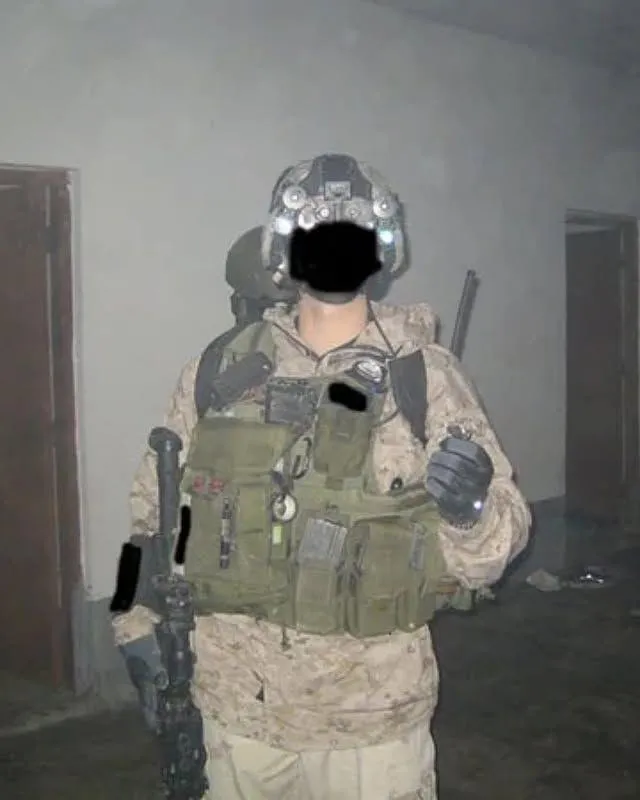
What Is a Special Operator? Spec Ops Life, Explained
Life as a Special Operator: Spec Ops Selection, Units & Mindset
You know the image from movies like Zero Dark Thirty: the silent professional who emerges from the shadows to handle an impossible mission. But what is a special operator in reality, and what truly separates the Hollywood hero from a real-world Special Operations Operator? People casually say "spec ops" or ask about the special ops meaning, but inside the community a military operator is defined by far more than on-screen drama. The reality is less non-stop action and far more a level of intelligence, discipline, and problem-solving that pushes human limits, the qualities this guide breaks down unit by unit. Every one of those qualities has to be built long before it is ever tested, which is the entire premise behind our tactical fitness programs.
The title "operator" itself signifies this difference within special ops. It isn't a generic term for all elite soldiers but a specific designation a military operator earns only after surviving a grueling selection and qualification pipeline that can last for years. The process is designed to find intellect and resilience, not just strength.
Ultimately, this creates a fundamental distinction in roles. Think of a conventional soldier as a highly capable family doctor, prepared for a wide range of common challenges. A Spec Ops Operator, however, is the neurosurgeon: a specialist called upon for only the most complex, critical, and high-stakes procedures where there is absolutely no margin for error.
The Unforgiving Filter: Why Does 80% of Special Forces Hopefuls Quit?
You've seen the images: exhausted men carrying logs on a cold beach or doing push-ups in the mud. What you're seeing isn't just a workout; it's one of the world's most effective filters.
For special ops units like the Navy SEALs, the roughly six-month BUD/S selection course is built to weed out most candidates by design, Naval Special Warfare's stated goal is to graduate only about 20% of those who start, an intended attrition rate near 80%, though the long-run average since 1998 has run closer to 68%. For every four or five people who start, roughly one will finish. This staggering number isn't an accident, it's the entire point. Every pipeline has its own version of that filter, and every filter has its own preparation problem to solve, which is why candidates chasing a Green Beret slot start by choosing an SFAS training program that matches the assessment they will actually face. The same logic applies on the Army side of the house, where anyone targeting the 75th Ranger Regiment has to weigh RASP prep programs against the exact standards the Regiment tests.
The primary goal of this brutal process, known as "selection," is not to build strength but to reveal character. Instructors are looking for the rare individual who can remain calm, think clearly, and lead others when they are physically and mentally depleted. The extreme cold, lack of sleep, and constant physical pressure are tools designed to find a candidate's breaking point. The real test isn't whether you can do 100 push-ups; it's whether you can make a smart decision for your team after being awake for three days straight as a military operator.
Surviving this unforgiving crucible is only the price of admission. Candidates who pass selection then move into the actual training pipeline, a multi-year journey to master specialized skills. This is where they learn everything from foreign languages to the advanced trauma care taught in the 18D combat medic course. And just as a surgeon and a diplomat require different training for different jobs, so too do the various special ops forces.
Surgeons vs. Diplomats: Are Navy SEALs and Green Berets Really That Different?
While both are household names synonymous with "elite" in special ops, the comparison between a Navy SEAL and an Army Green Beret is like asking whether a heart surgeon is better than a diplomat. They are both masters of their craft, but they are trained to solve entirely different kinds of problems. Their primary missions are so distinct that they often work in completely different ways, on completely different timelines.
Navy SEALs are the military's premier maritime special operations force, and a cornerstone of special ops, specializing in missions that originate from the Sea, Air, or Land (hence the name). Think of them as the surgeons, called in for precise, high-stakes operations. Their work often involves direct-action raids, reconnaissance of enemy coastlines, and hostage rescues on ships or oil rigs. Their training is intensely focused on mastering stealthy approaches, explosive action, and the ability to operate in any environment, especially water.
The Army's Green Berets, in contrast, are the military's foremost experts in what's called Unconventional Warfare. Within special ops, their core mission is to work with and through other people. As warrior-diplomats, they embed in foreign countries for months or years, learning the language, understanding the culture, and training local forces to defend themselves, almost always as part of a 12-man team whose makeup is worth understanding through the Special Forces ODA structure. Instead of a quick raid, their goal is to build long-term stability by empowering allies. Getting to that team is its own journey, and for civilians the most direct route is the 18X enlistment contract, which sends a recruit straight toward Special Forces selection rather than a conventional unit.
So, which unit is better? The question itself misses the point. The right choice depends entirely on the mission. If a high-value target is on a coastal compound, the SEALs get the call. If a partner nation needs to build a capable force to fight insurgents, the job belongs to the Green Berets. But these two only represent a fraction of the special ops world. What about massive airfield seizures or rescuing a downed pilot from deep behind enemy lines? That requires a different set of specialists altogether.
The Spearhead & The Lifeline: Army Rangers and Air Force Pararescue (PJs)
For those massive, complex missions like seizing an entire airfield, the call goes to the Army's 75th Ranger Regiment. Unlike the small teams of SEALs or Green Berets, the Rangers are a large-scale, direct-action force. Think of them as the military's elite light infantry, trained to be a spearhead that can overwhelm a heavily defended objective with speed and precision. Their physical and tactical standards are incredibly high, preparing them to be the world's premier forced-entry specialists, capable of deploying anywhere on the globe in under 18 hours to kick the door in, often the opening move in the special ops ecosystem.
Then there is the ultimate lifeline of the special ops world: the Air Force Pararescue men, or PJs. Their mission is one of the most noble and dangerous, rescuing downed pilots and isolated personnel from deep inside hostile territory. To do this, PJs are trained to an extraordinary degree as both combatants and advanced paramedics, able to fight their way to a casualty and provide life-saving medical care under fire. Their entire existence is dedicated to fulfilling their motto: "That Others May Live."
From a regiment of hundreds trained for overwhelming force to a small team of medics prepared to risk everything for a single life, the diversity of roles is immense. These wildly different missions all demand incredible physical prowess, but the common thread binding every operator is an unseen quality. It's not muscle, but a specific kind of mental fortitude that allows them to function when others would fail.
The Unseen Armor: What Is Real 'Mental Toughness' for an Operator?
This mental fortitude is often misunderstood. It's not the absence of fear or stress; it's the ability to manage those emotions to maintain clarity. Think of an ER doctor in a crisis, the pressure is immense, but their training allows them to compartmentalize and perform flawlessly. For a military operator, real mental toughness is this disciplined emotional regulation, an unseen armor that allows them to function when instincts are screaming to shut down.
The reason this emotional control is so critical is that operators in special ops are, above all, elite problem-solvers. Missions are dynamic and unpredictable. When a plan falls apart, raw aggression is useless. The most vital skill is the ability to stay calm, analyze a chaotic situation, and adapt. This capacity for clear-headed decision-making under the highest possible stakes is what truly defines their effectiveness.
Ultimately, this entire mindset is embodied in the ethos of the "Quiet Professional." It's a culture that prizes humility and silent competence over ego and recognition. Unlike their Hollywood counterparts, real operators focus on the mission, not the credit. This shared value of getting the job done without fanfare is the cultural glue that holds these teams together and is a core part of what separates them. It's a foundation of character, built long before they ever enter selection.
How to Build the Foundation for Special Operations Selection
So how does someone even begin to prepare for this path? The first step is to rethink the idea of fitness. While strength matters, the key physical requirement for any special ops assessment is durability, the trait we build first in every tactical athlete we coach. Operators aren't bodybuilders; they are endurance athletes. The foundation is an unbreakable body that can run for miles, swim in open water, and carry heavy loads over difficult terrain without falling apart. It's about building resilience, not just raw power, and about peaking for selection so that durability arrives on the exact week it gets tested.
Beyond physical readiness, every candidate is expected to carry a "mental rucksack." This is the intellectual toolkit they build long before enlisting. Aspiring military operators are voracious readers, and many of the best books about US special forces focus on military history, leadership, and strategy. By studying these subjects, they aren't just gaining knowledge; they're learning how to think critically under pressure, a skill as vital as any physical one.
Finally, the most crucial preparation is the character test you pass every day. Are you reliable? Do you finish what you start? Elite teams are built on unwavering trust, and that quality is demonstrated in your life long before selection begins. These three pillars, physical durability, a full mental rucksack, and proven character, form the bedrock not just for a demanding military career, but for a successful life after the uniform comes off.
Life After the Teams: Turning Spec Ops Skills into Civilian Success
The transition from a military career might seem daunting, but for an operator, it's often just a change of venue. The same skills learned in special ops, leading small, diverse teams under immense pressure and planning complex missions with incomplete information, are exactly what C-suite executives and startup founders do every day. The ability to calmly assess risk when the stakes are high is a rare and valuable commodity, making the career path after leaving the military surprisingly versatile.
It's no surprise, then, that many veterans from these elite units become highly successful entrepreneurs, consultants, and corporate leaders. The real-world experience a military operator gains in project management, where a single mistake can have critical consequences, translates directly into a business world that craves accountability and clear-headed decision-making. Companies aren't just hiring a veteran; they're hiring a world-class problem-solver who has been tested in the most demanding environments imaginable.
Ultimately, more than any single skill, it is the spec ops operator mindset that guarantees success. This ingrained discipline, relentless drive to find solutions, and absolute ownership of outcomes are universal assets. This unique ability to solve the unsolvable is precisely why they are so vital to a country's security.
Why a Nation Needs Its Elite Problem-Solvers
The Hollywood image of the lone warrior fades, replaced by the reality of the strategic problem-solver: a thinking operator selected for intellect in special ops, meticulously trained, and deployed as part of a highly specialized team. You now understand that different units are not better or worse, but are specialists for entirely different kinds of challenges.
The next time you see a headline about US special forces, try to look past the action and identify the problem being solved. Is it a situation requiring a surgeon's precision, or is it a long-term mission to build stability? Noticing this distinction is the first step to seeing the world through a more informed, strategic lens.
Ultimately, this is their true purpose. The spec ops operator provides a nation with critical options that exist in the space between diplomacy and conventional war. They are a precise and powerful tool, not just for winning fights, but for solving problems so complex that their greatest successes are often the larger conflicts that never had to happen.
References
Naval Special Warfare Command / U.S. Navy - BUD/S graduation goal of approximately 20% (≈80% intended attrition); reported long-run average attrition since 1998 of approximately 68%.
***Disclaimer: This content is provided for general informational purposes only. Combat Fitness is not affiliated with the U.S. Department of Defense, and official standards may change at any time. Always consult official military publications for the most up-to-date requirements.***


