
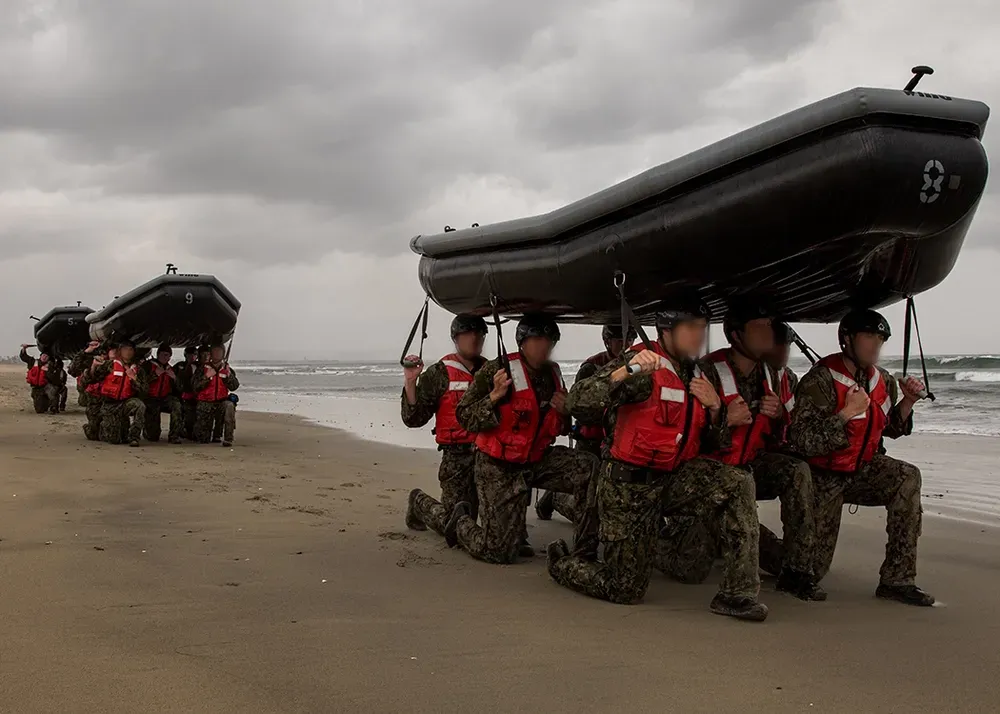
Strength Training for Military and Law Enforcement
Strength Training for Military and Law Enforcement: What Actually Transfers to the Job
Strength training for military and law enforcement has always had an identity problem. It is either dismissed as vanity training or abused as ego lifting. Both miss the point.
For tactical athletes, strength is not about how you look. Strength is about how much stress your body can tolerate before it fails, and how much external load it can move, repeatedly, without breaking down. That is the standard that matters for soldiers, police officers, and first responders whose work imposes load, impact, awkward positions, and accumulated fatigue.
For these athletes strength training is not optional, it is the foundation that every other physical quality is built on top of. Programs built around that principle, structured around the strength qualities that actually transfer to occupational performance, are what CF ONE training programs are designed to deliver.
Why Strength Training Gets Misunderstood in Tactical Populations
Many people associate strength training with bodybuilding.
Machines.
Mirror muscles.
Aesthetics over function.
Others associate it with powerlifting extremes.
Max effort.
Low reps.
High injury risk.
Neither model fits the tactical population. Strength training for military and law enforcement is not about chasing one-rep maxes or building show muscles, it is about raising the floor of physical capacity so that everyday operational demands stop costing you everything you have. When baseline strength is higher, everything else becomes easier. For military and law enforcement athletes specifically looking for strength-focused programs built around these demands, strength programs covers the full range of options available.
Strength Reduces the Physiological Cost of Tactical Work
Every physical task carries a metabolic and structural cost. Running costs energy. Rucking costs energy and joint loading. Carrying equipment, climbing, or moving a wounded teammate costs all three. Stronger athletes pay a lower relative cost for the same task because their tissue capacity, neuromuscular efficiency, and force production are operating well below maximum. For athletes deciding which tactical fitness program best fits their strength development goals and background, the tactical fitness program buying guide walks through exactly how to evaluate your options.
For a soldier or officer working a long shift, a forced ruck, or a sustained scene, that lower cost shows up in three measurable ways:
Less fatigue per movement
Better posture under load
More reserve capacity when stress is high
This matters during long days, extended operations, and repeated efforts. Strength does not replace conditioning. It makes conditioning more effective.
Injury Prevention Is a Strength Issue - Especially for Tactical Athletes
Most non-contact injuries in military and law enforcement personnel occur when tissue capacity is exceeded, when the load applied to a tendon, muscle, or joint surface exceeds what it has been prepared to absorb. Weak tissue fails sooner. Properly programmed strength training increases tissue tolerance by progressively loading muscles, tendons, and connective structures over time. This reduces the likelihood of overuse injuries when training volume or operational tempo increases.
Ignoring strength while demanding high running, rucking, and conditioning workloads is one of the fastest ways to drive injury rates up, a pattern documented repeatedly in military performance research on stress fractures, lower-extremity overuse, and selection-course attrition. This is why effective tactical training systems prioritize strength first. The Combat Fitness training plans do this deliberately: strength is treated as infrastructure, not decoration.
The Difference Between Tactical Strength and Sport Strength
Sport strength is often optimized for a specific event. A powerlifter builds peak force production in three lifts. A sprinter builds explosive power for one type of movement. Tactical strength must be more general.
It needs to transfer to unpredictable tasks: carrying casualties, climbing obstacles, restraining resistance, performing under gear weight across long durations. This changes exercise selection and programming priorities.
For a tactical athlete, maximal strength in a single isolated movement matters less than broad strength expressed across multiple patterns, push, pull, squat, hinge, carry, and rotate, often under fatigue and gear weight. Endurance within those patterns matters as much as peak output, because the job rarely asks for one heavy effort and instead demands sustained capability across hours. This is what functional strength training for military performance addresses directly, covering how strength is selected and structured to actually transfer to occupational demands rather than just test performance.
What Kind of Strength Actually Matters for Tactical Performance
Not all strength transfers equally. The bench press number that earns respect in a commercial gym tells you almost nothing about whether a soldier can drag a casualty fifty meters or an officer can pin a resisting subject. Tactical strength training prioritizes four qualities that translate directly into operational tasks:
Lower body strength for load carriage and movement
Pulling strength for climbing, dragging, and control
Trunk strength for stability under fatigue
Posterior chain strength for injury prevention
These qualities support real tasks. They also support longevity. This does not require endless variation. It requires consistent exposure to key movements. For athletes with specific questions about tactical fitness program structure and what to look for in a strength-integrated system, the tactical fitness program FAQ covers the most common questions in one place.
Relative Strength Beats Absolute Strength for Tactical Athletes
Relative strength matters more than absolute numbers. How strong you are relative to your bodyweight determines how efficiently you move. This is especially important for running and rucking. Chasing maximal lifts without regard for bodyweight often degrades endurance and recovery.
Strength should support performance, not compete with it. This balance is where many people go wrong. Understanding what is strength-endurance gives this relative strength principle its physiological foundation, defining the quality that sits at the intersection of force production and sustained performance in tactical contexts.
Frequency Beats Hero Sessions
One massive lift session does less than multiple moderate ones. Strength adapts through repeated exposure. Two to four strength sessions per week produces better outcomes than sporadic maximal efforts.
Consistency builds resilience. Hero workouts build fatigue. This matters when strength training must coexist with conditioning and operational demands.
Why Minimalist Strength Programs Fail Tactical Athletes
Minimalist strength programs appeal to busy people. Unfortunately, minimal input produces minimal output. One or two lifts per week rarely build enough strength to change injury risk or performance.
Effective programs invest time where it matters. They do not rely on novelty or shortcuts. This is especially true in tactical populations where demands are high and margins are small.
Strength Training for Police Officers: The Overlooked Application
Strength training for police officers is consistently underestimated, even by officers themselves. A patrol officer may spend hours in a vehicle, on a fixed post, or in court, then within seconds need to sprint after a fleeing suspect, restrain a combative subject, or physically control an arrest. That transition, from completely sedentary to maximal explosive effort with zero warm-up, is one of the most physically demanding patterns in any occupation, and almost no general fitness program prepares the body for it.
The strength qualities that actually matter for police officers, deputies, corrections officers, and federal agents are not the qualities most gym programs train. The job requires four specific strength expressions:
Reactive strength that can produce force without a warm-up window.
Trunk and hip stability to manage unpredictable resistance.
Grip endurance for restraint situations.
Upper body pulling strength for control and climbing.
These demands are specific. Generic strength programs built for gym athletes do not address them directly. The specific application of strength-endurance to law enforcement tasks is covered in strength-endurance for law enforcement tasks, which connects the strength qualities described here to the real occupational scenarios officers face.
Strength and Endurance Are Not Enemies - Solving the Interference Effect
The idea that lifting ruins endurance is outdated. Poor programming ruins endurance. Strength training improves efficiency when integrated correctly. It reduces energy cost. It supports posture and mechanics. It allows higher-quality conditioning sessions.
The key is balance. Strength should complement conditioning, not overwhelm it. This is where structured systems outperform random programming. The precise physiological mechanism behind how strength training affects endurance explains why correctly integrated strength improves rather than degrades conditioning performance, and why the interference effect is a programming problem rather than a biological inevitability.
Progression Matters More Than Exercise Selection in Strength Training
People obsess over exercises. They ignore progression. Progression drives adaptation. Gradually increasing load, volume, or complexity builds strength. Randomly changing exercises does not.
A simple program done consistently beats a complex one done poorly. This is a lesson many tactical athletes learn too late.
Why Recovery Determines Strength Gains for Tactical Athletes
Strength training stresses the nervous system and the connective tissue at the same time. Recovery is what allows that stress to convert into adaptation. Sleep duration, daily protein intake, hydration, and overall stress management all directly influence how much strength is actually gained from a given training block.
Ignoring recovery limits progress and increases injury risk, a particularly costly trade-off for military and law enforcement personnel who already operate under sustained operational, psychological, and circadian stress. A program that does not respect recovery will produce diminishing returns or break the athlete entirely.
Training plans must account for that reality, which is why every Combat Fitness program is built around deliberate deload weeks and intensity cycling rather than constant maximal effort.
Building Strength Without Sacrificing Conditioning Performance
The practical challenge for tactical athletes is not whether to strength train. It is how to strength train without compromising conditioning performance or operational recovery.
This requires:
Volume that is sufficient to drive adaptation but not so high it bleeds into conditioning sessions.
Intensity that is meaningful but submaximal most of the time.
Session placement that minimizes interference between strength and endurance work.
Deload periods that allow tissue recovery during high-operational-tempo phases.
The structural framework for managing this balance across a full training cycle is covered in a framework for strength-endurance balance, which gives tactical athletes the practical programming approach for developing both qualities without one undermining the other.
Strength training for military and law enforcement, done correctly, does not make athletes bulky, slow, or stiff. It makes them harder to break, harder to fatigue, and harder to stop. The broader operational context for why these strength qualities matter across a full military or law enforcement career is grounded in what is tactical conditioning, which connects strength to the full framework of physical readiness that occupational performance demands.
Strength Training for Military and Law Enforcement: FAQ
Should soldiers and police officers lift weights?
Yes. Strength training improves durability, performance under load, and injury resistance.
How strong does a tactical athlete need to be?
Strong enough to move external load efficiently and repeatedly without breakdown.
Will lifting weights slow my run time?
No. Properly programmed strength training improves running economy and reduces injury risk.
How often should tactical athletes strength train?
Most tactical athletes benefit from two to four dedicated strength sessions per week, depending on the volume of running, rucking, and operational tempo in the same week. During high-conditioning blocks or selection prep, that number may drop to two; during recovery or maintenance blocks, three to four. Consistency over many weeks matters far more than the exact session count in any given week.


