
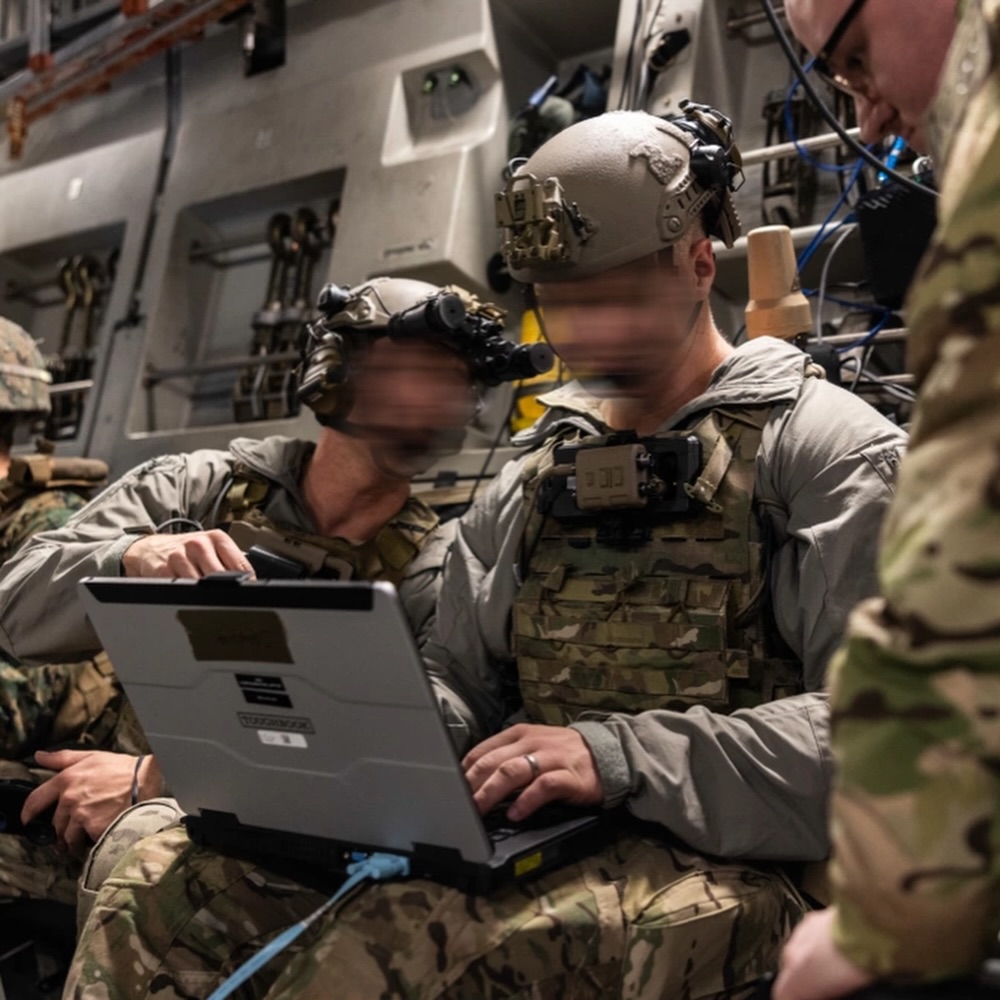
UBRR Test: Upper Body Round Robin Standards & Scoring
UBRR Explained: Upper Body Round Robin Standards, Scoring and Training
The UBRR, or Upper Body Round Robin, is a nine-event special operations fitness test scored on a points scale, and passing it takes 1,100 total points plus a minimum on every event. It was built inside the SOF community, not handed down by a service headquarters, which is why it tests bench press for reps, dips, a rope climb in body armor, and a five-mile run or ruck after all of it. If you want this programmed instead of assembled from forum posts, our tactical fitness programs build the progression into a plan. Below: every event in order, the full points table, how the UBRR differs from the Air Force PAST, and a twelve-week progression.
Key Takeaways:
Nine events, one standard, no age or sex brackets and no maximum score.
Passing takes the minimum on all nine events plus 1,100 aggregate points. Minimums alone total roughly 800, so minimums fail.
Pull-ups and kipp-ups pay 3.5 points per rep, the highest rate on the test.
The UBRR is not the Air Force PAST, which is the entry test for Air Force Special Warfare pipelines.
The rope climb scores GO or NO GO. Zero points, and it can end your test.
What Is the UBRR?
The Upper Body Round Robin is a nine-event fitness test used across Tier 1 and Tier 2 special operations units to measure upper-body strength, muscular endurance and aerobic capacity in one continuous session. Events run back to back on a single points scale, one standard for every candidate regardless of age.
It was not written by a service fitness office. According to SOFREP's account of its origin, it came from a group of Delta Force operators led by Ed Bugarin, who wanted an assessment reflecting the job rather than what a two-mile run measures. It spread into wider SOF use as a unit standard, a screener and a training benchmark.
That origin matters practically. No DoD-wide publication governs the UBRR the way service instructions govern the AFT or the PFT, so event details and equipment vary between the units that administer it. The scoring below is the version published consistently across SOF fitness references as of 2026. Confirm the worksheet with the unit testing you.
The acronym belongs in the same family as PAST, PJ, CCT and STO. Our guide to Air Force acronyms covers the rest of the alphabet in a special warfare pipeline.
The UBRR Events, In Order
The UBRR runs as a sequence, not a circuit you can shuffle. Once an event ends, you have no more than ten minutes before the next one starts. That ceiling is the test. Any one of these movements is manageable fresh. All nine on a rolling ten-minute clock is a different problem.
Figure 1.1 - the Upper Body Round Robin, the nine-event SOF fitness test built by a group of Delta Force operators led by Ed Bugarin. Bench press 6 reps at 80% of bodyweight, 40 push-ups and 40 sit-ups in a minute each, 6 pull-ups, 10 dips, a 20 to 25 foot rope climb in body armor or a 20 lb vest scored Go/No Go, 6 kipp-ups in a minute, a 4 × 25 m shuttle carrying blocks in 24 seconds, and five miles in 40 minutes running or 75 minutes rucking a 45 lb load. Those numbers are the floor, not the pass: clearing every minimum still leaves you short, because the test requires 1,100 aggregate points earned for performance above each minimum, 3.5 per rep on pull-ups and kipp-ups, 3 on bench press and sit-ups, 2.5 on dips, 2 on push-ups, with time bonuses on the shuttle and the five-mile. One attempt per station, no age-graded scoring. The defining constraint is the clock between events, roughly ten minutes, so bench, pull-ups, dips and kipp-ups all draw on the same fatigued upper body before the run. The UBRR is an unofficial community standard rather than a published regulation, so rope height, vest weight, run versus ruck and even the rest interval vary by unit. Sources: SOFREP, Mountain Tactical Institute, Refactor Tactical.
Two features of that order drive everything else. The bench press comes first, while you are fresh, and every pushing event after it is degraded by what you just did. Push-ups at minute three are not push-ups at minute zero.
The run or ruck comes last, after eight events of upper-body and grip fatigue. Forty minutes for five miles is an eight-minute mile, unremarkable when rested and a different effort off the back of a full UBRR. Pacing it badly costs more points than any single upper-body event can return.
UBRR Scoring and the Points Table
UBRR scoring works on a floor-plus-rate model. The minimum on an event earns 100 points. Every rep or second beyond it adds points at a fixed rate that differs by event. The rope climb is the exception: GO or NO GO, no points.
The table below reflects the UBRR standard as published across SOF fitness references current to 2026.
Figure 1.2 - the UBRR scoring system and what it actually takes to pass. Clearing the minimum on an event is worth 100 points: 6 bench press reps at 80% of bodyweight, 40 push-ups and 40 sit-ups in a minute, 6 pull-ups, 10 dips, 6 kipp-ups, a 24-second shuttle, and five miles in 40 minutes running or 75 minutes rucking 45 lb. Points accrue above each minimum, 3.5 per rep on pull-ups and kipp-ups, 3 on bench press and sit-ups, 2.5 on dips, 2 on push-ups, 2 per 0.1 second under on the shuttle, 2 per 5 seconds under on the run and 2 per 15 seconds under on the ruck. The rope climb is Go/No Go and scores nothing. Because the rope pays no points and you run or ruck but never both, only eight events score, so hitting every minimum yields 800 points against a 1,100-point pass, leaving 300 points that have to be bought above the floor. A lean pass looks like roughly double every rep minimum plus a 21.5-second shuttle and a 36:30 five-mile, which totals about 1,130. Minimums apply at every station, so a high total cannot rescue a failed event, and a No Go on the rope ends the test regardless of score. Sources: Combat Operators, SOFREP, Mountain Tactical Institute, Refactor Tactical.
To pass you need both: the minimum on all nine events, and 1,100 total points.
Run that arithmetic and the test shows its hand. Eight scored events at exactly the minimum is 800 points, so bare minimums fail. You have to sit well above the floor on multiple events, which makes the UBRR a performance test with a screening floor attached.
Points also cost different amounts of effort. Pull-ups and kipp-ups pay 3.5 per rep, push-ups pay 2. Ten extra pull-ups is 35 points, ten extra push-ups is 20. Spend your weeks according to the payout, not your preferences.
UBRR vs the PAST Test
The UBRR and the PAST get confused constantly, and they are not the same test or the same purpose. The PAST, now administered as the Initial Fitness Test, is the Air Force Special Warfare entry assessment that screens candidates before a pipeline. The UBRR measures operator-level fitness, usually for people already in a unit or training toward one.
Six differences separate them:
Purpose. The UBRR is a unit and community fitness standard. The PAST is an entry screen for Air Force Special Warfare.
Origin. The UBRR was built inside the SOF community. The PAST comes from Air Force Recruiting and AFSPECWAR.
Events. The UBRR runs nine, including bench press, dips and a rope climb. The PAST runs pull-ups, sit-ups, push-ups, a run, a swim and underwaters.
Water. The UBRR has no water component. The PAST has two.
Scoring. The UBRR uses a points scale with 1,100 to pass. The PAST scores against event minimums, and competitive candidates sit well above them.
Age brackets. Neither test uses them.
Water is the difference that matters. The PAST tests it because Air Force Special Warfare candidates have to function in it. The UBRR instead loads pressing volume, a rope climb in kit, and a ruck option the PAST never touches.
If you are preparing for an Air Force Special Warfare pipeline, the PAST is the test standing between you and a contract. The UBRR is the benchmark worth training toward afterward, because it exposes the pressing endurance and grip capacity pipeline training will hammer.
Who Has to Take the UBRR
Nobody takes the UBRR as a service-wide requirement. Units and courses choose to use it, so the answer is a list of communities rather than a regulation. In practice it appears in Army Special Forces circles, where it has long served as a group and course fitness screen, and across other Tier 1 and Tier 2 units that adopted it from its Delta Force origins. If a unit hands you a UBRR worksheet, treat it as that unit's standard and get the current version from them.
The Air Force Special Warfare career fields sit alongside this rather than inside it. Their gate is the PAST, but the physical profile the UBRR measures maps closely to what those pipelines demand, which is why it circulates as preparation material there.
Pararescue and Combat Rescue Officer
Pararescuemen, known as PJs, run the longest and most attrition-heavy pipeline in Air Force Special Warfare, combining combat skills with paramedic certification. The gate is the PAST, but the pressing and grip demands the UBRR measures are what breaks candidates once loaded training begins.
Combat Control and Special Tactics
Combat controllers, or CCT, are certified air traffic controllers who deploy with ground forces to control aircraft, and Special Tactics Officers lead those teams. Both enter through the PAST and a course sequence measured in years, and both reward the repeat-effort upper-body endurance the UBRR scores.
TACP and Special Reconnaissance
Tactical Air Control Party airmen, or TACP, embed with ground maneuver units to direct air support, and Special Reconnaissance airmen handle environmental and battlefield reconnaissance. Both enter through the PAST, and both live in the load-carriage and upper-body world the UBRR measures.
Candidates early in the pipeline should know the standards around them. Air Force Academy physical requirements set the officer accession standard, and our breakdown of Air Force boot camp workouts covers the stage before any of this.
Pull-Ups: The Event That Decides Your Score
Pull-ups pay 3.5 points per rep above the minimum of six, tied with kipp-ups for the highest rate on the test, and unlike kipp-ups they carry no time limit. That makes the pull-up bar the highest-leverage place to spend training weeks. Twenty pull-ups is 149 points. Six is 100.
Most candidates stall in the low teens because of grip endurance and event order, not strength. Pull-ups sit at event four, after a bench press and two minutes of calisthenics, so training max pull-ups fresh prepares you for a version of the event you will never take.
Train volume, not maxes. Grease-the-groove work at 50 to 60 percent of max, spread across the day, adds more weekly reps than one all-out session. Moderate-load, high-frequency training is well supported in the resistance-training literature.
Train them fatigued. Once a week, do pull-up work immediately after pressing volume. That is the adaptation the test demands and the one nobody trains.
Build grip separately. Dead hangs, farmer carries and rope work raise the ceiling that ends most sets. Grip fails before the lats do.
Kipping allowance is a local call. Ask before you test, and train strict, because a strict rep counts everywhere.
Push-Ups, Sit-Ups, Dips and Kipp-Ups
These four events carry most of the test's volume and its no-rep risk.
Push-ups are one minute for a minimum of 40, paying 2 points per rep after that. They arrive immediately after the bench press, so pacing beats max capacity. Sprinting for 20 seconds and fighting for singles is how a 60-rep athlete scores 45.
Sit-ups are one minute for a minimum of 40, paying 3 points per rep, a better return than push-ups for the same minute. Hip flexor endurance and a repeatable rhythm beat abdominal strength here.
Dips have a minimum of 10, pay 2.5 points per rep, and carry no clock. They land after pull-ups and punish anyone who has only pressed on a bench.
Kipp-ups, scored as toes to bar for one minute, pay 3.5 points per rep off a minimum of six. Most candidates undertrain the movement because it is unfamiliar, which makes it the cheapest 30 points on the test.
The rope climb deserves a warning. It is 20 to 25 feet in body armor or a weighted vest, scored GO or NO GO, worth zero points. You cannot gain from it and you can lose everything. Climb rope in kit before test day, using a leg lock rather than arm strength.
The Run
The five-mile run closes the UBRR, with a 40-minute standard and 2 points for every 5 seconds under it. The ruck alternative is five miles with a 45-pound load in 75 minutes, paying 2 points per 15 seconds under.
Two facts make this event heavier than its position suggests. It carries an effectively uncapped point return, and it is the only event where a pacing error compounds. Going out at seven-minute pace on legs that carried you through eight prior events is how candidates walk mile four and lose 100 points they had already earned.
Run the first mile at goal pace, not faster. Everything before it makes goal pace feel harder than it is, and that feeling is not information about your fitness. Every two weeks, run a five-mile time trial immediately after upper-body volume. The gap between that number and your fresh five-mile time is what you are training to close.
A UBRR Training Plan
Twelve weeks moves a UBRR score substantially if the plan respects the test's structure: high-rate events first, fatigue-specific work throughout, and a taper that lands before test day.
Weeks 1 to 4: base and diagnosis
Take a full UBRR in week one and score it honestly. Then build volume with four upper-body sessions a week of submaximal pull-up, dip and push-up work, two runs and one ruck. No max efforts. The goal is accumulated reps and tissue tolerance.
Weeks 5 to 8: rate of return
Shift volume toward the events that pay most. Pull-ups and kipp-ups get dedicated sessions twice a week. Bench press runs at 80 percent of bodyweight for sets across, the exact test load. Add one fatigued session weekly where pull-ups, dips and the shuttle run follow pressing volume. Rucks progress to five miles at 45 pounds.
Weeks 9 to 11: test simulation
Run two full UBRRs two weeks apart under the real transition rule. Score both, compare event by event, and spend accessory work on whichever event lost the most points against target.
Week 12: taper
Cut volume by half, hold intensity, add no new stimulus. Climb rope in kit once early in the week, then leave it alone.
Peaking is its own skill, and getting it wrong wastes twelve good weeks.
How the UBRR Compares to Other Military Fitness Tests
The UBRR sits at the far end of a spectrum that starts with service-wide screening tests, which is why your current PT score predicts little here.
Where each test sits:
UBRR. Nine events, 1,100 points to pass, one standard for everyone. Measures upper-body strength and endurance under fatigue.
Army AFT. Five events, 500 max with 60 required per event. Measures general combat readiness.
Navy PRT. Three events scored in categories by age and sex. Measures baseline health and readiness.
Marine PFT. Three events, 300 max. Measures baseline strength and endurance.
Air Force PFA. Four weighted components, 100 points with 75 to pass. Measures general fitness and body composition.
The Army replaced the ACFT with the five-event Army Fitness Test in June 2025, and our breakdown of ACFT standards and scoring covers that scoring model. The Navy PRT standards run on push-ups, a forearm plank and a 1.5-mile run. The Marine PFT standards use pull-ups or push-ups, a plank and a three-mile run for a 300-point maximum, and the pull-up carryover to the UBRR is the strongest of any service test. The Air Force assessment moved to a two-mile run and four weighted components in 2026, and our Air Force PT test scoring guide covers the conventional test rather than the special warfare one.
The pattern is the point. Service tests bracket by age and sex and cap at a maximum. The UBRR does neither, because it assumes the standard is set by the job rather than the person taking the test.
Training to Standard
A scored test with a fixed date is where self-coaching fails. You have finite weeks, nine events with different point rates, and fatigue interaction between all of them. Guessing at that allocation is how candidates arrive strong on three events and short on aggregate. Structured programming solves the allocation problem, not the effort problem.
Our guide to choosing a training program walks through what separates real tactical programming from a workout list, and our structured tactical training programs FAQ answers how guided training runs week to week.
Most candidates preparing for a UBRR are already doing unit PT, so a program has to fit around it rather than replace it. Our comparison of app-based training versus unit PT covers running both without accumulating more volume than you can recover from.
FAQ: Frequently Asked Questions
What does UBRR stand for?
UBRR stands for Upper Body Round Robin. The name describes the format: nine events run back to back, weighted toward upper-body strength and muscular endurance, with a five-mile run or ruck at the end.
What events are in the UBRR?
The UBRR has nine events in a fixed order: bench press at 80 percent of bodyweight, one minute of push-ups, one minute of sit-ups, max pull-ups, max dips, a rope climb in body armor or a weighted vest, one minute of kipp-ups, a 4 x 25 meter shuttle run, and a five-mile run or a five-mile ruck with a 45-pound load. Transitions cap at ten minutes.
What is a good UBRR score?
Passing requires 1,100 points, so 1,100 is the floor rather than a good score. Bare minimums across the scored events total roughly 800, so a passing score already reflects performance well above the minimum on several events. Candidates aiming to be competitive target scores well beyond the pass line, driven by pull-ups, kipp-ups and the run.
How many pull-ups do you need for the UBRR?
Six pull-ups is the minimum and scores 100 points. Every rep beyond six adds 3.5 points, tying pull-ups with kipp-ups for the highest rate on the test. Since 1,100 total points is required to pass, most candidates need far more than six, and training toward the high teens is a realistic target.
Is the UBRR harder than the ACFT?
For most people, yes. The Army replaced the ACFT with the Army Fitness Test in 2025, and both are service-wide tests scored by age and sex with a fixed maximum. The UBRR has no brackets, no maximum, nine events instead of five, and a ten-minute transition rule. It measures upper-body endurance under fatigue, which service tests barely touch.
How do I train for the UBRR?
Train the high-rate events first, train them fatigued, and simulate the full test. Pull-ups and kipp-ups return 3.5 points per rep, so they earn dedicated sessions. Run one full scored UBRR mid-cycle under the real transition rule, since no single-event workout shows how the sequence interacts. Bench at 80 percent of bodyweight, the test load.
The UBRR rewards the athlete who prepared for the sequence, not the athlete who prepared for nine events separately. Know the point rates, spend your weeks where they pay, rehearse the rope climb in kit, and pace the run off legs that have already worked. Score a baseline this week and build from the number in front of you.
References:
SOFREP. "The UBRR Test: Designed by Delta Force for the SOF Community."
SOFREP. "Train To Pass The UBRR And You'll Be Ready For Anything."
Soldier Systems Daily. "Special Forces PT Test (Upper Body Round Robin)."
Mountain Tactical Institute. "Plan Focus: Upper Body Round Robin."
Combat Operators. "Upper Body Round Robin (UBRR): SOF Tier 1 PT Test."
Air Force Special Warfare. "AFSPECWAR Initial Fitness Test (formerly the PAST)."
U.S. Army. Army Fitness Test (AFT), effective June 1, 2025.
Air and Space Forces Magazine. "Air Force: Twice-a-Year PT Tests, 2-Mile Runs Coming in 2026."
U.S. Marine Corps. Marine Corps Order 6100.13A, Physical Fitness Test and Combat Fitness Test standards.
U.S. Navy. OPNAVINST 6110.1K, Physical Readiness Program.
Schoenfeld BJ, Ogborn D, Krieger JW. "Effects of Resistance Training Frequency on Measures of Muscle Hypertrophy." Sports Medicine, 2016.
Disclaimer: This article is for informational purposes only and is not medical advice. Fitness test standards are set and administered by individual units and services and change over time. Confirm current standards with the unit or service administering your test. Consult a qualified medical professional before beginning any new training program.


