
Unit PT vs Combat Fitness App: Is Group PT Enough?
Combat Fitness Training App vs Unit PT: Which Builds Better Tactical Performance?
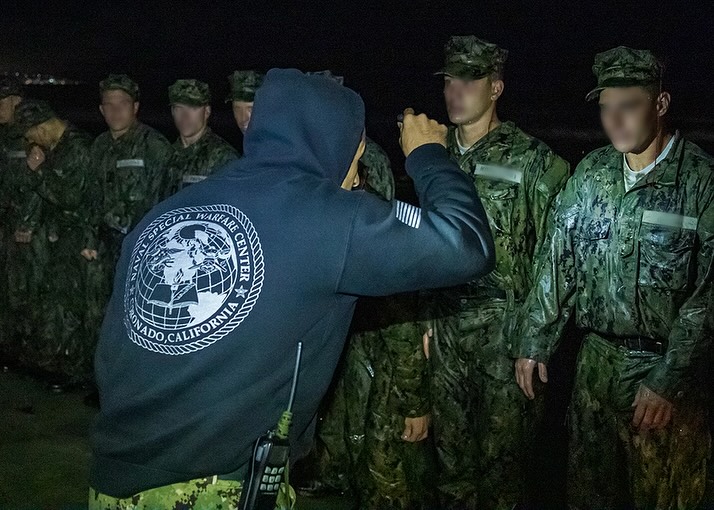
For military personnel, physical training isn't optional, it's built into the job. Most units rely on Unit PT (unit physical training) as the primary method to maintain baseline fitness, build cohesion, and prepare soldiers for operational demands. But the real question isn't whether Unit PT works, it's whether group PT alone is enough to build high-level performance, or whether a structured, periodized system delivers more. For anyone preparing for selection or chasing a standard above the minimum, that difference decides results.
But a growing number of tactical athletes are supplementing, or even replacing, Unit PT with structured systems like the Combat Fitness periodized training app. This creates a critical question:
Is traditional Unit PT enough to build high-level performance, or does a structured, individualized system produce better results?
The answer is not as straightforward as choosing one over the other. Each approach serves a different purpose and understanding those differences is key.
What Is Unit PT?
Unit PT refers to:
Organized group physical training within a military unit
Led by a designated PT leader or NCO
Conducted on a fixed schedule (typically early morning)
It typically includes:
Running
Bodyweight circuits
Group conditioning sessions
Occasional strength work
Unit PT is designed to:
Maintain baseline fitness
Build discipline and routine
Promote team cohesion
However, it is not always designed for:
Individual performance optimization
Long-term athletic development
Specific selection preparation
In practice, Unit PT is a readiness tool, not a development tool. It exists to keep an entire formation at a deployable baseline and to reinforce the discipline of training together, on schedule, regardless of who shows up motivated that morning. That mission is real and it matters. But it also sets the ceiling: programming written for thirty people of wildly different fitness levels cannot simultaneously be optimal for the strongest soldier in the formation and safe for the weakest. The result is competent maintenance, rarely targeted progression toward an individual standard.
What Is the Combat Fitness Periodized Training App?
Combat Fitness provides a structured, long-term training system delivered through an app.
It includes:
Periodized programming across strength, endurance, and rucking
Infinite progression (no fixed end date)
Tactical-specific training design
Integrated performance tracking and support
Rather than focusing on group execution, it focuses on:
Individual performance progression over time
This makes it particularly relevant for:
Selection candidates (SFAS, Ranger, PJ, etc.)
Career tactical athletes
Individuals seeking high-level readiness
The distinction is structure. Where Unit PT organizes a session, a periodized system organizes months and years, sequencing strength, endurance, and rucking so each block builds on the last instead of resetting every morning. That's the same logic behind the full Combat Fitness program library at /training-programs, where each plan maps to a specific goal rather than a one-size-fits-all formation. For a soldier whose target is a selection pipeline or a measurable performance jump, that long-arc structure is the difference between training hard and training toward something.
Training Philosophy: Group Standard vs Individual Optimization
Unit PT: Lowest Common Denominator
Unit PT must accommodate:
Large groups
Varying fitness levels
Limited time and equipment
As a result, it often defaults to:
Moderate intensity
Generalized programming
Scalable but non-specific workouts
This creates a “middle ground”:
Too easy for high performers
Too difficult for beginners
It ensures participation, but not optimization.
Combat Fitness: Individualized Progression Within a System
Combat Fitness is built around:
Structured progression
Individual pacing
Performance-based development
Athletes train:
At appropriate intensity levels
With targeted progression
Based on long-term goals
This allows for:
Faster improvement
Better adaptation
Reduced stagnation
This isn't just a programming preference, it shows up in the research. A 2017 meta-analysis by Williams and colleagues, pooling 18 studies in Sports Medicine, found that periodized resistance training produced significantly greater maximal-strength gains than non-periodized training. The mechanism is straightforward: planned variation in intensity and volume drives adaptation more reliably than repeating moderate, undifferentiated sessions. Unit PT, by design, tends toward the latter, steady effort without a structured progression curve. An individualized system applies the variable that actually moves the needle: deliberate, sequenced overload matched to where the athlete currently is.
Program Structure & Progression
Unit PT
Programming is often:
Day-to-day or week-to-week
Dependent on the PT leader
Focused on variety rather than progression
Common issues:
Lack of long-term planning
Inconsistent overload
Minimal tracking of progress
While sessions may be challenging, they are often:
Disconnected from a larger performance plan
Combat Fitness Training App
Combat Fitness is built on:
Phased periodization (accumulation, intensification, etc.)
Structured progression across months and years
Integrated strength, endurance, and tactical capacity
Each session:
Serves a purpose
Builds on previous training
Contributes to long-term outcomes
This creates:
Consistency
Measurable progress
Reduced guesswork
Concretely, that means a block of accumulation work building volume and base capacity feeds into an intensification block that sharpens output, which feeds into the next cycle rather than starting over. The athlete always knows why today's session exists and what it's setting up. Compare that to a Unit PT week assembled the night before by whichever NCO has the duty: each session may be hard, but hard and progressive aren't the same thing. Effort without sequencing produces fatigue; effort with sequencing produces adaptation. The structured system is built to ensure the second outcome, not just the first.
Specificity to Tactical Demands
Unit PT
While intended for military readiness, Unit PT often lacks:
Structured rucking progression
Load carriage optimization
Multi-domain integration (strength + endurance + fatigue)
Sessions may include:
Runs without progression plans
Circuits without load management
Limited strength development
Rucking is where this gap bites hardest. Knapik, Reynolds, and Harman, reviewing soldier load carriage in Military Medicine (2004), found that road-march speed and efficiency improve substantially with a deliberate program combining aerobic work, targeted resistance training, and regular progressive marching, not with occasional unloaded runs. Most Unit PT never builds that progression: load carriage shows up as an event to be survived, not a quality to be trained. A program built for operational demands treats rucking as its own progressive discipline, which is exactly how the military-specific plans at /military-fitness-programs are structured.
Combat Fitness
Designed specifically for:
Tactical performance
Real-world demands
Programming includes:
Rucking progression
Strength development
Aerobic and anaerobic conditioning
Hybrid performance integration
This reflects operational realities where athletes must:
Perform under load
Transition between tasks
Sustain output over time
Consistency vs Constraint
Unit PT
Advantages:
Built-in schedule
Mandatory participation
External accountability
Limitations:
Fixed timing
Limited flexibility
Conflicts with shift work or operational duties
Missed sessions often:
Cannot be recovered
Lead to inconsistent training
Combat Fitness App
Provides:
Complete schedule flexibility
Training anytime, anywhere
This allows athletes to:
Maintain consistency despite operational demands
Train around their schedule
Avoid missed sessions
For anyone working shifts, standing duty, or deployed without a predictable schedule, this is the deciding factor. A 0500 formation PT session you can't attend is simply lost, there's no makeup. A structured plan you control travels with you: it adapts to a field rotation, a night shift, or a deployment with no gym access. That last case is exactly why deployed and equipment-limited soldiers gravitate toward bodyweight-based options like the no-equipment programs at /no-gym-programs, which keep progression intact when the only available training space is wherever you're standing.
Consistency becomes:
Controlled by the athlete, not the unit schedule
Coaching, Feedback, and Accountability
Unit PT
Strengths:
Group accountability
Leadership presence
Immediate instruction (in some cases)
Limitations:
Limited individual feedback
Large group sizes reduce attention
Coaching quality varies significantly
Combat Fitness App
Provides:
Structured guidance
Support channels
Clear execution standards
Athletes develop:
Self-reliance
Awareness of training variables
Ownership of performance
This shift is critical for:
Advanced athletes
Selection candidates
Long-term development
Data, Tracking, and Progress Measurement
Unit PT
Tracking is typically:
Minimal or nonexistent
Based on periodic testing (e.g., fitness tests)
This leads to:
Limited visibility into progress
Reactive adjustments instead of proactive planning
Combat Fitness App
Integrates:
Performance tracking
Training logs
Progress monitoring
Athletes can:
Track improvements over time
Identify plateaus early
Adjust intelligently
Tracking isn't bureaucracy, it's how you avoid the two failure modes of unmanaged training. Gabbett's work on the training-injury prevention paradox (British Journal of Sports Medicine, 2016) showed that it isn't hard training that breaks athletes down; it's poorly managed load, spikes after gaps, or chronic under-loading that never builds capacity. Without data, Unit PT can't see either coming, so adjustments are reactive, made only after a failed fitness test or an injury. A logged, monitored system flags a plateau or an overreach while there's still time to correct it. Progress becomes something you steer, not something you discover later.
Progress becomes:
Objective, not assumed
Scalability and Long-Term Development
Unit PT
Best suited for:
Maintaining baseline fitness
Supporting general readiness
Not ideal for:
High-level performance development
Selection preparation
Multi-year progression
Combat Fitness
Built for:
Long-term athletic development
Continuous progression
Tactical readiness at higher levels
Athletes can:
Progress beyond baseline standards
Prepare for elite selections
Sustain performance over time
Cost vs Value
Unit PT
Pros:
No direct cost
Built into military structure
Cons:
Limited performance optimization
Opportunity cost of suboptimal training
It's worth being specific about the actual numbers. Combat Fitness runs at $49/month for CF ONE and $99/month for CF PRO, the latter built around full SOF and selection-pipeline preparation. Unit PT carries no line-item cost, and that's a genuine advantage. But "free" ignores opportunity cost: months of generalized training that leaves an athlete short of a selection standard isn't actually free, it's expensive in the currency that matters, which is readiness. The honest framing isn't cheap versus paid; it's whether the outcome you need is one that group maintenance can produce at all.
Combat Fitness App
Pros:
Structured system
Long-term progression
Tactical specificity
Cons:
Monthly subscription
However, the value lies in:
Better results
Faster progression
Reduced inefficiency
Which One Is Better?
Unit PT Is Better For:
Maintaining baseline fitness
Building team cohesion
Establishing routine and discipline
Combat Fitness Is Better For:
Selection preparation
High-level performance development
Tactical athletes seeking progression
Individuals who want structured, effective training
Final Comparison Summary
At a high level:
Unit PT builds discipline and baseline fitness
Combat Fitness builds performance and progression
Unit PT serves the organization.
Combat Fitness serves the individual.
For athletes aiming to:
Exceed standards
Prepare for selection
Build long-term capability
A structured system provides a clear advantage. None of this means Unit PT is the enemy. It does its job, it keeps formations deployable and builds the habit of showing up. The point is narrower and more useful: group PT is a floor, not a ceiling. If your goal is to hold a baseline alongside your unit, Unit PT covers it. If your goal is to pass a selection, recover from a plateau, or simply train toward a standard above the minimum, you need a system that progresses you as an individual. For most serious tactical athletes, the smartest move isn't choosing one, it's using Unit PT for the floor and a structured plan to climb past it.
FAQ Section
Is Unit PT enough for military performance?
It is enough to maintain baseline fitness, but often insufficient for high-level performance or selection preparation.
Can Combat Fitness replace Unit PT?
In most cases, Unit PT is mandatory. However, Combat Fitness can be used to supplement or enhance training outside of scheduled sessions.
Why do many soldiers train outside of Unit PT?
Because Unit PT often lacks the structure and specificity needed for individual goals, especially for selection or advanced performance.
Is Combat Fitness only for elite athletes?
No. It is scalable and can be used by athletes at various levels, though it is particularly valuable for those seeking higher performance.
What is the biggest limitation of Unit PT?
The need to train large groups leads to generalized programming that does not optimize individual performance.
How should athletes combine both?
The most effective approach is often:
Use Unit PT for baseline training and cohesion
Use Combat Fitness for structured progression and performance development
References
Gabbett, T.J. (2016). The training-injury prevention paradox: should athletes be training smarter and harder? British Journal of Sports Medicine, 50(5), 273–280.
Knapik, J.J., Reynolds, K.L., & Harman, E. (2004). Soldier load carriage: historical, physiological, biomechanical, and medical aspects. Military Medicine, 169(1), 45–56.
Williams, T.D., Tolusso, D.V., Fedewa, M.V., & Esco, M.R. (2017). Comparison of periodized and non-periodized resistance training on maximal strength: a meta-analysis. Sports Medicine, 47(10), 2083–2100.
This comparison reflects Combat Fitness's editorial perspective as a tactical-training provider and is accurate as of the date of publication; pricing and program details are subject to change.


