
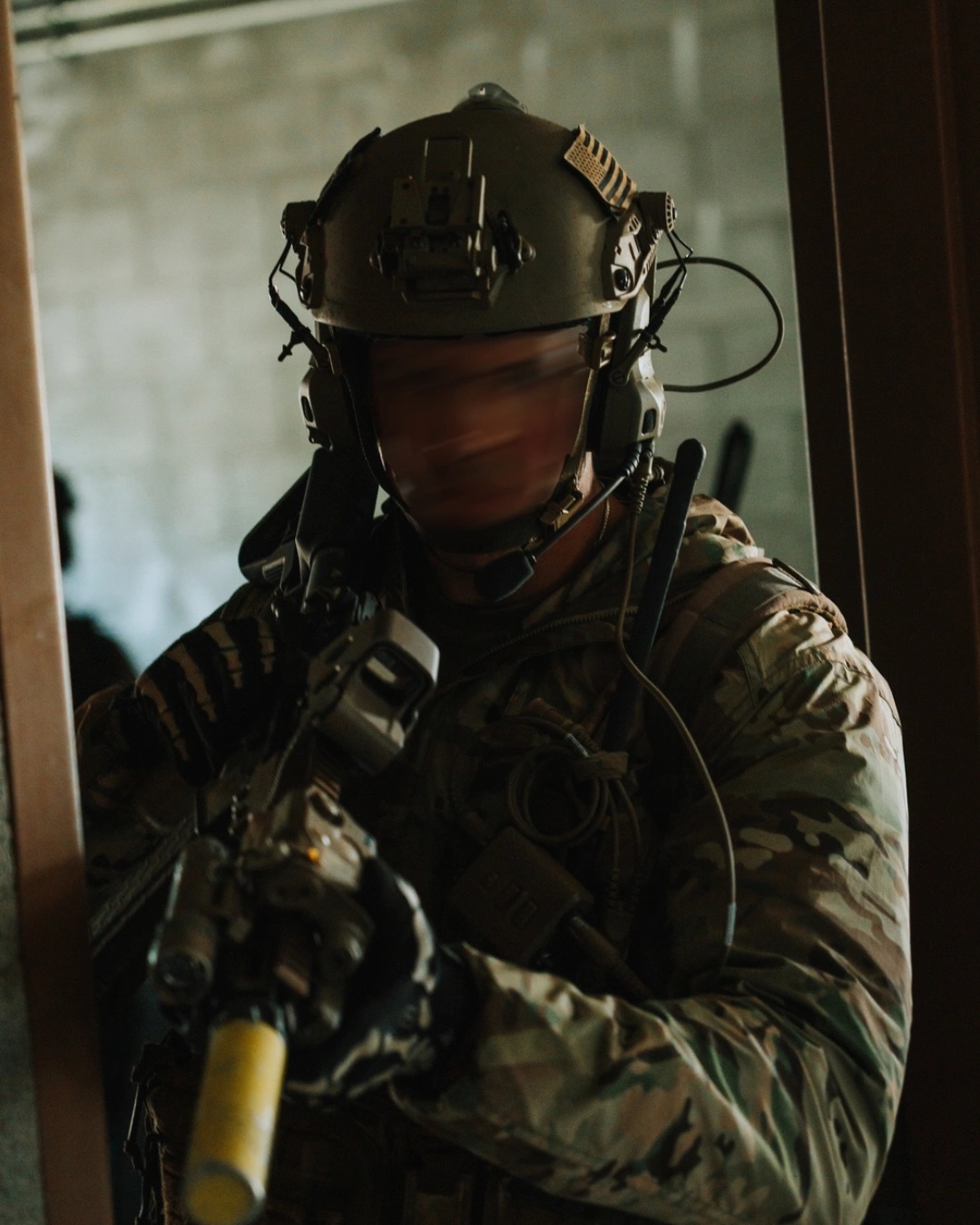
Delta Force vs Navy SEALs: Key Differences | Combat Fitness
Delta Force vs Navy SEALs: How the Two Units Differ
Delta Force and the Navy SEALs are both tier-one American special operations units, and the real differences come down to branch, entry path, and mission emphasis rather than one unit being harder or better than the other. Delta belongs to the Army and recruits almost entirely from soldiers who already hold a special operations or combat arms background. The SEALs belong to the Navy, carry a maritime mission set, and take candidates straight off the street as well as from the fleet. If you are reading this because you are choosing a pipeline to train for, our tactical fitness programs are built around the demands both selections share. Here is the full side by side: structure, selection, missions, command, and where Green Berets and Rangers fit.
Key Takeaways:
Delta Force is an Army unit. The SEALs are a Navy force. Both tier-one elements answer to Joint Special Operations Command for operations.
Most people comparing Delta to the SEALs are comparing Delta to SEAL Team 6. The SEAL Teams and the tier-one element are not the same thing.
Delta selects mostly from serving soldiers with prior special operations or combat arms time. BUD/S accepts candidates from a far wider pool, including new enlistees.
The mission sets overlap heavily. Direct action, hostage rescue, and special reconnaissance sit on both lists. Maritime access and force size are the honest points of difference.
Neither pipeline rewards a single fitness quality. Load carriage, water competence, running under fatigue, and strength endurance decide both.
Delta Force vs Navy SEALs: The Short Answer
Delta Force is the Army's tier-one special mission unit, formally the 1st Special Forces Operational Detachment-Delta, and it selects primarily from soldiers already serving. The Navy SEALs are a larger Naval Special Warfare force organized into numbered SEAL Teams, of which the Naval Special Warfare Development Group, known publicly as SEAL Team 6, is the tier-one element. Both report to Joint Special Operations Command for tier-one tasking.
The table below is the fast version. Everything after it is the reasoning.
Figure 1.1 - Delta Force and the Navy SEALs compared properly, in three columns rather than two. Every part of 1st SFOD-D is tier one, but on the Navy side only SEAL Team 6, formally the Naval Special Warfare Development Group, answers to Joint Special Operations Command; the numbered SEAL Teams work for theater special operations commands. That makes the conventional SEAL pipeline the wrong comparison for Delta. Delta recruits serving Army soldiers only, NCOs E-5 to E-8 and officers Captain to Major, drawn heavily from Special Forces, the Ranger Regiment and the 82nd Airborne, through a three-to-four-week Selection held twice a year and a six-month Operator Training Course, roughly seven months of formal courses on top of years already served. The SEAL route runs about 59 weeks from prep school through BUD/S at 24 weeks and SEAL Qualification Training at 26 weeks to the Trident, and a candidate for SEAL Team 6 must then serve in a Team for at least two deployments before attempting Green Team, an eight-month course that fails about half its candidates. Delta also carries the cover names Combat Applications Group and Army Compartmented Element and is not officially acknowledged, so its figures come from open reporting rather than an Army release. Sources: GlobalSecurity, American Special Ops, Naval Special Warfare Development Group and U.S. Navy SEAL training references.
What Delta Force Is and How It Is Organized
Delta Force is the Army's dedicated counterterrorism and hostage rescue unit, formed in the late 1970s and based at Fort Bragg. Its formal designation is the 1st Special Forces Operational Detachment-Delta, and it has carried several other names in official use over the years, including Combat Applications Group and the JSOC task force designation Task Force Green. That naming problem is not trivia. It is the clearest signal of how the two units differ in public posture.
The Army does not acknowledge Delta the way the Navy acknowledges the SEALs. There is no recruiting page, no official fact sheet, and no published training pipeline. What exists in the open record is a mix of unit recruiting notices posted internally at Fort Bragg, congressional testimony, and first-hand accounts from former members. Treat any confident number about Delta, including the ones later in this post, as reported rather than confirmed.
Administratively the unit sits under U.S. Army Special Operations Command. Operationally it answers to Joint Special Operations Command. If you want the longer history and the unit's development from the Son Tay generation onward, we cover what Delta Force is in a dedicated post.
What the Navy SEALs Are, and Where SEAL Team 6 Fits
The Navy SEALs are the sea, air, and land component of Naval Special Warfare Command, organized into numbered SEAL Teams plus their supporting SEAL Delivery Vehicle and special boat units. A SEAL Team is a standing special operations formation with a geographic focus, and there are several of them. That is the piece most comparisons skip.
Within that structure sits the Naval Special Warfare Development Group. Publicly it is still called SEAL Team 6, though the original Team 6 was disbanded in 1987. DEVGRU is the Navy's tier-one special mission unit and the true counterpart to Delta. It draws from experienced SEALs who have already completed deployments, then runs them through an internal selection and training course of roughly eight months with attrition reported near half.
This distinction matters more than anything else on this page. When someone asks whether Delta is better than the SEALs, they are usually comparing an Army tier-one unit against a Navy force of several thousand. The apples-to-apples comparison is Delta against SEAL Team 6, and we break that unit down separately.
Selection and Training Compared
Both pipelines are long, and neither is a single event. The difference is where they start.
The SEAL path is open at the entry level. A civilian can enlist on a SEAL contract, pass the Physical Screening Test, and go through Naval Special Warfare Prep School, a roughly 24-week Basic Underwater Demolition/SEAL course split into three phases, Army airborne training, and a 26-week SEAL Qualification Training course before earning the trident. Hell Week sits inside the first phase and runs about five and a half days of continuous training on minimal sleep. Total time from ship date to a SEAL Team is close to a year, and published progression data shows only a small fraction of people who start the process finish it.
Delta's path is closed at the entry level. Open reporting describes a roughly four-week selection held twice a year in the mountains of West Virginia, built around long individual land navigation movements under load with no feedback, followed by a months-long Operator Training Course for those who pass. Reported prerequisites include several years of service, a rank band in the junior NCO range, airborne qualification, a minimum general technical score, and eligibility for a security clearance. Nobody arrives at Delta selection as their first military experience.
Figure 1.2 - the Delta Force and Navy SEAL pipelines compared stage by stage, with attrition. The SEAL path is open at entry: a civilian passes the Physical Screening Test, 500-yard swim in 12:30, 50 push-ups, 50 curl-ups, 10 pull-ups and a 10:30 mile-and-a-half as minimums, against competitive marks of 8:00, 80 to 100, 15 to 20 and around 9:00, then runs nine weeks of boot camp, Naval Special Warfare Prep School, 24 weeks of BUD/S in three phases, airborne training and 26 weeks of SEAL Qualification Training, roughly sixteen months from ship date rather than the twelve often quoted. Hell Week sits at the end of First Phase: about five and a half days of continuous training on some four hours of sleep. A 2023 Navy report gives the attrition shape rarely published: 68% average since November 1998, with 66% of it in First Phase and 21% in Hell Week alone, collapsing to 5% in Second Phase and 3% in Third, and splitting 39% for officers against 79% for enlisted. Delta's path is closed at entry, a four-week Selection held twice a year at Camp Dawson, West Virginia, built on solo land navigation under a ruck with no feedback, then a six-month Operator Training Course, and nobody arrives without four to six years already served. Its attrition is not published; one first-hand account of a single class puts it near 90%. Sources: MILPERSMAN 1220-410, U.S. Navy BUD/S Class 352 investigation report, Task & Purpose, Sandboxx, American Special Ops.
The physical content differs in emphasis, not in kind. BUD/S loads water competence, surf, cold exposure, and evolutions run in boat crews. Delta selection loads solo distance movement under a rucksack over broken terrain, which punishes anyone whose aerobic base and load tolerance were built on a treadmill. Research on Army Special Forces Assessment and Selection has consistently found that ruck-march performance and aerobic capacity are among the strongest physical predictors of completion, which is why our guidance on selection and what it demands puts load carriage at the center of the peaking block.
Missions and Specialization
Both units are assigned direct action, hostage rescue, counterterrorism, and special reconnaissance. On paper the lists are close enough to be nearly interchangeable at the tier-one level, and the units have shared task forces on the same deployments for two decades.
The differences are structural. The SEALs own the maritime environment as a matter of doctrine and force design. Combat diving, ship boarding, submarine lock-out, and small-boat infiltration are core Naval Special Warfare skills, and the training pipeline reflects that with an entire seven-week phase devoted to combat diving. Delta has water capability but no maritime identity. Its center of gravity is precision land operations against high-value targets, hostage rescue, and the associated reconnaissance.
Force size is the other honest difference. Naval Special Warfare fields a few thousand SEALs across many teams with a broad task list. Delta is a single unit measured in hundreds, tasked narrowly. That changes the day-to-day job substantially, and if you want the texture of what that job looks like, we have written about life as a special operator in more detail.
Anyone claiming a clean capability gap between the two is selling something. They are peers with different origins.
Command Structure: Both Answer to JSOC
Delta Force is an Army unit. The Navy SEALs are a Navy force. Both sit under U.S. Special Operations Command, and both tier-one elements, Delta and DEVGRU, fall under Joint Special Operations Command for operational control. JSOC was created in 1980 to give the national command authority a standing joint headquarters for exactly this kind of task, and it is the reason two units from different services routinely operate as one task force.
That answers most of the confusion in this comparison. They are not competing organizations in the same chain. They are service-provided units feeding a joint command. For the service question on its own, we cover which branch Delta Force is in separately.
Which Is Harder to Get Into?
Delta selection has the narrower filter, but a narrower filter is not the same as a harder course. Delta screens a population that has already survived Army selection standards, so the pool arriving at Camp Dawson is pre-filtered. BUD/S screens a population that includes people who have never worn a uniform, which is why its raw attrition number looks so much worse.
Comparing the two by attrition percentage is a category error. A high failure rate measured against unselected civilians and a high failure rate measured against experienced special operations soldiers are not measuring the same thing.
The useful framing is prerequisites. To attempt BUD/S you need a PST score, a contract, and a willingness to be cold and wet for six months. To attempt Delta selection you need years of service, a supporting record, a clearance, and in practice a background that already includes a hard course. One is a door you can walk to. The other is a door you have to earn your way to over several years.
For a candidate deciding today, that means the SEAL question is whether you can pass a physical standard and hold under stress. The Delta question is whether you are willing to spend the first four to six years of a career earning the chance to try.
Adding Green Berets and Rangers to the Comparison
The comparison people search for is rarely limited to two units. Delta, the SEALs, the Green Berets, and the 75th Ranger Regiment get compared in every possible combination, and the four-column table below answers most of those permutations at once.
Figure 1.3 - Delta Force, the Navy SEALs, the Green Berets and the 75th Ranger Regiment compared across branch, command, tier, role, entry, qualification and team size. Three of the four are Army. Delta takes serving soldiers through a four-week internal Selection and a six-month Operator Training Course; the SEALs take civilians through 24 weeks of BUD/S and 26 weeks of SEAL Qualification Training; the Green Berets take soldiers through 24 days of Special Forces Assessment and Selection and a Qualification Course that runs 56 to 95 weeks, the spread driven by language category and specialty, about 14 weeks for a weapons, engineer or communications sergeant against roughly 50 for a medic. The Rangers have no separate qualification course at all: RASP 1 runs eight weeks for privates through sergeants and RASP 2 three weeks for sergeants promotable through captains, and assignment to a battalion follows. Ranger School is a separate thing entirely, a Training and Doctrine Command leadership school open to every service, not required to join the Regiment, but mandatory for infantry and artillery Rangers before they take a leadership role. Sources: U.S. Army 75th Ranger Regiment and Special Forces training references, U.S. Navy SEAL pipeline lengths, GlobalSecurity and American Special Ops for 1st SFOD-D.
Green Berets vs Army Rangers
Green Berets and Rangers are both Army, both under U.S. Army Special Operations Command, and they do different jobs. Special Forces soldiers are trained for unconventional warfare and foreign internal defense, which means working by, with, and through partner forces, and they carry a language requirement. Rangers are the Army's premier direct-action raid force, organized for airfield seizure and large-scale raids at speed. Selection reflects that split: the Special Forces path runs a 24-day assessment and a Qualification Course of roughly a year, while the Ranger path runs an eight-week Ranger Assessment and Selection Program for enlisted soldiers. If you want the full Green Beret training path, and the separate Army Ranger requirements, both are covered in depth.
Navy SEALs vs Army Rangers
A Navy SEAL and an Army Ranger are not competing for the same job. Rangers fight as a regiment, moving in platoons and companies against fixed objectives. SEALs operate in far smaller elements with a maritime and reconnaissance bias. The Ranger pipeline is shorter and the unit is larger, which makes it a realistic first special operations assignment for a young soldier in a way that a tier-one unit never is.
Green Berets vs Navy SEALs
Green Berets and SEALs are the closest match on this list in terms of team size and mission philosophy, and the sharpest contrast is organizational. A Special Forces Operational Detachment Alpha is a twelve-man team built with paired specialties so it can split and still function, and it is designed to train foreign forces for months at a time. SEAL platoons are built for shorter direct-action and reconnaissance tasks. The Special Forces team structure is the clearest illustration of how differently these units are assembled.
Who Would Win?
This question does not have an answer, and the framing is wrong. Delta and DEVGRU train together, share task forces, and deploy on the same missions under the same joint command. There is no scenario in which the two are measured against each other, and the operators involved would find the question tedious. If you are asking it as a proxy for which unit to pursue, the sections above are the real answer.
Training for Either Pipeline
If you are training toward either pipeline, the overlap matters more than the differences. Four qualities decide both selections.
Load carriage capacity. Delta selection is built on long individual movements under a rucksack, and Special Forces selection research points at ruck performance as a primary predictor. Load carriage is a structural adaptation of tendon, bone, and postural endurance, and it is developed by progressive time under load rather than by running more.
Water competence. The SEAL path makes this non-negotiable, and even on the Army side, comfort in the water removes a failure mode. Swimming with a mask and fins and treading with hands out of the water are trained skills, not talents.
Running under fatigue. Both pipelines test aerobic capacity after sleep loss, not fresh. Building the aerobic base first and then layering fatigued running protects the base instead of eroding it.
Strength endurance in the upper body. Repetition standards for pushups, pull-ups, and situps are entry gates, not the goal. The real requirement is repeatable output over weeks.
Piecing that together yourself is the common failure. Most candidates over-train the quality they are already good at and neglect the one that will fail them. If you are weighing coaching options, we have put SEAL-style training programs compared against structured tactical programming, and our guide to choosing a training program walks through how to evaluate any of them honestly. For candidates who want the plan built and progressed for them, structured tactical training programs remove the guesswork from the eight to twelve months before a selection date.
FAQ: Frequently Asked Questions
What is the difference between Delta Force and the Navy SEALs?
Delta Force is an Army tier-one special mission unit that recruits primarily from serving soldiers, with a focus on hostage rescue, counterterrorism, and precision land operations. The Navy SEALs are a larger Naval Special Warfare force with a maritime mission set that accepts candidates from civilian life. The tier-one Navy equivalent to Delta is SEAL Team 6.
Are Delta Force and SEAL Team 6 the same thing?
No. The original SEAL Team 6 was disbanded in 1987 and its role passed to the Naval Special Warfare Development Group, which is still called SEAL Team 6 in public. Delta is the Army's tier-one unit and DEVGRU is the Navy's. They are separate units from separate services that both answer to Joint Special Operations Command.
Which branch is Delta Force in?
Delta Force is a United States Army unit. It falls administratively under U.S. Army Special Operations Command and operationally under Joint Special Operations Command. The Navy equivalent is DEVGRU. The service distinction also explains the recruiting difference, since Delta draws from soldiers who are already serving.
Is Delta Force harder to get into than the SEALs?
By raw attrition the numbers favor Delta being harder, but the comparison is not clean. Delta screens experienced special operations and combat arms soldiers, while BUD/S screens a much wider pool including new enlistees. Delta has the higher barrier to entry because of its prerequisites. BUD/S has the higher volume of failures.
Do Delta Force and the SEALs work together?
Yes. Delta and DEVGRU both fall under Joint Special Operations Command and have operated in the same joint task forces for decades, alongside Rangers, Air Force special tactics, and partner-nation units. Interoperability between them is the reason JSOC was created after the failed Iran hostage rescue attempt in 1980.
How long is selection for each unit?
The SEAL pipeline runs close to a year from prep school through BUD/S and SEAL Qualification Training. Delta selection is reported at roughly four weeks, followed by an Operator Training Course lasting several months, but candidates typically spend years in the Army before they are eligible to attempt it.
Delta Force vs Navy SEALs is a comparison of two peer tier-one units with different services, different entry paths, and different environmental specialties, not a ranking. Pick the pipeline that matches the career you want and the environment you will train in for years, then build the physical base it demands. Load carriage, water competence, aerobic capacity under fatigue, and strength endurance are the common currency, and they take months to develop. Start building them now, and choose the unit with your eyes open.
References:
U.S. Army. "Special Forces." goarmy.com. Special Forces Preparation Course (6 weeks), Special Forces Assessment and Selection (24 days), Special Forces Qualification Course (53 weeks), 18X eligibility criteria.
U.S. Army. "U.S. Army Rangers." army.mil. 75th Ranger Regiment mission, RASP 1 (8 weeks, E1 to E5) and RASP 2 (3 weeks).
U.S. Army. "Ten things you didn't know about the 75th Ranger Regiment."
U.S. Special Operations Command. "About USSOCOM." Component commands including Joint Special Operations Command, Naval Special Warfare Command, and Army Special Operations Command.
U.S. Navy. "Special Operations Careers." navy.com. SEAL mission description and Physical Screening Test.
MyNavy HR. MILPERSMAN 1220-410, SEAL and SWCC program eligibility and screening requirements.
Naval Special Warfare Center published training pipeline descriptions. Naval Special Warfare Preparatory School, BUD/S three-phase structure (approximately 24 weeks), Hell Week (approximately 5.5 days), SEAL Qualification Training (26 weeks).
Knapik JJ, Reynolds KL, Harman E. "Soldier load carriage: historical, physiological, biomechanical, and medical aspects." Military Medicine, 2004;169(1):45-56.
Orr R, et al. "Soldier Load Carriage, Injuries, Rehabilitation and Physical Conditioning: An International Approach." International Journal of Environmental Research and Public Health, 2021;18(8):4010.
"Physical performance, demographic, psychological, and physiological predictors of success in the U.S. Army Special Forces Assessment and Selection course." Physiology and Behavior, 2019.
"Psychophysiological Patterns Related to Success in a Special Operation Selection Course." Frontiers in Physiology, 2019;10:867.
"A Meta-Analytic Predictive Approach to Fitness-Related Dropout Rates of Special Operations Forces Candidates." Military Medicine.
Disclaimer: This article is for informational and training purposes only. It is not affiliated with, endorsed by, or an official publication of the U.S. Department of Defense or any branch of the U.S. Armed Forces. Selection standards, entry requirements, and training pipelines change; confirm current requirements with an official recruiter or your chain of command. Consult a qualified medical professional before beginning any new training program.


