
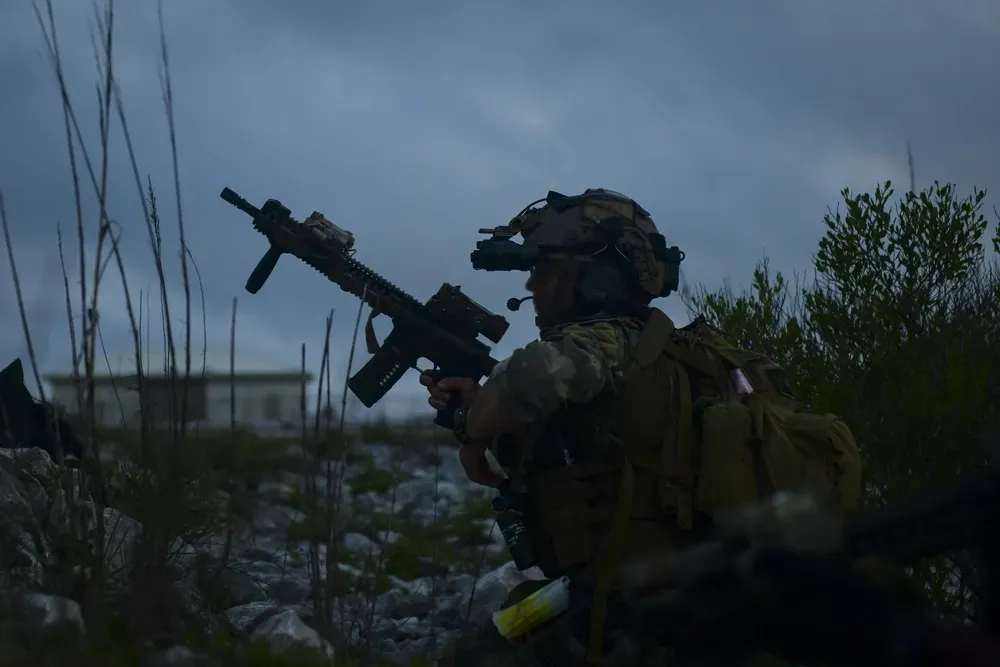
US Army Ranger Requirements: 75th Regiment & RASP Guide
Qualifications for the 75th Ranger Regiment & RASP
You've seen them in movies: the elite soldiers called upon for the world's most dangerous missions. But becoming one is not a job you simply choose, it's an honor you earn by surviving a selection process designed to make most people fail. This guide breaks down US Army Ranger requirements for the 75th Ranger Regiment in plain terms: who is eligible, the physical and mental standards, and how RASP, the Ranger Assessment and Selection Program, decides who makes the cut.
To join the legendary 75th Ranger Regiment, every candidate, from new recruits to seasoned soldiers, must first pass the Ranger Assessment and Selection Program. RASP stands for Ranger Assessment and Selection Program: an eight-week course, run by official Army standards, that functions as the world's most intense job interview. It is a crucible built to find the few who possess unbreakable mental and physical resilience. Essential qualifications for becoming a Ranger are best developed through a structured military training system. The path to meet US Army Ranger requirements is defined by pain, exhaustion, and extreme psychological pressure, and it begins long before selection, with structured preparation.
Candidates who want to make sure they prepare properly for RASP should start with the RASP program buying guide. Many of the questions candidates ask most often are answered in the RASP program FAQ.
The short answer, before the detail:
Figure 1.1 - Army Ranger and RASP requirements at a glance, current as of August 2026. Enlistment age, the minimum ASVAB score, RASP length and attrition, with two answers corrected against official sources: the Army raised the maximum enlistment age from 35 to 42 in March 2026, and the published Ranger minimum is an ASVAB TECH score of 105 rather than a GT score. RASP 1 runs eight weeks for E-1 to E-5, RASP 2 three weeks for officers and senior NCOs, and attrition sits above 50 percent. Sources: AR 601-210 (March 2026).
Everything below explains what sits behind those numbers.
What Is a 75th Ranger Regiment Ranger (And How They Differ From Special Forces)
A modern Ranger is a soldier serving in the elite 75th Ranger Regiment, the U.S. Army's premier direct-action raid force. Life in the 75th Ranger Regiment revolves around preparing for and executing missions that require speed, precision, and overwhelming force, such as seizing an airfield or capturing a high-value enemy leader in a surprise assault. This role is often compared with the Green Beret training path.
This highly specialized role is often confused with that of the Army's other famous elite, the Special Forces or "Green Berets." An easy way to frame the Special Forces vs. Army Rangers debate is to think of them as different tools for different problems. Rangers are the sledgehammer, designed for short-duration, high-intensity strikes. Green Berets, conversely, specialize in unconventional warfare: they might spend years in a foreign country, learning the language and training local allies to handle their own fights.
Serving as a Ranger means holding a full-time job in one of the world's most disciplined light infantry forces. It is not just a title or a school; it's a specific role in a unit with a distinct and demanding mission. But before anyone can attempt to join this brotherhood, they must pass through several critical gates.
The First Gate: Are You Even Eligible to Try?
Before any aspiring soldier can dream of the physical challenges, they must clear a series of fundamental hurdles. The U.S. Army sets strict, non-negotiable prerequisites for the civilian-to-Ranger pipeline, and failing even one means the journey ends before it begins.
Figure 1.2 - Army Ranger requirements checked against official sources, August 2026. Citizenship, age, education, ASVAB score, security clearance, Airborne School and service obligation, each marked as verified, corrected, or missing. Two rows need edits: the Army raised the maximum enlistment age from 35 to 42 in March 2026, and the published minimum is an ASVAB TECH score of 105 rather than a GT score. Two gates are missing from the standard list - MOS eligibility and the published pre-RASP physical standards of 41 hand-release push-ups, a 2:35 plank, six pull-ups, a two-mile run and a six-mile ruck march. Sources: the 75th Ranger Regiment's recruiting page at and AR 601-210 (March 2026).
Perhaps the most critical hurdle is earning a Secret security clearance. This is not a simple background check; it's a thorough investigation into your entire life, from finances to past conduct. Because Rangers are entrusted with classified mission details for high-stakes operations, the Army must be certain you are responsible and trustworthy. A clean record isn't just a recommendation; it's mandatory.
Clearing these administrative gates only earns a spot at the starting line. The next step is securing the special enlistment contract that guarantees a shot at the legendary selection course.
How an 'Option 40' Contract Guarantees Your Shot at Selection
Simply meeting the basic requirements isn't enough; you need a special ticket to the tryouts. In the Army, this ticket is the "Option 40" contract, a specific add-on to your enlistment agreement. It guarantees you a spot to attend the Ranger Assessment and Selection Program (RASP), the grueling course where candidates are weeded out. Securing this contract is the only way a new soldier is guaranteed a shot at joining the 75th Ranger Regiment.
To qualify for this contract, you must first prove your mental aptitude on the Armed Services Vocational Aptitude Battery (ASVAB). The key metric is your General Technical (GT) score, which measures problem-solving and verbal skills. Aspiring Rangers need a minimum GT score of 105, a standard ensuring they can think clearly under the extreme pressure of Ranger operations. This is a non-negotiable academic hurdle.
An Option 40 contract promises an opportunity, not an outcome. It secures your path through Basic Training and then Airborne School, delivering you to the doorstep of RASP. The contract only gets you to the starting line; surviving the selection course is a test you must pass on your own.
What Is RASP? The 8-Week Course Where Most Candidates Do Not Finish
After earning your parachute wings, your Option 40 contract delivers you to the main event: the eight-week Ranger Assessment and Selection Program, known throughout the Army simply as RASP. RASP is not a school; it is the sole gateway to the 75th Ranger Regiment. Think of it as the most grueling job interview on earth, where every action is a test of whether you have what it takes to stand in the ranks of America's premier direct-action raid force.
RASP 1 is the eight-week course for junior enlisted soldiers, pay grades E-1 through E-5, and it runs in two phases. Phase 1 is the assessment: critical events, physical benchmarks, land navigation, and foundational skills. Phase 2 shifts to marksmanship, breaching, mobility, and continued fitness. Senior NCOs, officers and warrant officers attend RASP 2, a shorter course of roughly three weeks.
While the physical standards are punishing, RASP's true goal is to test character under extreme duress. The course is engineered to see who remains a team player and who quits when pushed to their absolute mental and physical limits. The numbers tell the story: published figures put attrition above 50 percent, and individual classes have run considerably higher. The Regiment does not release current class-by-class pass rates, so treat any precise percentage you see quoted with caution. What is not in doubt is the direction: most people who start RASP do not finish it.
Surviving Phase 1: The Brutal Physical Standards of RASP
The first phase of RASP wastes no time weeding out those who aren't physically prepared. To survive the initial cuts, candidates must clear the Ranger Physical Assessment Test (RPAT), a non-negotiable battery of events that far exceeds the standard Army fitness test. These are the army ranger physical requirements that screen out unprepared candidates first.
There are two sets of numbers, and confusing them is how candidates arrive underprepared. There is the standard that gets you in the door, and there is the standard that gets you through.
The pre-RASP entry screen. Clear this to class up:
Figure 1.3 The pre-RASP entry screen, checked against current Army standards. The Army's published pre-RASP requirements are 41 hand-release push-ups, a two-minute-35-second plank, six pull-ups, a two-mile run and a six-mile ruck march - not the APFT-era 53 push-ups, 63 sit-ups and four pull-ups still in circulation. Sit-ups are not an event in the Army Fitness Test, which replaced the ACFT on 1 June 2025 with the deadlift, hand-release push-up, sprint-drag-carry, plank and two-mile run. Sources: goarmy.com Army Rangers page and army.mil/aft.
Graded events during RASP:
Figure 1.4 - Graded events inside RASP, with published standards separated from reported ones. The five-mile run under 40 minutes, the 12-mile march with a 35-pound ruck and the 15-meter swim in full uniform are stated by the Army; the three-hour ruck cut-off and the six-chin-up minimum come from community material. The table also covers the 6, 8, 10 and 12-mile ruck progression at 35 pounds dry and the non-physical graded events - day and night land navigation, the first-responder test and the Ranger history and Creed screenings. Source: goarmy.com, Army Rangers careers page.
Cadre do not publish a single universal pass/fail time for every iteration of these events, so treat the minimums as a floor rather than a target. The full breakdown of each event, including form standards and the pacing strategy for the ruck, is in the pre-RASP PT test guide.
Among these events, the ruck march is a cornerstone of Ranger life. This isn't a casual hike; it's a high-speed, forced march carrying a rucksack (or "ruck") that weighs at least 35 pounds dry, before water, a rifle, and other gear are added. It's a brutal test designed to measure a candidate's physical endurance and, more importantly, their mental refusal to quit.
These aren't isolated tests performed on a fresh day. RASP is designed to grind candidates down with constant movement, minimal sleep, and relentless pressure. Passing the RPAT is one thing; performing similar feats days later, while exhausted and hungry, is the real measure. This is why the competitive column matters more than the minimum column. A candidate who arrives able to run exactly 40 minutes for five miles has no margin, and RASP is an eight-week test of margin. This constant physical stress is the tool instructors use to expose a candidate's true character.
Beyond Brawn: Why Mental Toughness Is the Real Test at RASP
While the physical standards are brutal, they serve a deeper purpose: to strip away a candidate's energy and expose their true character. RASP is designed to see who can still think clearly, lead effectively, and remain a team player when pushed to the absolute brink of exhaustion. Instructors create this fatigue on purpose, knowing that a person's real decision-making ability only surfaces when they are cold, hungry, and have been awake for 20 hours straight.
This mental screening is most obvious during events like land navigation. Imagine being sent into miles of dense, unfamiliar woods in the dead of night with only a map and a compass. It's a test not just of skill, but of an individual's ability to handle stress and frustration alone. In team-based challenges, instructors are watching for something else entirely: selfishness. They want to see who helps a struggling teammate and who looks out only for themselves. In the world of Rangers, where lives depend on teamwork, a selfish attitude is an immediate disqualifier.
More candidates fail RASP for giving up or for a "character flaw" than for purely physical reasons. It isn't a program for the strongest athlete; it's a search for individuals with unbreakable integrity and resilience. For those who prove they have this unshakeable character, they earn the tan beret and a place in the 75th Ranger Regiment.
Ranger School vs. the 75th Ranger Regiment: The #1 Point of Confusion
A simple analogy from professional sports helps untangle this common mix-up. The 75th Ranger Regiment is an exclusive, operational unit, like a starting roster for an NFL team. You must pass the brutal tryout (RASP) to get on this team and earn the right to wear their uniform, symbolized by the tan beret.
Ranger School, in contrast, is an entirely separate leadership course open to soldiers from all across the Army. Think of it as the league's most punishing and prestigious coaching clinic. A soldier proves they belong in the Regiment by conquering RASP. Once they join, they are a U.S. Army Ranger. Later in their career, that Ranger leader will attend the 62-day Ranger School to further hone their leadership skills. Anyone, from the infantry, engineers, or even supply clerks, can volunteer for Ranger School to test their limits. If they graduate, they earn the coveted black-and-gold "RANGER" tab, but it doesn't mean they are in the 75th Ranger Regiment.
Figure 1.5 - RASP compared with Ranger School. What each is, who can attend, what it earns, how long it runs, whether it puts a soldier in the 75th Ranger Regiment, and the entry fitness standard for each. RASP 1 runs eight weeks and is the only route into the Regiment; Ranger School runs 61 days across the Darby, Mountain and Swamp phases, is open to any Army volunteer, and awards the Ranger Tab without an assignment to the Regiment. Ranger School's entry test is now the Ranger Combat Fitness Assessment, in place since June 2025 - a 12-minute-30-second combat circuit, a four-mile run in 32 minutes and six strict chin-ups. Sources: army.mil/ranger and the Army's RCFA announcement.
The short version: RASP gets you into the Regiment. Ranger School gets you a tab. Most Rangers eventually have both. Plenty of soldiers who wear the tab have never served in the Regiment.
The distinction is crucial: you join the Regiment by passing RASP, not by graduating from Ranger School. While most members of the Regiment will eventually earn the Ranger Tab, many soldiers who wear the tab serve in conventional Army units.
You Passed RASP: What Does Life in the 75th Ranger Regiment Look Like?
For the few who pass RASP, the reward is the iconic tan beret, marking their entry into the brotherhood. But earning a place in the Regiment is not the finish line; it's the beginning. Life in the 75th Ranger Regiment is one of constant, advanced training and a state of readiness so high that the Regiment can put a full Ranger battalion in the air within 18 hours of an alert notification. Holding that standard is not a scheduling achievement; it is a training one, and it is why the preparation never stops.
The test is never truly over; it just evolves. Rangers are held to a standard that is earned, tested, and re-earned daily through relentless preparation. Meeting US Army Ranger requirements is not a gift; it is a commitment that starts the day a candidate decides to prepare seriously for selection.
Frequently Asked Questions
What are the requirements to become an Army Ranger?
You must be a U.S. citizen, 17 to 35 years old (waivers are possible for prior service), hold a high school diploma or GED, score a minimum GT of 105 on the ASVAB, be eligible for a Secret security clearance, and qualify for Airborne School. Civilians enlist on an Option 40 contract, which guarantees a shot at RASP and carries a four-year active duty commitment.
What GT score do you need to be an Army Ranger?
A minimum General Technical score of 105 on the ASVAB. The GT score measures problem-solving and verbal reasoning, and the 105 threshold exists because Ranger operations demand clear thinking under extreme pressure. It is a hard gate, not a guideline.
What is the age limit for the 75th Ranger Regiment?
17 to 35 for civilians enlisting on an Option 40 contract. Waivers are possible for candidates with prior service. Ranger School, which is a separate course open to the wider Army, has its own eligibility rules.
How long is RASP?
RASP 1, the course for junior enlisted soldiers in pay grades E-1 through E-5, runs eight weeks across two phases. RASP 2, for senior NCOs, officers and warrant officers, runs roughly three weeks.
What is the RASP pass rate?
Published figures put attrition above 50 percent, and individual classes have run considerably higher. The Regiment does not release current class-by-class rates, so treat any precise percentage with caution. More candidates fail for quitting or for a character issue than for a physical one.
What are the RASP physical requirements?
The pre-RASP entry screen is 53 push-ups and 63 sit-ups in two minutes each, 4 pull-ups, a 2-mile run in 14:30, a 6-mile ruck at 35 lb in 1:30, and a 15-meter swim in uniform. During the course, graded events include a 5-mile run in 40 minutes, 6 strict chin-ups, and a ruck progression at 6, 8, 10 and 12 miles carrying 35 lb dry, with the 12-mile in under 3 hours. There is no 6-mile run event.
What is the difference between RASP and Ranger School?
RASP is selection for a unit; Ranger School is a leadership course. Passing RASP gets you the tan beret and a slot in the 75th Ranger Regiment, and it is the only way in. Graduating Ranger School gets you the Ranger Tab and is open to any soldier in the Army. Most Rangers eventually hold both, and many tabbed soldiers have never served in the Regiment.
***Disclaimer: This content is provided for general informational purposes only. Combat Fitness is not affiliated with the U.S. Department of Defense, and official standards may change at any time. Always consult official military publications for the most up-to-date requirements.***


