
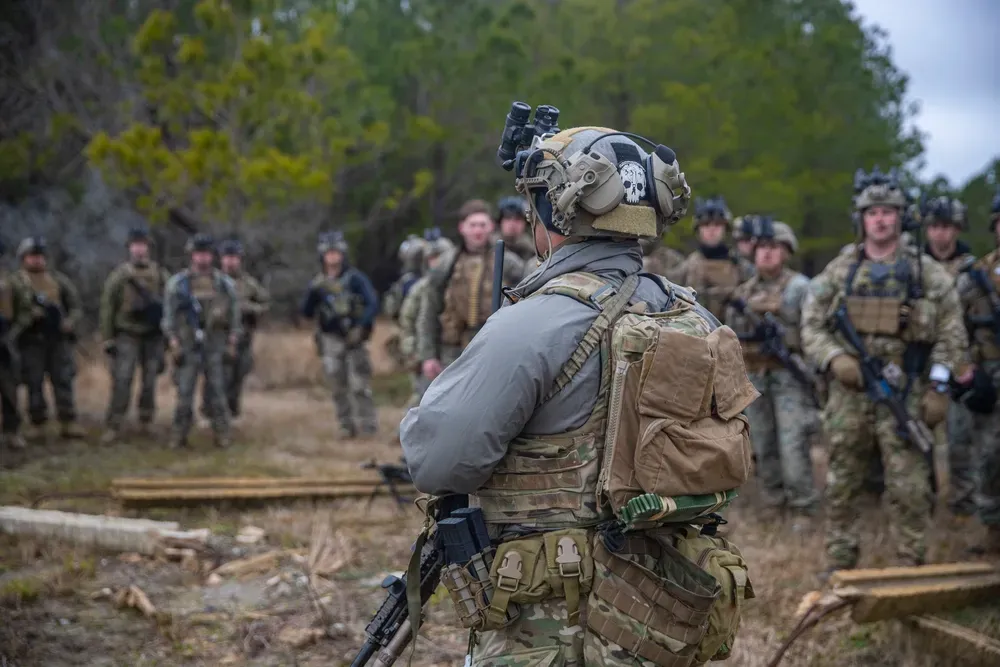
RASP Program Guide: How to Train and Prepare for Ranger Assessment and Selection
RASP Prep Explained: Training Plans, Standards, and Timelines for Ranger Selection
Preparing for RASP, the Ranger Assessment and Selection Program for the 75th Ranger Regiment, is not the same as being generally fit, and the gap is wider than most candidates expect.
A lot of athletes make the mistake of treating Ranger preparation like a mix of hard workouts, extra miles, and random grit sessions. But RASP rewards something more specific than generic toughness. It demands a strong aerobic base, fast and durable running, loaded movement capacity, strength that actually transfers, and the ability to recover and keep performing under repeated stress. Official Army sources describe RASP as an eight-week course for junior enlisted Soldiers entering the 75th Ranger Regiment, with separate RASP 2 selection for more senior leaders.
That is why structured training matters.
A real RASP program should not just make someone tired. It should make a candidate measurably more prepared for the actual demands of Ranger Assessment and Selection, where, historically, a large share of candidates who start RASP do not finish. This guide answers the most common questions around choosing, using, and progressing through a RASP training plan: how long RASP lasts, what fitness standards to hit before you arrive, how many days a week to train, and where Combat Fitness programs fit your timeline.
What is a RASP program?
A RASP program is a structured training plan designed to prepare an athlete for the physical demands of Ranger Assessment and Selection for the 75th Ranger Regiment. Army sources describe RASP 1 as an eight-week course for Soldiers from private through sergeant, while RASP 2 is a three-week selection course for officers, warrant officers, and senior NCOs.
A good RASP prep plan usually develops:
running endurance and speed
rucking durability and pacing
aerobic base
strength and muscular endurance
trunk and postural resilience
recovery between hard efforts
overall tactical durability
The key is progression. RASP prep is not random suffering. It is directed preparation.
What makes RASP prep different from general military fitness?
The difference is specificity.
General military fitness can improve overall readiness, but RASP is tied to the 75th Ranger Regiment and its standards. Army and GoArmy materials describe Rangers as part of an elite special operations force, and note that joining requires extensive training, Airborne qualification, and passing the pre-RASP fitness test.
That means a real RASP program should emphasize:
stronger run performance
better loaded movement tolerance
repeatable effort under fatigue
faster recovery
better relative strength and durability
A normal gym split or random “military workout” plan usually leaves gaps.
What should a good RASP program include?
A solid RASP prep program should include:
structured running
progressive rucking
strength training
aerobic base work
muscular endurance
recovery management
mobility and durability work
Just as importantly, these pieces need to be organized well. Hard days need to serve a purpose, easier days need to support adaptation, and the whole RASP training plan needs to progress toward selection rather than just accumulate fatigue. A candidate does not get bonus points for being smoked year-round before ever arriving, they get points for hitting the pre-RASP standards and recovering well enough to keep performing.
That is where a system like SOF-LAND or Dismount 4.0 is stronger than piecing together leg days, random intervals, and occasional weekend rucks.
What fitness standards should you hit before RASP?
Before a Soldier classes up for RASP 1, they have to clear the pre-RASP fitness test. Official 75th Ranger Regiment and Army recruiting materials describe the entry benchmarks as 53 push-ups, 63 sit-ups, a 2-mile run in 14:30 or faster, and at least 4 pull-ups, followed by a 6-mile ruck march carrying a 35-pound rucksack and weapon in under 1 hour 30 minutes.
Those numbers are the floor, not the goal. A candidate who only just scrapes the minimums arrives with no margin for the fatigue, sleep loss, and repeated efforts RASP layers on top. A smart RASP program treats the entry test as an early checkpoint and then keeps building run speed, ruck pace, and strength endurance well past it. For the full breakdown of eligibility, contracts, and who qualifies, the Combat Fitness guide to US Army Ranger requirements covers that side in depth, this guide stays focused on the training itself.
What is the best Combat Fitness program for RASP prep?
The strongest direct option is SOF-LAND in Combat Fitness PRO.
Why? Because RASP is a land-based special operations problem. The athlete needs run-ruck-lift capability, durability, and performance under repeated stress. SOF-LAND is the most directly aligned Combat Fitness option for that profile.
At Combat Fitness ONE, the best supporting choice is usually Dismount 4.0, because it blends:
rucking
running
lifting
Other useful supporting options include:
35M5M 4.0 if the athlete needs better run performance
Hybrid Elite if they need advanced strength-endurance balance
Resurgence or Functional + if they still need to build a base first
Can beginners start with a RASP program?
Yes, but not every beginner should start with the most specific RASP plan immediately.
A lot of athletes identify with the goal before they have the base to support the training. That usually ends with shin issues, poor recovery, stagnation, or burnout.
A smarter progression builds the aerobic and strength base first, then adds RASP specificity once the body can absorb it. For most beginners that looks like:
Step Off! for beginner running
Resurgence for beginner lifting and cardio
Functional + for beginner/intermediate hybrid development
Highspeed 2.0 if equipment is limited
Then, once the base is stronger, they can move into Dismount 4.0 or SOF-LAND.
Do RASP programs include running?
Yes. Running is one of the core pillars of RASP prep.
A strong RASP plan should include a mix of:
easy aerobic runs
intervals
threshold or tempo work
long runs
Running matters because it improves:
aerobic capacity
pacing
recovery between efforts
movement efficiency
fatigue resistance
For athletes whose running is clearly lagging, 35M5M 4.0 is one of the best supporting programs in the Combat Fitness library.
Do RASP programs include rucking?
They should.
While public-facing Army pages do not spell out every event detail in one place, Ranger-related official materials and pre-RASP resources make it clear that ruck work is part of the broader Ranger preparation world, and Ranger training articles reference ruck marches as part of preparation and exposure.
That is also true from a practical standpoint. A candidate preparing for land-based special operations selection needs:
load-bearing capacity
lower-leg durability
postural endurance
long-duration work tolerance
This is exactly why Dismount 4.0 and SOF-LAND matter.
Is strength training still important for RASP?
Absolutely.
One of the most common mistakes in selection prep is swinging too far toward endurance and forgetting that strength still supports:
carrying load
trunk stability
durability
resilience under stress
work output when tired
That does not mean bodybuilding-style lifting should dominate the plan. It means strength should support the broader RASP objective.
Programs like Dismount 4.0, Hybrid Elite, and SOF-LAND do a better job of balancing strength with field-relevant conditioning than disconnected hypertrophy work alone.
How many days per week should someone train for RASP?
Most serious RASP preparation usually lands in the 5 to 6 day per week range, depending on the athlete’s level and current readiness.
That does not mean every day should feel like selection.
The best plans balance:
hard efforts
aerobic work
loaded movement
strength sessions
recovery management
A candidate who treats every session like a test often ruins the consistency needed to improve.
How long is RASP, and how long should you prepare for it?
RASP 1 itself runs roughly eight weeks; RASP 2 is about three weeks. How long you should prepare beforehand, though, depends entirely on your starting point.
A stronger athlete with a good base may need a shorter lead-in. A weaker or less developed athlete may need several phases:
build the base
fix weak links
increase specificity
peak closer to selection
That is one of the benefits of the Combat Fitness ecosystem. Someone can start with Resurgence or Functional +, shift into Dismount 4.0, and then move into SOF-LAND when the goal becomes more immediate.
Can someone build muscle while preparing for RASP?
They can maintain or build some muscle, especially in earlier phases, but pure hypertrophy should not be the main point of RASP prep.
Programs like Blackout 3.0 and Mass Gainer 2.0 can be useful in off-seasons or when an athlete clearly needs more strength and size. But closer to RASP, training has to reflect selection demands.
The question is not “Can they get bigger?”
It is “Does the training make them better for RASP?”
Is hybrid training useful for RASP prep?
Yes, especially before the most specific phase.
Hybrid-style programming is useful because it develops:
strength
endurance
recovery
balance across multiple demands
That makes programs like:
Hybrid Elite
35M5M 4.0
Dismount 4.0
Functional +
very valuable depending on the athlete’s current level.
But the closer someone gets to RASP, the more direct specificity matters. That is where SOF-LAND becomes the smarter move.
Is Combat Fitness ONE enough for RASP prep, or is PRO better?
For a candidate who is serious about RASP specifically, Combat Fitness PRO is usually the better fit because it includes SOF-LAND, which best matches land-based special operations preparation.
That said, Combat Fitness ONE still includes strong supporting programs:
Dismount 4.0
35M5M 4.0
Hybrid Elite
Resurgence
Functional +
ONE can build the engine. PRO adds deeper specificity.
How do you know if a RASP program is working?
A good RASP plan should produce measurable progress in the qualities Ranger selection actually tests, not just a vague sense of being tired. Roughly every four to six weeks, a candidate should be able to point to gains like:
That often looks like:
faster run pace
better ruck pace and tolerance
stronger relative strength
better recovery between sessions
improved durability in feet, legs, and trunk
more confidence in long efforts
The athlete should feel more capable and more specific, not just more exhausted.
FAQ
What is a RASP program?
A RASP program is a structured training plan built to prepare an athlete for Ranger Assessment and Selection for the 75th Ranger Regiment. Official Army sources describe RASP 1 as an eight-week course and RASP 2 as a three-week leadership-focused selection course.
What is the best Combat Fitness program for RASP?
The best direct fit is SOF-LAND in Combat Fitness PRO. The strongest supporting option in Combat Fitness ONE is usually Dismount 4.0.
Do RASP programs include running?
Yes. Running is one of the core pillars of Ranger preparation.
Do RASP programs include rucking?
Yes. Ruck capacity is a major part of land-based special operations preparation and should be trained directly.
Can beginners prepare for RASP?
Yes, but many need to build a foundation first through programs like Step Off!, Resurgence, Functional +, or Highspeed 2.0 before moving into more specific prep.
Is lifting important for RASP?
Yes. Strength supports load carriage, durability, posture, and overall performance.
How many days per week should someone train for RASP?
Most serious candidates will train around 5 to 6 days per week depending on their level and phase of prep.
Is hybrid training useful for RASP?
Yes. Hybrid-style training is very useful in earlier stages, but specificity matters more as selection gets closer.
What is the difference between Combat Fitness ONE and PRO?
ONE includes the core Combat Fitness program library. PRO includes everything in ONE plus more tactical-specific pipeline programs like SOF-LAND, SOF-SEA, SOF-AIR, SOF OPERATOR Base, and Tactical URBAN.
What is the biggest key to RASP prep?
Specificity backed by progression. The athlete needs the right training, in the right order, for the actual demands ahead.


