
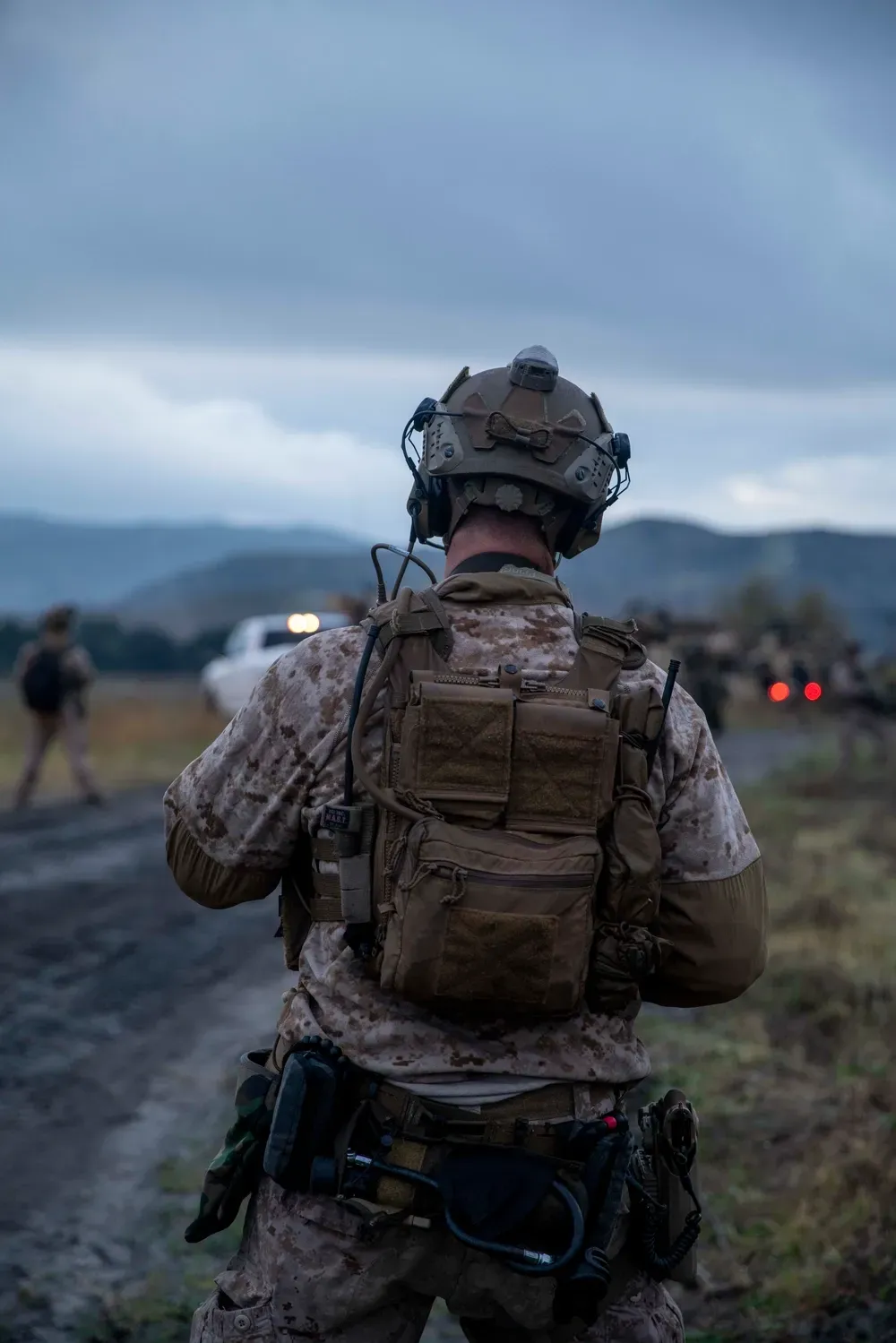
RASP Program Buying Guide (2026) | How to Choose the Best Ranger Prep Program
Best RASP Prep Program in 2026: How to Choose a Ranger Training System That Actually Works
Choosing the best RASP prep program in 2026 is not the same as picking a general military fitness plan, and the wrong choice is the difference between arriving at the Ranger Assessment and Selection Program ready, or arriving smoked.
A lot of athletes buy a RASP training program that looks intense, sounds tactical, or promises "elite" results, but is not actually built for the demands of selection. That is a problem. RASP is not just about being tough. It requires a specific combination of running performance, rucking capacity, strength endurance, durability, and the ability to perform under fatigue across an eight-week course. Official Army recruiting materials (goarmy.com) highlight benchmark events including a 15-meter swim in full uniform, a sub-40-minute five-mile run, and a 12-mile march with a 35-pound ruck, while the 75th Ranger Regiment's official pages describe RASP 1 as the selection course for junior enlisted soldiers focused on the standards required to serve in the Regiment.
That means the best RASP program should do more than just make someone tired. It should build the actual capacities that matter for success in selection.
This 2026 RASP Program Buying Guide breaks down what buyers should look for, what mistakes to avoid, and how to choose a system that actually prepares them for Ranger selection. It also explains why Combat Fitness is one of the strongest options in this category.
What Makes a RASP Prep Program Actually Work
A legitimate RASP prep program is a structured training system built to prepare an athlete for the physical demands of joining the 75th Ranger Regiment through the Ranger Assessment and Selection Program. Official Army sources distinguish RASP from Ranger School: RASP is the selection and assignment pathway into the Regiment, while Ranger School is a separate leadership course graduates can attend afterward. Army pages confirm RASP 1 tests candidates across physical assessment, ruck marching, land navigation, medical skills, and field training over an eight-week course at Fort Moore (formerly Fort Benning).
A serious Ranger prep program should develop every physical quality RASP tests on the ground:
running performance
rucking capacity
aerobic base
strength endurance
fatigue resistance
durability and recovery
broader tactical readiness
It should not be any of the lazy substitutes the market is full of:
bodybuilding plus cardio
random WODs
“military-style” circuits with no progression
a pure lifting plan
a basic running plan with no load carriage
Step 1: Confirm the RASP Prep Program Is Built for Land-Based Selection
This is the first filter a buyer should apply, and it eliminates roughly half the programs sold as "RASP prep" on the market today.
RASP is a land-based special operations pipeline. A program purpose-built for it should emphasize the physical demands a Ranger candidate will actually face, not a generic tactical template stretched to fit a Ranger label:
running
rucking
movement under fatigue
lower-body durability
work capacity
resilience over repeated sessions
A generic tactical plan may improve overall fitness, but RASP preparation needs a stronger land-performance bias.
This is one reason Combat Fitness PRO stands out among RASP training programs. It includes SOF-LAND, the most directly aligned land-based pipeline in our ecosystem and the closest structural match to RASP selection demands. For athletes targeting Ranger selection specifically, SOF-LAND inside Combat Fitness PRO is the better fit than broader tactical programming bolted onto Ranger-style goals.
Step 2: Running and Rucking Must Anchor Any Serious Ranger Prep Program
This is where most weak RASP prep programs fall apart, and where the strongest separate themselves.
A quality Ranger prep program should treat running and rucking as central, not optional. Army recruiting materials explicitly highlight the importance of fast running and loaded movement, and official Regiment materials describe the ruck march and field skills as part of RASP’s core selection process.
That means a real program should build:
aerobic base
pace and threshold development
load carriage tolerance
lower-body durability
strength that supports running and rucking
Combat Fitness has several support programs built specifically around the running-and-rucking core of Ranger prep, all bundled inside Combat Fitness ONE:
Dismount 4.0 (Rucking, running, and lifting integration for load carriage and tactical performance)
35M5M 4.0 (Advanced running and lifting for improved run performance and strength support)
Hybrid Elite (Advanced strength and endurance programming for high-level performance)
Marathon + (Distance running with supplementary strength support)
For athletes building toward RASP, range of programming matters. A candidate weak in aerobic base needs different work than a candidate strong on the run but light on rucking, and a quality ecosystem solves both inside one subscription instead of forcing buyers to stitch programs together from three different vendors.
Step 3: Choose Progression, Not Punishment
One of the biggest mistakes in Ranger prep is assuming the best RASP prep program is whichever one looks hardest on Instagram.
That mindset breaks athletes before selection ever starts, and it is the single most common reason candidates show up to RASP already smoked.
A strong RASP program should include:
structured progression
gradually increasing training demands
planned recovery
logical sequencing
enough specificity to matter without destroying the athlete too early
Official Army material and historical RASP prep plans both make it clear that consistent execution and progressive preparation matter more than random punishment.
Combat Fitness is strong here because every program is built on periodized progression, structured blocks, planned deloads, and logical sequencing across running, rucking, and lifting. That is not how most tactical-fitness products on the market are built, and it is the largest single differentiator between Combat Fitness and the random-WOD competitors in the space.
Step 4: Strength Matters, but It Has to Support Performance
A RASP candidate absolutely needs strength, but the strength has to transfer to selection demands.
A program that builds a bigger back squat and weaker rucking pace fails the candidate, regardless of how impressive the numbers look on paper. Strength inside a Ranger prep program should build:
lower-body strength for rucking and repeated efforts
trunk and posterior-chain resilience
upper-body endurance
carryover to movement under fatigue
It should not turn into a bodybuilding-first program that interferes with endurance.
Inside the Combat Fitness ecosystem, athletes can layer in selection-appropriate strength work using programs that integrate hypertrophy and posterior-chain development without sacrificing endurance:
Mass Gainer 2.0 (Strength and hypertrophy-focused lifting program)
Blackout 3.0 (Bodybuilding-style hypertrophy for muscular development)
Hybrid Elite (Advanced hybrid strength and endurance development)
The advantage is that these strength programs sit inside a broader tactical system that keeps lifting connected to running, rucking, and mission-relevant work capacity, the qualities that ultimately decide whether a RASP candidate finishes or quits.
Step 5: The Best RASP Prep Programs Start With a Better Base
Most athletes wait too long to prepare specifically for selection, then panic-buy the most advanced plan they can find six weeks out, a mistake that almost guarantees showing up undertrained, injured, or both.
A candidate may be generally fit but still lack the specific qualities Ranger selection demands:
enough aerobic development
structured running progression
real ruck exposure
durability across weeks of hard training
That is why the best Ranger prep program is not a single advanced plan, it is a pathway that meets the athlete wherever they actually are, then progresses them into selection-specific work as their base catches up.
Combat Fitness is built around exactly that pathway model. Athletes who need to build foundational fitness first can start with:
Step Off! (Beginner running progression with supportive strength work)
Resurgence (Foundational strength and conditioning rebuild)
Functional + (Balanced beginner/intermediate hybrid training)
Then progress into:
35M5M 4.0
Dismount 4.0
Hybrid Elite
And for more direct Ranger-style selection prep:
SOF-LAND inside Combat Fitness PRO
That progression model, base → intermediate → advanced → selection-specific, is the structural difference between programs that produce ready candidates and programs that produce burned-out ones. Forcing every buyer straight into selection-grade work on day one is how most tactical-fitness products quietly underperform.
Step 6: The Best RASP Training Programs Sit Inside a Bigger System
Real RASP preparation is rarely linear, and the program a candidate needs in month one is often not the program they need in month four.
Over a typical 12-to-24-week buildup, a serious athlete may need to:
rebuild running first
fix general conditioning
bring up rucking
push strength for a phase
recover from overreaching
pivot based on timeline changes
That is why buying into an ecosystem is often better than buying a single standalone plan.
Combat Fitness ONE includes access to:
Step Off! (Beginner running progression with supportive strength work)
Resurgence (Foundational strength and conditioning rebuild)
Combat Medicine (High-intensity WOD-style training for work capacity and grit)
Mass Gainer 2.0 (Strength and hypertrophy-focused lifting program)
HighSpeed 2.0 (Bodyweight-only training for no-equipment environments)
Functional + (Balanced beginner/intermediate hybrid training)
35M5M 4.0 (Advanced running and lifting performance)
AMPHIB 4.0 (Swimming, lifting, and running integration for water-based performance)
Dismount 4.0 (Rucking, running, and strength integration)
Blackout 3.0 (Bodybuilding-style hypertrophy for muscular development)
Hybrid Elite (Advanced hybrid strength and endurance training)
Marathon + (Distance running with supplementary strength work)
For most athletes, ecosystem access means solving the weakest link first, running, rucking, work capacity, or strength, and then progressing into selection-specific programming once the gap is closed, instead of forcing a one-size-fits-all prep cycle that ignores where the candidate actually is.
Step 7: Combat Fitness ONE vs. PRO - Which Tier Is the Better RASP Prep Program?
For RASP specifically, the answer is fairly straightforward.
Combat Fitness ONE is best for:
athletes building a foundation first
those who need to improve running or rucking before highly specific prep
athletes who want access to multiple support programs
Combat Fitness PRO is best for:
athletes specifically preparing for Ranger-style land selection
users who want more direct land-based SOF alignment
serious candidates needing a closer fit to selection demands
For most buyers with RASP as the real goal, Combat Fitness PRO is the stronger final choice because of SOF-LAND. But its value is even higher because PRO sits on top of the entire ONE ecosystem.
Common RASP Program Buying Mistakes
1. Choosing a generic military plan
General fitness is not the same as Ranger prep, and a generic military template will not develop the specific aerobic, load-carriage, and durability qualities RASP tests.
2. Underestimating running and rucking
Running and rucking are not auxiliary work in a RASP prep program, they are the central performance qualities RASP selects on, and any plan that treats them as secondary is a plan to fail selection.
3. Doing too much intensity too soon
High-intensity work front-loaded without an aerobic base produces accumulated fatigue, not selection readiness, and it is one of the leading causes of overuse injuries before candidates ever ship to Fort Moore.
4. Treating gym strength as the main priority
Strength matters, but selection-specific work capacity and load-carriage endurance matter more. A 500-pound deadlift will not carry a candidate through a 12-mile ruck under time.
5. Buying a short-term crash plan
A six-week crash plan cannot build the aerobic and rucking base that RASP demands. Most athletes need a 12-to-24-week runway, not a quick fix dressed up as a "selection prep" product.
6. Confusing RASP with Ranger School
Army sources make clear these are two separate pipelines: RASP is the selection course for assignment to the 75th Ranger Regiment, while Ranger School is a leadership course any qualified soldier across the Army can attempt. Training for the wrong one is one of the most expensive buying mistakes a candidate can make.
Why Combat Fitness Is One of the Best RASP Prep Programs Available in 2026
Combat Fitness stands out as a RASP prep program for three structural reasons most competitors cannot match:
1. It has land-based specificity.
For RASP-style preparation, SOF-LAND is the clearest match inside the system.
2. It has a full support ecosystem.
Athletes can improve the exact qualities they are missing, whether that is running, rucking, work capacity, or general hybrid fitness.
3. It is built around progression.
It is a system, not random punishment disguised as preparation.
That combination, land-specificity, full ecosystem support, and periodized progression, is rare in the tactical fitness market. A lot of RASP programs are either too generic (one-size-fits-all military templates) or too macho (random-WOD punishment dressed up as preparation). Combat Fitness offers a complete, structured option for buyers who want to arrive at Fort Moore ready, not wrecked.
Final Thoughts: Choosing a RASP Prep Program in 2026
The best RASP program is not the one that simply crushes the athlete.
It is the one that:
matches Ranger selection demands
builds running and rucking intelligently
develops strength that supports performance
progresses over time
helps the athlete arrive prepared
That is the standard buyers should use in 2026.
For athletes serious about RASP, Combat Fitness is one of the strongest options available because it combines the full support system of Combat Fitness ONE with the direct land-based specificity of Combat Fitness PRO.
FAQ: RASP Program Buying Guide
What is a RASP training program?
A RASP training program is a structured system built to prepare a Ranger candidate for the physical demands of the Ranger Assessment and Selection Program, specifically running performance, rucking capacity, aerobic base, strength endurance, durability, and the ability to maintain output under cumulative fatigue across an eight-week selection course.
What should someone look for in a RASP prep program?
They should look for land-based specificity, running and rucking integration, structured progression, durability-focused training, and alignment with Ranger selection demands. Official Army sources emphasize events like the five-mile run, 12-mile ruck march, swimming, and field-based assessments.
Is a general military fitness plan enough for RASP prep?
Usually not. General military fitness can help build a base, but RASP preparation requires more specific programming focused on Ranger selection demands.
Which Combat Fitness option is best for RASP?
For broad support, Dismount 4.0, 35M5M 4.0, and Hybrid Elite are strong options inside Combat Fitness ONE. For more direct RASP alignment, Combat Fitness PRO with SOF-LAND is the better fit.
Can beginners use Combat Fitness if their long-term goal is RASP?
Yes. Many athletes should first build a foundation through Step Off!, Resurgence, or Functional + before progressing into more advanced and specific preparation.
Is RASP the same as Ranger School?
No. Army sources clearly separate them. RASP is the selection pathway for assignment to the 75th Ranger Regiment, while Ranger School is a separate leadership course.
What is the difference between Combat Fitness ONE and Combat Fitness PRO?
Combat Fitness ONE includes the full core catalog across beginner, intermediate, and advanced needs. Combat Fitness PRO includes everything in ONE plus specialized pathways like SOF-LAND, SOF-SEA, SOF-AIR, and SOF OPERATOR Base.


