
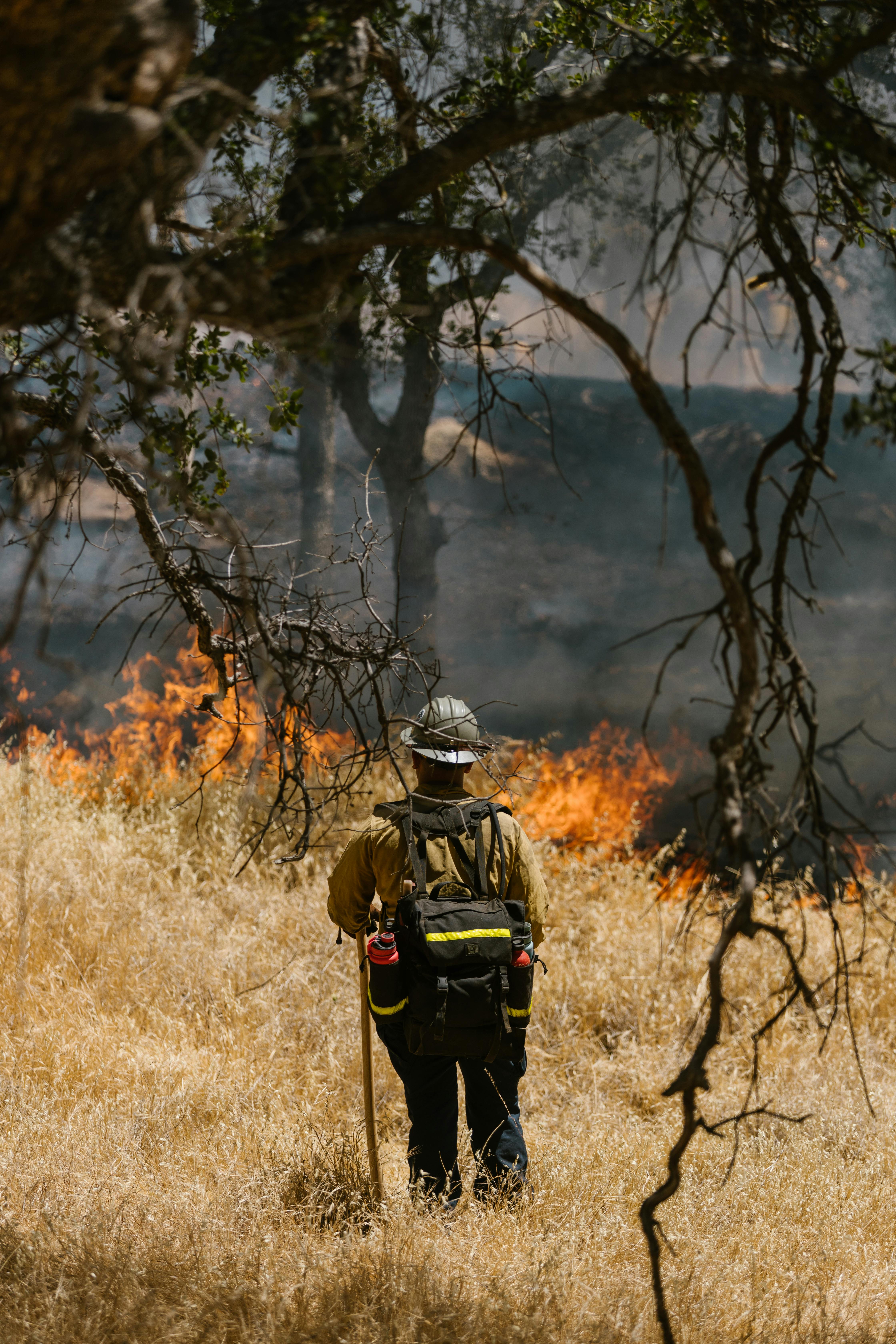
Concurrent Training for Firefighters: Strength & Endurance
Firefighting is a profession like no other. It demands strength, power, endurance, resilience, and the ability to perform under pressure, which is exactly why a generic firefighter workout program built on cardio alone leaves you short. Every call brings unpredictability, steep stairs, heavy equipment, sudden sprints, long carries, heat stress, and cognitive load. Purpose-built tactical fitness programs for first responders exist precisely because those demands do not respond to general fitness. Training for these demands isn’t simple. One of the most effective strategies for preparing firefighters is concurrent training, a method that blends strength and endurance work in the same program.
Many training myths suggest that combining strength and endurance leads to compromise, that you have to pick one or the other. But for firefighters, strength without endurance limits performance just as much as endurance without strength. Concurrent training is not only possible, it’s practical and essential when done correctly.
What Is Concurrent Training?
Concurrent training is the intentional integration of strength/resistance training and endurance conditioning within the same training program. Rather than isolating one quality at a time, concurrent training develops multiple physical attributes together: strength, power, cardiovascular capacity, metabolic resilience, and work capacity.
For firefighters, this approach mirrors the real-world demands of the job. A call might require hauling heavy equipment, climbing stairs, then quickly transitioning to sustained movement under load, all of which require both strength and endurance.
The reason this works rather than canceling out comes down to how the body adapts. Strength training drives the mTOR pathway, which builds force-producing tissue; endurance training drives AMPK, which improves aerobic machinery. They do compete for resources, but only when stacked carelessly. Sequence and space them, and a firefighter develops the high-force capacity to force a door and the aerobic base to keep working three rooms later, inside one coherent program rather than two that fight each other. Sorting out which programs actually handle that sequencing well is its own project, and a tactical athlete program buying guide is the fastest way to compare hybrid options side by side before committing to one.
Why Traditional Training Falls Short
Some training systems emphasize long slow distance or high-volume cardio as the sole way to get “in shape.” Others treat strength training as separate and distinct, like bodybuilders in a gym. This is where most off-the-shelf firefighter workout plans fall down. A pure running plan builds an engine that fades the moment you shoulder a charged line, and a pure lifting plan builds a body that gasses out on the second flight of stairs in full kit. The same gap shows up in popular tactical products, which is why it helps to review alternatives to tactical fitness programs before assuming a single-modality plan will cover fireground demands. The fireground doesn't let you specialize. It asks for force and endurance in the same ninety seconds, so a program that trains only one quality has already conceded the part of the job that gets people hurt.
Fire performance isn’t isolated. It’s a blended requirement:
You need strength for forcible entry and equipment movement.
You need power for sprints, ladder raises, and short bursts.
You need endurance to sustain effort over long incidents.
You need recovery capacity for multiple calls in a shift.
If you train only one component, you reduce your preparedness for the full spectrum of firefighting demands. Preparedness is the right word, because the cost of a gap doesn't show up in the gym, it shows up on the call where it matters. The strongest firefighter on the crew is a liability if he can't recover between exertions, and the fittest runner is a liability if he can't move a downed partner. Concurrent training closes both gaps at once rather than trading one for the other.
The Science Behind Concurrent Training
Research on concurrent training broadly supports its effectiveness when properly programmed. When strength and endurance work are balanced across a training cycle with appropriate sequencing, both qualities can improve without significant interference. The key is careful planning, not avoidance.
The practical version of "appropriate sequencing" is simple. When you can split sessions, put strength in the morning and conditioning later in the day, ideally six or more hours apart, so the fatigue and signaling from one doesn't blunt the other. When you can't split, lift first while you're fresh, then condition, and keep the hardest interference pairing, heavy lifting and long hard running, off the same day. Get that order right and the interference effect shrinks from a real problem to a rounding error.
Good concurrent programs consider:
Training order (strength before endurance on some days)
Intensity and volume balance
Adequate recovery windows
Task-specific movements that blend strength and conditioning
These elements make concurrent training feasible and evidence-supported, and they are inseparable from how training density in firefighter programs is structured across a week.
What Firefighter Performance Really Requires
To understand how to train, let’s look at typical firefighter tasks:
Ruck and Hose Carries
Heavy loads carried for variable distances under fatigue.
Stair Climbs with SCBA
Strength of legs and back plus cardiovascular endurance.
Victim Drag/Rescue
Hybrid power + anaerobic endurance demand.
Repeated Transitions
High intensity effort followed by sustained moderate work, often with little rest.
These task profiles make a strong case for training that develops both strength and endurance simultaneously. Picture a single working fire. You force entry, drag a charged line up two flights in full SCBA, work a room, then back out to help haul a victim clear, all inside a few minutes with no real rest. That sequence demands maximal force, repeat power, and sustained aerobic output back to back, in that order, under heat. No single training mode rehearses it. It also explains why the questions of whether tactical athletes can train like endurance athletes usually resolves against the pure endurance model. A firefighter conditioning plan that mirrors that stacking, force then power then endurance with minimal recovery, is what actually transfers to the call.
Tips for Success with Concurrent Training
1. Sequence Smartly
Where possible, do strength work before endurance unless the day's priority is purely endurance adaptation. Lifting first protects bar speed and force output, because the central-nervous-system fatigue from a hard run degrades heavy lifting far more than the reverse. If you only have one window, that order alone preserves most of your strength quality.
2. Keep Intensity Controlled
High intensity in every session will impede recovery. Use planned intensity cycles.
3. Monitor Recovery
Firefighters live with irregular sleep, broken nights on shift, and high occupational stress, all of which eat into recovery before training even starts. Track the basics honestly: resting heart rate trending up, sleep you didn't get, soreness that lingers past 72 hours. The same monitoring logic drives training load management for law enforcement, where shift patterns and unpredictable exertion create identical recovery problems. Two or three of those flags in a week means pull back the conditioning volume, not push through it. Overreaching on top of a 24-hour shift is how injuries and burnout happen.
4. Prioritize Movement Quality
Technique matters. Conditioning combined with poor movement increases injury risk.
5. Adjust Around Shifts
Shift work dictates readiness more than any training variable. Schedule your hardest strength and conditioning on days off or the front end of a rest block, keep on-shift work light and movement-quality focused, and treat the day after a brutal 24 as recovery, not a missed session to make up. A firefighter workout program that ignores the duty cycle looks great on paper and falls apart in week three.
The Role of Recovery
Concurrent training is demanding, and recovery isn't an afterthought; it's central to progress. You're asking the body to adapt to two stimuli at once, so the recovery debt is higher than single-mode training, not lower. Quality sleep, adequate protein, hydration, and genuinely planned rest days are what let strength and endurance adaptations consolidate instead of compete. Skip them and you don't get the benefit of either, you just accumulate fatigue.
Without recovery, training becomes competition with fatigue rather than preparation for performance. Recovery is also what separates raw fitness from usable readiness, which is the practical difference between capacity versus capability on a working fireground. Putting all of this together, sequencing, intensity control, recovery, and shift-aware scheduling, is the hard part, and it's exactly where a structured plan beats piecing it together yourself. A firefighter fitness program built on hybrid principles handles the sequencing for you.
Addressing Common Myths
Myth: “Strength and endurance cancel each other out.”
Reality: Not when sequenced and balanced appropriately.
Myth: “More training is always better.”
Reality: No, more training without recovery is counterproductive.
Myth: “Only running builds endurance.”
Reality: Endurance is a broader physiological quality than single-mode cardio; hybrid circuits, loaded carries, and interval work all elicit strong aerobic and anaerobic adaptation.
What the Evidence Shows
The research consistently supports developing strength and endurance together when programming and sequencing are appropriate. Adaptation happens in parallel, the cardiovascular system improves stroke volume and capillary density while the musculoskeletal system gains force and tissue resilience, provided the hard interference pairings are kept apart and recovery is protected. The interference effect is real, but it's a programming variable to manage, not a wall. Done right, concurrent training isn't a compromise; it's the most direct route to the blended capacity the fireground actually demands.


