
Training Load Management for Law Enforcement Officers
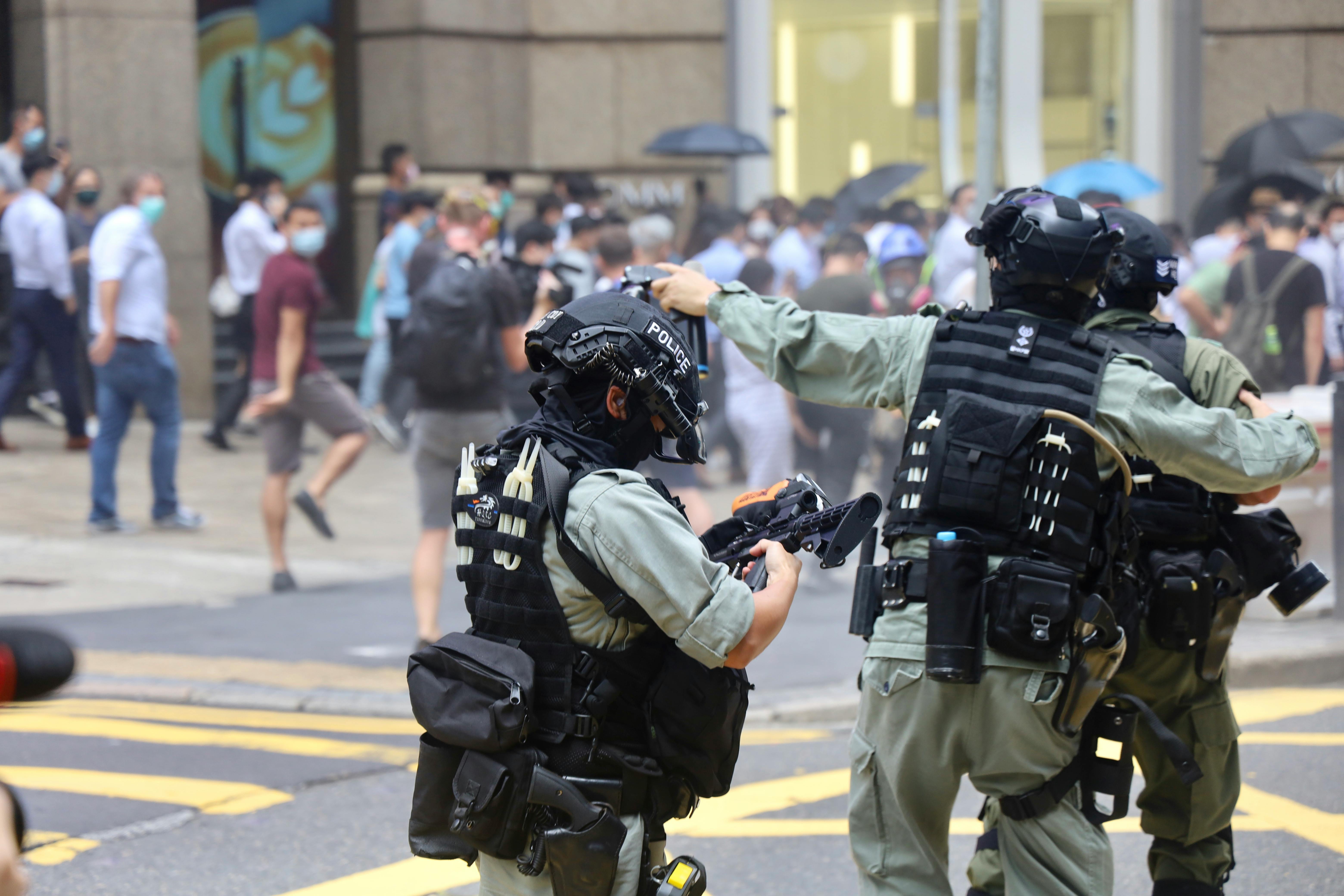
Training load management for law enforcement is the difference between an officer who stays ready for an entire career and one who breaks down halfway through it. The job is unpredictable: one shift is eight hours behind the wheel of a patrol car, the next is a foot pursuit, a physical struggle, or a drawn-out tactical operation with no warning.
Because of this, officers must be prepared for sudden bursts of high-intensity activity, often with little warning and limited recovery. This is where training load management becomes critical. It’s not just about how hard you train, it’s about how much total stress your body can handle over time. Managing that total stress well over a career is exactly what structured tactical training programs for law enforcement are built around.
What Is Training Load?
Training load refers to the total stress placed on the body through physical activity.
It includes two main components:
External load
The work you actually perform:
Distance run
Weight lifted
Number of repetitions
Duration of a workout
Frequency of sessions
Internal load
Your body’s response to that work:
Heart rate
Perceived exertion
Fatigue levels
Recovery quality
Sleep patterns
Both forms of load matter. Two officers can perform the same workout, but experience very different internal stress levels depending on:
Sleep
Shift schedules
Nutrition
Life stress
Fitness level
This is the first thing that separates law enforcement from a typical training population: the same prescribed session lands completely differently on an officer coming off four hours of broken sleep after a night shift than it does on a teammate who worked days and slept eight hours. The workout on paper tells you almost nothing. The internal cost is what you have to manage.
Why Load Management Matters for Officers
A police schedule is its own training variable. Rotating shifts wreck sleep timing, court and administrative days break up training weeks at random, and the physical demand is feast-or-famine: weeks of low-output patrol punctuated by seconds of maximal effort. An officer can't periodize around a season the way an athlete does, because the competition arrives unscheduled, often at the end of a night shift on four hours of sleep. That is the specific problem load management has to solve for law enforcement. How you go about solving it is its own decision, and it's worth weighing app-based training versus in-person coaching before you commit to either.
Unlike many athletes, law enforcement officers often:
Work irregular shifts
Experience high stress levels
Sleep inconsistently
Train around unpredictable schedules
Face sudden high-intensity demands
This creates a unique problem.
If training load is:
Too low
Fitness declines
Strength and conditioning drop
Injury risk increases during sudden events
Too high
Fatigue accumulates
Recovery suffers
Injury risk increases
Job performance declines
The goal is to find the optimal training load, enough stress to build fitness, but not so much that it causes breakdown. Picking a plan built for that reality is half the battle, and a good tactical athlete program buying guide can help you separate programs designed for unpredictable tactical demand from generic fitness plans.
The Training–Injury Relationship
Research across athletic and tactical populations shows a consistent pattern. Gabbett's work on the training-injury prevention paradox (2016) found that:
Sudden spikes in workload are associated with higher injury risk.
Gradual increases in load improve resilience.
Higher chronic workloads often reduce injury rates.
This is sometimes called the training–injury prevention paradox.
Officers who are:
Well-conditioned
Consistently trained
Adapted to higher workloads
Are often more resistant to injury than those who train inconsistently.
The Acute and Chronic Workload Balance, in Officer Terms
One useful way to think about load is the relationship between what you did recently and what you have been doing over the longer term. Your recent training (roughly the last week) is your acute load. Your established baseline (roughly the last month) is your chronic load. Trouble shows up when the two diverge sharply. A single brutal week dropped on top of a month of almost nothing is a spike, and spikes are where injuries cluster. The reverse is also a problem: a long stretch of almost no training lowers your baseline so far that an ordinary shift demand now exceeds what your body is conditioned for. For officers, this reframes the entire goal. You are not chasing a single hard session. You are defending a chronic baseline high enough that the job's worst day is still inside your normal range.
Common Load Management Mistakes
Many officers unknowingly fall into one of these patterns.
The “all or nothing” approach
Long periods of little or no training
Followed by intense workout phases
Often leads to soreness or injury
In law enforcement this usually isn't laziness, it's the schedule. A run of court dates, a heavy case load, or a stretch of overtime crowds out training entirely; then a guilty conscience triggers two weeks of punishing sessions to make up for it. That swing, detraining followed by a sharp spike, is precisely the pattern most associated with injury, and it repeats on a roughly monthly cycle for a lot of officers.
Constant high-intensity training
Hard workouts every session
No structured progression
Minimal recovery
This often leads to:
Fatigue
Plateaued performance
Overuse injuries
The officer who treats every gym session like a selection event, max effort every time, no easy days, tends to feel productive while quietly digging a hole. The body never gets the lower-stress days it needs to actually absorb the hard ones, and the work capacity that matters on duty stops improving.
Ignoring life stress
Training is only one form of stress. Officers also face:
Shift work
Emotional strain
Administrative demands
Sleep disruption
When life stress is high, training load often needs to be reduced. For officers this isn't occasional: critical incidents, court testimony, internal reviews, and chronic sleep debt stack on top of physical training constantly, and a hard session on a high-stress week costs far more than it returns. The same logic applies to fuel: living on whatever the gas station sells across a run of night shifts adds its own quiet load, which is why a workable gas station nutrition strategy belongs in the same conversation as managing training stress.
Key Principles of Load Management
Effective training load management follows a few simple rules.
1. Consistency over intensity
Regular moderate training is more effective than:
Sporadic hard sessions
Random high-intensity workouts
Consistency builds resilience. For shift workers this means building a week that survives a bad roster, not one that only works when everything goes right. Three sessions you will actually complete around nights, court, and overtime beat five planned sessions that collapse the first time the schedule turns. Lowering the bar to something repeatable is not a compromise here; it is the entire strategy, because the chronic baseline that protects you is built by what you repeat, not by what you manage once.
2. Gradual progression
Increase workload slowly over time:
Add small amounts of volume
Increase intensity in phases
Avoid sudden spikes
The catch for officers is that progression assumes a stable starting point, and your roster rarely gives you one. The fix is to progress off your worst recent week, not your best. If a rough stretch of nights knocked you down to two short sessions, you rebuild from there in small steps rather than jumping back to where you were before the disruption. Slow re-entry feels like wasted time; it is actually how you avoid handing yourself the exact spike that causes the injury.
3. Balance hard and easy days
Not every session should be intense.
A well-structured week includes:
Hard days
Moderate days
Easy or recovery sessions
The practical move for officers is to anchor intensity to the roster rather than the calendar: schedule the hard days on days off or going into days off, and treat the day after a night shift as an easy or recovery day by default. Fighting your own sleep debt to force a hard session you planned three days ago is how the spike-and-crash cycle starts.
4. Monitor recovery signals
Pay attention to:
Sleep quality
Resting heart rate
Motivation levels
Joint or tendon pain
Performance trends
These often reveal load problems before injuries occur. None of this requires lab testing. A cheap wrist tracker showing resting heart rate climbing across a week, a grip that feels weak on the range, motivation that has quietly cratered, a tendon that nags every shift: those are the early signals that total stress has outrun capacity, and they show up days before an actual injury does.
Signs Training Load Is Too High
Watch for:
Persistent soreness
Joint or tendon pain
Poor sleep
Low motivation
Declining performance
Elevated resting heart rate
These are early indicators that:
Total stress is exceeding your capacity.
Low-back pain deserves a specific mention, because for officers it often has less to do with training than with the gear: the duty belt back pain that a heavy roster and long hours in a patrol seat only compound. For an officer, the stakes on those signals are not just missed workouts. Accumulated fatigue degrades reaction time, decision-making, and physical output, and unlike an athlete you cannot choose to sit out the day the bill comes due. The shift happens whether or not you are recovered. That is why catching an overreaching trend early matters more in this profession than in almost any other: the cost of ignoring it can show up mid-incident, not just at your next training session.
Signs Training Load Is Appropriate
When load is managed well, you’ll notice:
Steady performance improvements
Consistent weekly training
Faster recovery between sessions
Better energy levels
Fewer injuries
In practical terms it looks like showing up to a shift feeling like you have something in reserve, recovering from a hard tactical day without it wrecking the rest of your week, and trusting that if the worst happens on duty, your body can answer.
What a Training Week Can Look Like on Rotating Shifts
This is an illustration of the principles, not a prescription. On a block of day shifts, an officer might place two strength or work-capacity sessions on the front and middle of the week and one moderate conditioning session before a day off, keeping the day after the heaviest session light. On a block of night shifts, the same officer drops to maintenance, one or two short, lower-intensity sessions, and protects sleep above all else, accepting that nights are for holding the baseline, not building on it. The point is not the exact layout. It is that the plan bends around the roster instead of pretending the roster doesn't exist.
The Long-Term Goal
For law enforcement, training isn’t about:
One perfect workout
One fitness test
One peak performance
It’s about:
Long-term readiness
Injury resistance
Reliable performance under stress
Sustainable fitness across an entire career
An officer's career spans decades, not seasons, and the body has to remain capable through all of it: through the desk years, the shift changes, the injuries, and the slow creep of age. The officer who manages load well is not the one with the most impressive single workout, but the one who is still durable, capable, and ready twenty years in. Training load management is what makes that possible.
References
Gabbett, T.J. (2016). The training-injury prevention paradox: should athletes be training smarter and harder? British Journal of Sports Medicine, 50(5), 273-280


