
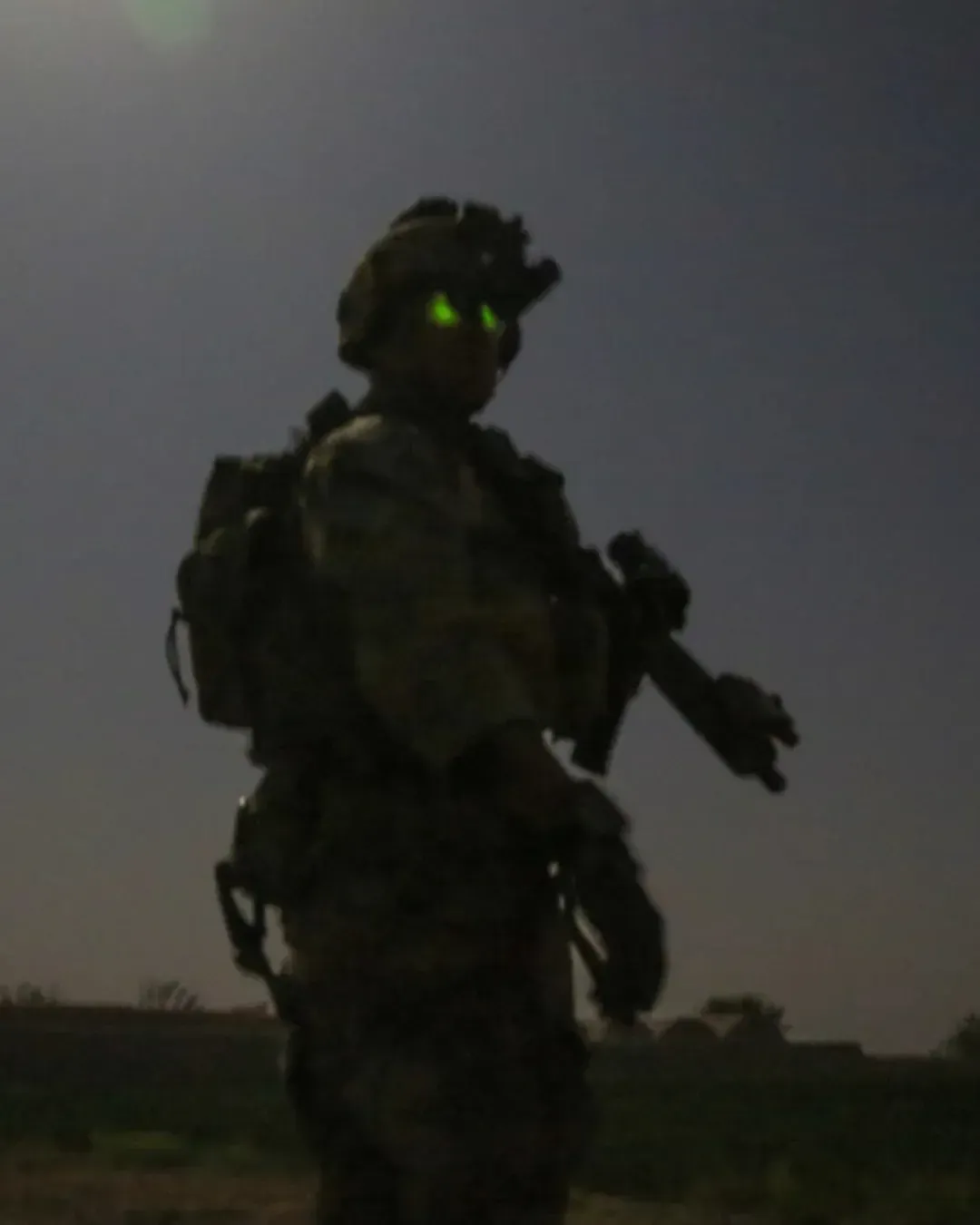
160th SOAR: Army Night Stalkers, Aircraft and How to Join
The 160th SOAR: Who the Army Night Stalkers Are, What They Fly, and How to Join
The 160th SOAR is the US Army's special operations aviation regiment, based at Fort Campbell, Kentucky, and its job is to fly special operations forces into and out of objectives at night, at low level, and on time. Its crews work to a time-on-target standard of plus or minus 30 seconds, anywhere in the world. Every candidate who wants that job starts with Green Platoon, and the physical base for it is the same one our tactical fitness programs are built to develop.
Below: where the Night Stalkers came from, the aircraft, the requirements for soldiers and pilots, what happens at Green Platoon, which MOSs the 160th takes, the creed, and a training progression you can start this week.
Key Takeaways:
The 160th Special Operations Aviation Regiment (Airborne) was built after the 1980 failure of Operation Eagle Claw, and night, low-level flying is the capability that earned the Night Stalkers name.
The regiment flies modified MH-6 and AH-6 Little Birds, MH-60M Black Hawks (including the armed DAP), and MH-47G Chinooks.
You do not have to be a pilot. The 160th recruits across aviation maintenance, communications, intelligence, medical, supply, and support MOSs.
Enlisted Green Platoon runs about five weeks (27 training days) at Fort Campbell and tests running, rucking, swimming, land navigation, weapons, and combatives.
Preparation is an aerobic and load-carriage problem first: a 4-mile run in 36 minutes and long rucks with 45 pounds at a 15-minute-mile pace.
What Is the 160th SOAR?
The 160th SOAR is the 160th Special Operations Aviation Regiment (Airborne), the Army unit that provides helicopter support to special operations forces. It is headquartered at Fort Campbell, and its stated mission is to organize, equip, train, and employ Army special operations aviation forces worldwide for contingency missions and combatant commanders.
You will see the unit written as 160th SOAR, 160th SOAR(A), the 160th Airborne, the 160th Special Operations Aviation Regiment, or just "the 160th." The "(Airborne)" reflects airborne status the unit received in 1986. All of those names mean the same regiment.
What sets the Army 160th apart is the standard. Per the Army, the regiment's crews are expected to arrive on target within 30 seconds of the planned time, anywhere in the world. A raid's whole timeline is built around the aircraft arriving when it said it would, so the aviation standard becomes the assault force's standard too.
Why Is the 160th Called the Night Stalkers?
The 160th is called the Night Stalkers because the unit was built to fly at night, at low altitude, when no other Army aviation unit could. The nickname followed the capability, built in the early 1980s when night vision goggle flying was a rare skill.
The origin is a failure. In April 1980, Operation Eagle Claw, the attempt to rescue American hostages in Iran, ended at a desert staging site called Desert One after helicopter problems forced an abort, and a collision on the ground killed eight servicemen. The Holloway Commission's review of the mission identified the lack of a dedicated, trained special operations aviation capability as a core problem.
The Army's answer was Task Force 158, drawn from aviation units of the 101st Airborne Division. Its crews trained on night, low-level flying for a second rescue attempt that never launched. On October 16, 1981, the unit was designated the 160th Aviation Battalion, and it became the 160th Special Operations Aviation Regiment (Airborne) in 1990. You will see the name written as Night Stalkers or Nightstalkers; the 160th Night Stalkers use two words.
What Does SOAR Stand For in the Army?
In the US Army, SOAR stands for Special Operations Aviation Regiment. The full designation is the 160th Special Operations Aviation Regiment (Airborne), shortened to 160th SOAR or 160th SOAR(A). Outside the military, "soar" is an everyday word and a common program or company name, so the military meaning always comes with the "160th" in front of it.
So when someone asks what an Army Night Stalker is, the short answer is a soldier assigned to the 160th SOAR, whether that soldier flies the aircraft, crews it, maintains it, or supports the mission from the ground. The regiment is the only unit of its kind in the Army.
What Aircraft Does the 160th SOAR Fly?
The 160th SOAR flies four families of aircraft: the MH-6 and AH-6 Little Birds, the MH-60M Black Hawk, the MH-60M Direct Action Penetrator (DAP), and the MH-47G Chinook. Each is a heavily modified version of a standard Army airframe, built for night, low-level, long-range special operations. The regiment also operates MQ-1C Gray Eagle unmanned aircraft.
160th SOAR aircraft and roles
Figure 1.1 - The 160th SOAR's six airframes with a lift ladder placing all of them on one troop-capacity scale, from a Little Bird carrying four to six operators on fold-down benches outside the fuselage to a Chinook carrying thirty, a fivefold span the regiment maintains because the landing zone picks the aircraft, not the reverse. Three capability chips per row cut across the fleet and correct two common impressions: aerial refueling belongs to three of the six, not just the Chinook, since the MH-60M and the DAP both carry retractable probes; and the DAP's troop capacity is shown as convertible rather than absent, because a Direct Action Penetrator returns to transport configuration in a couple of hours or less. Counted honestly the list is four distinct airframes doing six jobs, and the designations are in motion, the Little Birds are becoming MH-6R and AH-6R across 52 aircraft, the MH-60M is lined up for a new engine and a Block 2 designation around 2030, and the MV-75 Cheyenne II that eventually replaces some of this is not expected in special operations until roughly 2036. Sources: U.S. Army Special Operations Aviation Command; army.mil; Boeing/USSOCOM contract announcements, March and November 2025; Army Transformation Initiative memo, May 2025; U.S. Army MV-75 naming announcement, April 2026; The War Zone reporting, 2023–2026.
What the modifications do
The 160th aviation fleet differs from the regular Army's in its equipment. The assault aircraft carry terrain-following and multimode radar, forward-looking infrared, advanced navigation, and survivability equipment. The MH-47G and MH-60M can be fitted for aerial refueling, which is what lets a special operations aviation regiment fly deep into denied territory and back without landing. The Little Birds trade range for size, reaching rooftops and narrow streets larger aircraft cannot.
How Is the 160th Organized? Bases, Battalions, and Insignia
The 160th is organized into a regimental headquarters and four flying battalions, supported by a training battalion and support units. Night Stalkers are stationed at three locations: Fort Campbell, Kentucky; Hunter Army Airfield, Georgia; and Joint Base Lewis-McChord, Washington.
160th SOAR battalions and locations
Figure 1.2 - The 160th SOAR's laydown, drawn as a chain of command rather than a flat list. Six units sit on three installations, and Fort Campbell holds four of them: the regimental headquarters, 1st Battalion with the Little Birds, 2nd Battalion with the Chinooks and Gray Eagles, and the Special Operations Aviation Training Battalion that a four-battalion list usually omits, the Green Platoon schoolhouse every Night Stalker passes through, 27 days for enlisted soldiers and 15 for officers, before joining any of the four. The two outlying battalions exist for reach: 3rd Battalion at Hunter Army Airfield in Savannah, activated there in September 1989 and so nine months older in that location than the regiment is under its current name, sharing a ramp with 1st Battalion of the 75th Ranger Regiment; and 4th Battalion at Joint Base Lewis-McChord, redesignated in October 2007 and facing the Pacific. Above all of it sits the U.S. Army Special Operations Aviation Command at Fort Bragg. Sources: U.S. Army Fort Campbell and Fort Stewart garrison pages; USASOC ARSOF lineage and honors records; official 160th SOAR recruiting site.
The regiment falls under the US Army Special Operations Aviation Command (USASOAC), which sits within US Army Special Operations Command. For a worked example of how a special operations team is built from the ground up, see our breakdown of ODA team structure.
The 160th SOAR patch, beret, and insignia
Since October 2013, the 160th SOAR shoulder sleeve insignia (SSI) has been the USASOAC patch, which replaced the lineage patches the unit wore earlier. Its design combines a Fairbairn-Sykes knife with up-swept red wings. Night Stalkers wear a maroon beret with the regimental flash and crest. The regiment's own Night Stalkers emblem, often searched as the 160th SOAR logo, appears on the 160th SOAR Night Stalkers patch worn on morale gear and unit items. The Army Night Stalkers uniform otherwise follows standard Army regulations.
What Do the Army Night Stalkers Do?
The Army Night Stalkers fly special operations forces to and from the objective, fire on the enemy in support of them, resupply them, and recover isolated personnel. Most of that work happens at night, at low level, in weather and terrain that would ground other aviation units.
The core mission set, as the regiment describes it:
Infiltration and exfiltration of special operations forces
Close air support and armed escort
Resupply of forces in the field
Personnel recovery and casualty evacuation
Reconnaissance and surveillance
The plus or minus 30 seconds standard
An assault force in a blocking position, a sniper team watching a compound, and an aircraft 200 miles away all have to converge at the same moment. Two minutes late means two extra minutes for the enemy to react. That is why the 160th trains crews to a time-on-target tolerance of 30 seconds and assesses pilots on a time-on-target mission before they are selected.
Notable operations
The 160th has flown in nearly every major US special operations mission since its founding: Operation Urgent Fury in Grenada (1983), Operation Prime Chance in the Persian Gulf (1987 to 1988), Operation Just Cause in Panama (1989), and Operation Gothic Serpent in Mogadishu (1993), where two MH-60s were shot down. Since October 2001, the regiment has been in continuous combat. In 2005, eight Night Stalkers were killed when their MH-47 was shot down during the Operation Red Wings rescue effort in Afghanistan. In 2011, 160th crews flew the assault force on Operation Neptune Spear.
The regiment's history is tied to another unit. Eagle Claw was also the first major mission for Delta Force, and the failure at Desert One shaped both organizations. Today the two still work together.
What the job looks like day to day
Most days are spent training, maintaining aircraft, and preparing for missions that may never be announced. For a wider look at the daily reality of this community, see our piece on life as a special operator.
How Do You Join the 160th SOAR? Requirements for 2026
You join the 160th SOAR by holding (or reclassifying into) an MOS the regiment accepts, meeting its physical, medical, and clearance standards, and then passing Green Platoon at Fort Campbell. Soldiers can apply through the regiment's recruiters, and many new soldiers are assigned from initial entry training. Requirements below were checked against the regiment's recruiting pages in September 2026.
Can civilians join the 160th?
Yes, but not as civilians. You enlist in the Army first. According to the Army Special Operations history office, most Enlisted Green Platoon attendees are initial entry soldiers nearing the end of Advanced Individual Training, selected either by Human Resources Command based on needed MOSs or through voluntary application. That makes the 160th one of the few special operations units a brand-new soldier can reach.
The route is different from the 18X contract, which is a written enlistment option into the Special Forces pipeline. For the 160th, a new soldier enlists in an MOS the regiment uses, then works with a recruiter on assignment. Ask the recruiter about 160th opportunities before you sign, not after.
Army Night Stalkers requirements (enlisted)
The regiment's published enlisted requirements, as of September 2026:
Hold an authorized MOS, or be able to reclassify into one.
Have or be able to obtain a Secret security clearance.
Be a US citizen, financially stable, with no permanent profile.
Hold a PULHES of at least 111211.
Score a minimum GT of 100.
Pass the Army Fitness Test (AFT), which replaced the ACFT in June 2025.
Airborne status depends on the MOS. If you are comparing Army special operations entry standards, our guide to Army Ranger requirements lays out the Ranger equivalent.
160th SOAR pilot requirements (officers and warrant officers)
The 160th does not train new pilots from scratch. Aviators must already be pilots in command in an authorized MOS. The regiment's published standards also include a minimum of 70 points in each AFT event, a 4-mile run in 36 minutes or less, a PULHES of 111211, compliance with Army body composition standards (AR 600-9), and the ability to obtain a Top Secret clearance.
Pilot candidates attend a week-long assessment at Fort Campbell that includes a physical fitness evaluation, a flight evaluation with a time-on-target mission, MOS testing, psychological screening, and a board interview. Those selected complete Officer Combat Skills (about three weeks), a four-week Basic Skills course focused on night vision goggle navigation in the MH-6, aircraft qualification, and a 15 to 17 week Basic Mission Qualification.
What Is Green Platoon? 160th Assessment and Selection
Green Platoon is the 160th's assessment and combat skills course, the first step every new Night Stalker completes. The regiment describes it as a process that evaluates your ability to be trained. Enlisted Green Platoon runs about five weeks (27 training days); Officer Green Platoon runs 15 training days. Both are held at Fort Campbell.
What 160th Green Platoon covers
The 160th SOAR Green Platoon course combines assessment with training. Per the regiment and the Army Special Operations history office, it includes:
Physical assessment, including the AFT and timed runs
Road marches of 4, 8, and 12 miles
Swim qualification
Land navigation
Weapons training
Combatives
First responder medical skills
Security clearance processing and psychological screening
Team-building events under fatigue
The Army's train-up guidance for the course also references 4 to 6 mile runs at a nine-minute-mile pace, rucks of 4 to 10 miles carrying 45 pounds at a 15-minute-mile pace, pull-ups, and a 20-foot rope climb. Enlisted students are reported to run 4 miles in 36 minutes.
How hard is 160th SOAR selection?
The Army Special Operations history office reported in 2016 that about 60 percent of assessed soldiers graduated from Combat Skills. The regiment is explicit that the standards are exacting and do not flex. Most failures come from run and ruck times, injuries to underprepared feet and legs, and stacked fatigue. That is why Green Platoon and RASP selection are the two Army courses candidates most often compare: both reward a big aerobic base and durable legs more than raw strength.
Which MOS Can Join the 160th? Roles Beyond the Cockpit
The 160th recruits far more than pilots. Its published list of authorized enlisted MOSs spans aviation maintenance, communications, intelligence, medical, supply, and specialist support. If you are not an aviator, you can still be a Night Stalker. The 160th SOAR MOS list below is grouped by field.
160th SOAR MOS list by field (per the regiment's recruiting page, September 2026)
Figure 1.3 - All 59 military occupational specialties the 160th SOAR accepts, shown as a single colour-coded grid above the field-by-field breakdown. The colouring exposes what an alphabetical list hides: seven of the codes, 15K, 15L, 15Z, 35Z, 88Z, 91X and 94W, are supervisor and senior-sergeant positions that junior specialties merge into on promotion rather than jobs anyone enlists into, and three more sit in the wrong bucket entirely, with 15C flying the MQ-1 Gray Eagle, 15P running aviation operations and 25V documenting operations on camera. The distribution is the story: just 16 of 59 codes are aviation, the medical field carries six clinical and recovery specialties against a single combat medic code, and six of the eleven "supply and ammunition" codes are ground-maintenance trades. The list includes 15R, an Apache repairer for a regiment that flies no Apaches, which is the clearest signal that these codes are an entry route, not a roster of waiting jobs. Sources: official 160th SOAR recruiting site, enlisted prerequisites page; DA Pam 600-25 career progression smartbooks for CMF 15 (August 2023), CMF 46 (February 2026) and CMF 94 (August 2024); Army COOL MOS records.
The 160th SOAR crew chief
The 160th SOAR crew chief role is one of the most sought-after enlisted jobs in the regiment. Crew chiefs fly on the aircraft, manage the cabin and the passengers, and often operate weapons, while also maintaining the aircraft on the ground. The route in runs through the aviation maintenance MOSs above.
Medical roles are a good example of how the 160th differs from ground special operations units. Its medics are 68-series soldiers. The Special Forces medic, the 18D MOS, is a separate career field with its own much longer training pipeline. Confirm current eligibility with a 160th recruiter before you plan a reclass.
The 160th Night Stalker Creed
The Night Stalker Creed is the regiment's statement of standards, and it closes with the 160th motto, "Night Stalkers Don't Quit." The full text, as published by the 160th SOAR on the Fort Campbell website:
"Service in the 160th is a calling only a few will answer for the mission is constantly demanding and hard. And when the impossible has been accomplished the only reward is another mission that no one else will try. As a member of the Night Stalkers I am a tested volunteer seeking only to safeguard the honor and prestige of my country, by serving the elite Special Operations Soldiers of the United States. I pledge to maintain my body, mind and equipment in a constant state of readiness for I am a member of the fastest deployable Task Force in the world, ready to move at a moment's notice anytime, anywhere, arriving time on target plus or minus 30 seconds.
I guard my unit's mission with secrecy, for my only true ally is the night and the element of surprise. My manner is that of the Special Operations Quiet Professional, secrecy is a way of life. In battle, I eagerly meet the enemy for I volunteered to be up front where the fighting is hard. I fear no foe's ability, nor underestimate his will to fight.
The mission and my precious cargo are my concern. I will never surrender. I will never leave a fallen comrade to fall into the hands of the enemy, and under no circumstances will I ever embarrass my country.
Gallantly will I show the world and the elite forces I support that a Night Stalker is a specially selected and well trained soldier.
I serve with the memory and pride of those who have gone before me for they loved to fight, fought to win and would rather die than quit.
Night Stalkers Don't Quit!"
Inside the unit, "Night Stalkers Don't Quit" (often shortened to NSDQ) is an operating rule, not a slogan. A crew that turns back leaves a ground force without its ride home. The nightstalker creed also commits every member to keeping body, mind, and equipment ready, so physical preparation is written into it.
How to Train for 160th Green Platoon
Train for Green Platoon by building a large aerobic base, then layering on rucking, upper-body endurance, swimming, and land navigation, over at least 12 to 16 weeks. The course tests timed runs, long rucks with 45 pounds, pull-ups, a rope climb, and swim qualification, all under accumulated fatigue and short sleep.
The priority order comes from the events. A 4-mile run in 36 minutes and 12-mile rucks are aerobic and structural demands that take months to adapt to, and load carriage performance improves most when training combines running, rucking, and resistance work (Knapik and colleagues). Sudden spikes in training load raise injury risk (Gabbett), which is why the Army's own train-up guide limits running mileage increases to about 10 percent per week and tells you to increase ruck distance or weight, never both at once.
16-week special operations aviation regiment training progression
Figure 1.4 - A sixteen-week Green Platoon preparation plan charted against the standards the 160th publishes for itself. The ruck panel puts each block's distance on one scale with a dashed line at ten miles, the top of the regiment's own "4-10 mile road marches w/ 45 pound rucksack" envelope: four of the five blocks sit inside it and weeks 13 to 15 break through, reaching ten to twelve miles by jumping fifty to seventy percent in a single week against the same document's instruction to add no more than ten percent and to move distance and weight one at a time. The core numbers are otherwise the regiment's own, forty-five pounds, fifteen-minute road-march miles, nine-minute run miles, pull-up ladders and rope-climb technique, though the "four-mile tempo under thirty-six minutes" works out to exactly nine-minute pace, making it a distance progression rather than a speed one. Two details sit outside the published standards entirely: swimming appears in neither the train-up nor the enlisted prerequisites, and of the fifty-nine MOSs the regiment accepts, only 13F falls under the Army Fitness Test's sex-neutral 350 combat standard. Sources: 160th SOAR(A) Combat Skills Train-Up Program, U.S. Army Fort Campbell; 160th SOAR enlisted prerequisites; Army Fitness Test, effective 1 June 2025; Army Directive 2025-06; Buist et al., Am J Sports Med 2008;36(1):33–39.
How to run the progression
Take an AFT practice test and a timed 4-mile run in week 1 to set your baseline.
Keep most running easy. Endurance athletes spend about 80 percent of training at low intensity (Seiler), and that base is what carries you through weeks of back-to-back events.
Add one hard run per week, alternating tempo work and intervals (Buchheit and Laursen).
Progress ruck distance first, then weight. Break boots in fully and never ruck in wet boots, per the Army train-up guide.
Train pull-ups with ladders and frequent submaximal sets rather than sets to failure.
Deload every fourth week by cutting volume by about half.
Retest in week 12. If the 4-mile run is still over 36 minutes, make running the priority.
Do not skip the sleep and navigation work
Green Platoon runs for weeks with limited sleep, and research on soldiers in simulated combat shows that sleep loss and underfueling sharply degrade cognition and mood (Lieberman and colleagues). You cannot train that away, but you can arrive rested, fueled, and practiced at land navigation. For the wider picture of how selection prep is structured across services, see our guide to SOF training and selection prep.
Where 160th Prep Fits in a Tactical Training Program
In the 12 months before a Green Platoon date, a soldier or new enlistee should build aerobic base and load tolerance first, then maintain strength, then sharpen skills. Aerobic capacity and durable feet, knees, and hips decide most Green Platoon outcomes; peak strength rarely does.
A realistic year: months 1 to 6 build running volume and general strength, months 7 to 10 add structured rucking and swimming, and the final stretch follows a progression like the one above. If you are still in initial entry training, pass your AFT with room to spare and arrive injury-free.
If you want a plan built for you, compare your options before you commit. Some candidates buy paid course plans; our breakdown of how Mountain Tactical compares lays out the differences. For a structured way to evaluate any plan, read our guide to choosing an SOF training program, and if you are still deciding on a broader track, our guide to choosing a military fitness program covers the criteria that matter.
FAQ: Frequently Asked Questions
Is the 160th the same as the 160th Airborne?
Yes. The 160th Airborne is a shortened name for the 160th Special Operations Aviation Regiment (Airborne), also written 160th SOAR(A). The unit gained airborne status in 1986. It is not part of the 82nd Airborne Division or the 101st Airborne Division, although its founding aircrews came from the 101st.
Where is the 160th SOAR based?
The 160th SOAR is headquartered at Fort Campbell, Kentucky, where the 1st and 2nd Battalions are also stationed. The 3rd Battalion is at Hunter Army Airfield, Georgia, and the 4th Battalion is at Joint Base Lewis-McChord, Washington. Green Platoon for all candidates is held at Fort Campbell.
Do you have to be a pilot to join the 160th?
No. Pilots are only part of the regiment. The 160th recruits enlisted soldiers across dozens of MOSs, including aviation maintenance, communications, intelligence, medical, supply, and support specialties. Pilots must already be Army aviators who are pilots in command before they apply.
How long is 160th Green Platoon?
Enlisted Green Platoon runs about five weeks, or 27 training days, per the regiment's recruiting office. Officer Green Platoon runs 15 training days. Pilots then spend months in further qualification courses before flying missions with the regiment.
Can you join the 160th straight out of basic training?
Many soldiers do. Most Enlisted Green Platoon students arrive from Advanced Individual Training after enlisting in an MOS the regiment uses, either through Army assignment or voluntary application. Talk to a recruiter about 160th opportunities before you enlist, and choose an authorized MOS.
The 160th SOAR exists because the Army once lacked aviators who could fly special operations forces at night, and it has spent four decades making sure that never happens again. The standard is plus or minus 30 seconds, and Green Platoon is where that standard starts. Build the aerobic base now, add the ruck, and arrive at Fort Campbell ready to be trained instead of ready to be hurt.
References:
US Army Fort Campbell. 160th Special Operations Aviation Regiment (Airborne): mission, history, and Night Stalker Creed.
160th SOAR(A) Recruiting. Enlisted: Night Stalker Enlistment (authorized MOSs and requirements).
160th SOAR(A) Recruiting. Officer: Night Stalker Officer Recruitment.
160th SOAR(A) Recruiting. Frequently Asked Questions (Green Platoon length, duty stations, clearance).
160th SOAR(A). Combat Skills Train-Up Program. Fort Campbell, KY.
US Army Special Operations Command History Office. Enlisted "Green Platoon": Making Night Stalkers, Part II. Veritas; 2016.
US Army Special Operations Command History Office. Officer "Green Platoon": Making Night Stalkers, Part I.
US Army. 160th SOAR: Plus or minus 30 seconds.
DVIDS. Night Stalkers mark new lineage with donning of USASOAC patch. October 1, 2013.
US Army. Army introduces new fitness test for 2025.
US Army. Army Fitness Test.
Special Operations Review Group (Holloway JL, chair). Rescue Mission Report. Washington, DC: Joint Chiefs of Staff; August 1980.
The War Zone. This is what the Night Stalkers' MH-60M Direct Action Penetrator brought to the Venezuelan op.
Bowden M. Black Hawk Down: A Story of Modern War. New York, NY: Atlantic Monthly Press; 1999.
Headquarters, Department of the Army. AR 600-9, The Army Body Composition Program. Washington, DC.
Headquarters, Department of the Army. FM 7-22, Holistic Health and Fitness. Washington, DC; October 2020.
Knapik JJ, Harman EA, Steelman RA, Graham BS. A systematic review of the effects of physical training on load carriage performance. J Strength Cond Res. 2012;26(2):585-597.
Knapik JJ, Reynolds KL, Harman E. Soldier load carriage: historical, physiological, biomechanical, and medical aspects. Mil Med. 2004;169(1):45-56.
Gabbett TJ. The training-injury prevention paradox: should athletes be training smarter and harder? Br J Sports Med. 2016;50(5):273-280.
Seiler S. What is best practice for training intensity and duration distribution in endurance athletes? Int J Sports Physiol Perform. 2010;5(3):276-291.
Buchheit M, Laursen PB. High-intensity interval training, solutions to the programming puzzle: Part I. Sports Med. 2013;43(5):313-338.
Lieberman HR, Bathalon GP, Falco CM, Kramer FM, Morgan CA, Niro P. Severe decrements in cognition function and mood induced by sleep loss, heat, dehydration, and undernutrition during simulated combat. Biol Psychiatry. 2005;57(4):422-429.
Knapik JJ, Sharp MA, Canham-Chervak M, Hauret K, Patton JF, Jones BH. Risk factors for training-related injuries among men and women in basic combat training. Med Sci Sports Exerc. 2001;33(6):946-954.
Nindl BC, Castellani JW, Warr BJ, et al. Physiological Employment Standards III: physiological challenges and consequences encountered during international military deployments. Eur J Appl Physiol. 2013;113(11):2655-2672.
Disclaimer: This article is for educational purposes only and is not medical advice or official Army guidance. Unit requirements, course lengths, and eligible MOSs change; confirm current standards with a 160th SOAR recruiter before making enlistment or reclassification decisions. Consult a qualified healthcare provider before starting a new training program. No training plan guarantees selection.


