
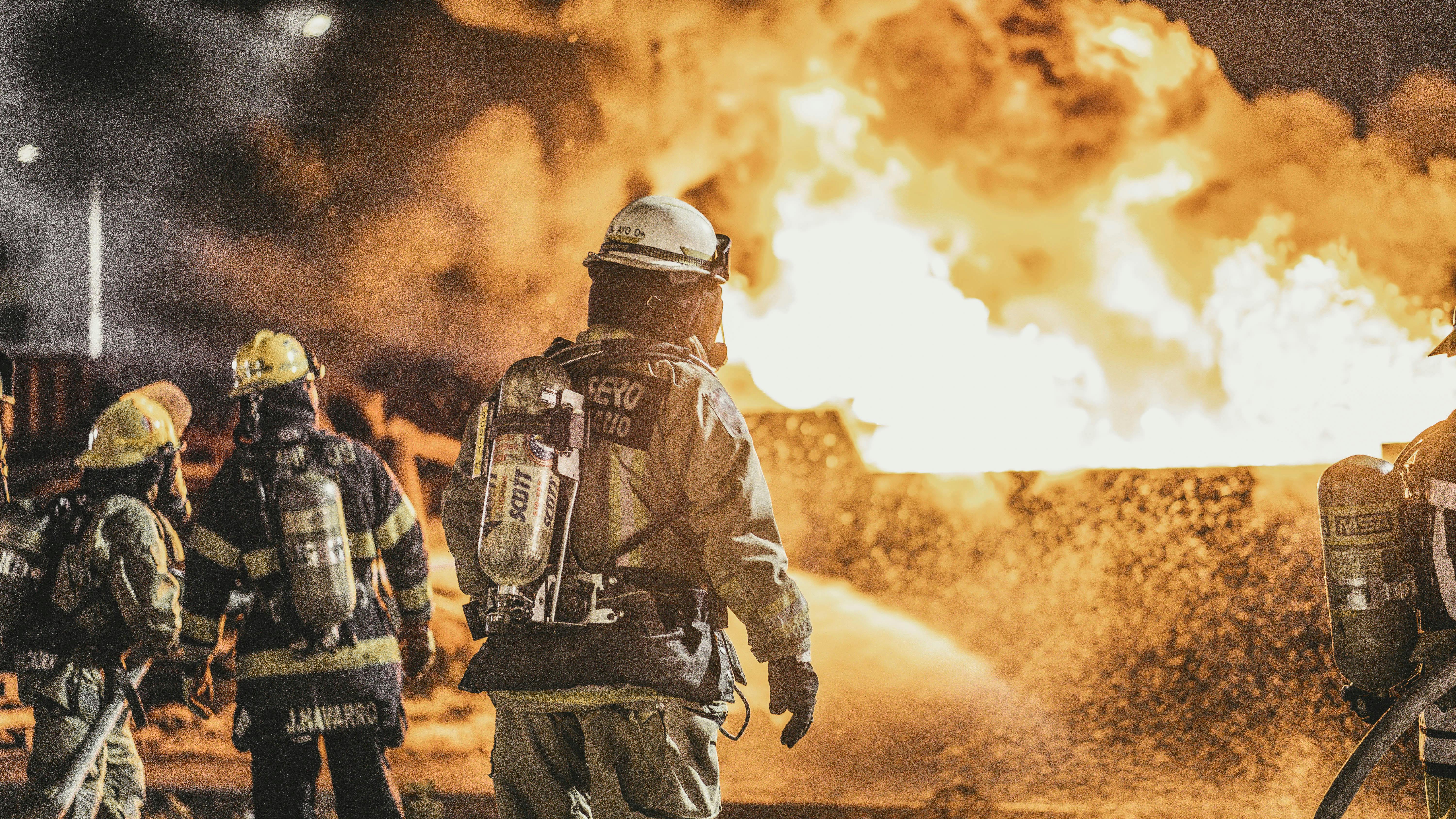
Firefighter Fitness: Tactical Readiness for the Job
Firefighter fitness is unlike fitness for almost any other job. Firefighters operate in one of the most physically demanding environments in the tactical world, and a single call can stack stair climbs in full gear, hose advancement, forcible entry, victim rescue, and extended work in extreme heat into a few brutal minutes. The stakes are not abstract: Smith (2011) reports roughly 80,000 firefighter injuries and about 100 line-of-duty deaths each year, with sudden cardiac events accounting for nearly half of those fatalities. Preparation is a survival issue, not a vanity one.
These tasks don’t happen in controlled conditions. They happen under:
Heavy protective equipment
High temperatures
Limited visibility
Time pressure
Accumulating fatigue
Because of this, firefighter fitness has to mean more than general conditioning or a good-looking physique. What the job demands is tactical readiness: the ability to perform specific, physically punishing tasks efficiently, repeatedly, and safely, while wearing gear that fights you the entire time. Closing that gap is exactly what structured tactical fitness programs for first responders are built to do, and the rest of this guide breaks down what that readiness is built from and how to train each piece.
What Tactical Readiness Means for Firefighters
Tactical readiness in the fire service is the ability to:
Perform demanding tasks under load
Sustain effort over extended operations
Recover quickly between efforts
Maintain performance across long careers
Research shows that firefighting tasks place significant cardiovascular and muscular demands on personnel, often pushing them near their physiological limits. This means training must prepare firefighters for real operational conditions, not just general fitness.
Read that list again, because the order matters. General fitness might get you through one hard effort; tactical readiness is what lets you string several together and still function on the call after this one. Rhea and colleagues (2004) found that firefighters with higher overall physical fitness perform demanding job tasks more efficiently and with a lower injury risk, which is exactly the outcome readiness is built around. The goal is not a single impressive number in the gym. It is a body that holds its standard across a long shift, a long incident, and a long career, and recovers fast enough to do it again tomorrow. That standard is not unique to the fire service, and it mirrors the same fundamentals laid out in this guide to military readiness and pre-deployment fitness, where sustained performance under load defines the job.
The Physical Demands of Fireground Operations
Typical fireground tasks include:
Stair climbs with equipment
Advancing charged hose lines
Carrying tools and ladders
Forcible entry
Victim drags or carries
Extended overhaul operations
These tasks require a combination of:
Strength
Strength endurance
Aerobic capacity
Work capacity
Heat tolerance
Studies show that many firefighting tasks are performed at high percentages of a firefighter’s maximum aerobic capacity. Without proper conditioning, fatigue accumulates quickly.
None of these tasks are optional, and none of them wait for you to be fresh. Bilzon and colleagues (2001), studying simulated firefighting tasks, documented the high metabolic cost of work like hose handling and casualty drags, much of it driven by the gear and the pace rather than the movement itself. Translated to training, that means a firefighter cannot specialize. You need raw strength to move a ladder or a body, the aerobic engine to keep moving once your heart rate spikes, and the work capacity to repeat the cycle without folding. Build only one of those qualities and the fireground will find the gap fast. Because those demands are so specific, how you select a program matters as much as how hard you work it, which is the same logic behind choosing a deployment fitness program built around real operational loads.
Core Physical Qualities for Fire Service Readiness
Tactical readiness is not one quality you can train in isolation. It is the product of four physical capacities working together, each covering for the others when the call gets long. Strength sets your ceiling, strength endurance lets you reach it repeatedly, aerobic capacity funds your recovery, and work capacity is what carries you through the whole incident. Neglect any one of them and the fireground will expose it. The four sections below break down what each quality does, why it matters on the job, and where to put your training focus.
1) Strength
Strength is essential for:
Lifting equipment
Carrying tools
Dragging victims
Handling ladders
Joint stability and injury prevention
Higher levels of muscular strength are associated with improved performance on simulated firefighting tasks.
Key areas to train:
Lower body
Upper body pushing and pulling
Core stability
Grip strength
Strength is the foundation everything else sits on, because you cannot endure a load you cannot move in the first place. A ladder, a charged line, a downed colleague in full kit, a forcible-entry tool swung dozens of times: every one of these is a strength expression before it is an endurance one. Train the major patterns heavy and with intent, prioritizing the lower body and the pulling and pushing that carries, drags, and pries. Grip and core stability deserve their own attention, since both quietly cap how much of your strength actually reaches the task. Strength built here makes every other quality cheaper to express.
2) Strength Endurance
Most fireground tasks involve repeated efforts, not single maximal lifts.
Strength endurance supports:
Continuous hose advancement
Repeated stair climbs
Tool handling over time
Sustained operations under fatigue
Research shows that firefighter tasks often require repeated moderate-to-high force output rather than single maximal efforts. Here is where most fireground work actually lives. You rarely get one maximal lift; you get the twentieth stair landing, the third hose line of the night, the tool you have been swinging for ten minutes. Strength endurance is the ability to keep producing meaningful force after fatigue has set in, and it is trainable separately from max strength. Higher-rep loaded carries, sled work, repeated stair efforts under load, and circuits that blend lifting with movement all build it. The aim is a firefighter who looks the same on rep one and rep fifty, because on a real call the rep that fails is the one that gets someone hurt.
3) Aerobic Capacity
Aerobic fitness plays a major role in:
Sustaining long incidents
Recovering between tasks
Reducing overall fatigue
Supporting cardiovascular health
Higher aerobic capacity is linked to improved performance and reduced physiological strain during firefighting. Aerobic capacity is the quality that decides how the second half of a call feels. A strong engine clears fatigue between efforts, holds your heart rate further from its ceiling under load, and protects the cardiovascular system that, as Smith (2011) notes, fails more firefighters than fire itself. This is not an argument for long, slow, junk mileage. Build an aerobic base with steady conditioning, the same foundation behind aerobic capacity for SWAT operators who have to perform under fire, then sharpen it with intervals that mimic the work-rest pattern of an incident: hard effort, brief recovery, repeat. The firefighter who can recover on the move is the one still making good decisions when the easy energy is long gone.
4) Work Capacity
Fireground operations often involve:
Continuous effort
Minimal rest
Multiple sequential tasks
Work capacity allows firefighters to:
Maintain output under fatigue
Transition between tasks efficiently
Stay effective during extended incidents
Work capacity is the quality that ties the others together. It is your ability to do a high total volume of demanding work, transition between tasks without a reset, and stay effective deep into an incident that refuses to end. Strength gives you the ceiling, endurance lets you repeat, and aerobic fitness funds the recovery, but work capacity is what the fireground actually tests when a routine call turns into a two-hour grind. Train it with task-specific circuits that chain carries, drags, climbs, and tool work back to back, under load and against the clock, so that doing a lot of hard things in sequence becomes normal rather than novel.
The Impact of Protective Equipment
Firefighters typically operate in:
Turnout gear
Helmet
SCBA
Tools and equipment
This adds:
Significant weight
Heat retention
Increased energy cost
Reduced movement efficiency
Research shows that protective clothing significantly increases physiological strain and thermal stress during firefighting tasks. Training must account for these factors. This is the variable most general fitness programs ignore, and it changes everything. Turnout gear, helmet, SCBA, and tools add significant weight, but the real tax is heat. The same protective clothing that shields you also traps the heat your body produces, driving core temperature and heart rate up and cutting the time you can work before you have to stop. Bilzon and colleagues (2001) and the broader firefighting literature consistently show that the ensemble itself raises the physiological cost of every task. Practically, that means you have to train in a way that builds tolerance for working hot and heavy, not just fit and fresh. Loaded carries, weighted stair work, and conditioning that lets your body practice shedding heat all close the gap between gym fitness and fireground fitness.
Common Training Mistakes in the Fire Service
Most firefighters who feel underprepared are not lazy. They are training hard at the wrong thing. Three patterns show up again and again, and each one leaves a specific hole in readiness. Chasing aesthetics builds a body that photographs well but has never practiced producing force under fatigue, in heat, in gear. Living on cardio keeps the engine running but lets strength and the tissue that protects your joints erode, which raises injury risk on the heavy tasks. And training that never accounts for load or heat, no carries, no stairs, no task-specific conditioning, prepares you for a version of the job that does not exist. The fix in every case is the same: train the demands as they actually appear.
Only Training for Aesthetics
Bodybuilding-style programs:
May improve appearance
But often lack job-specific strength and endurance
Only Doing Cardio
Cardio-only programs:
Reduce force production
Increase injury risk
Limit operational performance
Ignoring Load and Heat Demands
Training without:
Loaded carries
Stair work
Task-specific conditioning
creates gaps in readiness.
Signs a Firefighter Lacks Tactical Readiness
Common indicators:
Rapid fatigue during stair climbs
Difficulty handling equipment
Slow recovery between tasks
Joint pain under load
Frequent minor injuries
These often point to gaps in strength, endurance, or work capacity. None of these signs are character flaws, and none of them are permanent. They are feedback. Rapid fatigue on the stairs points to an aerobic or work-capacity gap; struggling with equipment usually traces back to raw strength or grip; slow recovery between efforts is the engine telling you it needs work; and recurring joint pain or minor injuries often mean the body is being asked to do under load what it was never trained to do. Read them as a diagnostic checklist rather than a verdict. Each one tells you exactly which quality to prioritize next, which is far more useful than training harder at random.
Practical Takeaways
You do not need to train all of these qualities perfectly at once. You need to train all of them honestly. A workable approach builds a real strength base first, layers strength endurance and aerobic conditioning on top, and then ties everything together with task-specific work that looks like the job: carries, stair climbs, drags, and tool work done under load and progressed gradually over time. Consistency beats intensity here. The firefighter who trains the right things steadily for years will out-perform and outlast the one who trains hard in bursts and burns out. Use the points below as a standing checklist, not a one-time program.
To build tactical readiness in the fire service:
Develop a solid strength foundation
Train strength endurance regularly
Maintain aerobic conditioning
Include task-specific circuits
Train under load when possible
Progress training gradually over time
Fireground work is unpredictable, brutal, and indifferent to how you feel that day. Firefighter fitness built around genuine tactical readiness is what lets you meet it anyway, performing the job effectively and safely no matter how long the incident runs, and being ready to do it all again on the next call.
References
Bilzon, J. L. J., Scarpello, E. G., Smith, C. V., Ravenhill, N. A., & Rayson, M. P. (2001). Characterization of the metabolic demands of simulated shipboard Royal Navy fire-fighting tasks. Ergonomics, 44(8), 766–780.
Knapik, J. J., Reynolds, K. L., & Harman, E. (2004). Soldier load carriage: historical, physiological, biomechanical, and medical aspects. Military Medicine, 169(1), 45–56.
Smith, D. L. (2011). Firefighter fitness: improving performance and preventing injuries and fatalities. Current Sports Medicine Reports, 10(3), 167–172.
Lemon, P. W. R., & Hermiston, R. T. (1977). The human energy cost of fire fighting. Journal of Occupational Medicine, 19(8), 558–562.
Rhea, M. R., Alvar, B. A., & Gray, R. (2004). Physical fitness and job performance of firefighters. Journal of Strength and Conditioning Research, 18(2), 348–352.


