
Superman Exercise & Hold: Proper Form Guide | Combat Fitness
The Superman Exercise: How to Do the Hold, Muscles Worked & Variations
The superman exercise is a face-down back-extension hold that trains the muscles along your spine, plus your glutes and hamstrings, to resist the forward rounding that loaded work forces on your body. Ruck straps, plate carriers, and long hours in a vehicle seat all pull your trunk the same direction, and the superman hold is one of the simplest ways to push back. Our tactical fitness programs build it into structured core and durability work for exactly that reason.
It takes no equipment, no gym, and about five minutes. This guide covers what the superman is, the muscles it works, why it matters for tactical athletes, proper hold form, how long to hold it, the variations worth using, and where it fits in your training week.
What Is the Superman Exercise?
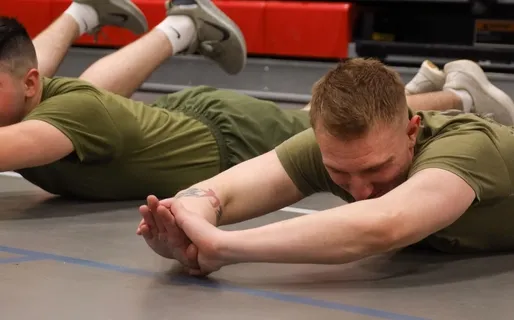
The superman exercise is a prone (face-down) back-extension hold. You lie on your stomach, reach your arms overhead, and lift your arms, chest, and legs a few inches off the floor at the same time, holding the position with your glutes and spinal extensors. The shape resembles a flying superhero, which is where the name comes from.
You will see it called the superman hold, superman pose, superman position, or simply “supermans.” They all describe the same movement. The hold version is isometric, meaning you stay still under tension. The dynamic version, often called superman raises, lifts and lowers on a rhythm.
Because it needs nothing but floor space, the superman travels well. You can run it in a barracks room, a hotel, or the dirt next to a range.
What Muscles Does the Superman Exercise Work?
The superman works the entire posterior chain, with the spinal extensors doing most of the job. It is an endurance move, not a max-strength move, which is why it carries over so well to long days under load.
Erector spinae (primary): the long columns of muscle on either side of your spine that hold your trunk upright.
Multifidus: small, deep muscles that stabilize individual spinal segments.
Gluteus maximus: extends the hip and lifts the legs, and it should share the load with the low back.
Hamstrings: assist the glutes in lifting the legs off the floor.
Middle and lower trapezius and rear delts: hold the arms overhead and keep the shoulder blades set.
That spread makes the superman a legitimate superman back workout on its own when you need one. It trains the muscles that keep your spine stacked, not the ones that look good in a mirror.
Why the Superman Matters for Tactical Athletes
Low back pain is among the most common reasons service members lose training days and seek care. Load carriage drives a large share of that. Studies of soldiers under load show the trunk leans further forward as pack weight climbs, which shifts more demand onto the spinal extensors to keep you upright.
Body armor adds the same forward pull, and soldiers who wear it report more back and neck pain. Long hours in vehicles add whole-body vibration, which epidemiological reviews link to low back pain in drivers and equipment operators. Every one of those exposures asks the same muscles to work for hours, not seconds.
This is where endurance matters more than strength. In a classic Danish study, men with poor isometric back-extensor endurance were more likely to develop first-time low back trouble over the following year. The superman trains that endurance directly, with zero equipment and low fatigue cost. It is prehab, not aesthetics. That is the same logic behind building functional strength for military performance: train the body for the demands the job puts on it.
Is the superman exercise good for your lower back? For most healthy athletes, yes, when done with a controlled range of motion. It is one tool, not the whole toolbox, and it does not replace heavy hinging. If you are deciding how much durability work belongs alongside your lifting and running, our guide to choosing a strength & endurance program walks through how to weigh it.
How to Do a Superman Hold (Proper Form)
A good superman hold is long and low, not high and arched. Follow these steps:
Lie face down on a mat or firm ground, legs straight and arms extended overhead, palms facing each other or the floor.
Brace your midsection as if someone were about to tap your stomach, without sucking it in.
Squeeze your glutes hard. This lifts the legs and keeps the low back from doing all the work.
Lift your arms, chest, and legs 2 to 4 inches off the floor at the same time, reaching long through your fingertips and toes.
Keep your gaze on the floor a foot in front of you so your neck stays in line with your spine.
Hold for the target time, breathing steadily, then lower under control.
Common Superman Mistakes
Cranking the neck back: looking forward or up compresses the cervical spine. Keep your eyes down.
Lifting as high as possible: height does not add value here, it adds load to the lumbar spine.
Soft glutes: if your glutes are not squeezed, your low back is carrying the position alone.
Holding your breath: steady breathing under tension is part of the skill you are building.
Bending the knees: keep the legs long so the hamstrings and glutes contribute.
The height point is the one with research behind it. Stuart McGill’s lab measured lumbar loads across extensor exercises and found that lifting both arms and legs from the prone position, especially into an exaggerated arch, produced some of the highest spinal compression of the movements they tested. A low, controlled lift keeps the training benefit without the extra load. If you have current back pain, start with the bird-dog regression below and get cleared by a clinician.
How Long Should You Hold a Superman? (Reps and Progression)
Most athletes get more from repeated short superman holds of 8 to 10 seconds than from one long max-effort hold. Short holds keep form clean and let you accumulate total time under tension without the late-set sagging and neck cranking that a long grind invites. Build volume first, then hold length.
This mirrors the approach McGill recommends for spinal endurance work: short, repeated holds that build capacity without fatiguing into poor position. For reference, healthy young adults in his normative data held a bench-based back-extensor test for well over two minutes on average, so there is plenty of room to grow.
A simple progression for your superman workout:
Week 1 to 2: 5 to 6 holds of 8 to 10 seconds, 10 seconds rest between holds, 2 rounds.
Week 3 to 4: 3 sets of 20 to 30 second holds, 30 seconds rest.
Week 5 and beyond: 3 sets of 45 to 60 second holds, or switch to dynamic superman raises for 3 sets of 12 to 15 reps.
Advanced: add light load (a small plate or 2 to 5 pound dumbbells in each hand) rather than chasing holds past 60 seconds.
Once 60 seconds feels easy, more time adds little. Change the variation or the load instead.
Superman Variations
The variations below run from easiest to hardest. Pick the one that matches your current capacity and training goal.
Bird-dog (regression): on hands and knees, extend one arm and the opposite leg. Research shows it recruits the spinal extensors and multifidus with far less spinal load, which makes it the go-to for anyone returning from back pain.
Superman raises (dynamic superman): lift for a one-second pause, lower, repeat. Good for higher-rep endurance sets.
Swimmers: hold the superman position and alternate opposite arm and leg in small flutters. Adds rotation control and shoulder endurance.
Superman pull: from the hold, pull your elbows down toward your ribs as if doing a lat pulldown, then reach back out. Superman pulls train the upper back and lats along with the extensors.
Superman row and dumbbell superman: add light dumbbells to the pull pattern, or simply hold them overhead. Weighted supermans are the cleanest way to progress past long holds.
Reverse superman: lie prone on a bench with hips at the edge and lift your straight legs to hip height. It shifts the emphasis to the glutes and hamstrings with your torso supported.
Superman back extension: the same pattern performed on a 45-degree back extension bench, which allows more range of motion and easy loading.
Two names cause confusion. Superman push-ups are an advanced plyometric push-up where you push off and extend your arms and legs in the air. Superman curls are a cable biceps curl with arms out to the sides. Both share the name but train different things.
How to Program the Superman Exercise
The superman fits in three places: the warm-up, a core finisher, or recovery days. As a warm-up, 2 rounds of short holds wake up the glutes and extensors before deadlifts, squats, or a ruck. As a finisher, 3 sets at the end of a lower-body or core day add posterior-chain endurance without hurting tomorrow’s session.
Two to four sessions a week is plenty. Because the fatigue cost is low, it can run alongside a heavy training block without competing for recovery. It works best as a supporting piece inside a strength workout for athletes rather than as a standalone back day.
Pairing It With the Rest of Your Core Work
Most core programming leans heavily on flexion: sit-ups, bicycle crunches, and leg raises. The superman is the extensor complement to that work. Pair one flexion or anti-extension move with one extension move so your trunk develops evenly front to back. Planks resist extension, supermans produce it, and a balanced set of core exercises for men and women should include both. If your week has three sets of crunches for every set of back work, fix the ratio.
Frequently Asked Questions
What muscles does the superman exercise work?
The superman exercise works the erector spinae as the primary movers, with the multifidus, glutes, hamstrings, middle and lower trapezius, and rear delts assisting. It trains the entire posterior chain for endurance, which is what keeps your spine upright under a ruck, armor, or long hours seated.
How do you do a superman hold with proper form?
Lie face down, arms overhead, brace your midsection, squeeze your glutes, and lift your arms, chest, and legs 2 to 4 inches off the floor. Keep your eyes on the floor and your neck neutral. Reach long rather than high, breathe steadily, and lower under control.
How long should you hold a superman?
Start with repeated holds of 8 to 10 seconds, then build to 3 sets of 20 to 30 seconds, and eventually 45 to 60 seconds. Past 60 seconds, progress with dynamic raises or light weight rather than longer holds, since extra time adds little once form starts to slip.
Is the superman exercise good for your lower back?
For healthy athletes, the superman is a useful low-back endurance builder when done with a low, controlled lift. Lifting too high creates high spinal compression, so keep the range small. If you currently have back pain, start with the bird-dog and get assessed by a clinician first.
What are the best superman variations?
The bird-dog is the best regression, dynamic superman raises and swimmers build endurance, and the superman pull adds upper-back work. For progression, weighted supermans, the reverse superman, and the superman back extension on a 45-degree bench all add load without needing longer holds.
Superman hold vs. plank: what’s the difference?
A plank trains the front of your core to resist your spine sagging into extension. A superman hold trains the back of your core to produce and hold extension. They are complements, not substitutes, and a balanced program includes both so your trunk is strong in every direction.
How many sets and reps of supermans should you do?
Most athletes do well with 2 to 3 sets, two to four times a week. Use 5 to 6 short holds per round when starting, 20 to 60 second holds as you advance, or 12 to 15 dynamic reps per set. Keep it as a supporting exercise, not the main event.
The superman exercise is a small investment with an outsized return: five minutes of low, controlled holds builds the spinal endurance that loaded work drains every day. Train it two to four times a week, keep the lift low, and progress with variations instead of chasing longer holds. Knowing the movement is the easy part. Placing it correctly inside a full week of strength, conditioning, and rucking is what keeps your back healthy through a career. Start with the CF ONE program library and let the durability work get programmed for you.
References:
Biering-Sørensen F. Physical measurements as risk indicators for low-back trouble over a one-year period. Spine. 1984;9(2):106-119.
Callaghan JP, Gunning JL, McGill SM. The relationship between lumbar spine load and muscle activity during extensor exercises. Physical Therapy. 1998;78(1):8-18.
McGill SM, Childs A, Liebenson C. Endurance times for low back stabilization exercises: clinical targets for testing and training from a normal database. Archives of Physical Medicine and Rehabilitation. 1999;80(8):941-944.
McGill SM. Low Back Disorders: Evidence-Based Prevention and Rehabilitation. 3rd ed. Champaign, IL: Human Kinetics; 2016.
Ekstrom RA, Donatelli RA, Carp KC. Electromyographic analysis of core trunk, hip, and thigh muscles during 9 rehabilitation exercises. Journal of Orthopaedic & Sports Physical Therapy. 2007;37(12):754-762.
Knapik JJ, Reynolds KL, Harman E. Soldier load carriage: historical, physiological, biomechanical, and medical aspects. Military Medicine. 2004;169(1):45-56.
Attwells RL, Birrell SA, Hooper RH, Mansfield NJ. Influence of carrying heavy loads on soldiers’ posture, movements and gait. Ergonomics. 2006;49(14):1527-1550.
Konitzer LN, Fargo MV, Brininger TL, Lim Reed M. Association between back, neck, and upper extremity musculoskeletal pain and the individual body armor. Journal of Hand Therapy. 2008;21(2):143-149.
Cohen SP, Gallagher RM, Davis SA, Griffith SR, Carragee EJ. Spine-area pain in military personnel: a review of epidemiology, etiology, diagnosis, and treatment. The Spine Journal. 2012;12(9):833-842.
Bovenzi M, Hulshof CT. An updated review of epidemiologic studies on the relationship between exposure to whole-body vibration and low back pain (1986-1997). International Archives of Occupational and Environmental Health. 1999;72(6):351-365.
Hayden JA, Ellis J, Ogilvie R, Malmivaara A, van Tulder MW. Exercise therapy for chronic low back pain. Cochrane Database of Systematic Reviews. 2021;9:CD009790.
Headquarters, Department of the Army. FM 7-22, Holistic Health and Fitness. Washington, DC; 2020.
Disclaimer: This article is for general educational purposes and is not medical advice. Consult a qualified healthcare provider before starting a new exercise program, especially if you have current or past back pain or injury. Stop any exercise that causes sharp pain, numbness, or tingling, and seek professional assessment.


