
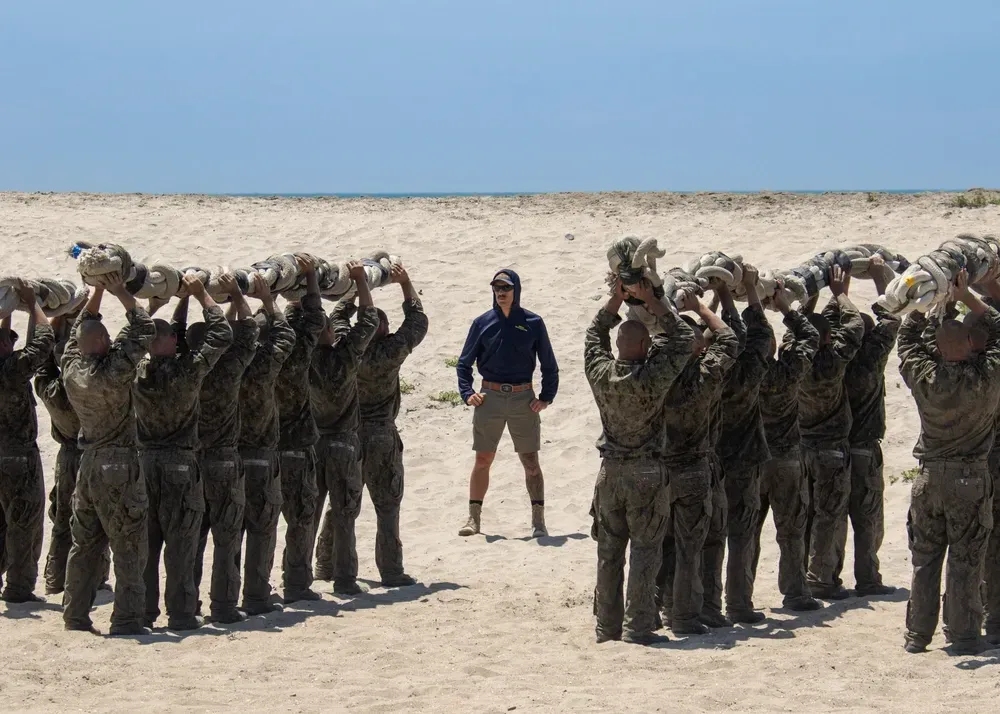
Functional Strength Training for Military Athletes
Functional Strength Training for Military Athletes: A Complete Guide
Functional strength training is one of the most misunderstood concepts in military fitness, and one of the most consequential for tactical athletes who need their strength to hold up under load, fatigue, and operational stress. It is often reduced to unstable exercises, novelty movements, or anything that looks different from traditional lifting. That interpretation misses the point. Functional strength training is not defined by how creative the exercises look, it is defined by what the strength does once you step away from the rack.
It is defined by how well strength transfers to real-world performance. The Combat Fitness ONE training programs are built on exactly that definition, strength work structured for transfer, not novelty. For military athletes looking specifically for programs designed around this principle, Combat Fitness strength programs is the right starting point.
For athletes deciding which tactical fitness program best fits their strength development goals, the tactical fitness program buying guide walks through how to evaluate your options. If you have specific questions about tactical fitness program structure and selection, the tactical fitness program FAQ covers the most common questions in one place.
What "Functional" Actually Means for Military Strength Training
Functional strength training for military athletes improves the ability to produce force in positions, patterns, and conditions that resemble operational demands, the loaded carries, the awkward lifts, the repeated efforts after the legs are already smoked. It is strength built to survive the variables the operational environment actually imposes, not strength built to perform in the controlled environment of a barbell session.
For military athletes, that means strength that supports:
Load carriage
Repeated movement under fatigue
Awkward or asymmetrical positions
Prolonged standing, walking, and carrying
If strength does not improve these outcomes, it is not functional, regardless of how creative or novel the exercise selection appears. That standard cuts in both directions: a back squat done with operational transfer in mind qualifies, while a single-leg balance drill done for novelty alone does not. The operational context that makes these outcomes the right targets is covered in what is what is tactical conditioning, which establishes the performance demands that functional strength must serve.
Why Traditional Strength Training Alone Is Not Enough for Tactical Athletes
Traditional barbell training builds valuable qualities. Heavy back squats, conventional deadlifts, overhead presses, and barbell rows increase maximal force production, tendon and bone density, and connective-tissue capacity. None of that is wasted work, these lifts remain the backbone of any serious tactical strength program. The problem is not the lifts themselves.
The problem is what gets left out. Military performance rarely occurs under symmetrical, rested conditions. A soldier carrying a casualty, a SWAT officer breaching after a four-hour stack, a Ranger student on day six of selection, none of them are producing force from a fresh, balanced, bilateral stance. Strength has to hold up under fatigue, asymmetry, and variability, or it does not show up when it is needed.
Functional strength training builds on traditional strength by ensuring it transfers. This does not require abandoning basic lifts, it requires complementing them intelligently with unilateral work, loaded carries, and full-range patterns trained under controlled fatigue. The physiology behind how how strength training affects endurance explains the specific mechanisms that determine whether strength transfers to sustained performance or competes with it.
Relative Strength Matters More Than Absolute Numbers
Absolute strength is useful. Relative strength is critical. For a tactical athlete, the question is rarely "how much can you lift?", it is "how much can you lift, carry, drag, and climb while moving your own bodyweight under load?"
Being strong relative to bodyweight directly improves efficiency during running, rucking, climbing, and casualty extraction. Excess mass increases energy cost, raises core temperature faster under load, and accelerates fatigue. A 250-pound operator with a 500-pound deadlift may move worse under a 70-pound ruck than a 195-pound operator with a 425-pound deadlift, because relative strength, and the conditioning that comes with carrying less passive mass, is what actually transfers.
Functional strength training prioritises strength gains that do not compromise endurance, conditioning, or recovery. This balance is routinely ignored in generic lifting programs that chase one-rep maxes without accounting for the operational cost of added bodyweight. The full framework for managing a framework for strength-endurance balance provides the structural approach for maintaining this balance across a training cycle.
Single-leg and Asymmetrical Strength Have a Role
Most military movement is unilateral. Walking, running, climbing, stepping over obstacles, and carrying a weapon system are all asymmetrical loading patterns. Single-leg strength built through rear-foot-elevated split squats, step-ups to a controlled height, and reverse lunges under load directly improves stability, hip integrity, and the ability to tolerate single-leg ground contact under fatigue.
Asymmetrical carries , suitcase carries, single-arm farmer's walks, offset overhead carries, improve trunk strength, anti-lateral-flexion stability, and postural control under load. These elements drive the durability that load carriage and operational movement actually demand. They are complements to bilateral strength work, not replacements: the back squat and the deadlift still anchor the program; the unilateral and asymmetrical work makes that strength survive contact with the operational environment.
Trunk Strength Is Not Optional for Military Performance
The trunk transfers force between the upper and lower body. Under load, fatigue, and asymmetrical positioning, a weak trunk leaks force, drives compensatory patterns, and is one of the most common precursors to lower-back injury during ruck marches and load-bearing work.
Functional strength training develops trunk stability through resisted, integrated movement, not endless isolation work. Loaded carries (front-rack, suitcase, overhead), heavy hinges (trap-bar deadlift, kettlebell swing), barbell presses, and weighted pull-ups all force the trunk to brace under real load and through full ranges of motion. Crunches, sit-ups, and dedicated "core" circuits have a place, but they should never be the primary driver of trunk capacity for a tactical athlete. The goal is resilience under load, not aesthetics under a t-shirt.
Strength Must Be Trained Through Full Ranges of Motion
Restricted movement reduces force transfer. Strength built through controlled, full ranges of motion improves joint tolerance, movement efficiency, and the body's ability to produce force in positions a soldier or operator actually finds themselves in, deep hip flexion under a ruck, overhead reach during a climb, full thoracic extension under a casualty drag.
Partial or rushed reps may allow heavier loads on paper, but they reduce functional carryover. A half-depth back squat with a heavier load builds less usable strength than a full-depth squat with a lighter one. Quality of movement always matters more than absolute load.
This is especially important once fatigue is present. As fatigue accumulates, range tends to collapse first, and athletes who have trained partial ranges in fresh conditions have nothing to fall back on when their movement quality is already compromised by the work itself.
Strength Training Supports Injury Prevention Indirectly
Strength training does not prevent injury directly, no exercise does. What well-programmed strength training does is increase tissue tolerance: the load that a tendon, ligament, joint capsule, or bone can absorb before it fails.
Stronger tissues withstand higher stress before failing. This reduces injury risk when training volume, rucking distance, or operational tempo increases. Functional strength training builds this tolerance gradually and predictably, through progressive overload across compound movements, loaded carries, and full-range work. It does not chase fatigue for its own sake.
It builds capacity. The specific application of this principle to load carriage, the most common context where tissue tolerance is tested for soldiers, LEOs, and tactical athletes, is covered in strength-endurance for load carriage, which makes the direct connection between the strength qualities described here and operational performance.
Why Instability Training is Often Misused
Unstable surfaces, BOSU balls, wobble boards, stability cushions, reduce the force a muscle can produce because the nervous system shifts resources toward maintaining balance rather than generating output. They may challenge proprioception, but they sharply limit strength development. For most military athletes and tactical operators, time spent on excessive instability work produces minimal return and crowds out training that would actually transfer.
True stability is a function of strength expressed through movement, not the absence of a stable surface. A heavy front-rack carry over uneven ground develops more usable stability than five minutes of single-leg stance on a foam pad. Ground-based, loaded, full-range movements remain the highest-transfer way to build the kind of stability that holds up under operational stress.
Programming Strength for Military Schedules
Functional strength training must fit real schedules, the rotation cycles, the deployments, the field exercises, the unpredictable duty hours that military athletes, LEOs, and first responders actually live with. A program that assumes five fresh hours a week in a fully equipped commercial gym will fail the moment the schedule shifts.
This requires:
Limited but consistent sessions
Efficient exercise selection
Manageable volume
Planned progression
Overly complex programs fail under operational stress. Simple, repeatable structures survive, three to four sessions per week, two to four compound lifts per session, a defined carry or unilateral element, and a clear progression model that holds up across a four-to-six-week block. This principle is reflected in systems like the Combat Fitness training plans available with Combat Fitness ONE, which are built around exactly these constraints rather than against them. The emphasis is on sustainability, not novelty. A program that can be run for six months straight beats a program that looks impressive on paper for two weeks and falls apart in the third.
Strength Must Coexist With Conditioning
Functional strength training supports conditioning. It should never compromise it. For a tactical athlete, strength that destroys aerobic capacity, ruck performance, or recovery is strength bought at the wrong price.
Volume and intensity must be managed so strength sessions do not bleed into conditioning sessions. When lifting volume is too high, athletes show up to runs and rucks already accumulated with fatigue, conditioning quality drops, and aerobic adaptations stall. A common signal that the balance has slipped: chronic muscle soreness lasting more than 48 hours, declining run paces despite consistent training, or rising resting heart rate across the week.
The goal is synergy, not competition. The full argument for how tactical strength and conditioning work together rather than against each other gives this synergy principle its complete programmatic context.
Functional strength training is not about creativity. It is about relevance. When strength transfers to performance, under load, under fatigue, in the positions and conditions a military athlete actually operates in, it becomes functional. Anything else is just lifting. The deeper physiological definition ofwhat is strength-endurancegives this transfer principle its full mechanistic foundation; it is the quality that sits at the intersection of strength and operational performance.
FAQ
What is functional strength training for military athletes?
Functional strength training for military athletes is strength work designed specifically to transfer to operational performance, to improve the ability to produce force under load, under fatigue, in asymmetrical positions, and across the real-world movement demands of military, LEO, and tactical work. It is defined by transfer, not by how creative the exercises look.
Is functional strength training different from regular lifting?
It builds on traditional lifting rather than replacing it. Standard barbell work, squats, deadlifts, presses, rows, remains the foundation. Functional strength training adds unilateral work, loaded carries, full-range movement, and trunk-stability work to ensure the strength built in the gym transfers to load carriage, sustained operational effort, and asymmetrical real-world positions.
Do military athletes need single-leg training?
Yes. Single-leg and asymmetrical strength improve stability and load tolerance.
Does functional strength training reduce injury risk?
Indirectly. No training program prevents injury outright. What well-programmed functional strength training does is increase tissue tolerance, the load that tendons, ligaments, and joints can absorb before failing, and improve movement efficiency under fatigue. Both reduce the probability of injury when training volume, rucking distance, or operational tempo rises.


