
How Strength Training Affects Endurance (Backed by Science)
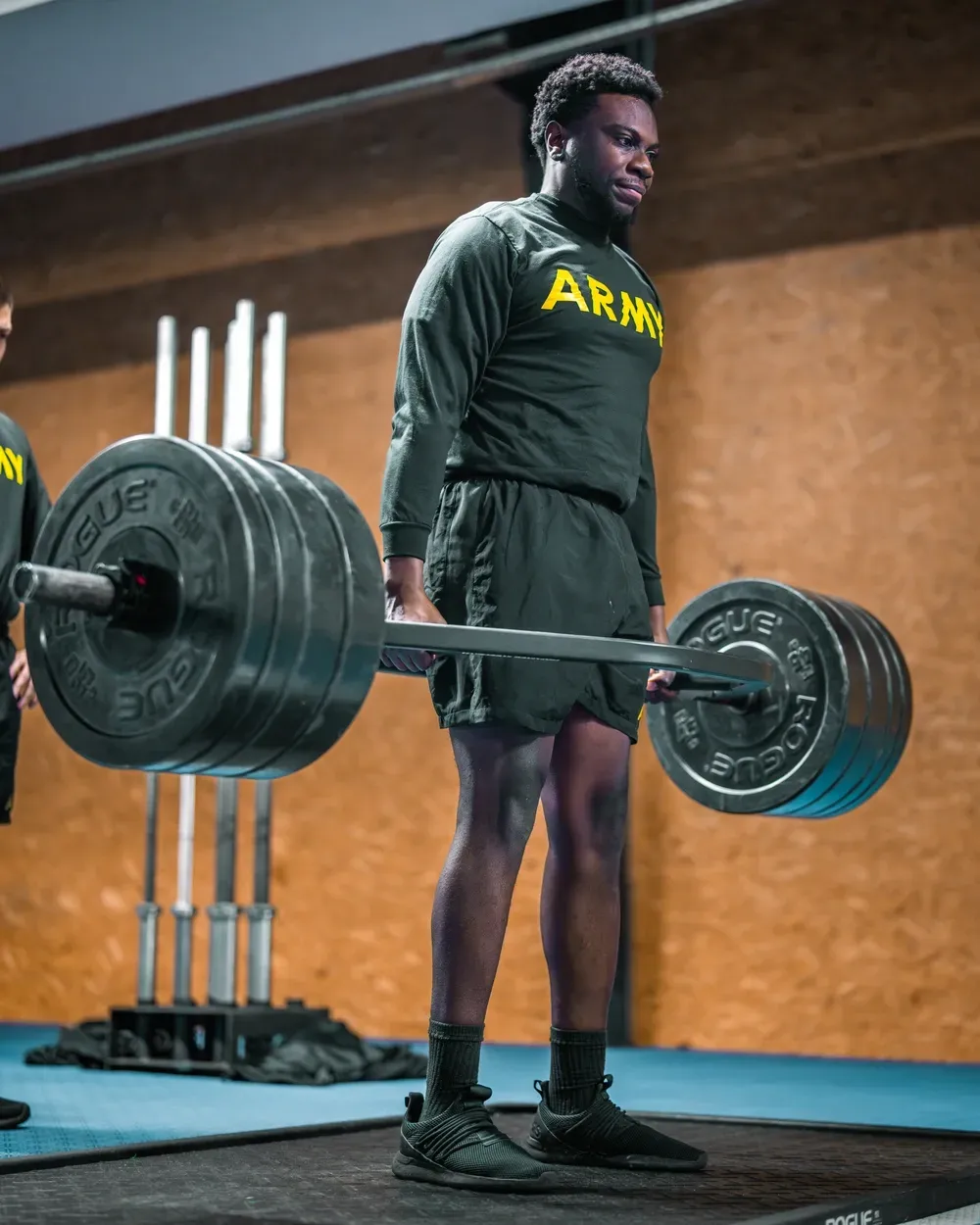
Strength training improves endurance performance when it is programmed correctly. The research on movement economy and concurrent training is consistent on this, and specific about what kind of strength work delivers it.
Done right, strength work makes every stride, ruck, and repeated effort cheaper to produce. It improves movement efficiency, delays fatigue, reduces injury risk, and raises overall work capacity. The negative effects athletes worry about, losing endurance by lifting, show up only when volume, intensity, or recovery are mismanaged alongside endurance work, not as an inevitable trade-off.
For most tactical and hybrid athletes, strength training is not a threat to endurance. It is a key part of long-term performance. Programs built around that integration are what CF ONE tactical training programs are designed to deliver.
Why Strength Matters for Endurance
At first glance, strength and endurance seem like opposite qualities. One focuses on maximal force. The other focuses on sustained effort. In reality, endurance performance depends heavily on the ability to produce force efficiently over time.
Every stride, pedal stroke, or step under load requires force. The stronger an athlete is, the smaller the percentage of their maximum strength required for each movement.
As a rough illustration: a weaker athlete might use 40 to 50% of their maximum strength for each stride under load, while a stronger athlete uses 20 to 30% for the identical task. The exact percentages vary with the individual and the load; the principle does not.
This is the relative-intensity principle, and it scales with the load. Picture two soldiers on a 12-mile ruck under a 45-pound pack. The weaker one is operating near half of his max with every step, so each mile chips away at a smaller reserve. The stronger one is working at a quarter to a third and finishes with gas in the tank.
Nothing about their aerobic engines has to differ. The stronger athlete simply spends less of his capacity on the same external work, which is why raw strength quietly extends endurance long before any cardio adaptation enters the picture.
This means the stronger athlete:
Fatigues more slowly
Uses less energy per movement
Maintains better mechanics over time
For athletes evaluating which hybrid training program best develops strength and endurance together, the hybrid training program buying guide walks through exactly how to choose the right option. For athletes with specific questions about hybrid training program structure, the hybrid training program FAQ covers the most common questions in one place.
Key Ways Strength Training Improves Endurance
1. Improved Movement Economy
Movement economy refers to how much energy it takes to maintain a given pace. Running economy is the endurance world's version of fuel mileage: how much oxygen you burn to hold a given pace.
Stronger muscles produce force more efficiently, require less energy for the same output, and reduce unnecessary movement. The mechanism is stiffer tendons and better-coordinated motor units storing and returning energy more efficiently with each ground contact, so the body wastes less effort on stabilizing and more on moving forward.
Not all strength training does this. A 2024 systematic review and meta-analysis pooled 31 studies covering 652 middle- and long-distance runners and separated the methods:
Figure 1.1 - Five strength training methods tested against running economy in a 2024 meta-analysis of 31 studies and 652 middle- and long-distance runners. Combined methods produced the largest effect at −0.426 across 10 to 14.5 km/h; heavy load at or above 80 percent of 1RM produced −0.266 across the widest range, 8.6 to 17.9 km/h or 11:11 to 5:25 per mile; plyometrics produced −0.307 but only at 12 km/h and below, roughly 8:03 per mile and slower. Submaximal load and isometric training were both tested across relevant speed ranges and produced nothing. All three working effects are small, and combined methods is the only one graded low certainty. Source: Llanos-Lagos et al., Sports Medicine, 2024.
Three practical conclusions:
Load matters more than volume. The benefit lives at 80% of 1RM and above. Sets of 15 with moderate weight, the way most endurance athletes lift when they lift at all, produced no measurable economy gain in this analysis
Combining heavy work with plyometrics beat either alone. If you have two sessions a week, that combination is the highest-yield use of them
Faster runners and those with higher VO2max got more from heavy work, so the benefit is not confined to novices
This leads to better running or rucking efficiency and lower energy cost at submaximal intensities.
2. Greater Fatigue Resistance
Strength training improves the ability of muscles to sustain repeated contractions, maintain posture under load, and resist breakdown over long efforts. This matters most in long-distance running, rucking, repeated tactical tasks, and multi-hour operations.
Fatigue resistance is where strength pays off in the field, not the lab. On a long security patrol or a multi-hour movement, the limiting factor is rarely a single hard contraction. It is the thousandth repetition of a sub-maximal one while carrying load.
A stronger muscle meets each of those repetitions further below its ceiling, so it accumulates metabolic and neural fatigue more slowly. The practical result is that posture, grip, and stride hold together deep into an effort when a weaker athlete's mechanics have already started to fall apart.
3. Improved Running and Load-Carriage Mechanics
As fatigue accumulates, weak muscles struggle to maintain proper movement patterns. This leads to poor posture, a shortened stride, inefficient movement, and increased injury risk. Stronger muscles help maintain alignment, stable joints, and efficient force transfer.
Load carriage exposes weak links faster than anything else in tactical training. Strap on a heavy pack and the spine, hips, and knees have to manage forces they never see unloaded. The first thing to go under fatigue is trunk stability: the torso starts to fold, the stride shortens, and ground-contact time climbs.
A strong posterior chain and braced midline buy time against that cascade. The athlete keeps a tall, efficient carrying position miles after a weaker training partner has collapsed into a shuffling, energy-leaking gait.
4. Reduced Injury Risk
The biggest endurance gains rarely come from a clever program. They come from not getting hurt. Stress fractures, tendinopathies, and overuse injuries are what derail recruits and tactical athletes, and they cluster in people whose connective tissue cannot tolerate their training volume.
The evidence here is unusually strong. A meta-analysis of 25 randomized controlled trials covering 26,610 participants and 3,464 injuries found:
Strength training reduced injuries to roughly one third (relative risk 0.315)
Overuse injuries specifically were nearly halved (relative risk 0.527), which is the exact category of shin splints, tendinopathies and stress reactions that ends running blocks
Stretching showed no significant effect (relative risk 0.963), which is worth knowing given how much of it gets done for injury prevention
Strength work builds the tissues that mileage alone breaks down:
Improves tendon and ligament resilience
Increases bone density
Strengthens connective tissue
Enhances joint stability
One boundary on that. Everything above is about reducing the chance of these problems arriving. It is not advice for an athlete who already has one. Localized bone pain that worsens with impact, tendon pain that persists across weeks, or anything that changes how you move needs a qualified professional rather than more strength work. Stress fractures in particular get dramatically worse when trained through, and they often feel manageable in their early stages.
Fewer injuries mean more consistent training, which is one of the biggest predictors of endurance improvement. Understanding what is aerobic capacity gives the endurance side of this relationship its full physiological foundation.
When Strength Training Can Hurt Endurance
Although strength training is usually beneficial, it can negatively affect endurance under certain conditions.
1. Excessive Strength Volume
High-volume hypertrophy programs can increase muscle soreness, temporarily reduce mobility, and limit endurance session quality. This is especially true when leg training is very high volume, sessions are long and fatiguing, and recovery is inadequate.
The mechanism here is residual fatigue, not some mysterious interference. A brutal high-volume leg day leaves the muscles damaged and the nervous system flat for 48 to 72 hours, and any endurance session that lands inside that window inherits a compromised athlete. The run feels heavier, pace drops, and the quality that actually drives aerobic adaptation never shows up.
This is almost always a scheduling failure rather than evidence that strength and endurance are incompatible. The same weekly volume, spaced intelligently, produces no such conflict.
2. Poor Session Timing
Heavy lifting immediately before key endurance sessions can reduce neuromuscular output, lower session quality, and increase fatigue accumulation.
Proper sequencing solves most of this. Heavy lifting recruits the same high-threshold motor units a hard interval session depends on, so stacking them back to back means the second session always borrows from a depleted account. The fix is rarely doing less. It is ordering the week so the priority quality of the day runs first while the athlete is fresh, and letting the supporting quality take the leftover capacity.
3. Unnecessary Weight Gain
In endurance-dominant sports, excessive muscle mass can increase energy cost, reduce efficiency, and slow performance.
This is the fear that keeps endurance athletes out of the weight room, and it is mostly misplaced. Meaningful, performance-limiting mass gain requires a hypertrophy-focused program and a calorie surplus to match, neither of which happens by accident from two strength sessions a week.
For a marathoner chasing the last 1% at the elite level, bodyweight genuinely matters. For a soldier, firefighter, or hybrid athlete who has to carry external load anyway, a few pounds of functional muscle is an asset, not a tax on performance.
Understanding what is concurrent training gives the entire topic of this post its foundational definitional context.
Why Your Bodyweight Swings When You Train Both
If you run and lift in the same week, your bodyweight will move around by a kilo or two from day to day, sometimes more. Almost none of that is fat or muscle, and understanding why stops the scale from driving bad decisions.
Glycogen and the water bound to it is the biggest single cause.
Muscle and liver store carbohydrate as glycogen, and glycogen does not sit there dry. Each gram of glycogen is stored with at least three grams of water. Total body glycogen runs to roughly 600 grams when fully loaded, around 500 g in muscle and 80 g in the liver.
Do the arithmetic: 600 g of glycogen carries at least 1.8 kg of water with it. A swing between substantially depleted and fully loaded is therefore around 2.4 kg of bodyweight that has nothing to do with body composition.
What that looks like across a training week:
After a long run or a hard endurance session, glycogen is depleted and the associated water goes with it. You weigh less the next morning. You have not lost fat
After a carbohydrate refeed or a rest day, glycogen reloads and pulls water back in. You weigh more. You have not gained fat
After a heavy lift session, muscle damage triggers inflammation and local fluid retention. Weight goes up for a day or two. This is repair, not gain
A low-carbohydrate day drops weight quickly for the same reason in reverse, and it comes straight back on
The other contributors, in rough order of size:
Sweat and rehydration. A hard session in heat can cost 1 to 2 kg of fluid in an hour, and the scale reflects that until you replace it
Sodium and food volume. A salty meal or a high-fibre day shifts water and gut content by several hundred grams
Creatine, if you supplement. It draws water into muscle cells and typically adds 1 to 2 kg in the first weeks. That is intracellular water, not fat
The practical rules:
Weigh yourself under the same conditions: first thing, after the toilet, before eating or drinking, ideally not the morning after a long run or a heavy leg day
Track the weekly average, not the daily number. A seven-day rolling average filters out almost all of this noise
Expect the pattern, and read it as information. Weight down after a long ruck means glycogen and fluid, not progress. Weight up two days after heavy squats means repair, not failure
A genuine trend needs two to three weeks of consistent movement in the average to mean anything
Concurrent training produces more of this noise than either quality alone, because you are cycling glycogen with the endurance work and provoking repair with the lifting, often in the same week. That is a sign the program is working, not a sign something is wrong.
The Ideal Balance for Endurance Athletes
The right dose of strength work depends on what you are optimizing for. A pure endurance athlete treats strength as a supporting input: enough to bank the economy and injury-resistance gains, not enough to interfere with the running or riding that defines their sport. A tactical or hybrid athlete needs strength as a co-primary quality, because the job demands force production and load carriage as much as it demands aerobic capacity.
For endurance-focused athletes:
2 strength sessions per week
Compound lifts, loaded at or above 80% of 1RM for the economy benefit
Low reps, typically 3 to 6, with full rest between sets
Keep sessions efficient and high quality. Volume is not the point here
Focus: squats or step-ups, hinges or deadlifts, pulls and presses, core stability
For tactical and hybrid athletes:
2 to 3 strength sessions per week
Combined with aerobic and work capacity training
Supports load carriage, repeated efforts, structural durability, and real-world performance
How to Structure Strength and Endurance Together
Separate sessions when possible. Ideally perform strength and endurance at different times of day, with several hours between them
If both must be done in one session, perform strength work first to preserve strength quality, then follow with endurance work
Manage weekly fatigue by avoiding heavy leg strength sessions stacked against high-intensity endurance sessions without recovery in between
Balance intensity across the week so hard days in one domain sit adjacent to easier days in the other
The interference effect, the specific physiological mechanism by which concurrent training can produce conflicting adaptations, is explained in the interference effect explained.
The Tactical Athlete Perspective
In tactical environments, athletes must move long distances, carry load, perform repeated high-intensity efforts, and recover quickly between tasks.
Strength supports all of these demands. Without adequate strength, movement becomes inefficient, fatigue accumulates faster, and injury risk increases. For these populations, strength is not optional. It is a foundational quality that supports endurance performance across the full operational demand profile.
The full structural framework for programming strength and endurance together across a training cycle is covered in a framework for concurrent training. The practical question of how much strength training is too much before endurance begins to suffer is answered in how much strength training hurts endurance.
Practical Takeaways
Include two to three strength sessions per week focused on compound, functional movements
Load them properly. The economy benefit lives at 80% of 1RM and above. Moderate-weight, high-rep lifting showed no significant economy improvement in the meta-analytic evidence
Consider combining heavy work with plyometrics, which outperformed either method alone
Keep sessions efficient. Avoid hypertrophy-focused volume that adds fatigue without adding performance-relevant adaptation
Manage total training load by tracking fatigue trends across both strength and endurance sessions rather than treating them as separate concerns
Ignore daily scale readings. Track the weekly average
Programmed correctly, strength training does not compete with endurance. It underwrites it, raising movement economy, fatigue resistance, durability, and the long-term consistency that drives every other adaptation. The fear of lifting away your endurance is really a fear of bad scheduling, and that is a solvable problem.
The reverse relationship, how endurance training affects strength, is covered in how endurance training affects strength.
Frequently Asked Questions
Why does my weight fluctuate so much when I train strength and endurance together?
Glycogen and the water bound to it. Each gram of glycogen is stored with at least three grams of water, and you hold roughly 600 g of glycogen when fully loaded. That is about 2.4 kg of swing available between depleted and full, before you count sweat losses or the fluid retention that follows a heavy lift. Concurrent training cycles both more than either quality alone. Track the weekly average, not the daily number.
Does strength training make you slower?
No, if it is loaded properly and scheduled sensibly. A meta-analysis of 31 studies and 652 runners found heavy strength work at 80% of 1RM and above improved running economy across a wide speed range. What does not help is submaximal or isometric work, which showed no significant effect.
How many strength sessions should an endurance athlete do?
Two per week for endurance-focused athletes, two to three for tactical and hybrid athletes. Load them heavily and keep them short. The benefit comes from the load, not the volume.
Will lifting make me too heavy for endurance?
Almost certainly not from two sessions a week. Meaningful mass gain requires a hypertrophy-focused program and a calorie surplus to match. For anyone carrying external load in their job or sport, a few pounds of functional muscle is an asset.
Should I lift before or after running?
Different days if you can. If they must share a day, separate them by several hours and put the priority quality first while you are fresh. Heavy lifting recruits the same motor units a hard interval session needs, so the second one always inherits a depleted athlete.
Does strength training actually prevent injuries?
It is the best-evidenced intervention there is. Across 25 randomized controlled trials and 26,610 participants, strength training cut injuries to roughly one third and nearly halved overuse injuries specifically. Stretching, by contrast, showed no significant effect.
How long before strength training improves my endurance?
Economy changes typically show up over 6 to 12 weeks of consistent heavy loading. The injury-resistance and consistency benefits accrue over longer timeframes, and those are usually worth more than the direct performance gain.
References
Llanos-Lagos, C., Ramirez-Campillo, R., Moran, J., & Sáez de Villarreal, E. (2024). Effect of strength training programs in middle- and long-distance runners' economy at different running speeds: A systematic review with meta-analysis. Sports Medicine, 54(4).
Lauersen, J. B., Bertelsen, D. M., & Andersen, L. B. (2014). The effectiveness of exercise interventions to prevent sports injuries: A systematic review and meta-analysis of randomised controlled trials. British Journal of Sports Medicine, 48(11), 871-877.
Murray, B., & Rosenbloom, C. (2018). Fundamentals of glycogen metabolism for coaches and athletes. Nutrition Reviews, 76(4), 243-259.


