
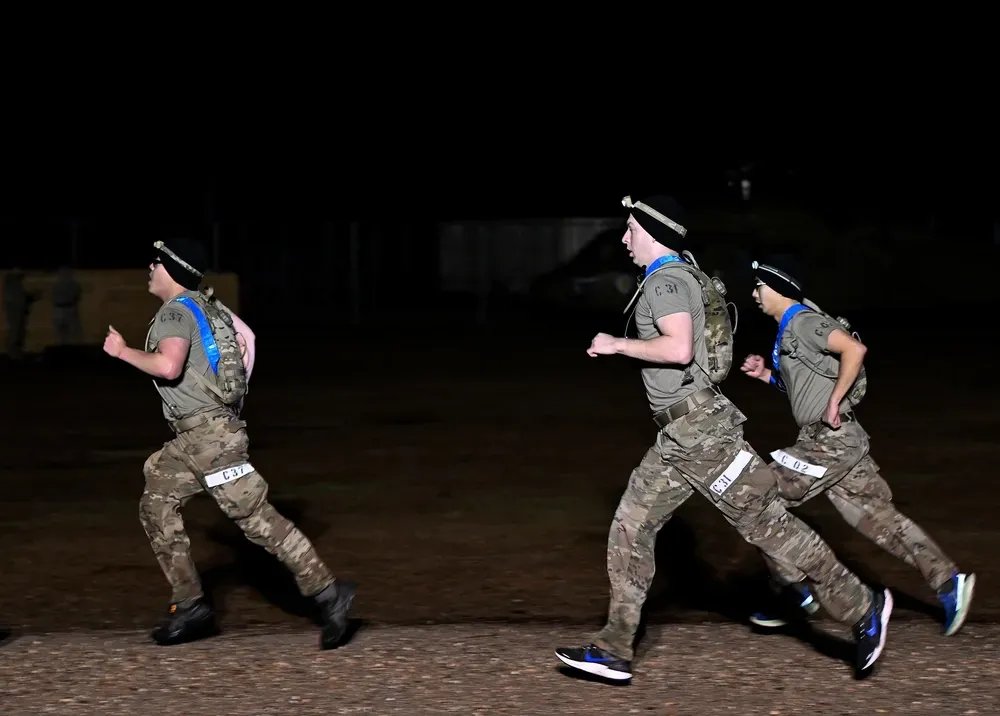
Tactical Strength & Conditioning: Military Athlete Guide
Tactical Strength and Conditioning: A Complete Guide for Military Athletes
Tactical strength and conditioning is a phrase that gets used often and explained poorly. Most explanations fall into one of two traps: they are either vague enough to mean nothing, or intense enough to confuse effort with effectiveness. Neither helps military athletes train better.
Tactical strength and conditioning is not a style. It is not a brand. It is a framework for preparing the body to perform reliably under load, fatigue, and stress, the operating model the National Strength and Conditioning Association built its TSAC division around, and the model serious military strength and conditioning work has been pointing toward for two decades.
This guide breaks down the framework into its working parts: what makes a tactical athlete different, how strength and conditioning integrate rather than compete, why constant intensity fails, and how to measure whether the training is actually working. If you're looking for programs built on exactly that framework, CF-ONE training programs training programs are structured around the principles this post explains.
What Makes Tactical Athletes Different from Traditional Athletes
Military athletes are not traditional athletes. A powerlifter peaks twice a year. A marathoner trains for one race. A team-sport athlete operates inside a known season with scheduled recovery. Tactical athletes operate under none of those conditions.
They do not train for a single event. They do not peak once per season. They do not operate under controlled conditions. They are expected to perform repeatedly, sometimes daily, sometimes for weeks at a stretch, often with limited recovery, while carrying external load and managing cognitive stress under real consequence. That changes how training must be structured.
Programs borrowed directly from sports or general fitness often fail because they do not account for this reality. A strength program designed for an offseason lifter assumes recovery time the operator does not get. A conditioning protocol built for road racers ignores load and unpredictable schedules. The mismatch is not the workout, it is the assumption underneath the workout. For military-specific training program options built around these demands, military fitness programs are the right starting point.
Choosing the right program is half the battle. For athletes deciding which tactical training program best fits their needs, the tactical fitness program buying guide walks through exactly how to evaluate your options. For athletes with specific questions about tactical training program structure and selection, the tactical fitness program FAQ covers the most common questions in one place.
Strength and Conditioning Are Not Separate Silos
In many programs, strength and conditioning are treated as opposing forces, lift days versus cardio days, strength blocks versus endurance blocks, hypertrophy mesocycles bracketed off from aerobic base phases. The split is a convenience for general fitness programming, not a requirement of physiology.
For tactical athletes, this separation creates gaps. Strength and conditioning must support each other. Strength reduces the relative cost of endurance tasks, a soldier with a heavier deadlift expends less of their working capacity on each repetition of load carriage. Conditioning improves recovery between strength efforts, raising the volume of quality work an athlete can sustain across a training week and across a deployment cycle.
When these qualities are developed together, performance becomes more stable. The structural framework for building these qualities concurrently is laid out in a framework for concurrent training, it is the practical application of the integration principle described here.
When they are isolated or imbalanced, something breaks down, usually the quality the program treated as the afterthought.
Tactical Strength Is About Usable Force, Not Maximal Lifts
Tactical strength is not about maximal lifts in ideal conditions. A 600-pound deadlift means very little if it cannot be expressed after twelve miles of rucking, three hours of sleep, and an elevated heart rate. Tactical strength is about usable force under fatigue, the force you can actually produce when the situation calls for it, not the force you can produce fresh under a lifting belt at a gym PR session.
This usable strength shows up across four specific qualities:
Lower body strength for load carriage
Pulling strength for climbing and dragging
Trunk strength for stability under stress
Posterior chain strength for injury prevention
These qualities matter more than any single lift number, and Combat Fitness programs like Mass Gainer 2.0 and Blackout 3.0 are built around developing exactly this pattern of usable, durable strength rather than chasing a peak one-rep max in isolation.
Relative strength is especially important. Being strong relative to bodyweight improves movement efficiency and endurance. A 200-pound soldier who can deadlift 400 pounds carries their kit, their plate carrier, and a casualty with significantly less relative effort than a 200-pound soldier who deadlifts 250. This is critical for military tasks where the load is non-negotiable. The precise physiological mechanisms behind what is strength-endurance explain why relative strength and sustained force production are inseparable in this context. The precise physiological mechanisms behind what is strength-endurance explain why relative strength and sustained force production are inseparable in this context.
Conditioning Must Reflect Operational Demands
Tactical conditioning is not constant high intensity. Operational demands vary. Sometimes output is sustained and steady, a multi-day patrol, a long approach march, a sustained search operation. Sometimes it is short and violent, a sprint to cover, a stack-and-clear, a one-minute fight that decides everything. Conditioning must prepare for both, and that requires development across all three primary energy systems rather than living in any single one.
Aerobic capacity (the oxidative system) supports long-duration effort and recovery between hard efforts. Threshold work (the lactate system) improves sustained output at the upper edge of what an athlete can hold for 20 to 60 minutes. High-intensity efforts (the phosphagen system) maintain speed and power for the short, decisive bursts. A program that develops only one of these, the most common failure mode in tactical training is over-reliance on high-intensity work, produces an athlete who is strong in one dimension and fragile in the other two.
When conditioning ignores this balance, performance becomes narrow and fragile. The full definition and scope of what is tactical conditioning grounds this energy system balance in operational context for athletes who want the complete framework.
Why Constant Intensity Fails Military Strength and Conditioning Programs
Many tactical programs rely heavily on moderate to high intensity work, chippers, AMRAPs, sub-30-minute "smoker" sessions, intervals stacked on top of intervals. The format feels productive. It looks like effort. It also suppresses adaptation.
Constant intensity erodes aerobic capacity because aerobic capacity is built primarily through lower-intensity, longer-duration work, the exact training a high-intensity program never makes room for. It slows recovery between sessions because the central nervous system never gets a true low day. It increases injury risk because fatigued movement patterns get reinforced under load. And it increases mental fatigue because every session demands maximal effort, which is unsustainable over a military career.
Military athletes already operate under stress. Training that adds unnecessary stress without building capacity accelerates burnout, and burnout in this population is not a missed workout, it is a missed deployment or a separation. Effective tactical conditioning includes restraint as a programming principle, not a weakness. Understanding how strength training affects endurance explains the physiological mechanism behind why constant intensity produces these specific failure patterns.
Load Carriage Changes Everything
Load changes movement mechanics. A six-mile run unloaded and a six-mile ruck under 45 pounds are not the same training stimulus and they do not produce the same adaptation. Loaded movement increases joint stress (particularly through the knees, hips, and lower back), raises energy cost by 30 to 50 percent depending on load and grade, and shifts gait mechanics in ways that demand specific preparation.
Tactical strength and conditioning must account for this. Running, lifting, and conditioning without ever moving under load produces incomplete preparation, the athlete looks fit on test day and breaks down on the third day of a field problem. Strength must support load tolerance, with deliberate posterior chain and unilateral work that survives the demands of carrying weight. Conditioning must reflect altered energy demands, with rucks programmed at specific paces and weights rather than added on as an afterthought. The Combat Fitness Dismount 4.0 program is built around exactly this gap, structured rucking integrated with running and lifting rather than treated as a separate event.
Ignoring load creates a false sense of readiness, and false readiness is the most expensive mistake a tactical athlete can make.
Durability is the Hidden Goal
Durability determines whether performance persists. It is the ability to tolerate volume without breakdown, across a training block, across a deployment, across a career. Strength and conditioning sit at the surface; durability is what makes both of them sustainable over time. An athlete with elite numbers and zero durability is one bad week from a soft-tissue injury that takes them off the team.
Durability is built through four compounding inputs:
Progressive loading
Consistent strength training
Aerobic development
Intelligent volume management
It is not built through daily exhaustion, and it is not built quickly. The components above work because they accumulate, each one raises the ceiling on what the next can add. Programs that ignore durability fail during prolonged demands. This is why some athletes look impressive early and disappear later: the surface qualities they trained were never anchored to the deeper one that keeps them in the fight.
Programming Must Manage Cumulative Stress
Military athletes accumulate stress from multiple sources. Training is only one of them. Workload, sleep deprivation, mental stress, nutritional inconsistency, temperature extremes, and operational environment all contribute to total systemic load. Effective tactical strength and conditioning accounts for total stress, not just training stress, because the body does not distinguish between a hard session and a hard week, it simply registers the sum.
This means adjusting volume and intensity when other demands rise. A week with 12 hours of sleep total and three night ops is not the week to push a PR squat block. Programs that ignore this reality rely on toughness to compensate, and toughness is a finite resource. That strategy fails eventually, usually at the worst possible moment.
Systems like the Combat Fitness training plans are designed to manage cumulative stress rather than deny it, with programmed lower-volume weeks and adjustable intensity built into every block. The distinction between tactical conditioning vs general fitness clarifies exactly why cumulative stress management is a tactical conditioning requirement and not a general fitness concern.
Simplicity Improves Execution
Tactical training does not benefit from excessive complexity. The Instagram-driven trend toward novelty exercises, unstable-surface barbell work, complex Olympic lift derivatives stacked into circuits, equipment piled to make a workout look interesting, adds risk without adding adaptation. Simple movements performed consistently under progressive load produce better outcomes than complex movements performed inconsistently with no progression scheme.
Complexity increases error under fatigue, and tactical athletes train fatigued more often than not. Simplicity improves repeatability, which is the actual driver of long-term adaptation. This matters most when training must coexist with demanding schedules, a program built on twelve foundational movement patterns is one the operator can run from a barracks gym, a deployed location, or a hotel during a course. A program built on choreography breaks the first time the equipment changes.
Measuring Success Correctly
Success in tactical strength and conditioning is not measured by soreness. Soreness is a response to novelty, not a measure of adaptation, a beginner who tries a new movement will be sore, and a fit operator who runs a familiar session may feel nothing. Using soreness as the success metric punishes the consistency that actually produces progress.
It is measured by four observable, trackable outcomes:
Improved performance under load
Reduced injury frequency
Faster recovery between efforts
Stable output across time
Programs that chase discomfort miss these metrics because discomfort is easy to manufacture and hard to convert into capability. Programs that track performance build them because measurement forces honesty, and honest training compounds. The tactical athlete performance pyramid maps out the full structural hierarchy of how these performance qualities are built and sequenced, it is the architectural reference that this post's principles fit into.
Tactical strength and conditioning is not about doing more. It is about preparing better, building strength that survives fatigue, conditioning that reflects operational demands, and durability that holds across a career rather than a training cycle. Every section above describes one part of that framework; the parts only work together. Athletes who want to understand the full professional definition of the kind of athlete this training is building should read what is a tactical athlete, the definition shapes every programming decision described in this post.
Tactical Strength and Conditioning FAQ
What is tactical strength and conditioning?
Tactical strength and conditioning is a training framework designed to build strength, endurance, and durability for performance under load, fatigue, and stress. It integrates strength work and conditioning concurrently rather than separating them, prioritizes usable force over maximal lifts, and manages cumulative stress across training and operational demands.
How is tactical strength different from general strength training?
Tactical strength prioritizes usable force, relative strength, and durability over maximal lifts or aesthetics. The goal is force that survives fatigue, load, and operational stress, not a one-rep max in fresh conditions. This shifts programming toward posterior chain work, unilateral strength, trunk stability, and pulling strength, all developed at progressive but sustainable loads.
Why does constant high-intensity conditioning fail military athletes?
Constant high-intensity conditioning fails military athletes because it suppresses recovery, limits aerobic development, increases injury risk, and accelerates burnout. Aerobic capacity is built primarily through lower-intensity work; programs that skip that base produce athletes who perform well in short tests and break down under sustained operational demands.
What should tactical conditioning include?
Tactical conditioning should include a balance across all three primary energy systems: aerobic base work (the largest share of weekly volume), sustained threshold efforts (moderate share), and limited high-intensity training (smallest share but specifically programmed). The exact ratio depends on the athlete's role, current fitness, and selection or operational timeline.


