
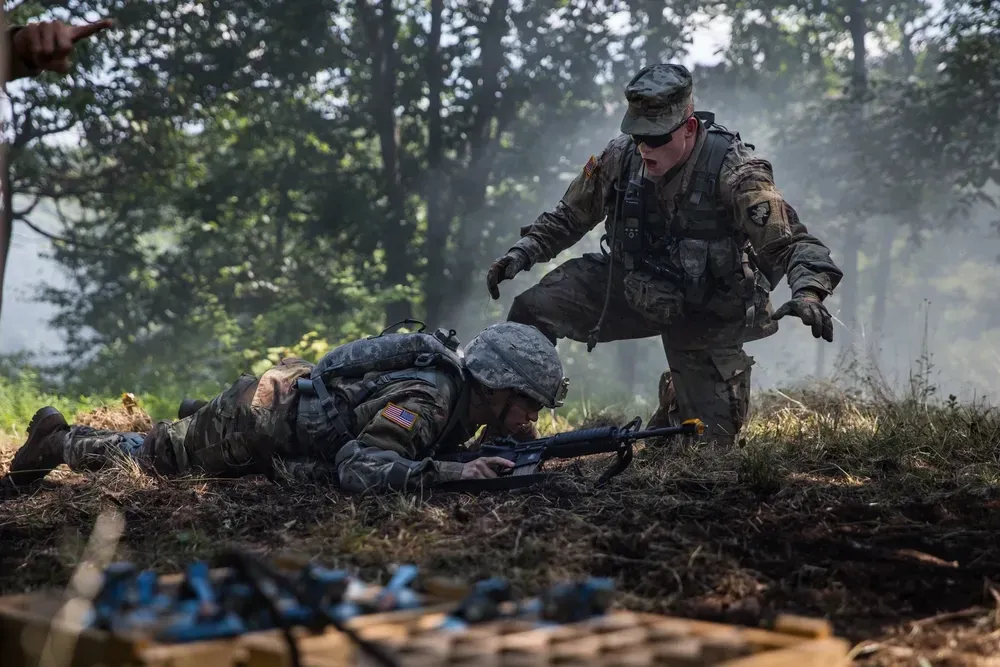
Concurrent Training Framework: Strength + Endurance
Why Concurrent Training Needs a Structured Framework
A concurrent training framework gives you a way to structure strength and endurance work in the same training phase without one undermining the other. Most athletes already train concurrently, runners lift, lifters condition, and tactical athletes need strength, endurance, speed, durability, and work capacity at the same time. Real life rarely allows perfectly isolated training blocks. The problem is not training multiple qualities at once. The problem is training them without a framework, and that is where progress stalls.
The issue isn't concurrent training itself. The issue is poorly managed concurrency, too many priorities, too much volume, and no plan for managing the interference effect that emerges when strength and endurance compete for the same recovery resources.
Without a structured framework, athletes typically experience three predictable failures: stalled progress on every quality at once, chronic accumulated fatigue, and complete confusion about what to actually prioritize on any given training day. We see this constantly in tactical athletes who try to maintain strength, build aerobic capacity, prepare for selection, and stay durable simultaneously, none of which is wrong on its own, but all of which together becomes noise without a framework managing the stress. Athletes who want a program that already applies this framework from day one can explore our CF ONE concurrent training programs.
A concurrent training framework provides clarity on three fronts: what is being trained, why it matters in this phase, and how training stress is distributed across the week so adaptations can occur in parallel instead of competing for the same biological resources. Frameworks turn random hard training into structured progress.
What Concurrent Training Is (And What It Is Not)
Concurrent training does not mean doing everything at once. It means training multiple qualities within the same phase while respecting:
Recovery capacity
Interference effects
Adaptive bandwidth
True concurrent training is structured and biased, not random. You can train multiple qualities at the same time, but you cannot prioritize all of them equally, and this is the single mistake we see most often in tactical athletes who confuse concurrent training with CrossFit-style "do everything hard" programming. Block periodization removes the conflict by training qualities in isolation. Concurrent training accepts the conflict and manages it. Knowing which approach fits which phase of an athlete's career is the difference between repeatable progress and chronic plateau.
Worth naming the research vocabulary here, since it comes up. The CrossFit-style approach referenced above has a formal name in the literature: High-Intensity Functional Training (HIFT). Researchers treat it as one form of concurrent training, it does combine resistance and metabolic work in the same session, but it is concurrent training with no priority hierarchy, which is precisely the problem this framework exists to solve. HIFT can build broad capacity effectively. What it does not do is bias adaptation toward a lead quality, which is what an athlete preparing for a specific standard usually needs.
Understanding the Interference Problem
The classic concern with concurrent training is interference, most commonly between strength and endurance. In simple terms:
Strength favors high force and low fatigue
Endurance favors sustained stress and metabolic demand
When both qualities are pushed aggressively without structure, neither adapts optimally, the strength signal and the endurance signal collide at the cellular level, and the body cannot maximize both adaptations from the same training week. Research on the interference effect dating back to Hickson's foundational 1980 study has shown this pattern repeatedly, and decades of follow-up work has refined our understanding of when interference matters most and when it can be safely ignored.
The goal is not to eliminate interference entirely, that would require abandoning concurrent training altogether, but to control when and where it appears so it does not derail the priority adaptation. For athletes who want the underlying physiology in depth, the interference effect explained covers the mechanisms in full. For athletes who want to see how well-designed programs manage this balance in practice, the hybrid training program buying guide walks through programming choices across different training goals.
What the more recent work actually refined. Hickson's finding held, but forty-five years of follow-up narrowed it considerably. The current picture, from pooled analyses across many studies, is roughly this:
Maximal strength holds up better than the folklore suggests. Athletes running well-structured concurrent programs do not lose meaningful maximal strength compared with strength-only training.
Muscle size holds up too. Adding endurance work at sensible volumes does not appear to compromise hypertrophy.
Explosive strength and power are where interference actually shows. Rate of force development, jump performance, and sprint qualities are the outcomes that consistently suffer when endurance volume is high.
That last point is the one this framework should be read through, and it is the reason power deserves protection more deliberately than strength does. For a tactical athlete, that matters more than it does for the recreational lifters most of this research is written about, getting over a wall, driving a drag, or moving fast under load are all power expressions, and power is the quality most likely to erode quietly while your lifts stay flat.
A Practical Framework for Concurrent Training
Effective concurrent training rests on three decisions that must be made in this exact order. Get the order wrong and the framework collapses, placement without priority is just scheduling, dosage without placement is just guessing. The three decisions are:
Priority
Placement
Dosage
1. Establish a Clear Priority
At any given time, one quality must lead.
Examples:
Strength-biased concurrent training
Endurance-biased concurrent training
Work-capacity-biased training
Non-priority qualities are maintained or progressed conservatively, typically at 40–60% of the volume they would receive if they were the lead quality. If priority is unclear, training stress becomes noise: the body cannot distinguish what to adapt to first, and adaptation across every quality slows. In our coaching of military and law enforcement athletes, almost every plateaued training cycle traces back to this single failure, three competing priorities, no clear lead, and a training week that looks productive but produces nothing.
2. Place Stress Intentionally
How stress is distributed across the week matters more than total volume.
General principles:
High-neurological work (strength, speed) earlier in the day or week
Metabolic work later or separated by adequate recovery
Hard days hard, easy days easy
Stacking demanding qualities together blurs stimulus and recovery, a heavy squat session followed by a threshold run two hours later trains neither quality fully and burns recovery on both. Concurrent training works best when stress is clustered intelligently, not scattered randomly across the week.
A practical example: strength-biased weeks place heavy lifts on Monday, Wednesday, Friday with shorter aerobic work on Tuesday and Thursday; endurance-biased weeks invert the pattern, placing long aerobic sessions on Monday, Wednesday, and the weekend with maintenance strength on Tuesday and Friday. The exact pattern matters less than the principle: hard qualities get protected time, easy qualities fill the gaps, and recovery has somewhere to land.
How much does session order actually matter?
This is the most-asked question in concurrent training, and the honest answer is more specific than the usual advice, because it has been tested directly.
For strength, muscle size, and aerobic fitness: less than you would think. Controlled work comparing same-day orders over multi-week programs has found no meaningful difference in strength gains, lean mass, or aerobic improvement between lifting first and conditioning first. If those are your outcomes, order is a convenience decision, not a performance one.
For power: order matters. Indices of power development do differ by sequence, which is consistent with everything above about power being the quality genuinely vulnerable to interference. If explosive output is what you are trying to develop, put it first, fresh, before anything else touches the nervous system.
So the practical rule is narrower than "always lift first." It is:
Power is your priority → power work first, always, no exceptions.
Strength, size, or aerobic fitness is your priority → order is largely free. Sequence around your schedule, your energy, and what you will actually complete.
Either way → separating the two sessions by several hours beats optimizing the order within one session.
That last point is the one most people skip past. The gap between sessions does more than the sequence within them. A morning lift and an evening run interfere far less than any ordering of the same two efforts back-to-back.
3. Dose Non-Priority Qualities Conservatively
Maintenance requires far less volume than progression. When a quality is not the priority:
Volume is reduced
Intensity is moderated
Frequency is limited
This keeps the quality present without competing for recovery resources. As a working starting point: maintenance dosing for a non-priority quality typically runs 1–2 sessions per week at 50–70% of the volume and intensity of the lead quality's primary work. The mistake we see almost universally is not training multiple qualities, it is trying to progress all of them at once, pushing each as if it were the priority. The body cannot adapt to four competing maximum stimuli in the same week. The deeper physiological explanation for why this happens is covered in the interference effect explained, the mechanism post that underpins this entire framework.
On the numbers above. The 40–60% and 50–70% figures are coaching heuristics, starting points we use with tactical athletes, not findings from a study. They are useful precisely because they are concrete: an athlete who has never quantified maintenance dosing does far better with a number to start from than with "reduce it somewhat."
Treat them as a first draft to be adjusted. The real test is not the percentage but whether the priority quality is still progressing. If your lead quality has stalled while your maintenance work feels comfortable, the maintenance dose is too high. If your non-priority quality is measurably declining rather than holding, it is too low. The numbers are a place to start arguing with your own data, not a prescription.
Who Concurrent Training Is For
Concurrent training is often more appropriate for real-world athletes than strict specialization. It works well for:
Tactical and military athletes
Hybrid and endurance-strength athletes
Busy professionals with limited training time
Athletes who value versatility over single metrics
When recovery is constrained by deployment cycles, shift work, family demands, or simply chronic life stress, structure becomes even more important, the athletes with the least margin for error are the ones who benefit most from a clear framework. For tactical athletes specifically, this means concurrent training is not a programming preference, it is a programming necessity: the job demands multiple qualities simultaneously, the schedule rarely permits clean training blocks, and the consequences of poor preparation are higher than for general-population athletes. The parent concept of what concurrent training is provides the foundational definition and context for why this approach exists and who it is designed for.
Common Mistakes in Concurrent Training
The same errors appear repeatedly:
Treating every session as high priority
Adding conditioning without adjusting strength volume
Chasing trends instead of managing stress
Confusing effort with effectiveness
Concurrent training fails when discipline and restraint disappear, when every session becomes a maximum effort, when every quality is treated as urgent, when "more is more" replaces "enough is enough." The framework is not glamorous. It tells you what NOT to train hard this week, which is harder for serious athletes to accept than being told to push harder. Restraint is the harder discipline, and it is the one that separates athletes who progress for decades from athletes who plateau in years.
Concurrent Training Is a Long-Term Strategy
The goal of concurrent training is not short-term peaks. It is:
Sustainable progress
Reduced injury risk
Broader physical capability
More quality training weeks per year
Athletes who manage concurrency well stay healthier, more consistent, and more capable over time.
FAQ - Frequently Asked Questions
Does concurrent training kill strength gains?
Only when endurance volume or intensity is excessive or poorly timed. Proper prioritization preserves strength.
Can beginners train concurrently?
Yes. Beginners often adapt well due to lower absolute stress and faster adaptation rates.
Should conditioning always follow lifting?
Not always, and the evidence is more specific than the usual advice suggests. Controlled comparisons of same-day session order have found no meaningful difference in strength, muscle size, or aerobic improvement between lifting first and conditioning first. Where order does matter is power development, which is measurably affected by sequence. So the rule is: if power is your priority, it goes first, fresh, every time. If strength, size, or aerobic fitness is your priority, order is largely a convenience decision, sequence it around your schedule and your energy. And in either case, separating the two sessions by several hours does more good than any ordering choice within a single session.
Is concurrent training the same as hybrid training?
Hybrid training is a subtype of concurrent training with more balanced priorities. The same framework applies.
How long does it take for a concurrent training framework to work?
Most athletes see clearer training weeks within 2–3 weeks of applying priority, placement, and dosage decisions. Measurable performance changes follow on standard adaptation timelines, typically 4–6 weeks for strength markers and 6–8 weeks for aerobic markers. The framework's value shows up in week-to-week consistency long before it shows up in testing.
What is the biggest mistake athletes make with concurrent training?
Treating priority as a suggestion. Athletes will identify a lead quality on paper, then push every non-priority session as if it were the priority anyway. The framework only works when the priority decision is enforced through volume and intensity choices, not just through stated intent.
What is concurrent training?
Concurrent training means developing multiple physical qualities, most commonly strength and endurance, within the same training phase, rather than isolating them into separate blocks. It is the research term for what most people call hybrid training. The defining challenge is the interference effect: when both qualities are pushed hard at once, competing recovery demands and adaptation signals limit how much either can improve.
Is CrossFit-style training the same as concurrent training?
It is a form of it. High-Intensity Functional Training (HIFT), the research term for CrossFit-style programming, combines resistance and metabolic work in the same session, which makes it concurrent by definition. The difference is that HIFT typically runs without a priority hierarchy, treating all qualities as equally urgent. That builds broad general capacity effectively, and it is not the approach to take when you need adaptation biased toward a specific standard.
Control Beats Balance
A concurrent training framework is not about doing everything evenly, that is the mistake that produces athletes who are average at five qualities and excellent at none. It is about controlling stress, biasing adaptation toward what matters most this phase, and staying consistent across months and years. When priorities are clear, when stress is placed intentionally, and when non-priority qualities are dosed conservatively, concurrent training becomes one of the most effective ways to build resilient, versatile tactical athletes, athletes who are strong, conditioned, durable, and capable across the full range of demands their job and life require.
Not perfect. Not maximal. But repeatable, and over a career, repeatable beats peak every time.
Two posts that extend this framework into adjacent territory: a framework for strength-endurance balance applies these same principles specifically to the strength-endurance relationship, while when endurance training hurts strength gains provides a decision-making guide for identifying when the balance has tipped too far in one direction.
References
Hickson, R. C. (1980). Interference of strength development by simultaneously training for strength and endurance. European Journal of Applied Physiology and Occupational Physiology, 45(2–3), 255–263. doi:10.1007/BF00421333 · PMID: 7193134
Eddens, L., van Someren, K., & Howatson, G. - The physiological effects of concurrent strength and endurance training sequence: a systematic review and meta-analysis. Journal of Sports Sciences. PMID: 28783467
PLOS One (2020) - Order of same-day concurrent training influences some indices of power development, but not strength, lean mass, or aerobic fitness.
Schumann, M., et al. - Compatibility of concurrent aerobic and strength training. Sports Medicine.


