
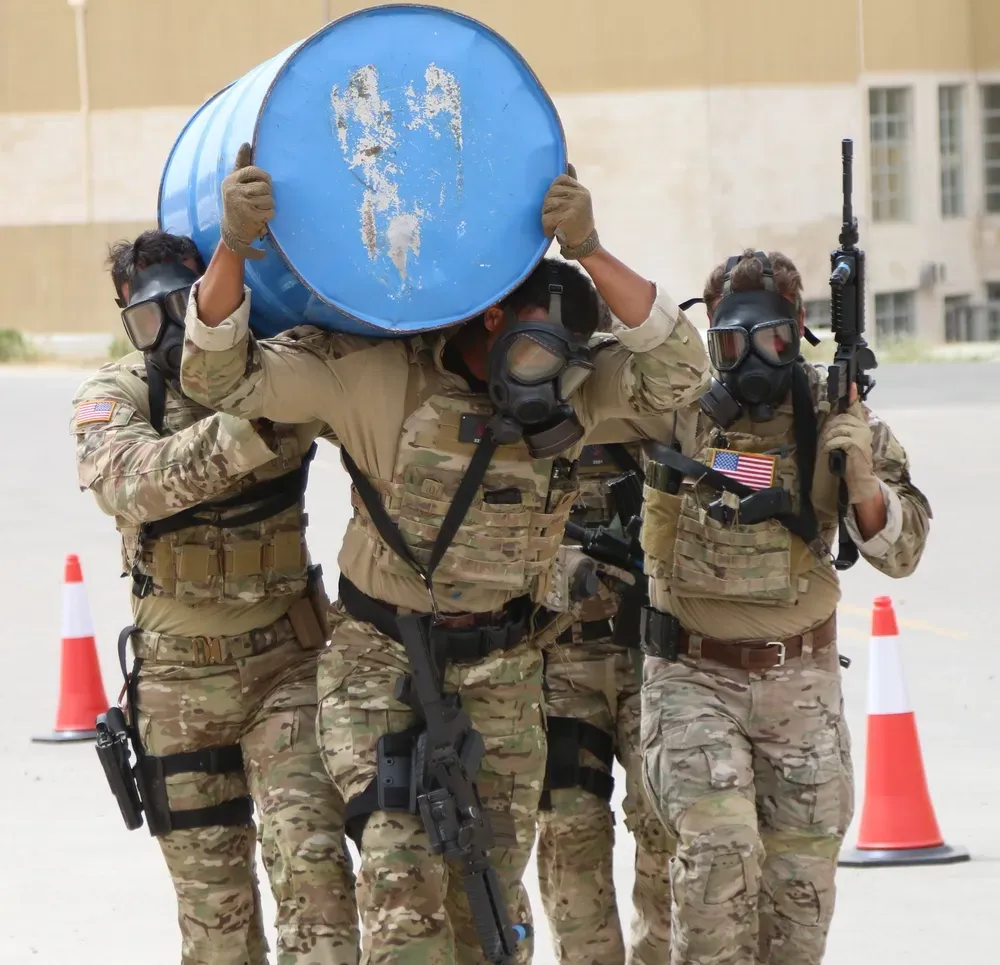
Hybrid Training Program Buying Guide 2026 | Best Strength + Endurance
Hybrid Training Program Buying Guide (2026): How to Choose the Best Strength and Endurance System
Choosing the right hybrid training program is harder than it looks. The market is full of plans that call themselves "hybrid" but stack lifting and running in ways that destroy both, leaving the athlete weaker on the bar, slower on the run, and more beat up than when they started. This 2026 hybrid training program buying guide breaks down the eight criteria that actually separate a real strength and endurance system from a marketing label.
Every serious tactical athlete eventually runs into the same problem: the interference effect. Lift heavy and endurance suffers. Run more and strength stalls. The best hybrid training programs solve this with structured periodization, intelligent sequencing, and proper fatigue management, not by throwing every modality into the same week and calling it variety.
The criteria below are what we use to evaluate any hybrid program, including our own. By the end of this guide you'll know exactly what to look for, what to avoid, and which Combat Fitness program fits where you are right now.
What Is a Hybrid Training Program?
A hybrid training program is a structured system that develops strength and endurance simultaneously, without forcing the athlete to sacrifice one capability for the other. Done well, it produces an athlete who can lift heavy, move fast over distance, and recover well enough to do it again the next day. The defining components are:
Strength (lifting, hypertrophy, power)
Endurance (running, conditioning, aerobic capacity)
Work capacity (high-intensity efforts)
Durability (injury resistance, recovery)
The goal is not just to do both, but to do both well, and that's where most programs fall apart. Building strength and endurance at the same time is a programming problem long before it's a training problem. Sports scientists call the underlying issue the interference effect: heavy concurrent endurance work blunts strength and hypertrophy adaptations unless volume, intensity, and recovery are sequenced deliberately. Solving it requires:
intelligent programming
fatigue management
proper sequencing
long-term progression
Step 1: Define Your Hybrid Athlete Goal
Not all hybrid athletes are the same, and the best hybrid training program for one athlete is the wrong one for another. Before choosing a system, the athlete needs to clarify what "hybrid" actually means for them. A SOF candidate prepping for selection has different programming demands than a patrol officer staying operationally ready, and both look nothing like a recreational lifter wanting to add a half-marathon to their year. The five most common profiles we see at Combat Fitness:
Common Hybrid Profiles
1. Strength + Running Performance
Improve lifts while increasing run speed
2. Tactical Hybrid Athlete
Balance strength, endurance, and operational demands
3. Aesthetic + Performance
Build muscle while maintaining conditioning
4. Endurance-Dominant Hybrid
Focus on running or distance while maintaining strength
5. General Fitness Hybrid
Stay well-rounded without specializing
Each of these requires a different emphasis.
Step 2: Look for Balance, Not Chaos
Hybrid training is not about doing everything at once, it's about doing the right things in the right order. The athletes who burn out fastest are usually the ones who stack a heavy squat day, a tempo run, a long ruck, and a metcon into the same week and wonder why their lifts have stalled and their knees hurt. Real hybrid programming respects the body's recovery curve. The best programs:
balance stress across the week
separate high-intensity efforts
manage fatigue properly
Bad Hybrid Programs:
stack hard workouts back-to-back
combine conflicting adaptations
ignore recovery
Good Hybrid Programs:
sequence training intelligently
alternate stress types
build over time
Combat Fitness solves this by structuring every hybrid training program within a periodized system, blocks of training are sequenced so strength and endurance adaptations support each other rather than compete. The output is an athlete who is durable across the year, not just peaked for a six-week window.
Step 3: Integration of Strength and Endurance
This is the defining feature of hybrid training, and the place most programs fail. The strength side and the endurance side cannot be programmed as two separate plans run in parallel; they have to interact. Lifting volume and intensity need to flex with running mileage. Long aerobic days need to land where they won't blunt the next strength session. The right hybrid training program treats strength and endurance as one integrated system, not two systems sharing a calendar.
What to Look For:
lifting that supports endurance
endurance that doesn’t destroy strength
complementary programming
Combat Fitness Hybrid Options
Functional + (Balanced hybrid training for beginners/intermediates)
Hybrid Elite (Advanced strength + endurance integration)
35M5M 4.0 (Running performance supported by strength work)
Marathon + (Endurance-focused hybrid with lifting support)
These programs are built to work together as a hybrid training ecosystem, not compete against each other for the athlete's recovery budget. Each one assumes the athlete may rotate between them across a training year, Functional+ as the entry point, Hybrid Elite as the advanced integrated block, 35M5M 4.0 when run performance is the priority, and Marathon+ when endurance distance is the target.
Step 4: Strength Programming Quality
A hybrid program is only as good as its strength component. The fastest way to spot a fake hybrid program is to read its strength template, if it's a circuit of light dumbbells and high-rep movements badged as "functional," it's a conditioning plan, not a hybrid plan. Real strength programming in a hybrid context still uses heavy compound lifts, structured progression, and enough volume to actually drive adaptation, even when running and conditioning sit in the same week.
Look For:
progressive overload
structured lifts
proper volume management
Avoid:
random circuits replacing real strength work
lack of progression
excessive fatigue limiting strength gains
Programs like:
Mass Gainer 2.0 (Strength + hypertrophy focus)
Blackout 3.0 (Bodybuilding-style hypertrophy)
can also be layered into hybrid phases for athletes prioritizing strength development.
Step 5: Endurance Programming Quality
The endurance side matters just as much, and this is where most lifters get it wrong. Endurance is not "do hard cardio sometimes." A well-built hybrid training program develops an aerobic base, progresses through tempo and threshold work, and uses intervals as the sharpening tool, not the only tool. If the program's endurance plan is "run hard until you puke twice a week," it will produce slower, more injured athletes within a training block.
Look For:
aerobic base development
interval and tempo work
structured progression
Avoid:
all-out efforts every session
no pacing structure
lack of progression
Combat Fitness integrates endurance through:
running (35M5M, Marathon +)
rucking (Dismount 4.0)
swimming (AMPHIB 4.0)
This creates a true hybrid system, not just a lifting program with cardio bolted on. The endurance side is programmed with the same care as the strength side, pace work, mileage progression, and recovery built into the week. That's the difference between a hybrid athlete who keeps improving for years and one who stalls inside six months.
Step 6: Scalability (Beginner → Advanced)
Hybrid training can be overwhelming for beginners, and a buying guide that doesn't address that is leaving most readers behind. The best hybrid training programs are not designed only for the athlete who already squats double bodyweight and runs a sub-20 5K. They include clear entry points for someone returning to training, and a progression pathway that holds up for the operator who's been training hard for a decade. A good program should provide:
clear entry points
progression pathways
long-term development
Combat Fitness Structure
Beginner & Intermediate
Step Off! (Beginner running + lifting)
Resurgence (Foundational rebuild program)
Functional + (Hybrid base development)
Advanced
Hybrid Elite (High-level hybrid performance)
35M5M 4.0 (Advanced running + strength)
AMPHIB 4.0 (Swimming + running + lifting)
Dismount 4.0 (Rucking + hybrid performance)
This allows athletes to:
start simple
build capacity
progress into advanced hybrid systems
Step 7: Tactical-Specific Hybrid Training (If Needed)
For tactical athletes, hybrid training must go further than the strength-plus-endurance baseline. Operational performance isn't tested on a flat track in fresh running shoes, it's tested under load, after sleep deprivation, with kit on, and often after a long approach. A tactical hybrid program has to prepare the athlete for that reality, not just the gym version of it. It needs to include:
rucking
load carriage
performance under fatigue
real-world demands
Combat Fitness PRO Adds This Layer
SOF-LAND (Run + ruck + strength integration)
SOF-SEA (Swimming + endurance + strength)
SOF-AIR (Running, swimming, and rescue performance)
SOF OPERATOR Base (Sustainable hybrid performance)
Tactical URBAN (Strength + agility + short-duration intensity)
This is where hybrid training becomes tactical performance training. The CF PRO programs are not generic hybrid templates with a tactical badge on top, each one is built around the specific operational demands of the pipeline or unit it targets, with load carriage, water work, and recovery from real-world stressors programmed in from the start.
Step 8: Long-Term Sustainability
Hybrid training only works if it's sustainable across years, not weeks. A program that produces a great six-week peak and then leaves the athlete broken is not a hybrid training program, it's a stunt. The best programs are designed to run continuously, with periodization shifts that let the athlete back off without losing fitness, and intensify without breaking down. The best hybrid training programs:
manage fatigue
allow recovery
support long-term consistency
Combat Fitness functions as a long-term system, not a short-term plan.
Athletes can:
shift between phases
adjust focus
continue progressing
Athletes can rotate between programs as their goals shift, a season focused on running performance, a season focused on hypertrophy, a season focused on selection prep, without ever leaving the ecosystem or having to rebuild a base from scratch. That continuity is the single biggest reason members stay subscribed for years.
Step 9: Common Hybrid Training Buying Mistakes
1. Doing too much at once
More is not better.
2. Ignoring recovery
Hybrid training increases total stress.
3. Choosing random programs
No structure = no progress.
4. Over-prioritizing one domain
Leads to imbalance.
5. No long-term plan
Short-term programs fail hybrid athletes.
Why Combat Fitness Is One of the Best Hybrid Training Programs
Combat Fitness stands out because it solves the biggest problem in hybrid training: balance. Built specifically for military, law enforcement, and tactical athletes, not repurposed from a general-fitness template, the system was designed from the ground up to integrate strength, endurance, conditioning, and load carriage inside one programming framework. That's the difference between a hybrid training program built for tactical performance and a strength program with a treadmill bolted to the side.
Key Advantages:
1. True hybrid integration
Strength + endurance + conditioning
2. Multiple hybrid pathways
Beginner → advanced → tactical
3. Structured progression
Not random programming
4. Tactical-specific options (PRO)
Real-world performance integration
5. Flexibility
Switch programs as goals evolve
With Combat Fitness ONE most athletes have everything they need to build serious hybrid performance, the full library of CF ONE hybrid programs is included, with no upcharges and no upsells.
With Combat Fitness PRO athletes gain access to the specialized tactical hybrid systems built for SOF pipelines, active operators, and SWAT-level urban units. Both tiers include a free trial, so the program can be tested before any commitment.
Combat Fitness ONE Program Access
Step Off! (Beginner running + strength foundation)
Resurgence (Foundational strength and conditioning)
Combat Medicine (High-intensity conditioning)
Mass Gainer 2.0 (Strength + hypertrophy)
HighSpeed 2.0 (Bodyweight-only training)
Functional + (Balanced hybrid training)
35M5M 4.0 (Advanced running + strength)
AMPHIB 4.0 (Swimming + running + lifting)
Dismount 4.0 (Rucking + hybrid performance)
Blackout 3.0 (Hypertrophy focus)
Hybrid Elite (Advanced hybrid system)
Marathon + (Endurance-focused hybrid training)
Final Thoughts: Choosing the Best Hybrid Training Program in 2026
Hybrid training is one of the most powerful ways to build real-world performance, but only if the underlying program is built correctly. The right hybrid training program balances strength and endurance, manages fatigue across the training year, progresses the athlete over time, and adapts as goals shift. The wrong one burns the athlete out, stalls progress, and produces imbalance that takes months to repair.
The right program will:
balance strength and endurance
manage fatigue
progress over time
adapt to your goals
The wrong program will:
burn you out
stall progress
create imbalance
In 2026, the difference between a real hybrid training program and a marketing label comes down to system design, periodization, sequencing, fatigue management, and a progression path that holds up for years. For tactical athletes looking for a complete, scalable, performance-driven hybrid training system, Combat Fitness is one of the clearest leaders in the space, and the system is built to grow with the athlete from beginner through selection-level and operator-level performance.
FAQ: Hybrid Training Program Buying Guide
What is a hybrid training program?
A hybrid training program develops both strength and endurance simultaneously while maintaining balance and performance in both areas.
Can you build muscle and endurance at the same time?
Yes, with proper programming. Hybrid training allows both to improve without sacrificing one for the other.
How many days per week should you train in a hybrid program?
Most hybrid training programs run 4–6 days per week, with the specific split depending on experience level and primary goal. Beginners often start at 4 days to allow recovery between strength and endurance sessions, while advanced hybrid athletes can sustain 5–6 sessions with proper periodization and fatigue management.
Is hybrid training good for beginners?
Yes, if the program includes proper entry points like Functional + or Resurgence.
What is the difference between Combat Fitness ONE and PRO?
Combat Fitness ONE includes a full hybrid training ecosystem. Combat Fitness PRO adds tactical-specific programs for advanced performance and operational readiness.
Is hybrid training better than traditional training?
It depends on goals. Hybrid training is better for athletes who need well-rounded real-world performance, military personnel, first responders, tactical athletes, and anyone whose job or sport demands both strength and endurance. Traditional single-domain programs (pure powerlifting, pure marathon training) are better when the athlete is optimizing for a single specific outcome and doesn't need the other capability.
How long should you follow a hybrid program?
Ideally long-term. The best systems allow continuous progression rather than short-term cycles.


