
Plank Alternatives: 16 Core Swaps by Goal | Combat Fitness
Plank Alternatives: Better Core Moves Grouped by Why You Want One
A good plank alternative trains the same job as the plank: it keeps your spine from moving while it's under tension. Any exercise that does that job counts as a substitute, and one that only looks different from a plank doesn't. That rule is how our tactical fitness programs pick every core exercise. We choose by function, not novelty.
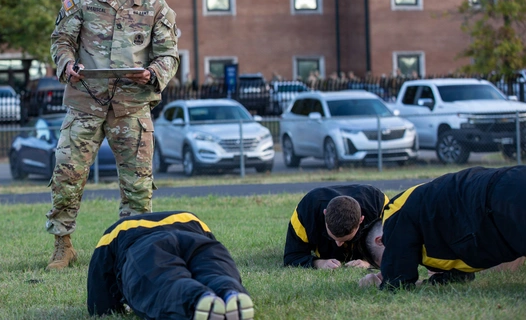
The plank is a graded event on the Army Fitness Test, the Marine Corps PFT, and the Navy PRT. The bracing it builds is what protects your back under a ruck or a plate carrier.
Below are 16 alternatives, grouped by why you want one: wrist pain, a harder option, standing work, side plank swaps, and Copenhagen swaps. A plank-free routine comes at the end.
What Makes a Good Plank Alternative?
A good plank alternative resists spinal movement under tension. The front plank is an anti-extension drill: your abs and deep core stop your lower back from sagging. If a swap keeps that demand, it's a real alternative. If it trades bracing for movement, as crunches do, it trains a different job.
McGill describes the core's performance role as stiffness. It moves force between the hips and shoulders without the spine buckling. That gives three anti-movement jobs to match:
Anti-extension: front plank, rollouts, dead bugs.
Anti-lateral flexion: side plank, suitcase carries.
Anti-rotation: Pallof press, single-arm work.
Pick the alternative that matches the job of the plank you're replacing. We lay out the full framework in our guide to the best core exercises for athletes.
Be honest about one thing: a harder-looking move isn't automatically a better one. Match the stimulus, not the difficulty. A sloppy ab wheel rollout trains your back to extend under fatigue, which is the opposite of the goal.
Replacing Plank Jacks, Up-and-Downs, and Hip Dips
Plank jacks, plank up-and-downs, and hip dips are plank variations with movement added. For a plank jack, use a dead bug, which holds anti-extension while your limbs move. For up-and-downs, a body saw keeps the shifting lever without loading your wrists over and over. For hip dips, the rotational version, use a Pallof press. Beginners should start with the forearm plank and the dead bug.
Plank Alternatives for Wrist Pain
If your wrists hurt, use plank alternatives that take the wrist out of full extension or off the floor entirely. The core demand stays the same, and only the contact point changes.
1. Forearm Plank
Moving from your hands to your forearms removes wrist extension completely. It's still a plank, but it's the first move for anyone whose wrists complain on a high plank. Keep your elbows under your shoulders and push the floor away.
2. Neutral-Grip Dumbbell or Fist Plank
Gripping hex dumbbells, or planking on your fists, keeps your wrists straight and lets you hold a high plank. This is the version to train if your test or job calls for a high plank position. If the floor is too much, raise your hands on a bench. Our elevated plank breakdown covers how box height adjusts the load.
3. Dead Bug
The dead bug is anti-extension done on your back with nothing on your wrists. Press your lower back into the floor, then slowly lower the opposite arm and leg without letting your back arch. If your back lifts, the rep is over. It's also the safest starting point for beginners and athletes coming back from back pain.
What Is a Harder Alternative to the Plank?
The harder alternatives to the plank lengthen the lever, add movement at the shoulders, or both. The four below raise the anti-extension demand well past a standard hold. Use them once you can hold a clean 60-second plank.
4. RKC Plank
The RKC plank is a short, maximal-tension plank. Squeeze your glutes, pull your elbows toward your toes, and tuck your pelvis. Schoenfeld and colleagues found that a long-lever plank with a posterior pelvic tilt produced far more rectus abdominis and oblique activity than a traditional plank. Hold it for 10 to 20 seconds and make every second hard.
5. Body Saw
From a forearm plank with your feet on sliders, rock your body back and forth a few inches. Each shift back lengthens the lever, and your abs have to stop your hips from dropping. Research on suspension-supported planks shows that a less stable base raises abdominal demand compared with a floor plank.
6. Ab Wheel Rollout
The rollout is the top anti-extension exercise in our program. Escamilla and colleagues found that wheel rollouts drove some of the highest rectus abdominis and oblique activity of the abdominal exercises they tested. Start from your knees, roll only as far as you can without your back sagging, and add range over time.
7. Hollow Body Hold
The hollow hold is gymnastics' answer to the plank, done face up. With your lower back pinned to the floor and your arms and legs held long, your abs resist extension against gravity. It builds the trunk position used in hanging core work, which our upcoming guide to pull-up bar core exercises covers.
Standing Alternatives to the Plank
Standing core exercises train the same anti-movement jobs in the position you work in. That matters for anyone who carries loads for a living. Gottschall and colleagues found that integrated, standing-style exercises produced more core activation than isolated floor drills. A review by Martuscello and colleagues reached a similar conclusion for multi-joint free-weight lifts.
8. Pallof Press
Stand side-on to a cable or band, hold it at your sternum, and press it straight out. The band tries to rotate you, and your core refuses. It's anti-rotation in its purest form. Do sets of 8 to 12 per side with a 2-second hold at full extension.
9. Farmer Carry
Holding a heavy load in each hand and walking makes your whole trunk brace as you move. McGill's strongman research found that carries created high torso stiffness and muscle activation. A farmer carry trains the same job as a ruck movement or a litter carry.
10. Sandbag Bear-Hug Carry
Hugging a sandbag to your chest pulls your torso forward, so your trunk has to resist flexion while you breathe and walk. It's the closest gym match to moving a casualty or a heavy piece of kit. That load-bearing view of the core is the case we make for functional strength for military performance.
Side Plank and Copenhagen Plank Alternatives
Side plank alternatives train anti-lateral flexion: stopping your trunk from bending sideways. Copenhagen plank alternatives train the adductors, the inner-thigh muscles that guard against groin strains. They're different jobs, so each gets its own swaps.
Side Plank Alternatives
The side plank works your obliques, quadratus lumborum, and glute medius. Ekstrom and colleagues found that the side bridge produced some of the highest glute medius and external oblique activity of the exercises they tested. These three swaps keep that job:
11. Knee side plank:
The short-lever regression. Same position, lighter load. It's the right side plank alternative for beginners or anyone with a sore shoulder.
12. Suitcase carry
One heavy weight in one hand, and walk tall without leaning. McGill, Marshall, and Andersen showed that carrying a load in one hand makes the opposite-side trunk muscles work to keep the spine upright. Your obliques get a side plank's job while you're standing.
13. Single-arm overhead carry
One weight locked out overhead. It adds a shoulder-stability demand to the anti-lateral flexion work.
Copenhagen Plank Alternatives
The Copenhagen plank is a side plank with your top leg on a bench, so your adductors hold you up. In Harøy and colleagues' trial, a Copenhagen-based program cut groin problems by about 41% in football players. Ishøi and colleagues found that it produced large gains in eccentric adductor strength. If the full version is too much, use one of these:
Short-lever Copenhagen
The bench under your knee instead of your ankle. That's the entry level of the same program.
Adductor squeeze
Squeeze a ball or a folded mat between your knees while lying on your back with your hips bent. Delahunt and colleagues found that a 45-degree hip angle produced the highest adductor activity.
Side-lying hip adduction:
Lie on your side and lift your bottom leg. Serner and colleagues ranked it close to the Copenhagen for adductor longus activity.
A Core Routine Without a Single Plank
This plank-free core routine covers all three anti-movement jobs plus the adductors. Run it two or three times a week after your main lifts, as two circuits with 60 to 90 seconds of rest:
Dead bug: 3 sets of 6 per side, slow.
Pallof press: 3 sets of 10 per side.
Ab wheel rollout or body saw: 3 sets of 6 to 10.
Suitcase carry: 3 trips of 30 to 40 meters per side.
Side-lying hip adduction: 2 sets of 10 to 12 per side.
Get the free core routine as a printable card, with progressions for each move. To fit it into a full training week, use our template for a strength workout for athletes.
One caveat for test prep: if your test grades the plank, keep practicing the plank. These alternatives build the strength behind the hold, but holding for time is a skill too. If you can't decide how core work fits next to your running and rucking, our guide to choosing a strength & endurance program explains what a properly built plan includes.
Frequently Asked Questions
What is a good alternative to the plank?
The ab wheel rollout, the dead bug, and the Pallof press are the best plank alternatives, depending on your goal. Each one resists spinal movement under tension, which is the plank's job. Use the dead bug for wrist pain or as a beginner, the rollout to make it harder, and the Pallof press to train standing.
What can I do instead of a plank if my wrists hurt?
The forearm plank, the neutral-grip dumbbell plank, and the dead bug all train the same brace without loading your wrists in extension. The forearm plank removes the wrist completely, dumbbells keep your wrists straight, and the dead bug takes your hands off the floor. Raising your hands on a bench also cuts the load.
What is a harder alternative to the plank?
The ab wheel rollout is the hardest common plank alternative, followed by the body saw, the RKC plank, and the hollow hold. Each one lengthens the lever or adds maximal tension. Progress only when the easier version stays clean, because a rollout with a sagging back trains the fault you're trying to prevent.
What can replace the copenhagen plank?
The short-lever Copenhagen, the adductor squeeze, and side-lying hip adduction all train the adductors. The short-lever version is the closest match and the first stage of the Copenhagen programs used in research. The squeeze and side-lying adduction are good options for beginners or for athletes coming back from a groin strain.
Is a standing core exercise as good as a plank?
Standing core exercises are as good as a plank when they train the same anti-movement job, and they often carry over better to loaded work. Carries and the Pallof press challenge your trunk in the position you fight, lift, and ruck in. If your fitness test grades the plank, keep training it directly as well.
What plank alternative is safe for diastasis recti?
The dead bug and other supine, low-load moves are common starting points for diastasis recti, but no single exercise is safe for everyone. Research suggests that how you control tension through the midline matters more than closing the gap. See a pelvic health physical therapist before you return to rollouts or full planks.
The best plank alternatives keep the plank's job and change only what has to change: the contact point, the lever, or the position. Pick by function and your core keeps the stimulus. The next step is turning that into a routine. Grab the free core routine, and let a structured program handle the progression week to week.
References:
McGill S. Core training: evidence translating to better performance and injury prevention. Strength and Conditioning Journal. 2010;32(3):33-46.
McGill SM, Childs A, Liebenson C. Endurance times for low back stabilization exercises: clinical targets for testing and training from a normal database. Archives of Physical Medicine and Rehabilitation. 1999;80(8):941-944.
Lee BC, McGill SM. Effect of long-term isometric training on core/torso stiffness. Journal of Strength and Conditioning Research. 2015;29(6):1515-1526.
Schoenfeld BJ, Contreras B, Tiryaki-Sonmez G, Willardson JM, Fontana F. An electromyographic comparison of a modified version of the plank with a long lever and posterior tilt versus the traditional plank exercise. Sports Biomechanics. 2014;13(3):296-306.
Escamilla RF, Babb E, DeWitt R, et al. Electromyographic analysis of traditional and nontraditional abdominal exercises: implications for rehabilitation and training. Physical Therapy. 2006;86(5):656-671.
Byrne JM, Bishop NS, Caines AM, Crane KA, Feaver AM, Pearcey GEP. Effect of using a suspension training system on muscle activation during the performance of a front plank exercise. Journal of Strength and Conditioning Research. 2014;28(11):3049-3055.
Calatayud J, Casaña J, Martín F, et al. Progression of core stability exercises based on the extent of muscle activity. American Journal of Physical Medicine and Rehabilitation. 2017;96(10):694-699.
Ekstrom RA, Donatelli RA, Carp KC. Electromyographic analysis of core trunk, hip, and thigh muscles during 9 rehabilitation exercises. Journal of Orthopaedic and Sports Physical Therapy. 2007;37(12):754-762.
Gottschall JS, Mills J, Hastings B. Integration core exercises elicit greater muscle activation than isolation exercises. Journal of Strength and Conditioning Research. 2013;27(3):590-596.
Martuscello JM, Nuzzo JL, Ashley CD, Campbell BI, Orriola JJ, Mayer JM. Systematic review of core muscle activity during physical fitness exercises. Journal of Strength and Conditioning Research. 2013;27(6):1684-1698.
McGill SM, McDermott A, Fenwick CM. Comparison of different strongman events: trunk muscle activation and lumbar spine motion, load, and stiffness. Journal of Strength and Conditioning Research. 2009;23(4):1148-1161.
McGill SM, Marshall L, Andersen J. Low back loads while walking and carrying: comparing the load carried in one hand or in both hands. Ergonomics. 2013;56(2):293-302.
Harøy J, Clarsen B, Wiger EG, et al. The Adductor Strengthening Programme prevents groin problems among male football players: a cluster-randomised controlled trial. British Journal of Sports Medicine. 2019;53(3):150-157.
Ishøi L, Sørensen CN, Kaae NM, Jørgensen LB, Hölmich P, Serner A. Large eccentric strength increase using the Copenhagen Adduction exercise in football: a randomized controlled trial. Scandinavian Journal of Medicine and Science in Sports. 2016;26(11):1334-1342.
Serner A, Jakobsen MD, Andersen LL, Hölmich P, Sundstrup E, Thorborg K. EMG evaluation of hip adduction exercises for soccer players: implications for exercise selection in prevention and treatment of groin injuries. British Journal of Sports Medicine. 2014;48(14):1108-1114.
Delahunt E, Kennelly C, McEntee BL, Coughlan GF, Green BS. The thigh adductor squeeze test: 45° of hip flexion as the optimal test position for eliciting adductor muscle activity and maximum pressure values. Manual Therapy. 2011;16(5):476-480.
Lee D, Hodges PW. Behavior of the linea alba during a curl-up task in diastasis rectus abdominis: an observational study. Journal of Orthopaedic and Sports Physical Therapy. 2016;46(7):580-589.
Benjamin DR, van de Water ATM, Peiris CL. Effects of exercise on diastasis of the rectus abdominis muscle in the antenatal and postnatal periods: a systematic review. Physiotherapy. 2014;100(1):1-8.
U.S. Army. Army introduces new fitness test for 2025. Army.mil, May 14, 2025.
U.S. Marine Corps Human Performance Branch. PFT and CFT standards.
Military OneSource. Navy Physical Readiness Test.
Headquarters, Department of the Army. FM 7-22, Holistic Health and Fitness. Washington, DC; 2020.
Disclaimer: This article is for educational purposes only and is not medical advice. Stop any exercise that causes pain in your back, wrists, shoulders, or groin. If you have diastasis recti, are pregnant or postpartum, or have an injury or medical condition, see a qualified healthcare provider or physical therapist before starting a new core program.


