
Firefighter Load Carriage: Build Conditioning That Lasts
Load Carriage Conditioning for Firefighters
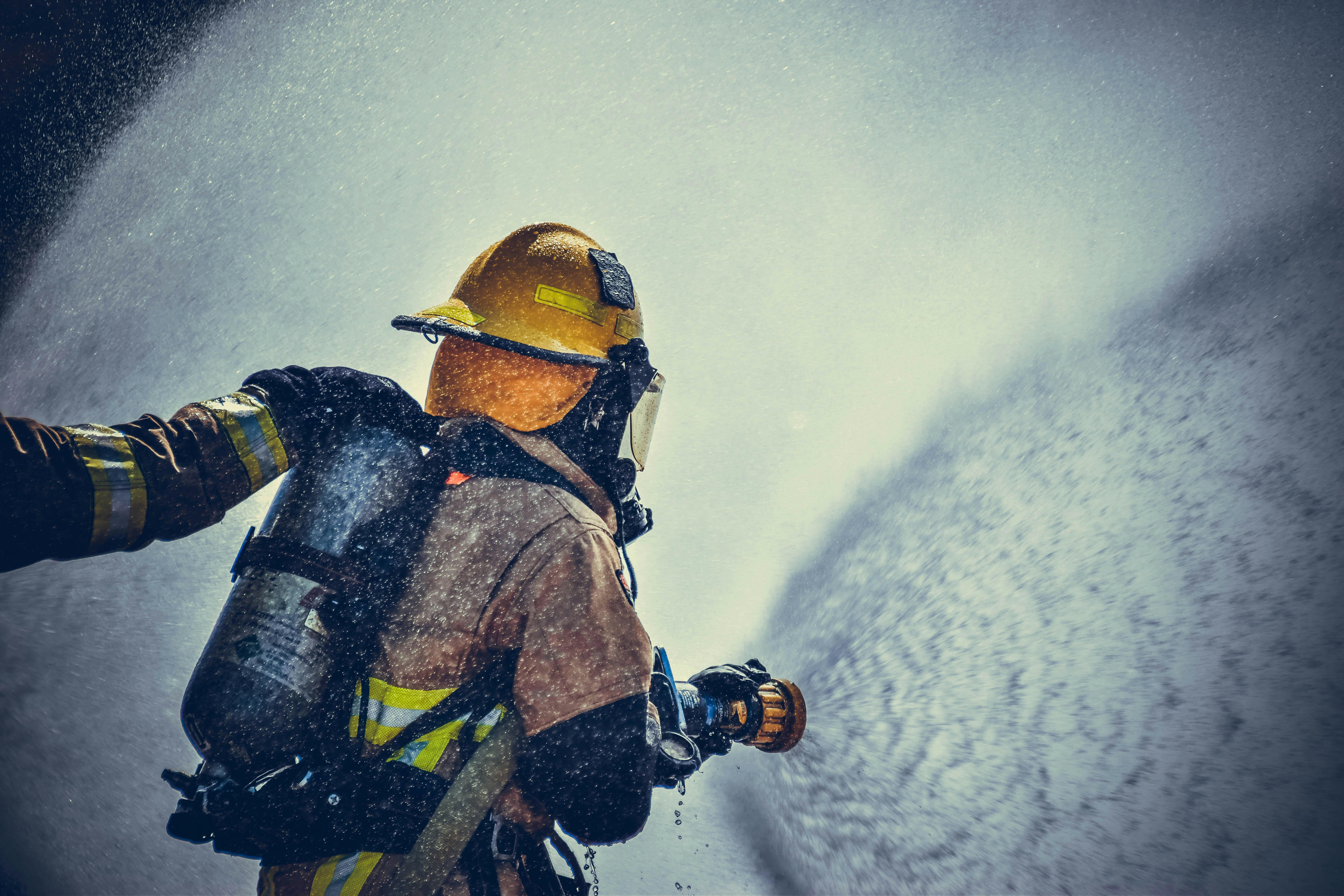
Firefighters don't work in shorts and running shoes. Firefighter conditioning for load carriage has to account for the way every fireground task happens under weight, turnout gear, SCBA, tools, charged hose, and sometimes a victim on top of all of it. That reality demands more than general fitness. It demands a system built deliberately around strength, aerobic capacity, muscular endurance, and durability under external load, because the firefighter who trains for an unloaded body will always underperform the one who trains for the load. That system is exactly what our tactical fitness programs for first responders are built to deliver, structured specifically for the loaded demands of the job. Fireground performance is ultimately about one thing: the ability to move your body plus equipment efficiently, repeatedly, and under fatigue.
The Reality of Load Carriage on the Fireground
Firefighters rarely move unburdened. Typical operational loads include:
Structural turnout gear
Self-contained breathing apparatus (SCBA)
Hose lines
Hand tools and equipment
Combined, this often totals 50–75+ pounds depending on the scenario. To put that in context: structural turnout gear and a charged SCBA alone commonly run 45–55 pounds before a single tool or length of hose is added. The body doesn't experience that as "a little extra", it experiences it as a permanent tax on every movement. A flight of stairs that costs almost nothing unloaded becomes a measurable cardiovascular event when you're climbing it with two-thirds of your bodyweight strapped on. That is the baseline firefighters train against, and it never lets up mid-incident.
And this load isn’t carried in ideal conditions. It happens while:
Climbing stairs in high-rise buildings
Crawling through confined spaces
Dragging charged hose lines
Performing victim rescues
Working in high heat and low visibility
Research consistently shows that load carriage increases physiological strain, reduces work capacity, and raises injury risk (Drain et al., 2016) in firefighters. Systematic reviews also confirm that wearing PPE and SCBA significantly increases the metabolic cost of firefighting tasks (dos Santos et al., 2025). In practical terms, that means the same task becomes harder, slower, and more fatiguing when done under load. the most direct way to prepare for that baseline is progressive load carriage itself, which is where choosing the right ruck training program buying guide helps you match training load to the actual demands of the job.
Why Load Carriage Is So Demanding
Carrying external weight changes how the body moves and how hard it has to work.
Under load, firefighters experience:
Higher heart rate at the same pace
Increased oxygen consumption
Greater joint loading
Faster fatigue accumulation
Picture the practical version of this. A firefighter advancing a charged line up three floors at a steady pace will hit a heart rate that, unloaded, would correspond to a near-sprint. Oxygen demand climbs, the legs flood, and rate of perceived exertion that would read "moderate" without gear reads "hard" with it. The work hasn't changed, the cost of the work has. Multiply that across a 20-minute interior operation and you understand why two equally "fit" firefighters can perform very differently once the gear goes on. Load carriage also alters biomechanics, increases spinal muscle activity, and contributes to discomfort and injury risk. This creates a unique training demand: firefighters must be strong enough to handle heavy equipment, but also conditioned enough to sustain effort over time.
Core Physical Qualities for Load Carriage
Effective firefighter conditioning is not built on a single fitness quality, it requires a balanced system, because the fireground tests several capacities at once. Strength gets the load moving, aerobic endurance keeps it moving, muscular endurance keeps it moving cleanly across repeated tasks, and durability keeps the joints and connective tissue intact while all of that happens. Train one in isolation and the others become the ceiling. Pulling those four qualities into one coherent plan is what structured tactical fitness programs are designed to do, so nothing important gets trained in isolation. The four qualities below aren't a menu to pick from; they're interdependent, and the weakest one sets the limit on fireground performance.
1) Strength
Strength is the foundation of load carriage performance.
It allows firefighters to:
Carry heavy equipment
Drag or lift victims
Move tools repeatedly
Maintain posture under load
Key strength qualities include:
Lower-body strength (squats, step-ups, hinges)
Core stability
Grip strength
Upper-body pushing and pulling strength
Stronger muscles distribute load more effectively and reduce stress on joints. In practice this means prioritizing heavy compound movement over machine isolation. A trap-bar deadlift, a weighted step-up, and a loaded carry train the exact pattern of picking gear up, climbing under it, and moving it across distance. Working in the 4–8 rep range with real load builds the strength reserve that makes operational weight feel lighter, so a 165-pound rescue drag stops being a maximal effort and becomes a submaximal one. Strength is the quality that buys margin against every other demand on this list.
2) Aerobic Endurance
Fireground work is rarely a single short effort. Most incidents involve sustained or repeated tasks.
A strong aerobic base allows firefighters to:
Climb multiple flights of stairs
Sustain hose advances
Recover between high-intensity efforts
Maintain output during long operations
Without adequate aerobic conditioning, fatigue builds quickly, and performance drops. The under-appreciated role of the aerobic system is recovery between efforts, not just output during them. A firefighter with a deep aerobic base clears fatigue faster between a hose advance and the next task, which helps offset the broader recovery challenges firefighters face across long shifts and back-to-back calls. Build that base with longer easy sessions, then layer intervals on top to raise the ceiling. On the fireground, the better-conditioned engine is the one still making good decisions in minute eighteen.
3) Muscular Endurance
Fireground tasks are often repetitive:
Continuous carries
Repeated lifts
Sustained tool work
Long stair climbs
Muscular endurance allows firefighters to:
Maintain performance across multiple tasks
Delay fatigue
Preserve movement quality under load
Muscular endurance is what keeps form intact on the tenth carry, not just the first. That gap is the practical version of capacity versus capability: being able to produce force once is not the same as sustaining it, rep after rep, under fatigue. It's trained in higher rep ranges and through repeated loaded efforts with short rest, which teaches local muscles, grip, shoulders, posterior chain, to keep producing force after they've started to burn. This matters because most fireground injuries don't happen on the heaviest single lift; they happen when a fatigued firefighter loses positional control on a routine one. Endurance under load is, in large part, an injury-prevention quality disguised as a performance quality.
4) Durability and Joint Resilience
Load carriage creates constant stress on connective tissue.
Durability training helps:
Strengthen tendons and ligaments
Improve joint stability
Reduce overuse injuries
Increase workload tolerance
This is especially important for:
Knees
Ankles
Hips
Lower back
Durability is the slowest quality to build and the easiest to skip, which is exactly why it gets neglected until something fails. Tendons and ligaments adapt on a longer timeline than muscle, so connective-tissue resilience comes from consistent, progressive exposure over months, controlled eccentric work, gradually heavier carries, and unsexy positional strength for the knees, hips, and lower back. That same connective-tissue stress shows up across tactical professions, which is why the durability demands of law enforcement work closely mirror what firefighters absorb under load. The firefighter who builds this layer absorbs the repeated micro-stress of load carriage without it accumulating into an overuse injury. The one who skips it borrows against a body that eventually sends the bill.
Key Training Methods for Load Carriage
A well-rounded program should include multiple training components.
Strength Training (2–3 sessions per week)
Focus on compound, functional movements:
Squats or step-ups
Deadlifts or hinges
Loaded carries
Rows and presses
Core stability work
This builds the structural base needed to handle heavy equipment. Durability is the slowest quality to build and the easiest to skip, which is exactly why it gets neglected until something fails. Tendons and ligaments adapt on a longer timeline than muscle, so connective-tissue resilience comes from consistent, progressive exposure over months, controlled eccentric work, gradually heavier carries, and unsexy positional strength for the knees, hips, and lower back. The firefighter who builds this layer absorbs the repeated micro-stress of load carriage without it accumulating into an overuse injury. The one who skips it borrows against a body that eventually sends the bill.
Aerobic Conditioning (2–4 sessions per week)
Develop the engine that supports long operations:
Steady-state cardio
Stair climbs
Interval conditioning
Circuit-based work capacity sessions
Blend these rather than choosing one. Most weeks should lean on easy steady-state work to build the base, with one or two harder interval or circuit sessions to develop the high-end capacity that interior operations demand. Make the work specific where you can: stair climbing trains the exact demand of a high-rise advance far better than flat running does. The aim is an engine that handles both the long, grinding incident and the short, maximal burst, because the fireground asks for both, often in the same call.
Loaded Movement Sessions (1–2 times per week)
Gradually expose the body to real-world demands:
Stair climbs with weight
Weighted carries
Hose-drag simulations
Step-up intervals
Progress load slowly to avoid overuse injuries. This is where everything converges, so treat progression conservatively: add load, distance, or stair volume by roughly ten percent at a time and hold there until it feels controlled before adding more. Loaded carries, weighted stair climbs, and hose-drag simulations rehearse the actual job, which is why they're the most transferable sessions in the program, and also the most punishing if rushed. One or two of these a week is plenty. The firefighter who earns each load increment keeps building; the one who jumps ahead spends the next month rehabbing instead of training.
Common Mistakes in Load Carriage Training
Only Doing Cardio
Firefighters who focus only on running often:
Lack the strength to carry equipment
Experience joint stress under load
Fatigue quickly during real tasks
The cardio-only firefighter is a recognizable type: excellent on a flat run, suddenly mortal the moment there's weight on the body. A strong runner with no strength base can still struggle to drag a 165-pound dummy or muscle a ladder, because endurance doesn't substitute for the force production those tasks require. Worse, the missing strength means joints absorb load the muscles should be handling, raising injury risk on the exact tasks that matter most. Running builds a useful engine, but on the fireground, an engine with no chassis underneath it.
Only Lifting Weights
Strength alone does not prepare firefighters for:
Long stair climbs
Sustained operations
Repeated high-effort tasks
The inverse failure is just as common. A firefighter who can move serious weight for a single effort but never built an aerobic base will be gassed by the third floor and useless by the fifth, because raw strength does nothing to clear fatigue between repeated tasks. Strength gets the load moving once; conditioning is what lets it move again, and again, across a long incident. Heavy lifting alone produces someone who is powerful for ten seconds and finished after two minutes, which is the opposite of what the job asks for.
Sudden Load Increases
Large spikes in:
Pack weight
Training duration
Stair volume
are a common cause of injury. Progression must be gradual and structured. The mechanism is simple: tissue adapts to the load it has seen, and a sharp spike asks it to tolerate load it hasn't earned yet. Doubling pack weight, jumping stair volume, or adding a long loaded session out of nowhere are the classic triggers, the body was on track, then got handed a bill it couldn't pay. This is why the ten-percent guideline matters more than any single workout. Consistency that climbs slowly beats intensity that climbs fast, every time, because the firefighter who stays healthy is the one who keeps training.
Practical Takeaways
To improve load carriage performance:
Train strength 2–3 times per week
Build a strong aerobic base
Include regular loaded movement sessions
Progress load gradually
Focus on durability and joint health
Here's the honest verdict: no single quality wins on the fireground, and no shortcut replaces the work. Strength, aerobic endurance, muscular endurance, and durability are not competing priorities, they're one system, and the weakest link sets the ceiling. That patient, progressive approach is the same one behind the durability requirements of military training, where load tolerance is built over months rather than weeks. A balanced conditioning program built around all four prepares firefighters for the part of the job that can't be scheduled: the unpredictable call, the long interior operation, the rescue that asks for everything at once. Train for the loaded body you'll actually be working in, progress it patiently, and the gear stops being the thing that slows you down.
References
dos Santos, M. L., et al. (2025). Metabolic demand of firefighting: A systematic review.
Wang, S.-T. (2022). Joint mobility and muscular activity during SCBA load carriage.
Drain, J., et al. (2016). Predicting physiological capacity of human load carriage.
Strang, J. T. (2018). Energetic cost of wildland firefighter load carriage.


