
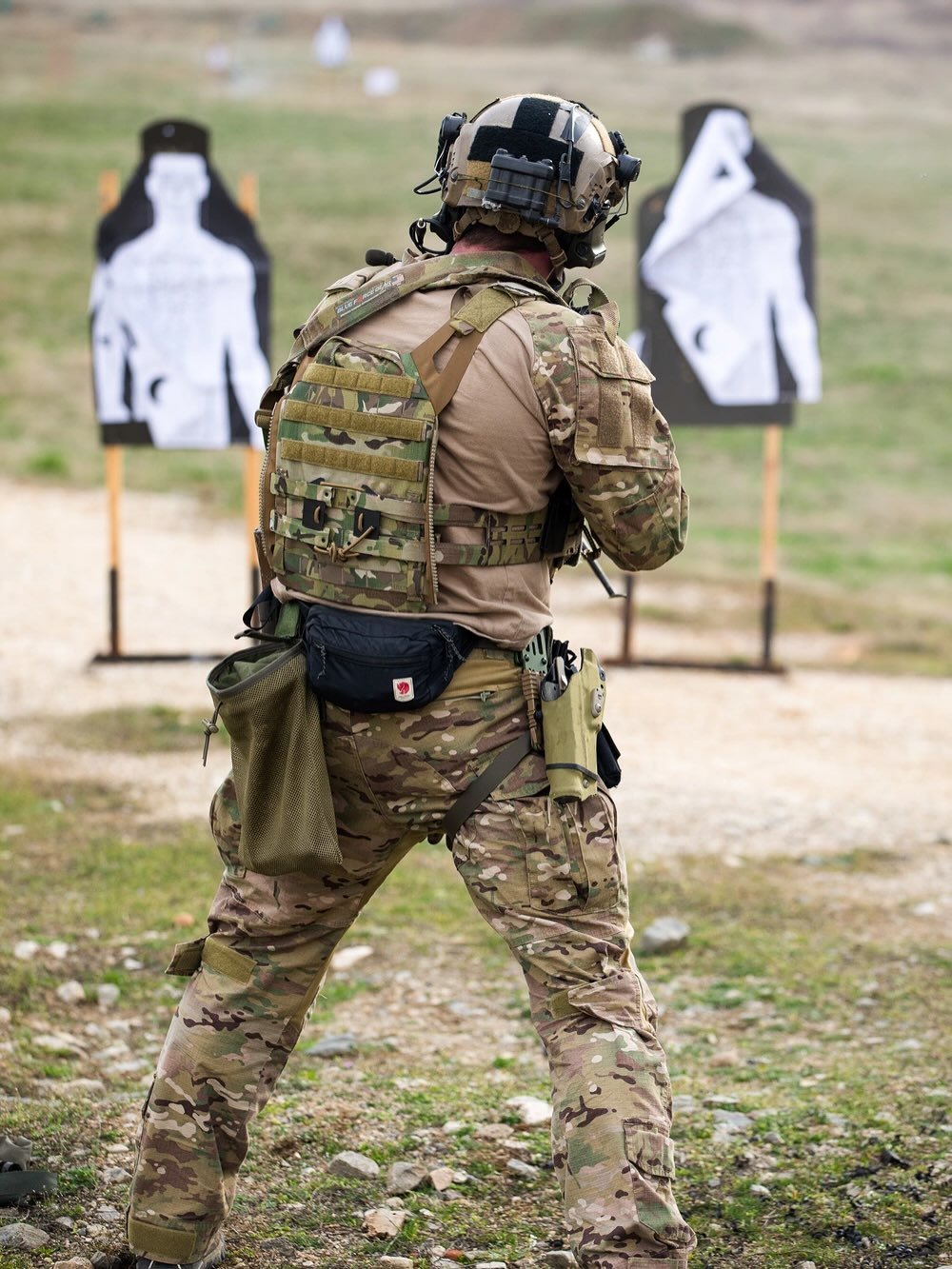
Military Conditioning: Train for Repeated High-Stress Tasks
Military Conditioning for Repeated High-Stress Tasks: How to Build Tactical Endurance
Military conditioning is not built for a single effort. It is built for the soldier who finishes a loaded movement, immediately transitions to a casualty drag, then has to shoot straight with a heart rate at 170. Repeated high-stress military tasks punish athletes who can only perform once. The test is never your best sprint, lift, or run, it is whether effort number five looks like effort number one.
You are not being tested on:
Your best sprint
Your best lift
Your best run
You are being tested on your ability to:
Perform again, and again, and again, under fatigue, load, and pressure
This is where conditioning becomes critical. It is the organizing principle behind the most effective military fitness programs, not an afterthought bolted onto random training.
Most people misunderstand conditioning. They treat it as:
Random workouts
High intensity circuits
General fitness
But real conditioning for military tasks is far more specific. It is also the lens worth using when you compare tactical fitness programs, since most are built for a single peak rather than repeatable output.
This guide breaks down:
What conditioning actually is
Why it improves durability
How work capacity drives performance
How to build a multi-modal conditioning system for tactical demands
What Conditioning Means for Repeated Military Tasks
Conditioning is the ability to:
Sustain and repeat physical output across multiple efforts with minimal performance drop-off
It is not just cardio.
It includes:
Aerobic capacity
Anaerobic capacity
Muscular endurance
Energy system efficiency
Recovery between efforts
What Conditioning Is Not
Conditioning is not:
Random high intensity workouts
Exhaustion for its own sake
Short-term performance spikes
If you can perform once but not again:
→ That is not conditioning
If your performance drops significantly across efforts:
→ That is not conditioning
Tactical Reality
Military tasks require:
Sustained output
Repeated efforts
Performance under fatigue
Conditioning is what allows you to:
Maintain pace
Recover between tasks
Execute under stress
Picture a standard field problem: a 6-mile ruck into an objective, immediate transition to litter carries, then a bounding movement under fire orders. No single event is maximal, but the sequence is unforgiving. The athlete with real conditioning holds a 15-minute-mile ruck pace, recovers during the two-minute halt, and still moves crisply on the objective. The athlete without it is 20% slower by the third task, and in this environment, 20% slower is mission failure. That gap is exactly what a head to head military training program comparison exposes: which system actually trains for effort number five.
How Conditioning Builds Durability Across Repeated Efforts
Durability is your ability to:
Withstand stress without breakdown
This includes:
Injury resistance
Fatigue resistance
Movement consistency
How Conditioning Builds Durability
Improves tissue tolerance
Repeated exposure strengthens muscles, tendons, and connective tissueEnhances energy system efficiency
Less energy cost for the same workReduces fatigue accumulation
Better recovery between effortsMaintains movement quality
Less breakdown under fatigue
The mechanism is progressive tissue adaptation. Tendons and connective tissue adapt slower than muscle, weeks versus days, which is why conditioning volume must rise gradually. That truth only sharpens with age, and effective conditioning strategies for older tactical athletes lean even hard on gradual, controlled load.
Research on workload management (Gabbett, 2016) shows injury risk climbs sharply when acute training load spikes well beyond the chronic load an athlete is adapted to. Conditioning done correctly keeps that ratio controlled: each week's stress slightly exceeds the last, tissue tolerance compounds, and the body stops being the limiting factor under repeated tasking. That controlled progression is usually the difference between durability and the real reason you are always injured in military training: load that outpaces tissue adaptation.
Key Insight
Strength builds capacity. Conditioning allows you to use that capacity repeatedly without failure.
Work Capacity: The Engine Behind Repeated Efforts
Work capacity is:
The total amount of work you can perform over a given period of time
It is one of the most important performance traits for military athletes.
Examples of Work Capacity
Completing multiple events in a single day
Performing repeated rucks and runs
Sustaining output across long training sessions
Maintaining pace under fatigue
Here is what that looks like in practice. A selection candidate runs a timed two-mile in the morning, completes a 12-mile ruck that afternoon, and faces a loaded obstacle course the next day. Total work across 36 hours might exceed 2,500 calories of output under load. An athlete with a big engine absorbs that volume and recovers overnight. An athlete without it carries 30–40% of yesterday's fatigue into today's event, and the scoreboard shows it.
Work Capacity vs Fitness
You can be fit and still lack work capacity. It is the same distinction as the difference between fitness and readiness: looking prepared versus actually being prepared when tasks stack.
Example:
Strong in the gym
Fast over short distances
But unable to:
Sustain output
Recover between efforts
Perform across multiple sessions
That is a work capacity limitation.
Key Insight
Work capacity determines how much you can do.
Conditioning determines how well you can repeat it.
The Multi-Modal Conditioning Model
Military tasks are not single-mode.
You are not just running.
You are not just lifting.
You are not just rucking.
You are doing all of them, often in sequence, under fatigue.
A complete conditioning system must include:
1. Aerobic Base
Foundation of all conditioning.
Developed through:
Zone 2 running
Rucking at controlled pace
Long duration efforts
Benefits:
Improved recovery
Reduced fatigue accumulation
Increased efficiency
The aerobic base earns its priority in the research. Analysis of elite endurance training distributions (Seiler & Kjerland, 2006) found top performers spend roughly 75–80% of training time at low intensity, not because easy work is easy, but because it builds the mitochondrial density and capillary networks that power recovery between hard efforts. For military athletes, that means most weekly conditioning volume runs at a conversational pace: roughly 60–70% of max heart rate, sustained for 40–90 minutes.
2. Threshold Conditioning
Ability to sustain hard efforts.
Developed through:
Tempo runs
Threshold intervals
Sustained efforts at moderate to high intensity
Benefits:
Higher sustainable pace
Improved tolerance to discomfort
Threshold work is where pace meets sustainability. A practical session: 3 x 10 minutes at a pace you could hold for about an hour in a race, with 3 minutes of easy jogging between reps. The math matters, running 10–15 seconds per mile too fast turns a threshold session into an anaerobic grind that costs two extra recovery days. Held at the right intensity, threshold training directly raises the pace you can sustain on a timed run or loaded movement.
3. High-Intensity Efforts
Short bursts of high output.
Developed through:
Intervals
Hill sprints
Short, intense circuits
Benefits:
Increased power
Improved anaerobic capacity
4. Muscular Endurance
Ability of muscles to sustain repeated contractions.
Developed through:
High-rep strength work
Loaded carries
Bodyweight circuits
Benefits:
Reduced local fatigue
Improved performance under load
Muscular endurance is the difference between a ruck that stays in your legs and one that climbs into your lower back. Loaded carries are the highest-transfer tool here: farmer carries at 50–70% of bodyweight for 40–60 meter intervals, or sandbag carries stacked at the end of a strength session. Local muscular fatigue, grip, trunk, calves, is usually what breaks form first under load, long before the heart and lungs give out.
5. Mixed Modal Work
Combination of multiple systems.
Examples:
Run plus ruck sessions
Strength plus conditioning circuits
Multi-event training days
Benefits:
Specificity to military tasks
Improved transition between efforts
Mixed modal sessions are where conditioning becomes mission-specific. A representative session: 800-meter run, 10 sandbag-over-shoulder reps, 400-meter loaded carry, repeated for four rounds at a controlled, repeatable pace. The training target is not the fastest first round, it is the smallest gap between round one and round four. A drop-off under 5–8% across rounds indicates conditioning that will hold up when tasks stack in the field.
Key Insight
Military conditioning is not one system.
It is the integration of multiple systems working together.
Conditioning for Repeated Efforts
The defining trait of tactical performance is repeatability.
What Repeated Efforts Require
Efficient energy systems
Rapid recovery between efforts
Stable movement under fatigue
Mental resilience
How to Train Repeatability
1. Repeat Submaximal Efforts
Instead of one maximal effort:
Perform multiple submaximal efforts
Example:
5 x moderate runs instead of 1 maximal run
2. Reduce Rest Gradually
Train your ability to recover faster.
Example:
Decrease rest between intervals
Increase density of sessions
3. Maintain Output Across Sets
Goal:
Minimal drop-off between efforts
If performance drops significantly:
Conditioning is insufficient
4. Introduce Fatigue Strategically
Train under fatigue, but control it.
Examples:
Back-to-back sessions
Two-a-days
Stacked training days
The key word is strategically. Pre-fatigued training works when it is dosed, one stacked day per week, not five. A proven structure: a moderate ruck in the morning, then a strength session six to eight hours later, forcing the body to perform quality work on incomplete recovery. Track performance on the second session; if output drops more than about 10% week over week, the fatigue dose is too high and adaptation is being buried instead of built.
Energy System Integration
All conditioning is built on energy systems.
Aerobic System
Primary driver of endurance.
Supports:
Long duration efforts
Recovery between efforts
Anaerobic System
Supports:
High intensity bursts
Short duration output
Key Principle
The aerobic system supports everything.
A stronger aerobic base:
Improves recovery
Extends performance
Delays fatigue
Common Mistakes in Conditioning
1. Too Much High Intensity
Leads to:
Excess fatigue
Poor recovery
Plateau
The key word is strategically. Pre-fatigued training works when it is dosed, one stacked day per week, not five. A proven structure: a moderate ruck in the morning, then a strength session six to eight hours later, forcing the body to perform quality work on incomplete recovery. Track performance on the second session; if output drops more than about 10% week over week, the fatigue dose is too high and adaptation is being buried instead of built.
2. No Aerobic Base
Without it:
Recovery is limited
Performance drops quickly
3. Random Workouts
Lack of structure leads to:
Inconsistent progress
Poor adaptation
4. Ignoring Work Capacity
Focusing only on single efforts instead of repeatability.
5. No Progression
Conditioning must be built progressively:
Volume
Intensity
Density
How This Applies to Military Athletes
Military environments require:
Sustained output
Repeated efforts
Load carriage
Performance under fatigue
This means conditioning must be:
Specific
Structured
Progressive
Generic programs fail because they:
Lack specificity
Ignore multi-modal demands
Do not build repeatability
That is a big part of why most online military fitness programs fall short: they sell intensity instead of building a structured, repeatable base. The fix is structure. A military athlete's training week should look deliberately unbalanced: the majority of conditioning volume at an easy aerobic pace, one threshold session, one high-intensity or mixed modal session, and strength work programmed around, not on top of, the hardest conditioning days. Built this way, the system compounds. Each phase raises the floor under the next, and repeated high-stress tasks stop being the thing that exposes you and start being the thing you are built for.
Practical Programming Principles
1. Build the Base First
Prioritize aerobic development.
2. Layer Intensity Gradually
Add threshold and high intensity work over time.
3. Train Multiple Modalities
Include:
Running
Rucking
Strength
Mixed sessions
4. Progress Work Capacity
Increase:
Total volume
Session density
Frequency
5. Maintain Recovery Balance
Conditioning should challenge you, not break you.
Final Takeaway
Conditioning is not about how hard you can go once.
It is about how well you can:
Sustain effort
Recover quickly
Repeat performance
If you understand:
What conditioning actually is
How it builds durability
How work capacity drives performance
How to train across multiple systems
You will be prepared for the real demands of military performance.
Because the standard is not:
One great effort
The standard is:
Consistent performance across repeated high-stress tasks
FAQ Section
What is conditioning in military training?
Conditioning is the ability to sustain and repeat physical efforts with minimal performance decline across multiple tasks.
How is conditioning different from cardio?
Conditioning includes aerobic capacity, anaerobic capacity, muscular endurance, and recovery ability. Cardio is only one part of it.
What is work capacity in simple terms?
Work capacity is how much total work you can perform over time, including repeated efforts and long training sessions.
Why is conditioning important for military tasks?
Military tasks require sustained effort, repeated output, and performance under fatigue. Conditioning enables all of these.
How do you train for repeated efforts?
By performing multiple submaximal efforts, reducing rest over time, and maintaining consistent output across sessions.
What is the biggest mistake in conditioning?
Relying too much on high intensity workouts while neglecting aerobic development and structured progression.


