
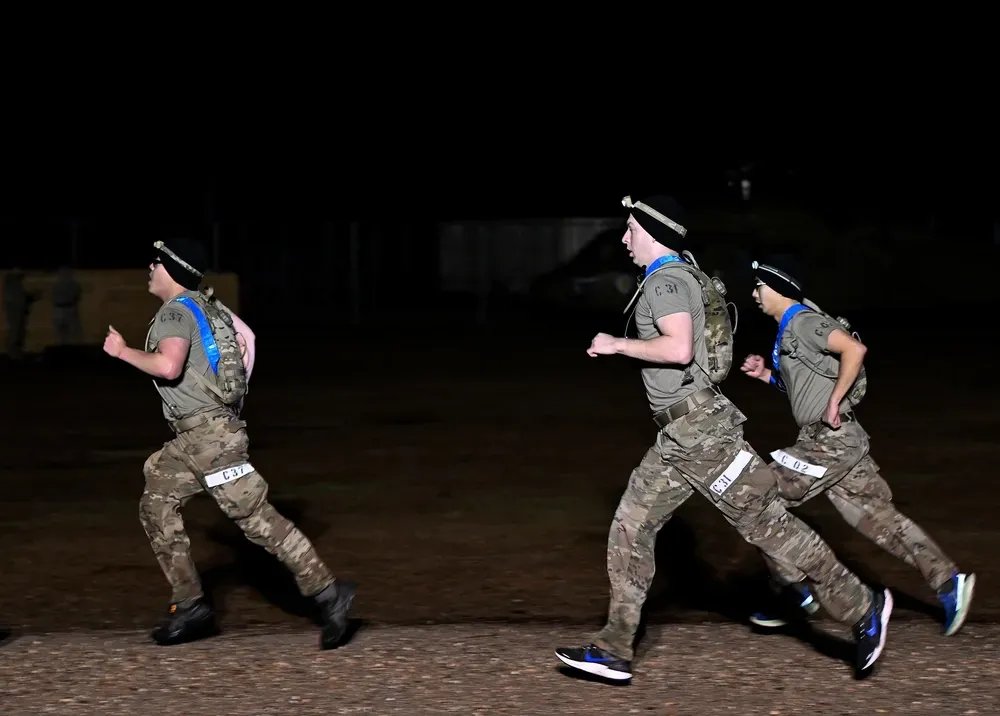
Fitness vs. Readiness: Why Most Programs Get It Wrong
Fitness vs. Readiness: Why Most Training Programs Build the Wrong One
Fitness is easy to measure. Readiness is not, and that single difference between fitness and readiness is where most tactical training programs quietly fail. They track run times, lift numbers, and test scores, then assume those numbers equal preparedness. They don't. Fitness is one input to readiness, not the whole thing, and a program built to move test numbers will leave you sharp on a good day and brittle the moment fatigue, load, and stress stack up. That is the gap most programs miss: the distance between training that scores well and training that actually holds when conditions turn against you. Fitness is a component of readiness. It is not the whole thing. When programs confuse the two, performance fails when it matters most. The best tactical fitness programs treat fitness as one input to readiness, not the finish line.
Fitness is Capacity in Isolation
Fitness describes measurable physical qualities, strength, endurance, speed, assessed under controlled, repeatable conditions. Those numbers are real and they matter: a heavier deadlift, a faster two-mile, a higher aerobic ceiling all expand what your body is capable of. But they describe capacity in isolation, stripped of the variables that define real operations. A graded treadmill test doesn't carry sixty pounds of kit, doesn't run on three hours of sleep, and doesn't make decisions while a heart rate sits at 170. Fitness answers a narrow question: what can you do when conditions are ideal? Readiness answers the one that actually decides outcomes, what can you do when they're not? Most programs only ever test the first and call it preparation. That failure is easiest to see when you put two programs side by side, which is exactly what the breakdown of Combat Fitness versus other tactical fitness programs. The same gap shows up in the military training programs breakdown, where scoring well and staying ready turn out to be very different things.
Readiness is Performance Under Constraint
Readiness includes fitness, but it is built from a wider set of qualities that rarely show up on a test sheet.
It also includes:
Fatigue tolerance
Stress management
Recovery capacity
Decision-making under pressure
Durability over time
A soldier can max a fitness test and still come apart on a twelve-mile ruck once fatigue, friction, and heat stack on top of each other. A patrol officer can squat well over 400 pounds and still gas out in a foot pursuit at the end of a night shift, which is the entire case for prioritizing readiness versus fitness in law enforcement. The fitness was real; the readiness wasn't there. That gap, strong on test day, fragile under accumulated demand, is exactly where programs that chase numbers leave people exposed.
Why Tests Distort Training Priorities
Fitness tests create narrow incentives, and people are rational, they train for what's scored and quietly neglect what isn't. The problem is everything a test can't capture:
Sleep deprivation
Repeated effort
Load carriage over time
Mental stress
So training collapses toward test day. Athletes peak for a single controlled performance and sacrifice the broad, durable base that has to hold up across a deployment, a selection course, or a twenty-five-year career. The result is a familiar pattern: short-term scores climb while long-term resilience quietly erodes. Readiness asks for the opposite, development broad enough that no single test day is ever the point.
Durability Matters More Than Peak Output
Peak output is impressive on a leaderboard. Durability is what keeps you in the fight. Readiness depends far less on a one-rep max than on the ability to repeat hard efforts, day after day, rep after rep, without breaking down. That repeatability rests on tissue resilience, aerobic capacity, and recovery efficiency, not on raw ceiling, and it maps directly onto the durability requirements of military training that any selection pipeline is built to expose. That repeatability rests on tissue resilience, aerobic capacity, and recovery efficiency, not on raw ceiling. Training that chases maximum effort every session while ignoring durability burns bright and fails fast, which is why so many genuinely strong, genuinely fit people wash out early. They built a peak with no base underneath it. A selection pipeline never asks what you can do once; it asks whether you can do it again tomorrow, and again the day after that.
Recovery Capacity Defines Readiness
Recovery determines how often you can perform, and how often you can perform is the entire game. Without it, capacity quietly declines, sleep debt, poor fueling, and unmanaged stress all drag readiness down no matter how hard the training looks on paper. Ignoring recovery doesn't forge toughness; it just shortens how many quality sessions you can string together before output craters. Programs that treat recovery as weakness trade long-term performance for short-term suffering and call it discipline. Effective systems do the opposite, they treat sleep, nutrition, and load management as a readiness multiplier, the thing that lets every other adaptation actually stick.
Strength Supports Readiness Beyond the Gym
Strength is readiness infrastructure, not a vanity metric. It improves posture under load, slows the onset of fatigue during sustained movement, and protects joints through the repetitive, awkward tasks that fill real operational days, lifting, dragging, climbing, carrying. Those benefits show up precisely where controlled-environment numbers don't. Strength earns its place in a readiness program when it's built to complement conditioning and recovery rather than compete with them, which is the balance emphasized in structured systems like the Combat Fitness training plans. Loaded correctly, strength stops being about what you can lift once and starts being about what your body can absorb, repeat, and recover from under stress.
Aerobic Capacity is the Hidden Readiness Factor
Aerobic capacity is the most under-trained readiness factor in tactical populations, precisely because it's invisible on the heavy lifts and short tests people fixate on. It is also a large part of what actually makes an athlete tactical rather than just fit. A strong aerobic base is what clears fatigue between efforts, lets you repeat output without redlining, and stabilizes performance across long-duration tasks, the ruck that turns into a movement-to-contact, the shift that runs four hours past end-of-watch. Programs that skip aerobic development produce people who are technically "fit" and yet constantly, inexplicably gassed. That isn't a discipline problem or a motivation problem. It's a readiness failure with a physiological cause, and no amount of grinding harder repairs a missing aerobic engine.
Mental Readiness Follows Physical Readiness
Physical and mental readiness aren't separate accounts. When the body is chronically fatigued, cognition degrades with it, decision speed, attention, working memory, and emotional regulation all slip, which are exactly the faculties that matter most when the stakes are real. That is the whole reason training when you're busy and under-slept has to be planned deliberately rather than powered through on willpower. A program that leaves operators perpetually smoked isn't building mental toughness; it's quietly eroding the judgment those operators are paid to exercise under pressure. Readiness has to include mental clarity, and that means managing the physical load well enough that the brain still works when it counts. Training that ignores this isn't hardcore, it's incomplete.
Why Readiness is Harder to Build
Readiness is harder to build than fitness for an uncomfortable reason: it demands patience and restraint inside a culture that equates suffering with progress. Building it means managing load instead of maximizing it, accepting that not every session should leave you wrecked, and trusting consistency over intensity. That runs directly against the instinct to prove yourself by how hard a workout felt. But readiness isn't forged through punishment, it accumulates through repeatable, well-recovered work over months and years. The real discipline is going easier when the plan calls for it. That's the part most programs, and most people, quietly skip.
What This Looks Like in the Real World
Picture two candidates entering the same selection course. The first trained for the test: a fast two-mile, a strong showing on the graded events, peaked perfectly for assessment day. The second trained for readiness: slightly less impressive on any single benchmark, but with a deep aerobic base, durable joints, and a body that recovers overnight. Day one, they look even. By day four, cumulative sleep loss, repeated rucks, no full recovery between events, the first candidate's numbers fall off a cliff while the second holds a steady, repeatable output. Nothing about the first candidate's fitness was fake. It simply had no durability underneath it, and selection isn't a test of your best day. It's a test of your worst one, repeated. That's the readiness gap in a single week.
How to Train For Readiness Instead of Just Fitness
Training for readiness doesn't mean training less, it means structuring effort so it accumulates instead of burning out. In practice, that looks like:
Strength training that improves durability
Conditioning across multiple energy systems
Aerobic base development
Planned recovery periods
Adjustments based on stress and workload
Built together, these elements produce capacity that holds up under pressure rather than capacity that only shows up on test day. The goal was never a single impressive performance. It's someone who can perform repeatedly, across a deployment, a selection course, a full career, and still be standing at the end of it.
This approach builds capacity that holds up under pressure. It produces people who can perform repeatedly, not just once. Fitness gets the attention because it's visible, measurable, and satisfying to chase. Readiness gets the results, because it decides who can still perform when conditions fall apart. Build the second one deliberately, and the first takes care of itself.
FAQ
What is the difference between fitness and readiness?
Fitness measures physical qualities in isolation. Readiness measures the ability to perform under fatigue, stress, and constraint.
Can someone be fit but not ready?
Yes. Many people perform well in tests but struggle during prolonged or repeated demands.
How do you train for readiness?
By building strength, aerobic capacity, durability, and recovery capacity rather than chasing constant intensity.
Why do most programs miss readiness?
Because readiness is harder to measure and requires patience and structure rather than constant effort.


