
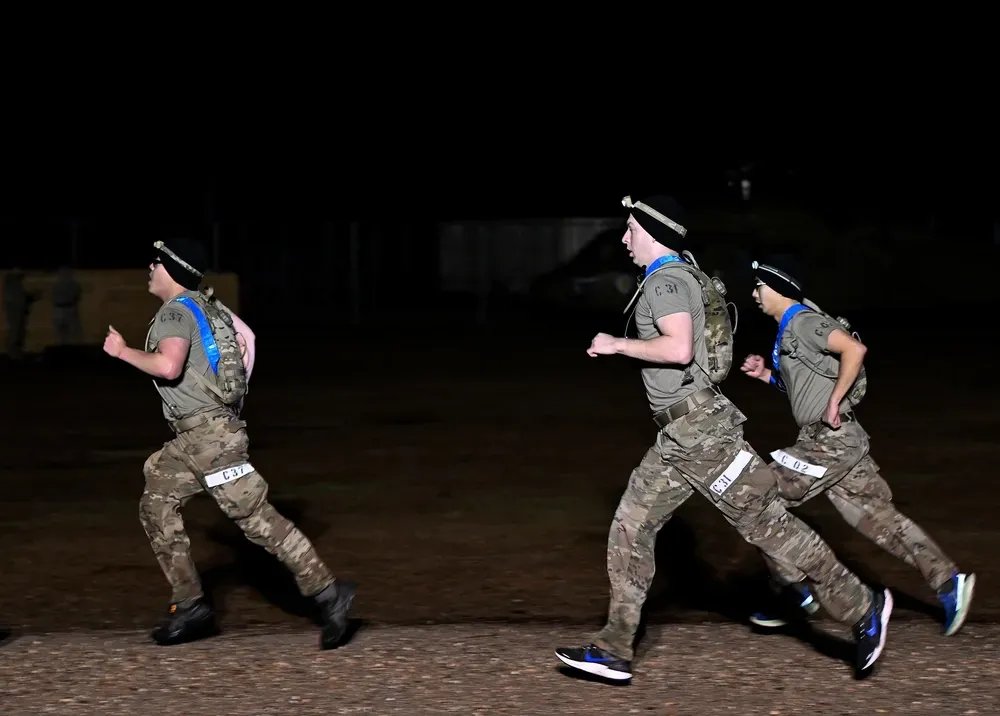
Tactical Readiness vs Test Fitness: Pass Isn't Ready
Tactical Readiness vs Test Fitness: Why Passing Isn't Ready
In most military environments, physical fitness is measured through standardized tests. These assessments matter: they set minimum standards, benchmark large groups quickly, and hold personnel accountable. But there's a hard truth the scorecard hides. Tactical readiness vs test fitness is the gap between passing a test and being ready for the job, between what a controlled assessment can measure and what a real operation actually demands. A high test score proves you can pass the test. It doesn't prove you can carry the load, cover the distance, and keep working when the mission turns ugly.
That difference isn't academic. A score chaser and a mission-ready operator can post identical numbers on test day and perform very differently in the field, because the two are built by different kinds of training. Knowing where test fitness ends and tactical readiness begins is the first step toward training for the mission instead of the scorecard.
Both are real, and both matter. The mistake is treating a test score as proof of readiness when it's only evidence of test performance. If you want a system built around the job rather than the scorecard, the military fitness programs by Combat Fitness are structured for operational readiness from the first week. The rest of this guide breaks down what each one actually measures, why training only for the test backfires, and what a readiness-first program looks like in practice.
What Is Test Fitness?
Test fitness refers to performance on standardized assessments such as:
Push-up tests
Sit-up tests
Timed runs
Loaded marches
Combat fitness tests
Obstacle course events
These tests are designed to:
Establish minimum standards
Track fitness levels across units
Provide measurable benchmarks
Encourage consistent training
Standardized testing is valuable because it:
Creates accountability
Identifies underprepared personnel
Provides clear performance targets
However, tests are simplified representations of physical readiness. In practice, test fitness is whatever a standardized assessment can capture in a short, controlled window. On the Army Fitness Test (AFT), the five-event standard the Army adopted in 2025, or the Marine Corps PFT, a soldier repeats a fixed menu of movements on flat ground, rested, in shorts, with a clock running. Those conditions are deliberately clean so scores stay comparable across thousands of people. The cost of that cleanliness is realism: the test rewards the specific events you practice, not the messy, loaded, unpredictable work those events are meant to predict.
What Is Tactical Readiness?
Tactical readiness is the ability to:
Perform real-world tasks under load
Sustain effort over long durations
Recover between repeated efforts
Maintain performance in harsh conditions
Operate effectively under fatigue
Real-world military tasks may include:
Long-distance ruck marches
Casualty evacuation
Equipment carries
Obstacle negotiation
Sustained patrols
High-intensity combat movements
Knapik and colleagues, in their review of soldier load carriage, documented how operational tasks stack strength, endurance, power, and the ability to move under heavy load, often at once, for hours, in heat, mud, and fatigue. No single test event isolates that combination. A casualty drag is raw strength under stress; a 12-mile ruck is strength endurance and load tolerance; a sustained patrol is aerobic capacity that has to survive a full duty cycle. Training that ruck-specific capacity is its own decision, and a ruck training program comparison is the fastest way to see how different plans build load tolerance over a full cycle.
Tactical readiness reflects the sum of these qualities, not any one of them in isolation.
Why Test Fitness Alone Is Not Enough
Standardized tests are limited in scope. They typically:
Occur in controlled environments
Use limited movement patterns
Do not simulate prolonged fatigue
Often lack significant external load
Notice what every one of those limitations has in common: they remove the very stressors that define operational work. Strip away load, terrain, duration, and fatigue, and you're left with a clean lab measurement of movement, useful, but incomplete. A test is a snapshot taken under ideal conditions; readiness is a film shot in bad weather. Confusing the two is how fit-on-paper soldiers end up underprepared for the field.
For example:
A soldier may excel at push-ups and a 2-mile run
But struggle with a 60-pound ruck over uneven terrain
That contrast is the whole problem in miniature. The push-ups and the two-mile run are honest measures of upper-body endurance and aerobic pace on flat ground; neither predicts how that same soldier moves with sixty pounds on their back, over broken terrain, after a night with no sleep. Knapik's load carriage research shows that adding external load sharply raises the physiological cost of every step and demands its own specific conditioning. Most of the questions that follow, how much weight, how often, what boots, get answered in a rucking gear and progression FAQ before they ever become injuries. Without deliberate load training, the gap between a clean test score and a loaded real-world task only widens.
The Problem with “Training for the Test”
When training focuses only on test events, several issues arise. Training for the test isn't laziness, it's a rational response to how soldiers are evaluated and ranked. The problem is that the test becomes the ceiling instead of the floor. When the whole training calendar bends toward a handful of scored events, the qualities those events ignore quietly erode, and the erosion doesn't show up until the day the mission demands them. The pattern isn't unique to the military either: the same split between readiness in law enforcement and the annual fitness screen shows up wherever a scored test stands in for job performance.
Narrow Physical Development
Test-focused training may emphasize:
High-rep calisthenics
Short-distance running
Specific test movements
This can neglect:
Strength
Load tolerance
Strength endurance
Work capacity under gear
Narrow development is the first cost. A program built on high-rep calisthenics and short runs can produce an impressive scorecard while leaving a soldier weak under load. Maximal strength, the ability to brace and carry, and work capacity in body armor aren't tested by push-ups, so they get trained last or not at all. The result is a soldier who looks fit on paper and gasses out the moment the task involves weight, distance, or both.
Short-Term Peaks Instead of Long-Term Readiness
Test-based training often leads to:
Short bursts of intense preparation
Rapid performance gains
Post-test performance decline
Peaking is the second cost. Done deliberately, peaking for special operations selection is a legitimate skill; done accidentally for a test date, it produces a sawtooth that looks like progress but never compounds. Test-cycle training tends to spike volume and intensity in the weeks before assessment, then collapse afterward, a sawtooth that looks like progress but never compounds. The military training-load literature, including Knapik's injury-risk work, links these sudden workload spikes to higher injury rates, and an injured soldier is the least ready soldier of all. Real readiness is built by consistent, year-round work, not by cramming for a date on the calendar.
Reduced Durability
Without balanced training, soldiers may experience:
Joint pain under load
Rapid fatigue during patrols
Increased injury risk
Decreased operational performance
Durability is the third cost, and the most expensive. When strength and load tolerance are neglected, joints take the punishment that conditioned tissue would have absorbed, and small problems become chronic ones under a rucksack. Knapik and colleagues found that higher physical fitness and gradual, progressive training are associated with markedly lower injury rates in military populations. Durable soldiers aren't just healthier, they're available, and availability is the quiet foundation of readiness.
What Tactical Readiness Training Looks Like
A readiness-focused program treats the test as a byproduct, not the target. Instead of rehearsing scored events, it builds the underlying physical qualities real tasks draw on, then lets test performance take care of itself. Each quality below maps to a specific operational demand, and a serious program trains all of them in parallel rather than chasing one at the expense of the rest.
Strength
Supports:
Casualty drags
Equipment handling
Obstacle negotiation
Joint stability
Strength is the quality that pays for all the others. A stronger soldier carries a given load at a lower percentage of their maximum, which leaves more reserve for everything else, pace, repeated efforts, recovery. It's also the foundation of durability: tissue strong enough for the task is far less likely to break under it. That's why a readiness program protects strength year-round instead of letting it slide between test cycles.
Aerobic Capacity
Supports:
Long patrols
Sustained operations
Recovery between efforts
Aerobic capacity is also the quality most sensitive to age, which is why aerobic capacity for aging tactical athletes becomes a deliberate training target rather than an assumption after the first decade of service.
Strength Endurance
Supports:
Repeated load-bearing tasks
Extended movement under gear
Continuous operational work
Power and Speed
Supports:
Short sprints
Rapid direction changes
Explosive movements under stress
Load Carriage Ability
Supports:
Ruck marches
Equipment movement
Long-distance patrols
Load carriage deserves special attention because it's the quality the test most often ignores and the field most reliably demands. Rucking under a realistic combat load is its own trainable skill: the body adapts to the specific posture, cadence, and tissue stress of moving weight over distance. You can't back-door that adaptation through more push-ups or a faster two-mile. Equipment choices compound the adaptation or sabotage it, and a no-BS tactical gear guide is worth reading before you load a pack that will be on your back for hundreds of miles. If the mission involves a ruck, the training has to involve a ruck, progressively loaded, on real terrain, year-round.
This multi-quality approach reflects real operational demands, and building all of it at once is exactly what a structured tactical program is for. If you'd rather follow a plan that develops strength, aerobic capacity, strength endurance, power, and load carriage in one progression instead of assembling it yourself, the Combat Fitness training programs are built to do precisely that.
Practical Takeaways
To move from test fitness to tactical readiness:
Train multiple physical qualities
Include regular load carriage
Maintain strength year-round
Build aerobic capacity
Use structured progression
Focus on long-term consistency
Fitness tests are useful benchmarks, and you should still pass yours convincingly. But in the contest of tactical readiness vs test fitness, the scorecard is the floor, not the finish line. Train the qualities the test can't measure, strength under load, endurance that survives a duty cycle, durability that keeps you available, and you'll pass the test as a side effect of being ready for the mission.
References
Knapik, J. J., et al. (2004). Soldier load carriage review.
Knapik, J. J., et al. (2001). Risk factors for training-related injuries among men and women in basic combat training. Med Sci Sports Exerc, 33(6), 946–954.


