
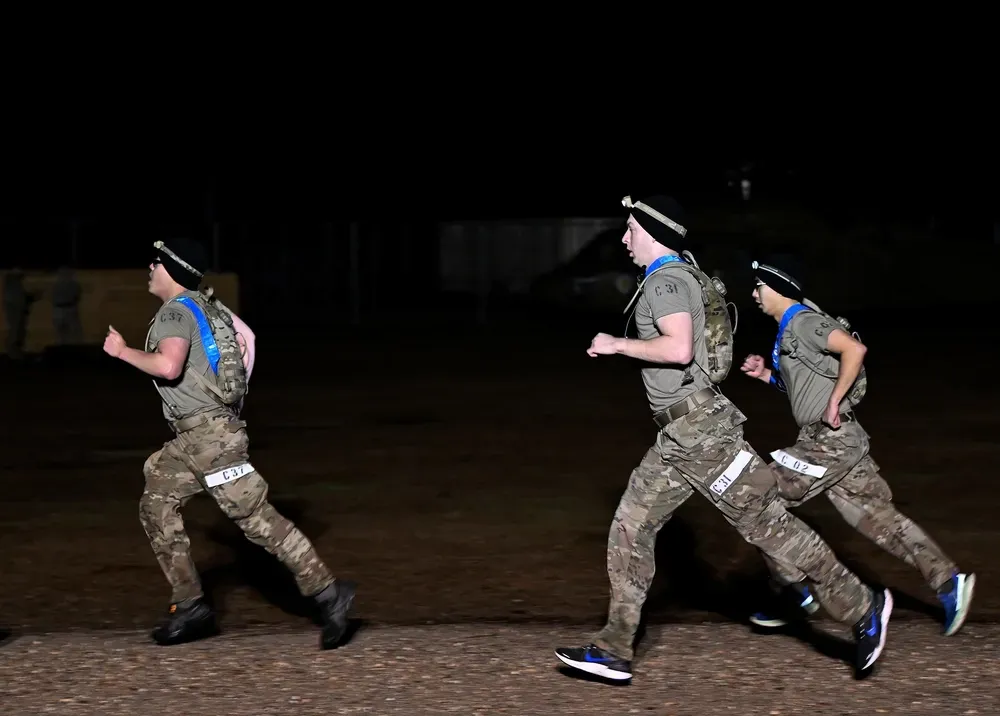
Running Program FAQ: How Often, How Far & How to Improve
Why Structure Beats Just Running More
Running is one of the most accessible forms of training, but also one of the easiest to get wrong. Most people assume progress comes from simply running more, but the athletes who improve fastest, and stay injury-free, are the ones following a structured running program built around easy days, hard days, and real recovery.
Whether the goal is improving a 5-mile time, building endurance for selection, or integrating running into a broader tactical fitness system, the questions are always the same:
How often should you run?
How far?
How fast?
What program should you follow?
This Running Program FAQ breaks down everything: how running programs work, how to choose the right one, and how to actually improve performance instead of just logging miles.
What is a Running Program?
A running program is a structured plan designed to improve specific aspects of running performance over time.
Instead of random runs, a good program includes:
different types of runs (easy, interval, tempo, long)
progressive volume increases
pacing guidelines
recovery structure
goal-specific design
The structure is what separates a program from a training log. A soldier who runs four unplanned miles every day adapts for a few weeks, then plateaus, because the body only changes when the stress changes in a deliberate sequence. A program manipulates distance, pace, and recovery on purpose: easy days build the aerobic engine, hard days sharpen speed, and rest days let the adaptation take hold. Random mileage gives the body no reason to improve, programmed mileage gives it a target every week. Programs like 35M5M 4.0 or Marathon + are examples of structured running systems built around progression, not guesswork.
Who should follow a running program?
Anyone who wants to improve.
Running programs are used by:
beginners trying to build consistency
intermediate runners aiming to improve pace or distance
military and tactical athletes preparing for selection
endurance athletes
hybrid athletes balancing strength and conditioning
Even experienced runners benefit from structure. Without it, most people either under-train or over-train.
What is the difference between running workouts and a running program?
Running workouts are individual sessions. A running program is the system that connects those sessions together over time.
For example:
a workout = 5 x 400m intervals
a program = how those intervals fit into a week, a phase, and a long-term progression
The difference is progression. Programs build capacity over time. Workouts alone do not.
How many days per week should you run?
Most athletes fall into one of these ranges:
Beginner: 2–3 days per week
Intermediate: 3–5 days per week
Advanced: 5–6 days per week
However, more is not always better.
The best programs balance running with:
recovery
strength training
other conditioning
For example:
Step Off! introduces running gradually
35M5M 4.0 increases frequency and intensity
Hybrid Elite balances running with strength
The right number is the most you can recover from, not the most you can survive. A patrol officer adding a fourth weekly run while sleeping six hours and lifting twice will break down long before a teammate running three quality sessions and recovering fully. Frequency is a dial you earn, not a setting you pick on day one. Most athletes progress fastest by holding a sustainable number for several weeks, proving they can absorb it, then adding a single day, rather than jumping two or three at once.
What types of runs should be included in a program?
A well-structured running program includes multiple types of runs:
1. Easy Runs (Zone 2)
build aerobic base
improve recovery
low intensity
2. Interval Training
improve speed and VO2 max
short, high-intensity efforts
3. Tempo Runs
improve threshold pace
sustained moderate-hard effort
4. Long Runs
build endurance
increase time on feet
Programs like Marathon + emphasize long runs more heavily, while 35M5M 4.0 blends speed and endurance for performance.
How do you improve your running speed?
Speed comes from a combination of:
aerobic development
interval training
running economy
consistency
Most people make the mistake of running hard all the time.
Better approach:
majority easy running
some structured intensity
This split is not a guess. When Seiler and Kjerland (2006) tracked the training of competitive endurance athletes, roughly 75 to 80 percent of their sessions sat at low, conversational intensity, with only a small fraction at genuinely hard efforts. The lesson for tactical athletes is blunt: most of your weekly mileage should feel almost too easy, so the handful of interval and tempo sessions can be run hard enough to actually drive adaptation. Grinding every run at a moderate effort trains neither end of the system well. Programs like 35M5M 4.0 are designed specifically to improve pace without sacrificing strength.
How do you increase running endurance?
Endurance improves through:
gradual increases in volume
long runs
aerobic base work
The key is progression, not jumping straight to long distances. Programs like Marathon + build endurance systematically, often combining running with lifting to maintain strength.
Can you combine running with strength training?
Yes, and for tactical athletes, you should.
Running alone develops endurance, but it does not build:
strength
durability under load
resilience
Programs like:
Hybrid Elite
Dismount 4.0
AMPHIB 4.0
combine running with lifting (and sometimes rucking or swimming) to build a more complete athlete. The science behind pairing them is well established. In a classic study, Hickson (1980) found that athletes training strength and endurance at the same time developed strength more slowly than those who lifted alone, the so-called interference effect. For tactical athletes the answer is not to drop one, but to program both intelligently: separating hard runs from heavy lifts, fueling adequately, and accepting that a hybrid athlete trades a little peak strength for the durability a single-mode runner never builds.
What is the best running program for beginners?
The best beginner program is one that builds consistency without overwhelming the athlete.
Strong options include:
Step Off! – beginner-friendly running progression
Resurgence – general fitness with running included
Functional + – hybrid approach with manageable running volume
The goal at this stage is not speed. It is consistency and injury-free progression.
What is the best running program for performance?
That depends on the goal.
For speed and mid-distance performance:
35M5M 4.0
For long-distance endurance:
Marathon +
For hybrid performance (strength + running):
Hybrid Elite
For tactical preparation (running + rucking + lifting):
Dismount 4.0
The best program is the one aligned with the athlete’s actual objective.
How do you avoid running injuries?
Most running injuries come from:
doing too much too soon
increasing volume too quickly
running too hard too often
poor recovery
Injury prevention comes from:
gradual progression
strength training
proper footwear
balanced programming
Most overuse injuries trace back to a single error: volume climbing faster than tissue can adapt. Tendons, bone, and connective tissue strengthen on a slower timeline than the cardiovascular system, so a runner whose lungs feel ready often outruns what their shins and Achilles can handle. A practical guardrail is to keep weekly mileage increases modest, on the order of ten percent, and to bank an easier week roughly every fourth week. The goal is consistency over months, and consistency is impossible while injured. Programs like Resurgence and Functional + help build a base before higher running volume is introduced.
How long does it take to improve your running?
Most athletes notice improvements in:
3–4 weeks (consistency, comfort)
6–8 weeks (pace, endurance)
12+ weeks (significant performance changes)
Those windows reflect how different systems adapt. The earliest gains are largely neural and psychological, running simply feels less daunting as coordination and confidence improve. The six-to-eight-week changes in pace and endurance come from real cardiovascular and metabolic adaptation: more capillaries, denser mitochondria, a stronger aerobic base. The largest jumps after twelve weeks require those slow structural changes to compound. This is why program-hopping every few weeks stalls progress, most athletes quit a plan right before it was about to pay off. However, long-term development takes months or years. Running rewards consistency more than intensity.
What is pacing and why does it matter?
Pacing is how fast you run during a session.
It matters because:
running too fast too often leads to burnout
running too slow all the time limits progress
A simple example makes this concrete. An athlete chasing a five-mile run in 35 minutes needs to hold seven-minute miles on test day, so their tempo work might target that exact pace while easy runs sit a full ninety seconds to two minutes per mile slower. Without defined zones, that same athlete drifts into a gray middle pace, too hard to recover from, too easy to build speed. Pace zones turn every run into a specific tool instead of an undefined effort that quietly stalls progress. A good program defines pace zones so each run has a purpose.
Should you run every day?
Not necessarily.
Daily running is usually reserved for:
advanced runners
specific training phases
Most athletes benefit more from:
structured running
proper recovery
complementary training
More is not better. Better is better.
What is the difference between Combat Fitness ONE and PRO for running?
Combat Fitness ONE:
includes all core running programs
supports beginner to advanced development
allows switching between programs
Combat Fitness PRO:
includes everything in ONE
adds selection-specific programs like:
SOF-LAND (run + ruck emphasis)
SOF-AIR (running + swimming + power endurance)
SOF OPERATOR Base (sustainable performance structure)
For general running improvement, ONE is sufficient. For tactical or selection-specific goals, PRO provides more depth.
Can you improve running without losing muscle?
Yes, but it requires balance. Too much running without strength training can lead to muscle loss.
Programs like:
Hybrid Elite
35M5M 4.0
Marathon +
include lifting to maintain strength and muscle while improving endurance.
Can running help with fat loss?
Yes.
Running is effective for fat loss because it:
burns calories
improves metabolic efficiency
increases overall activity levels
However, results still depend on:
nutrition
consistency
total training volume
Do you need special equipment to follow a running program?
At minimum:
running shoes
appropriate clothing
Optional:
GPS watch
heart rate monitor
Most programs do not require expensive equipment to get started.
What is the biggest mistake people make with running programs?
The most common mistakes:
running too hard all the time
skipping easy runs
not following a structured plan
jumping between programs too often
ignoring recovery
Consistency within a structured system always beats random effort.
What is the best running program?
The best running program depends on the goal. 35M5M 4.0 is ideal for speed and performance, while Marathon + is better for long-distance endurance.
How often should you run?
Most people should run 3–5 times per week depending on experience and goals.
How do beginners start running?
Begin with short, manageable sessions and follow a structured program like Step Off! to build consistency.
How do you run faster?
Improve aerobic capacity, include interval training, and stay consistent over time.
Can you run every day?
Only advanced runners should run daily. Most people benefit from recovery days.
What is the best running program for tactical athletes?
Programs like 35M5M 4.0, Dismount 4.0, and SOF-LAND provide strong tactical-specific running development.
How long should a running program be?
Most programs run in phases of 4–12 weeks, but long-term development takes ongoing training.
Do you need strength training with running?
Yes. Strength training improves durability, performance, and injury prevention.
Can running help with weight loss?
Yes, especially when combined with proper nutrition and consistent training.
What is the biggest key to improving running?
Consistency within a structured program.
References
Seiler, K. S., & Kjerland, G. Ø. (2006). Quantifying training intensity distribution in elite endurance athletes: is there evidence for an "optimal" distribution? Scandinavian Journal of Medicine & Science in Sports, 16(1), 49–56.
Hickson, R. C. (1980). Interference of strength development by simultaneously training for strength and endurance. European Journal of Applied Physiology and Occupational Physiology, 45(2–3), 255–263


