
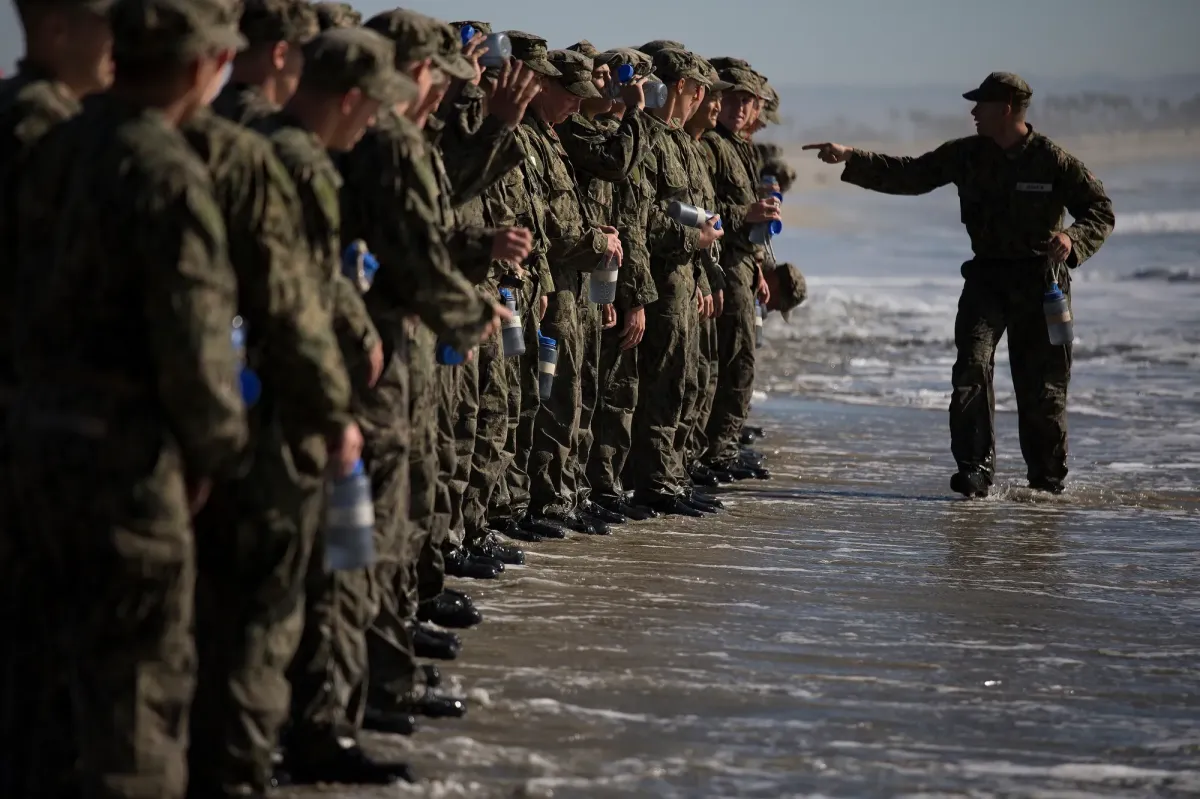
Military Fitness Is Broken: Why Most PT Programs Fail
Military Fitness Is Broken: Why Most PT Programs Fail Soldiers
Military fitness is supposed to prepare people for sustained physical and mental performance under stress. That is the entire job, and it is exactly where most military PT goes wrong.
Not to entertain. Not to punish. Not to “build character” through exhaustion.
Yet most military PT programs do exactly that.
They exhaust people
They injure people
They create the illusion of readiness without delivering it
And the system keeps repeating itself because pain is mistaken for progress. This is not a new problem. It is just one the institution refuses to confront honestly. CF-ONE training programs are built to confront it directly, structured, progressive, and accountable to performance outcomes rather than effort theater. For soldiers looking for military fitness programs built on structure rather than tradition, military fitness programs are the right starting point. For soldiers deciding which military fitness program fits their situation and goals, the military fitness program buying guide walks through exactly how to evaluate your options. For soldiers with specific questions about military fitness program structure and selection, the military fitness program FAQ covers the most common questions in one place.
The Core Issue
Military PT is not designed as training. It is designed as compliance-based group activity. That distinction matters. Training is a structured process intended to create specific adaptations over time. Group activity is something you can run every morning with minimal planning, minimal equipment, and minimal resistance from leadership.
Most military PT falls into the second category. That is why outcomes are inconsistent at best and destructive at worst. The full definition of what effective training actually is and why PT falls short of it is covered in what is tactical fitness and what it is not, it draws the same line this post is drawing, from first principles.
Why Military PT “feels” Effective
Military PT survives criticism because it feels hard.
Hard breathing
Burning muscles
People falling out of formation
Those sensations create emotional buy-in. They signal effort. But effort is not adaptation. The body does not reward suffering. It rewards intelligently applied stress followed by recovery. Without that pairing, the result is accumulated fatigue, not improved performance.
The mechanism is straightforward. Physical adaptation follows a stimulus-recovery-adaptation cycle: a training stress disrupts the body, and the rebuild that follows leaves it slightly more capable than before. Effort only converts into capability when that rebuild is allowed to happen. A session that leaves everyone gassed but is never followed by adequate recovery or progressive overload produces the sensation of hard training with none of the adaptation. Soldiers feel destroyed, assume they are getting fitter, and are measurably not. This is where most programs fail.
The Toughness Myth
The military has a deep cultural attachment to toughness. That is not inherently wrong. The problem starts when toughness replaces training. Toughness is psychological. Training is physiological. You can train toughness with discomfort. You cannot train strength, endurance, or durability without structure.
When PT sessions are built primarily to be miserable, the system selects for who can tolerate pain the longest, not who becomes more capable over time. Consider two soldiers in the same platoon. One arrives already durable and simply endures the daily smoke session; the other is under-prepared and breaks down under identical volume. Neither outcome reflects the quality of the programming, both reflect what each soldier walked in with. A miserable session has measured their starting tolerance, not improved anyone's capacity. Toughness-as-training rewards the already-capable and punishes the developing, which is the exact opposite of what a development system is supposed to do.
That leads to predictable outcomes:
People who survive the volume are praised
People who break down are labeled weak
The program itself is never questioned
This is not accountability.
It is avoidance.
Lack of Progression
Progression is the foundation of all effective training. If the stimulus does not increase or evolve in a planned way, adaptation stalls. Most military PT has no progression model.
Runs are scheduled arbitrarily.
Circuits change daily.
Intensity is random.
There is no long-term plan.
No buildup
No deload
No consideration of cumulative stress from field work, rucking, sleep deprivation, or operational tempo
The body cannot adapt to chaos. It can only survive it. This is also where load spikes do their damage. Sports science quantifies it through the acute-to-chronic workload ratio (Gabbett, 2016): when the work done this week sharply outruns the rolling average the body is conditioned for, injury risk climbs steeply. Random PT violates this constantly, an easy week followed by a brutal ruck-and-run block is a textbook spike. Planned progression exists precisely to keep that ratio inside a safe window while still driving adaptation. Chaos cannot, because by definition it is unplanned. That is why so many service members feel like they are always training hard but never actually improving. The case for why random workouts fail tactical athletes makes this adaptation argument at the physiological level for anyone who needs the mechanistic explanation.
Overuse Injuries are NOT a Mystery
The majority of military injuries are not combat-related. They are overuse injuries. This is not opinion. U.S. military injury surveillance has consistently found that over 95% of military injuries are musculoskeletal, and more than two-thirds of those are overuse injuries caused by cumulative microtrauma rather than any single traumatic event. Lower-extremity injuries dominate, and high-volume running is repeatedly identified as the largest single contributing activity. The pattern holds across decades of Army and Defense Health data: the institution is not being ambushed by these injuries—it is manufacturing them.
Stress fractures
Shin splints
Knee pain
Low back pain
Shoulder issues.
These injuries are not caused by weakness or lack of motivation. They are caused by poor load management. Repetitive high-impact activity layered on top of insufficient strength and inadequate recovery creates tissue failure. This is basic physiology. Running more does not make tissues stronger indefinitely. Strength training does. Yet many PT programs still treat strength as optional or secondary. Then leadership acts surprised when injury rates spike during high-volume periods. There is nothing surprising about it.
Strength is NOT Optional
Strength is not bodybuilding. Strength is armor. Stronger muscles and connective tissue tolerate higher workloads.
They absorb impact
They stabilize joints
They reduce injury risk
A system that emphasizes running and rucking while neglecting strength is structurally unsound. It is asking fragile tissues to absorb increasing stress without increasing their capacity. The capacity gap is physical, not motivational. Tendon, bone, and connective tissue remodel and strengthen in response to progressive resistance loading, running and rucking alone do not build that tissue tolerance, they spend it. A soldier who can squat and deadlift meaningful loads brings stronger hips, knees, and a more resilient posterior chain to every ruck march and obstacle. Remove strength work and you are asking under-built tissue to absorb a rising workload indefinitely. The failure point is predictable; only its timing is uncertain.
That is not grit. That is negligence.
Modern performance training understands this. Many military PT programs do not. The tactical athlete performance pyramid shows exactly where strength sits in a correctly ordered training architecture and why removing it collapses everything built above it.
Conditioning Without Structure Fails
Conditioning is necessary. Unstructured conditioning is destructive. When every conditioning session is high intensity, the aerobic system never develops properly.
Recovery suffers
Fatigue accumulates
Performance plateaus
Effective conditioning requires intent.
Low-intensity aerobic work builds durability.
Moderate-intensity work improves sustained output.
High-intensity efforts sharpen speed and power.
Endurance research has shown for years that the most effective programs are polarized—the large majority of conditioning volume kept genuinely easy, with a small, deliberate dose of hard work layered on top (Seiler & Kjerland, 2006). Military PT typically inverts this, making nearly every session moderately-to-very hard. The result is a no-man's-land: too hard to build a deep aerobic base, too frequent to recover from, too unstructured to sharpen anything. Capacity stalls, then erodes, while the calendar stays relentlessly full. When everything is hard, nothing improves. This is why many service members can suffer through workouts but struggle to perform consistently over longer durations. The direct contrast between tactical conditioning vs general fitness explains why structured energy system development is a tactical requirement that general fitness programming never addresses.
Recovery is Treated Like Weakness
Recovery is not laziness. Recovery is when adaptation occurs. No one gets fitter during the workout. They get fitter afterward, when the body rebuilds. Recovery is where the physiological work actually finishes. Sleep is when the bulk of tissue repair, hormonal regulation, and neural consolidation occurs; nutrition supplies the raw material for that rebuild. Strip either one and the adaptation you trained for never fully lands, no matter how hard the session was. Treating sleep and food as luxuries while demanding more output is not toughness, it is sabotaging the recovery half of the equation and then blaming the soldier when performance, predictably, falls off. Military culture often treats recovery as a personal problem rather than a readiness issue.
Sleep deprivation is normalized
Poor nutrition is ignored
Cumulative fatigue is dismissed
Then performance drops. Leadership responds by adding more PT. This creates a feedback loop of fatigue, injury, and declining capability. The solution is not more volume. The solution is better structure.
What Effective Military Fitness Actually Looks Like
Effective military fitness training borrows from sports performance. Not because soldiers are athletes, but because athletes train for repeated output under stress.
The principles transfer.
An effective system includes:
Structured strength training multiple times per week
Conditioning that targets different energy systems with purpose
Planned progression over time
Deloads and recovery periods
Adjustments based on operational stress, not denial of it
This is not theoretical. These principles are already used in successful tactical performance systems, including the Combat Fitness training plans.
The difference is intent. The goal is not to crush people. The goal is to make them harder to break. The distinction between training hard vs training smart is precisely the line between the programs that produce this outcome and the ones that don't.
Leadership Responsibility
Fitness culture flows downhill. If leaders reward suffering over performance, the system will continue to fail. If leaders prioritize readiness, durability, and long-term capability, outcomes improve.
PT should create people who are:
Stronger than last year
More durable than last year
Better able to handle load and stress
Less likely to break during high-demand periods
If a program does not produce those outcomes, it is not training. It is tradition. And tradition is not a performance strategy. The broader framework for what effective tactical conditioning actually requires is covered in what is tactical conditioning, the definition that this post's argument has been building toward.
Military fitness is broken because it stopped being training.
It can be fixed.
But only if effectiveness matters more than tradition.
FAQ
Why doesn’t military PT work?
Because most programs lack structured progression, adequate strength training, and planned recovery.
Is military PT effective?
It can improve basic fitness in untrained individuals, but often fails trained personnel due to poor programming and excessive fatigue.
Why are injury rates so high in the military?
Because repetitive high-impact training is combined with insufficient strength development and inadequate recovery.
What is better than traditional military PT?
Structured strength training, intentional conditioning, and a system that manages load and recovery over time, like the Combat Fitness training plan.
References
Defense Centers for Public Health. Injury Prevention for Active Duty Personnel. U.S. Army injury surveillance data on musculoskeletal and overuse injury burden.
Gabbett TJ. The training - injury prevention paradox: should athletes be training smarter and harder? British Journal of Sports Medicine. 2016;50(5):273–280.
Seiler S, Kjerland GØ. Quantifying training intensity distribution in elite endurance athletes: is there evidence for an "optimal" distribution? Scandinavian Journal of Medicine & Science in Sports. 2006;16(1):49–56.


