
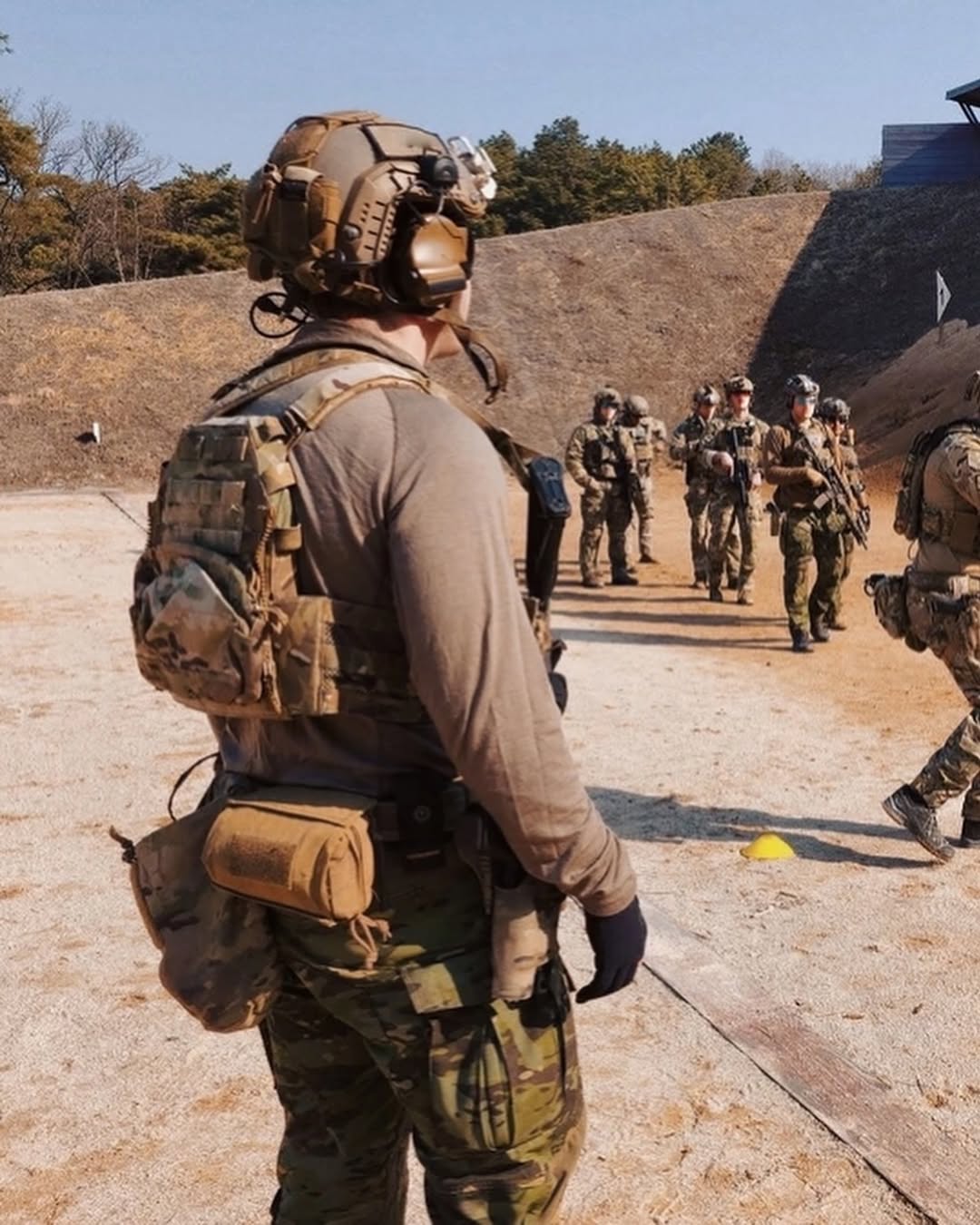
Military Fitness Program FAQ: 2026 Tactical Training Guide
The Complete Military Fitness Program Guide for Tactical Athletes
A military fitness program is built around a fundamentally different goal than commercial gym training. Where commercial programs chase aesthetics and isolated strength, a true military fitness program, sometimes called a military workout program or tactical fitness program, is engineered for sustained performance under load, durability across long deployments, and the real-world physical demands of soldiers, law enforcement officers, and tactical athletes.
Whether you're preparing for SFAS, BUD/S, RASP, or a local SWAT selection, or simply training to operate like a tactical athlete in your day-to-day role, choosing the right military fitness program raises a long list of practical questions. How many days a week should you train? Does it need to include rucking? Can you build muscle on a tactical program? Do you need coaching, or is a self-guided system enough?
This guide answers the most common, and most important, questions about military fitness programs: how they're structured, who they're built for, how to choose the right one for your current level and goals, and what separates a serious tactical training system from a generic "military-style" workout you find on social media. If you want to skip straight to programs, read the full Combat Fitness library of military fitness programs or you can hand the choice off to the program selector.
What Is a Military Fitness Program?
A military fitness program is a structured training system designed to develop:
Aerobic capacity (running, rucking, swimming)
Strength and load-bearing capability
Work capacity and endurance
Movement efficiency and injury resilience
Unlike generic workouts pulled from a magazine or a social-media trainer, a true military fitness program is built around operational demands: carrying load over distance, producing power while already fatigued, managing accumulated training stress across weeks and months, and developing multi-modal capacity that holds up when the conditions are bad and the day is long. That last part matters, soldiers and officers don't get to pick their conditions, so their training can't be optimized for a single domain.
This is the difference between a structured military workout program and a random one. Combat Fitness ONE, for example, runs on a progressive periodized model, phases of training that build on each other rather than a rotation of disconnected sessions, so athletes build durable long-term capability instead of short-term fatigue and burnout.
Who Are Military Fitness Programs For?
Military fitness programs are not limited to active-duty personnel. They are typically used by:
Special forces candidates (SOF, Ranger, SEAL, CSOR, etc.)
Law enforcement and SWAT units
Firefighters and first responders
Tactical athletes and hybrid fitness enthusiasts
Beginners looking for structured, goal-driven training
The audience isn't just active-duty soldiers. Most modern military fitness program platforms now serve a broader tactical population, police officers, federal agents, firefighters, paramedics, and serious civilian athletes who want training that holds up outside a climate-controlled gym. Combat Fitness, for example, offers entry-level pathways for new tactical athletes, Step Off! for running base-building, Resurgence for general conditioning, alongside advanced selection-prep programs like Dismount 4.0 for ruck-heavy land pipelines and AMPHIB 4.0 for water-based selection. If you're not sure where you fit, the full lineup is laid out in detail in the Combat Fitness military fitness program guide.
How Is Military Training Different from Regular Gym Training?
The biggest difference is intent.
Traditional gym training focuses on:
Muscle growth
Isolated strength
Aesthetic outcomes
Military fitness focuses on:
Performance under fatigue
Multi-domain capacity (strength + endurance)
Durability over time
For example:
A bodybuilder trains muscles
A tactical athlete trains systems
A bodybuilder trains muscles in isolation; a tactical athlete trains the entire system, strength, aerobic capacity, work capacity, durability, and the ability to recover between back-to-back demanding sessions. This is why hybrid training has become the dominant programming model for military fitness programs over the last decade. Combat Fitness programs like Hybrid Elite (strength plus running) and 35M5M 4.0 (advanced running plus lifting) combine modalities in a single structured plan, rather than asking athletes to bolt together a strength routine and a running plan on their own and hope the two don't cannibalize each other, which they will, every single time, without intelligent programming.
Do You Need to Be Fit Before Starting?
No, but the starting point matters.
Most structured systems include entry-level options, such as:
Step Off! – for beginners building a running base
Resurgence – general fitness and conditioning
Functional + – hybrid training for newer athletes
The key isn't starting "fit." The mistake almost every new tactical athlete makes is jumping into an advanced program because it sounds harder, then washing out three weeks later from accumulated fatigue and minor injuries. Start where your current level honestly puts you, and the program does the rest. If you want a structured way to figure out which program fits your current level and goals, the Combat Fitness program finder at /program-finder walks you through it in under two minutes.
What Should a Good Military Fitness Program Include?
A high-quality program should include:
Progressive overload (not random workouts)
Periodization (structured phases of training)
Multi-modal training (strength, endurance, mobility)
Recovery and fatigue management
Clear progression pathways
The non-negotiable components are progressive overload, periodization, multi-modal training, recovery and fatigue management, and clear progression pathways. Progressive overload means the program asks more of you over time, heavier loads, faster paces, longer efforts, in a controlled way. Periodization means those increases are organized into phases (typically 4–12 weeks) rather than ramped every single session, so the body has time to consolidate adaptations. Multi-modal training means strength, endurance, and movement work coexist inside the plan instead of being treated as separate hobbies.
Combat Fitness systems are built around an infinite progression model, meaning the program continues scaling with the athlete long after they've finished the first cycle, athletes can keep progressing for years inside the same system instead of constantly hunting for a new program every 12 weeks.
How Many Days Per Week Should You Train?
Most military fitness programs follow a 4–6 day training structure.
Typical breakdown:
2–3 endurance-focused sessions (running, rucking, swimming)
2–3 strength or hybrid sessions
1 recovery or mobility day
A typical 5-day military fitness program week looks something like this: two strength sessions, two endurance sessions (often one short and one long), one hybrid or work-capacity day, and a recovery day with mobility or easy aerobic work. Programs like SOF Operator Base are deliberately built around a sustainable structure so active operators can train hard without breaking down between cycles. More aggressive selection pipelines like SOF-LAND may push training during peak phases, but those phases are short, defined, and bracketed by deload weeks. Higher frequency only works when the rest of the system (sleep, nutrition, recovery) holds up.
What Is Rucking and Why Is It Important?
Rucking is walking or running with load (a weighted pack).
It is one of the most critical components of military fitness because it develops:
Load-bearing capacity
Lower body endurance
Structural resilience
Rucking is non-negotiable for any soldier facing selection. Most pipelines test rucking at loads of 35–65 pounds across distances of 4–25 miles, often back-to-back with running, swimming, or graded events. You cannot bluff this, rucking capacity is built specifically, over months, through gradual load and distance progression. Programs like Dismount 4.0 are built around exactly this progression, combining structured rucking with supporting strength and running work so the body adapts in the right order: tissue tolerance first, then pace, then load.
Do Military Fitness Programs Include Running?
Yes, running is foundational.
Most programs include:
Zone 2 aerobic base work
Interval training
Threshold sessions
Long-distance efforts
For example:
35M5M 4.0 focuses on improving speed and endurance
Marathon + builds long-distance capacity with strength support
Running is the most common limiting factor in tactical performance —--m and the most common reason candidates wash out of selection. Zone 2 base work develops the aerobic engine that lets everything else recover between efforts. Threshold sessions build the ability to sustain a hard pace. Intervals develop top-end speed. Long efforts build mental durability under fatigue. Programs like 35M5M 4.0 emphasize speed and middle-distance endurance for athletes preparing for run-heavy testing, while Marathon+ focuses on long-distance capacity with enough lifting to keep strength intact through high-volume mileage cycles.
What Equipment Do You Need?
It depends on the program.
Options range from:
No equipment (e.g., HighSpeed 2.0)
Minimal equipment (dumbbells, vest)
Full gym setups
A well-designed military fitness program scales to whatever equipment you have access to, which matters because tactical athletes rarely train in the same gym twice. Combat Fitness programs are built with this reality in mind. HighSpeed 2.0 runs entirely bodyweight for athletes deployed, traveling, or training without gym access. Most other Combat Fitness programs work with minimal equipment (a barbell, plates, a pull-up bar, and a ruck) and scale upward from there. The goal of a serious program is to remove "I don't have the equipment" as an excuse, and almost every modern tactical program is structured to make that possible.
Can You Build Muscle with a Military Fitness Program?
Yes, but it’s not the primary goal.
Programs like:
Blackout 3.0
Mass Gainer 2.0
are specifically designed for hypertrophy and strength.
However, most military fitness programs prioritize functional strength over isolated size, meaning muscle is built in a way that transfers to carrying load, moving fast under fatigue, and recovering between efforts. For athletes who specifically want to add size while maintaining tactical capacity, Combat Fitness offers two hypertrophy-leaning programs: Blackout 3.0 (bodybuilding-style hypertrophy with a tactical conditioning floor) and Mass Gainer 2.0 (strength-and-hypertrophy combined for soldiers and officers wanting to add muscle without losing aerobic capacity). Both are structured to add mass intelligently, not at the cost of everything else a tactical athlete needs.
What Is a “Hybrid Athlete”?
A hybrid athlete is someone who develops both:
Strength
Endurance
Simultaneously.
Military fitness programs are, by definition, hybrid training systems, they blend lifting, running, rucking, and conditioning into a single structured approach because the job requires all of those capacities simultaneously. The hybrid athlete model is the dominant framework in modern tactical training, and it's what separates a serious military fitness program from a "military-themed" workout plan that just runs a soldier through some push-ups and a few miles a week.
Programs like Hybrid Elite are built explicitly around this model, combining structured strength work with progressive running, sequenced so neither modality undermines the other. This is the same model used across most Combat Fitness programs, scaled to the specific goal of each one.
How Do You Choose the Right Program?
The best program depends on:
Current fitness level
Goals (selection, general fitness, performance)
Equipment access
Time availability
A useful decision framework: if you're starting from a low base, prioritize building an aerobic engine and movement quality first, Step Off! and Resurgence both do this. If you're preparing for a specific selection pipeline, work backwards from the test demands (rucking distance, run times, swim standards) and pick the program built for that pipeline. If you already have a strong base and want to develop hybrid capacity, programs like Hybrid Elite or 35M5M 4.0 are the right fit. If your timeline is short and your selection date is fixed, prioritize specificity, generic conditioning is wasted training time at that point.
Combat Fitness uses a program finder at /program-finder that automates this decision in under two minutes, asking about your current level, goals, and timeline before assigning the most appropriate starting program. The mistake to avoid is choosing the program that sounds the hardest, selection programs are calibrated for athletes already at an advanced baseline, and starting one too early almost always ends in burnout, injury, or both.
What Is the Difference Between Combat Fitness ONE and PRO?
Combat Fitness ONE:
Access to core training programs
Structured progression
Ability to switch programs
Combat Fitness PRO:
Everything in ONE
Advanced SOF-specific pipelines (LAND, SEA, AIR)
Direct coaching support
Nutrition guidance
Expanded training systems and resources
Combat Fitness ONE is gives full access to the core program library, Step Off!, Resurgence, Functional+, Hybrid Elite, Dismount 4.0, AMPHIB 4.0, and the rest of the lineup. Combat Fitness PRO adds the SOF-specific pipelines (SOF-LAND, SOF-SEA, SOF-AIR, SOF Operator Base), the TACTICAL URBAN program for LEO and SWAT, expanded coaching support, and nutrition guidance. PRO is designed for athletes preparing for high-stakes selection or operational specificity, ONE is the right choice for almost everyone else.
Are These Programs Good for Special Forces Preparation?
Yes, if they are specific. Generic fitness is not enough for selection.
Programs like:
SOF-LAND (rucking + land-based selection)
SOF-SEA (swimming + water confidence)
SOF-AIR (rescue, carries, anaerobic capacity)
are built around the actual demands of selection pipelines across multiple countries.
Specificity is what separates real preparation from guessing. SFAS, BUD/S, RASP, Air Force Special Warfare, and most international SOF pipelines test specific physical capacities, graded rucks at specific loads and distances, swim assessments, sustained calisthenic volume, and graded runs, and you don't get to pick which capacity gets tested on which day. A program built specifically around the demands of your target pipeline will prepare you better than the best generic fitness plan ever can. This is also the right moment to mention that for U.S. Army candidates, the AFT replaced the ACFT as the official Army Fitness Test on June 1, 2025, selection prep needs to reflect the current standards, not the outgoing ones.
How Long Does It Take to See Results?
Most athletes begin to see noticeable improvements in:
4–6 weeks (conditioning, energy, consistency)
8–12 weeks (performance, body composition)
Different qualities adapt on different timelines. Zone 2 aerobic capacity and general work tolerance start showing meaningful improvement in the first 4–6 weeks. Body composition and noticeable strength gains tend to land in the 8–12 week window. Rucking pace, max strength, and selection-grade durability take much longer, typically six months to two years of consistent training to build a foundation that holds up under real operational or selection demand. The athletes who progress fastest are the ones who plan in years, not weeks, and stay in the system long enough for compounding adaptations to land.
Can You Switch Programs?
Yes, and you should.
Training needs change based on:
Goals
Life schedule
Injury status
Upcoming events
Combat Fitness systems are built for this, athletes can move between programs as their needs change (Resurgence → Dismount 4.0 is a common path for someone building a base before pivoting to selection prep; Functional+ → Hybrid Elite is the standard hybrid-development path).
Are Military Fitness Programs Safe?
They are safe when scaled properly.
Risk comes from:
Choosing a program above your level
Ignoring recovery
Poor technique
Well-designed systems emphasize:
Progression
Movement quality
Load management
The most common injury pattern in tactical athletes isn't from one catastrophic session, it's from compounding under-recovery across weeks. A well-designed military fitness program emphasizes progression (gradual increase in load and volume), movement quality (technique under fatigue), and load management (cycling intensity rather than constantly maxing out). A program that doesn't account for all three is the program that breaks athletes.
Do You Need Coaching Support?
Not always, but it helps.
Coaching becomes valuable when:
Preparing for selection
Plateauing in progress
Managing injuries or constraints
Most self-directed athletes do fine inside a structured program library, the program does the periodization, the athlete shows up and executes. Coaching becomes valuable when the stakes go up: preparing for a specific selection pipeline with a fixed date, breaking through a plateau that self-troubleshooting can't solve, or managing training around an injury or constraint that requires real-time adjustment. This is where Combat Fitness PRO adds the most value, direct coaching support layered on top of an already-structured system, rather than coaching as a substitute for a program.
You can start a free trial of Combat Fitness through the button below. If you're still in research mode and want to compare military fitness training against adjacent disciplines, the Combat Fitness tactical fitness program FAQ covers how tactical fitness overlaps with, and differs from, military fitness, and which programs serve which audience best. Or browse the full library of training programs.
FAQ
What is the best military fitness program?
The best program is the one that matches your current level and goals. Structured systems like Combat Fitness offer scalable options for beginners through advanced selection candidates.
Can beginners do military fitness training?
Yes. Programs like Step Off! and Resurgence are specifically designed for beginners.
How long should you follow one program?
Most programs run in phases (4–12 weeks), but long-term progression comes from consistent training across multiple phases.
Is military fitness good for weight loss?
Yes. The combination of strength and endurance training is highly effective for fat loss and body composition, military fitness programs typically produce better long-term body composition results than pure cardio or pure lifting because they hit metabolic capacity and muscle retention simultaneously.
Do you need to run every day?
No. Most programs include 2–4 running sessions per week, depending on the phase and goal.
What is the hardest part of military fitness training?
Consistency and fatigue management, not individual workouts.
Can you do military training at home?
Yes. Programs like HighSpeed 2.0 are designed for zero equipment setups.
Is rucking necessary?
For tactical athletes, yes. It is one of the most important and specific training modalities.
How do you avoid injury?
Start at the right level, progress gradually, and prioritize recovery.
Is Combat Fitness worth it?
For athletes seeking structured, progressive, tactical-specific training systems, Combat Fitness provides significantly more direction and scalability than random workouts from social media or generic gym programs. ONE is the full core library; PRO adds the SOF and SWAT pipelines, coaching, and nutrition guidance. Both run on the same periodized hybrid model and both come with a free trial, the honest test is to use the program finder to identify the right starting program, train inside it for 6–8 weeks, and judge it from there.


