
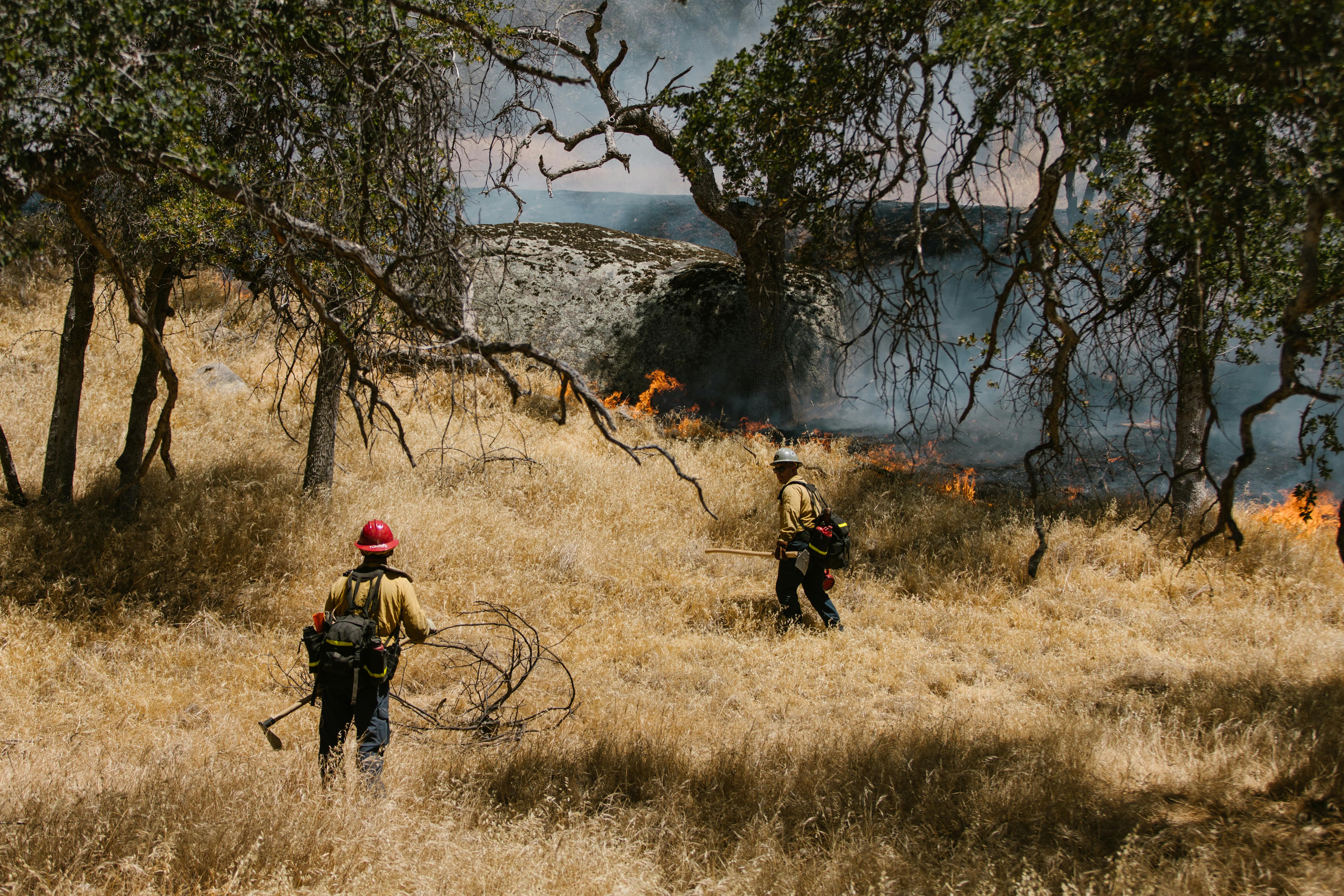
Firefighter Fitness for a Long Career: Train to Last
Firefighter Fitness for a Long Career: How to Train to Last 20–30 Years
Firefighter fitness for a long career is a different problem than getting in shape for the academy. A fire career can span 20 to 30 years, and over that time the job's physical toll, heavy loads, high heat, broken sleep, and sudden maximal efforts, compounds relentlessly. The firefighters who stay strong, capable, and injury-free into their forties and fifties aren't the most genetically gifted. They're the ones who train for durability across decades instead of chasing short-term fitness around the next test. This guide breaks down exactly how to do that, and how structured tactical fitness programs for first responders apply the same durability-first logic across an entire career.
That toll is well-documented, not anecdotal. Repeated exposure to heavy loads, high heat, poor sleep, and unpredictable calls wears down even the fittest individuals, and firefighting places among the highest cardiovascular and musculoskeletal demands of any occupation. The question isn't whether the job takes a physical cut from you each year. It's whether your training is building capacity faster than the job is spending it.
Many firefighters start their careers in strong physical condition. But without the right training approach, that performance often declines over time. Injuries build up. Conditioning drops. Recovery becomes harder. By mid-career, many firefighters are simply trying to “get through” shifts instead of performing at a high level. Long-term performance longevity is about changing that trajectory. It means building a system that keeps firefighters strong, capable, and resilient for decades, not just for the academy or early career years. Most firefighters who reach that point are not short on effort, they are short on structure, which is the exact gap that tactical athlete coaching support exists to close.
The Reality of a Long Fire Service Career
Firefighters face unique long-term stressors:
Repeated load carriage
Stair climbs under gear
Heat exposure
Shift work and disrupted sleep
High psychological stress
Sudden bursts of intense activity
Over time, these factors contribute to:
Joint degeneration
Chronic fatigue
Cardiovascular strain
Reduced work capacity
Increased injury risk
Research consistently shows that firefighting places high physiological demands on the cardiovascular and musculoskeletal systems, especially when performed in full protective equipment. In addition, long-term exposure to shift work and sleep disruption is associated with increased health risks and reduced recovery capacity. These aren't abstract risks.
Cardiac events are the single largest killer in the fire service: Kales et al. (2007) found that heart disease accounts for roughly 45% of all on-duty firefighter deaths, and the danger spikes during high-exertion fireground work. The training takeaway is blunt. A firefighter's cardiovascular and structural reserve isn't a vanity metric, it's survival capacity. Building and defending that reserve across a career is the entire point of training for longevity, not just passing the next annual evaluation. Without a structured approach to training and recovery, these stressors compound year after year. Choosing that structure matters, and firefighters weighing programming options often start by seeing tactical training programs compared against the demands of a full fire career rather than a single selection event.
Why Short-Term Fitness Approaches Fail
Many firefighters train in cycles:
Get in shape for the academy or a test
Maintain some training for a few years
Reduce training as injuries or fatigue accumulate
This leads to a slow decline in capacity. The pattern is familiar to anyone who's spent a decade on the job. Motivation runs hot before a test or a new assignment, then training quietly slides once the deadline passes. The problem isn't discipline, it's structure. Fitness built in a sprint decays in a sprint. When training only spikes around evaluations, the body never accumulates the durable adaptations, tendon resilience, aerobic depth, movement quality, that take years to build which is precisely the problem the long-term athlete development model was designed to solve.
Common problems with short-term approaches include:
Training only for annual fitness tests
Focusing on high-intensity workouts year-round
Ignoring aerobic development
Lack of structured progression
No long-term injury prevention strategy
Over time, this approach reduces durability and increases the likelihood of chronic injuries.
The Key to Longevity: Capacity Over Time
Long-term performance is built on one principle:
Your career durability depends on the gap between your capacity and the job’s demands.
If job demands constantly exceed your physical capacity:
Injury risk rises
Fatigue accumulates
Performance declines
If your capacity stays well above job demands:
Work feels easier
Recovery improves
Injury risk decreases
Career longevity increases
The goal is to raise and maintain capacity across decades, not just months. Think of it as a margin, not a number. Every fireground task, dragging hose, forcing a door, carrying a victim down stairs in full PPE, draws against your physical reserve. When your trained capacity sits far above what the job demands, those tasks cost you a smaller fraction of your total, you recover faster, and you finish the shift with something left. When capacity erodes toward the demand line, the same call empties the tank and the injury-protecting margin disappears.
Core Physical Qualities for Career Longevity
For a firefighter, the qualities that protect a long career aren't separate hobbies competing for gym time, they're one integrated system, and neglecting any one of them caps the others. Raw strength without aerobic capacity leaves you strong but gassed; aerobic fitness without durability leaves you conditioned but injury-prone. A longevity-focused program trains all four in proportion, shifting the emphasis the way aging tactical athletes should, more durability and aerobic maintenance, smarter strength work, rather than chasing whichever quality is most run to train this month.
1) Aerobic Capacity
Aerobic fitness:
Improves recovery between calls
Reduces cardiovascular strain
Supports long shifts
Helps manage fatigue
Higher aerobic fitness has been associated with lower injury risk and better performance in tactical populations. Aerobic fitness is the most undervalued quality in the fire service, and the most directly tied to survival. A deep aerobic base lowers the heart-rate cost of any given task, so the same stair climb or hose advance leaves you closer to baseline. That matters because cardiac strain on the fireground is where firefighters get hurt and killed. Practically, it also means faster recovery between calls during a busy shift and a slower drift toward chronic fatigue across a long career.
2) Strength
Strength supports:
Load carriage
Equipment handling
Victim drags
Joint stability
Injury prevention
Stronger muscles absorb more force and reduce stress on joints. Strength is your insurance policy against the awkward, unplanned loads the job throws at you. Victim drags, forcible entry, and advancing charged lines rarely happen in clean positions, and a stronger firefighter handles them with more margin and less joint stress. The goal isn't a maximal bench number, it's enough trained strength that real-world demands sit well within your capacity. Maintained across a career, that strength reserve is also what slows the muscle and bone loss that otherwise accelerates with age.
3) Strength Endurance
Fireground tasks often involve:
Repeated lifts
Sustained carries
Long stair climbs
Continuous tool work
Strength endurance allows firefighters to maintain performance over time. Most fireground work isn't a single max effort, it's the same hard task repeated until the job is done. Throwing ladders, advancing line, and overhauling a structure all reward the ability to produce force again and again without falling apart. Strength endurance bridges raw strength and aerobic conditioning, and it's the quality that most often separates a firefighter who's still effective forty minutes into an incident from one who's gassed. Train it deliberately with higher-rep, moderate-load work, not as an afterthought.
4) Durability and Joint Resilience
Durability training focuses on:
Tendon and ligament strength
Joint stability
Movement quality
Workload tolerance
This is critical for preventing:
Knee pain
Lower back issues
Shoulder injuries
Overuse problems
Durability is the quietest of the four qualities and the one that decides whether you finish your career on your terms. Tendons, ligaments, and connective tissue adapt far more slowly than muscle, which is why firefighters who add load too fast end up with the knees, backs, and shoulders that define a worn-down veteran. Training durability means deliberately building tissue tolerance, owning the ranges of motion the job demands, and treating workload management as a skill, and firefighter durability training breaks down how those tissue qualities are built sessions by session.
Long-Term Training Principles for a Full Fire Career
To support a multi-decade career, training should follow several core principles.
1) Train Year-Round, Not in Cycles
Avoid extreme “on-off” training patterns.
Instead:
Maintain consistent weekly training
Adjust intensity when needed
Keep a steady base of strength and conditioning
Consistency over years matters more than short bursts of intense training. The firefighters who last are rarely the ones who train hardest in any single month, they're the ones who never fully stop. A modest, consistent week, sustained for years, compounds into a level of durability no six-week pre-test push can replicate. Year-round training also keeps you out of the most dangerous cycle in the fire service: detraining hard, then throwing yourself back into intense work and getting hurt. Steady beats heroic when the timeline is measured in decades.
2) Build a Strong Aerobic Base
Aerobic conditioning should be a permanent part of training.
Recommended approach:
2–4 aerobic sessions per week
Mostly low-to-moderate intensity
Occasional higher-intensity intervals
This improves recovery and long-term health. Treat aerobic work as non-negotiable maintenance, the way you'd treat checking your SCBA. The bulk of it should be low enough in intensity that you can hold a conversation, which builds the cardiovascular machinery without adding meaningful fatigue or injury risk. A smaller dose of harder intervals sharpens the top end. For a firefighter, this isn't about running times, it's about lowering the cardiac cost of the job, the exact strain the research links to on-duty cardiac events.
3) Lift Weights for Life
Strength training should continue throughout a firefighter’s career.
Focus on:
Compound movements
Moderate loads
Controlled technique
Joint-friendly variations when needed
Strength helps preserve muscle mass, joint health, and functional capacity with age. Strength training shouldn't end when the academy does, it should evolve. The compound lifts that build capacity in your twenties still work in your forties and fifties, often with adjusted loads, tempos, and ranges that respect older joints. The mistake isn't lifting heavy as you age, it's quitting. Resistance training is one of the few interventions shown to slow age-related loss of muscle and bone, and for a firefighter that translates directly into staying operationally useful deep into a career.
4) Manage Training Load
Avoid sudden spikes in:
Volume
Intensity
Load carriage
Stair work
Gradual progression helps:
Reduce injury risk
Improve adaptation
Maintain consistency over time
Most training injuries aren't caused by hard work, they're caused by sudden change. A spike in volume, intensity, or load carriage after a quiet stretch is what tips tissue past its tolerance. The fix is progression you can barely feel, and managing training density for firefighters is how you make small, deliberate increases that let tendons and joints adapt alongside muscle. It's the same logic that governs the fireground, the firefighters who get hurt are usually the ones whose recent training didn't prepare their bodies for the demand they just met.
Common Mistakes That Shorten Careers
None of these mistakes feel like mistakes in the moment, which is exactly why they shorten careers. Each one is a reasonable short-term decision, skip the boring aerobic work, push through the nagging shoulder, train hard only when a test looms, that quietly erodes the capacity margin over years. Recognizing them early is most of the battle. The firefighters who stay capable into their fifties are usually just the ones who stopped making these specific trades sooner.
Training Only for Tests
This creates:
Inconsistent fitness
Periods of deconditioning
Increased injury risk
Ignoring Aerobic Fitness
Without a strong aerobic base:
Fatigue accumulates quickly
Recovery suffers
Cardiovascular strain increases
Pushing Through Chronic Pain
Ignoring pain often leads to:
Compensations
More severe injuries
Longer recovery periods
Early load management is key.
Practical Takeaways
To improve long-term performance longevity:
Maintain consistent year-round training
Build a strong aerobic foundation
Strength train regularly
Develop strength endurance
Focus on durability and joint health
Progress training loads gradually
None of this requires a complicated program or hours in the gym. It requires the discipline to keep showing up when there's no test on the calendar and no one watching. A firefighter who trains a few quality sessions a week, year after year, while managing load intelligently, will out-last a more talented colleague who trains in bursts. Longevity is built in unglamorous, repeatable weeks, the same weeks that quietly add up to a full, capable career.
Firefighting is a long career, not a short event.
The goal isn’t just to be fit today, it’s to remain capable, strong, and resilient for the next 20–30 years.
References
Taylor, N. A. S., et al. (2012). Physiological strain of firefighting protective clothing.
Kecklund, G., & Axelsson, J. (2016). Health consequences of shift work and insufficient sleep.
Kales, S. N., et al. (2007). Emergency duties and deaths from heart disease among firefighters in the United States.
Poston, W. S. C., et al. (2011). The prevalence of overweight, obesity, and substandard fitness in a population-based firefighter cohort.


