
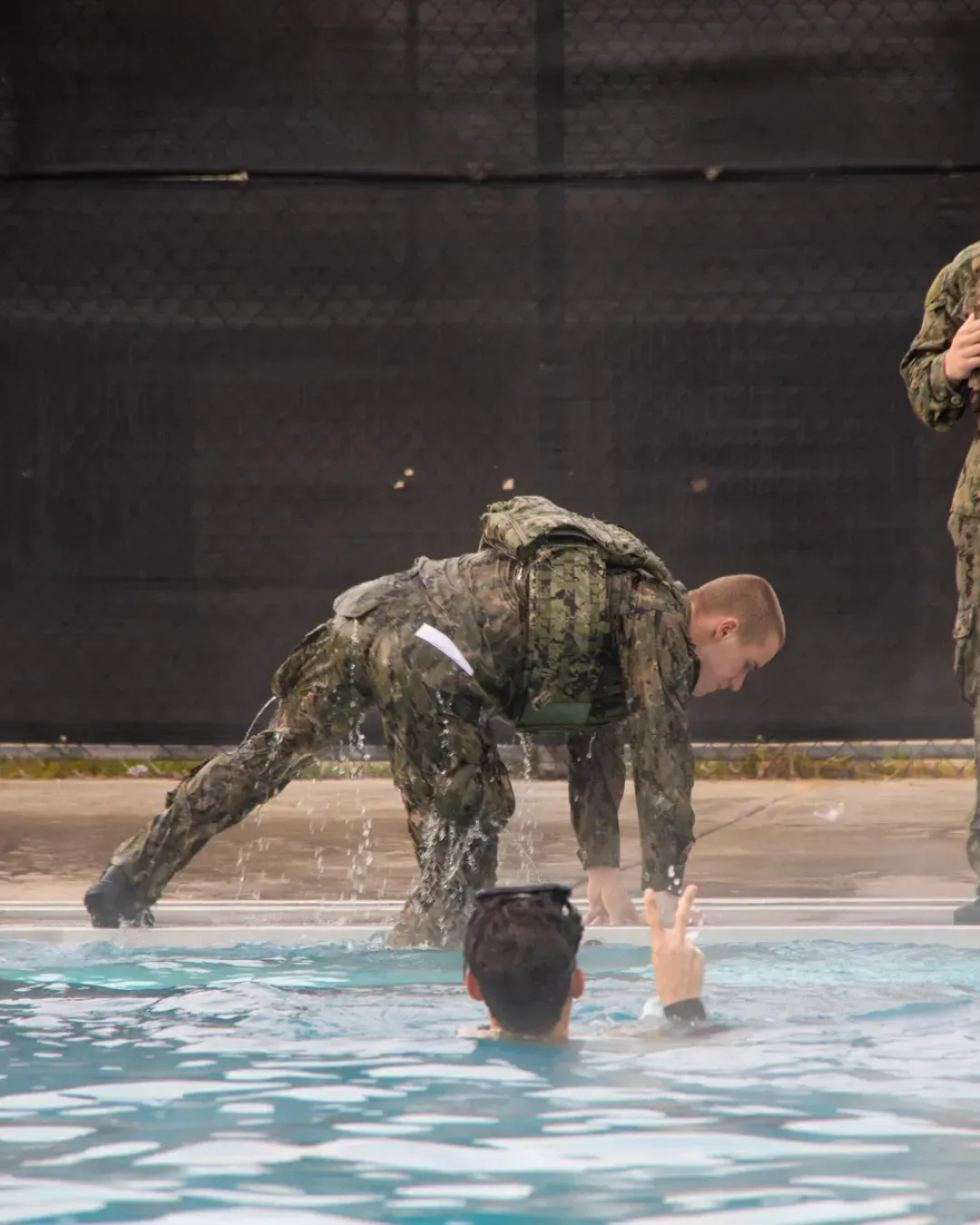
Performance Longevity for Tactical Athletes: 6 Key Drivers
Why a Long Tactical Career Demands a Different Approach
Most tactical athletes train for performance. Very few train for performance longevity, the ability to stay strong, durable, and operationally ready across an entire career instead of a few peak years. Early on, the formula is simple: get stronger, get faster, build conditioning. It works, until it doesn't. Over a long tactical career, fatigue compounds, injuries stack, and recovery slows, and performance starts to slide, not because you stopped training hard, but because you never adjusted how you train. For the aging tactical athlete, longevity isn't luck. It's built, and it's built on tactical fitness programs designed to be sustained rather than survived. This guide breaks down what drives it and how to train for it.
Because over time:
Fatigue accumulates
Injuries stack
Recovery changes
And eventually:
Performance starts to decline
Not because you stopped training hard. But because you never adjusted how you train. Performance longevity is not accidental. It is built.
This guide breaks down:
What performance longevity actually is
Why most tactical athletes lose it
The key drivers of long-term performance
How to train for decades, not just short-term peaks
What Is Performance Longevity?
Performance Longevity Model
For an aging tactical athlete, performance longevity is less about chasing a new personal best and more about defending the capability you've already built. It's the ability to repeat hard, operationally relevant work, rucks, sprints, lifts, long days, year after year without the wheels coming off. That means sustained physical capability, the consistency to train without constant interruptions, a low injury frequency, and recovery that actually keeps pace with the workload. Body composition sites underneath all of it, because carrying less unnecessary mass makes every ruck, sprint and long day cheaper, which is why choosing between tactical athlete fat loss programs matters more with age, not less.
The athletes who hold performance into their late 30s and 40s rarely train the hardest. They train the most intelligently, and they do it for the longest. Performance longevity is the ability to:
Maintain high levels of performance, durability, and readiness over an extended career
What It Includes
Sustained physical capability
Consistent training ability
Low injury frequency
Effective recovery
What It Is Not
It is not:
Avoiding hard training
Training less
Playing it safe
Key Insight
Performance longevity is:
The result of intelligent, sustainable training over time
Why Most Tactical Athletes Lose Longevity
Longevity rarely collapses from one bad decision. It erodes from patterns repeated for years. The most common pattern is chronic overreach: training load that climbs faster than the body's capacity to absorb it. Gabbett's (2016) work on the acute:chronic workload ratio is blunt about this, it's the sharp spikes in workload, not high workload itself, that drive the largest jumps in injury risk. Stack that on poor recovery, no real load structure, durability that's been ignored in favor of output, and a program that never changed as the athlete aged, and the result is predictable. Capability bleeds out one unmanaged week at a time.
1. Overemphasis on Intensity
Constant high-intensity work leads to:
Fatigue accumulation
Increased injury risk
2. Poor Recovery Management
Ignoring recovery leads to:
Chronic fatigue
Reduced adaptation
3. No Load Management
Unstructured training causes:
Spikes in stress
Breakdown over time
Structure is the fix, and the format you train from decides whether that structure survives contact with a real schedule, which is the practical question behind training app versus PDF programs.
4. Ignoring Durability
Focusing only on performance:
Leaves the body vulnerable
5. Not Adapting With Age
Using the same approach:
Stops working
Key Insight
Longevity is lost when:
Training exceeds your ability to recover and sustain it
How Recovery Changes Over a Tactical Career
Recovery is what converts hard training into adaptation, it's the bridge between the work you do and the capability you keep. The catch for older tactical athletes is that this bridge gets narrower with age. The same session that you bounced back from in 48 hours at 25 might need 72 or more at 40, and the cost of ignoring that gap compounds. Sleep, nutrition, stress, and training structure are the four levers that widen the bridge again. Recovery capacity, not training enthusiasm, sets the real ceiling on how often you can train and how hard, which is why the recovery needs of aging tactical athletes deserve as much planning as the training itself.
Recovery is the process of:
Components of Recovery
Sleep
Nutrition
Stress management
Training structure
Aging Impact
With age:
Recovery slows
Fatigue accumulates faster
Role in Longevity
Recovery determines:
How often you can train
How well you adapt
How long you can sustain performance
Key Insight
Recovery is not optional.
It is:
The foundation of performance longevity
Durability-Performance Tradeoff
Every training decision sits somewhere on a line between maximizing output and maximizing the ability to keep producing it. Push everything toward peak performance and you buy higher output at the cost of more fatigue and more injury exposure. Bias toward durability and you trade a sliver of peak ceiling for the ability to show up, healthy, for years. Younger athletes can live near the performance end and absorb the cost. The aging tactical athlete can't, the math changes, and the smart money shifts toward durability. The goal isn't to abandon performance. It's to protect just enough of it, for as long as possible. There is always a balance between:
There is always a balance between:
Maximizing performance
Maintaining durability
High Performance Focus
Pros:
Peak output
Cons:
Increased fatigue
Higher injury risk
High Durability Focus
Pros:
Sustainability
Reduced injury risk
Cons:
Slightly lower peak output
Aging Consideration
As athletes age:
The balance shifts toward durability
Key Insight
Longevity requires:
Prioritizing durability without sacrificing necessary performance
Managing Injury Risk for the Long Haul
Injury risk is one of the biggest threats to longevity, and over a long career the slow, repetitive injuries do more damage than the dramatic ones. Four factors drive most of it: training load, accumulated fatigue, movement quality, and recovery. The practical lever among them is load progression. Gabbett's (2016) acute:chronic workload research is the working model here, keep recent workload roughly in proportion to what the body is already conditioned to, and you avoid the spikes that injure people. Progress gradually, hold movement quality under fatigue, and protect recovery, and you remove most of the unnecessary breakdown that ends careers early, which is the entire premise of injury risk management in aging athletes.
Key Factors
1. Training Load
Too much or too fast:
Increases injury risk
2. Fatigue
Fatigue reduces:
Movement quality
Recovery
3. Movement Quality
Poor mechanics increase:
Stress on tissues
4. Recovery
Insufficient recovery:
Prevents adaptation
Managing Risk
To reduce injury risk:
Progress training gradually
Manage fatigue
Prioritize recovery
Maintain movement quality
Key Insight
Longevity depends on:
Minimizing unnecessary breakdown
The Core Drivers of Performance Longevity
No single quality carries longevity, it's the interaction of several, managed together. Six drivers do most of the work: consistent training, load management, recovery optimization, durability development, aerobic capacity, and strength maintenance. The aerobic-and-strength pairing is where aging athletes most often go wrong, because the two can interfere when both are pushed hard at once, the effect Hickson (1980) first documented, where heavy concurrent endurance work blunts strength gains. The answer isn't to drop one. It's to keep both, but stop trying to maximize them simultaneously. Hold a strength floor, build the aerobic capacity aging tactical athletes rely on to recover between hard efforts, and let the rest of the system breathe.
1. Consistent Training
Consistency builds:
Adaptation
Resilience
2. Load Management
Managing load prevents:
Overtraining
Injury
3. Recovery Optimization
Recovery supports:
Adaptation
Performance
4. Durability Development
Durability allows:
Repeated stress without breakdown
5. Aerobic Capacity
Aerobic fitness improves:
Recovery
Fatigue resistance
6. Strength Maintenance
Strength supports:
Movement efficiency
Injury resistance
Key Insight
Longevity is multi-factorial.
No single element drives it alone.
Training for Longevity
Translating these drivers into a weekly plan comes down to one principle: train within what you can recover from, then repeat it for years. Consistency beats heroics, and a moderate week you can repeat fifty times a year outperforms a brutal week you can survive five, which is the heart of consistency versus intensity as you age. Intensity still matters, but it's a tool, not the default. The polarized model Seiler and Kjerland (2006) described fits the aging tactical athlete well: keep most training easy enough to absorb, reserve genuinely hard work for a small, deliberate slice, and avoid living in the gray middle that costs recovery without driving adaptation. Then keep adjusting as the body changes.
1. Train Within Capacity
Do not exceed:
Your ability to recover
2. Prioritize Consistency
Regular training is more valuable than:
Occasional high effort
3. Use Intensity Strategically
Intensity should:
Drive adaptation
Not dominate training
4. Monitor Fatigue
Adjust training when:
Fatigue accumulates
5. Align Training With Life
Training must reflect:
Work demands
Sleep
Stress
6. Adapt Over Time
Your training approach should:
Evolve with age
Key Insight
Longevity is built through:
Sustainable training practices
Tactical Application
None of this is academic. Tactical careers don't ask for one peak performance, they demand repeated capability under fatigue, sometimes for twenty years, often on no notice. An operator who can deadlift heavy at 25 but is broken and deconditioned by 38 didn't get more capable over that span; the job got the early years and nothing after. Performance longevity is what keeps a tactical athlete operationally useful across the back half of a career, when experience is highest and the body is least forgiving. Lose it, and performance declines, injury risk climbs, and the career shortens.
Tactical careers demand:
Repeated performance
Long-term readiness
Resilience under stress
Performance longevity allows:
Continued operational capability
Reduced injury risk
Sustained career performance
Without it:
Performance declines
Injury risk increases
Career length shortens
Common Mistakes
The mistakes that cost athletes their longevity are rarely exotic, they're the obvious ones, repeated long enough to do real damage. Chasing short-term peaks while ignoring the long arc, treating recovery as optional, drifting into chronic overtraining, having no plan for managing injury risk, and running the same program at 42 that worked at 22, each one quietly trades future capability for present output. Spotting them is easy. Correcting them is mostly a matter of honesty about what the body is telling you and the discipline to adjust before something breaks rather than after.
1. Training for Short-Term Peaks Only
Leads to:
Long-term decline
2. Ignoring Recovery
Reduces:
Adaptation
readiness
3. Overtraining
Causes:
Fatigue
injury
4. No Injury Management Strategy
Increases:
Breakdown
5. Not Adjusting With Age
Old strategies stop working.
Final Takeaway
Performance longevity isn't about doing less, it's about doing the right things, consistently, for far longer than most athletes are willing to. As you age, recovery becomes the constraint, load management becomes the skill, and durability becomes the priority that protects everything else. Train consistently, manage load, protect recovery, and build durability, and you can hold performance, extend your career, and stay operational for decades. The point was never to be your strongest today. It's to still be capable, healthy, and in the fight years from now, long after the athletes who only chased peaks have broken down.
As you age:
Recovery becomes critical
Load management becomes essential
Durability becomes the priority
If you:
Train consistently
Manage load
Prioritize recovery
Develop durability
You can:
Maintain performance
Extend your career
Stay operational for decades
Because the goal is not just to perform today.
The goal is to:
Keep performing for the long term
FAQ Section
What is performance longevity?
The ability to maintain high levels of performance, durability, and readiness over a long career.
Why do tactical athletes lose longevity?
Due to excessive intensity, poor recovery, lack of load management, and failure to adapt training with age.
How important is recovery for longevity?
It is critical. Without recovery, performance and durability decline over time.
Can you still improve as you age?
Yes. With proper training, recovery, and load management, performance can be maintained or improved.
What is the biggest threat to longevity?
Injury and chronic fatigue from poorly managed training.
How do you train for long-term performance?
By prioritizing consistency, managing load, optimizing recovery, and developing durability.
References
Gabbett, T. J. (2016). The training–injury prevention paradox: should athletes be training smarter and harder? British Journal of Sports Medicine, 50(5), 273–280.
Hickson, R. C. (1980). Interference of strength development by simultaneously training for strength and endurance. European Journal of Applied Physiology and Occupational Physiology, 45(2–3), 255–263.
Seiler, K. S., & Kjerland, G. Ø. (2006). Quantifying training intensity distribution in elite endurance athletes: is there evidence for an "optimal" distribution? Scandinavian Journal of Medicine & Science in Sports, 16(1), 49–56.


