
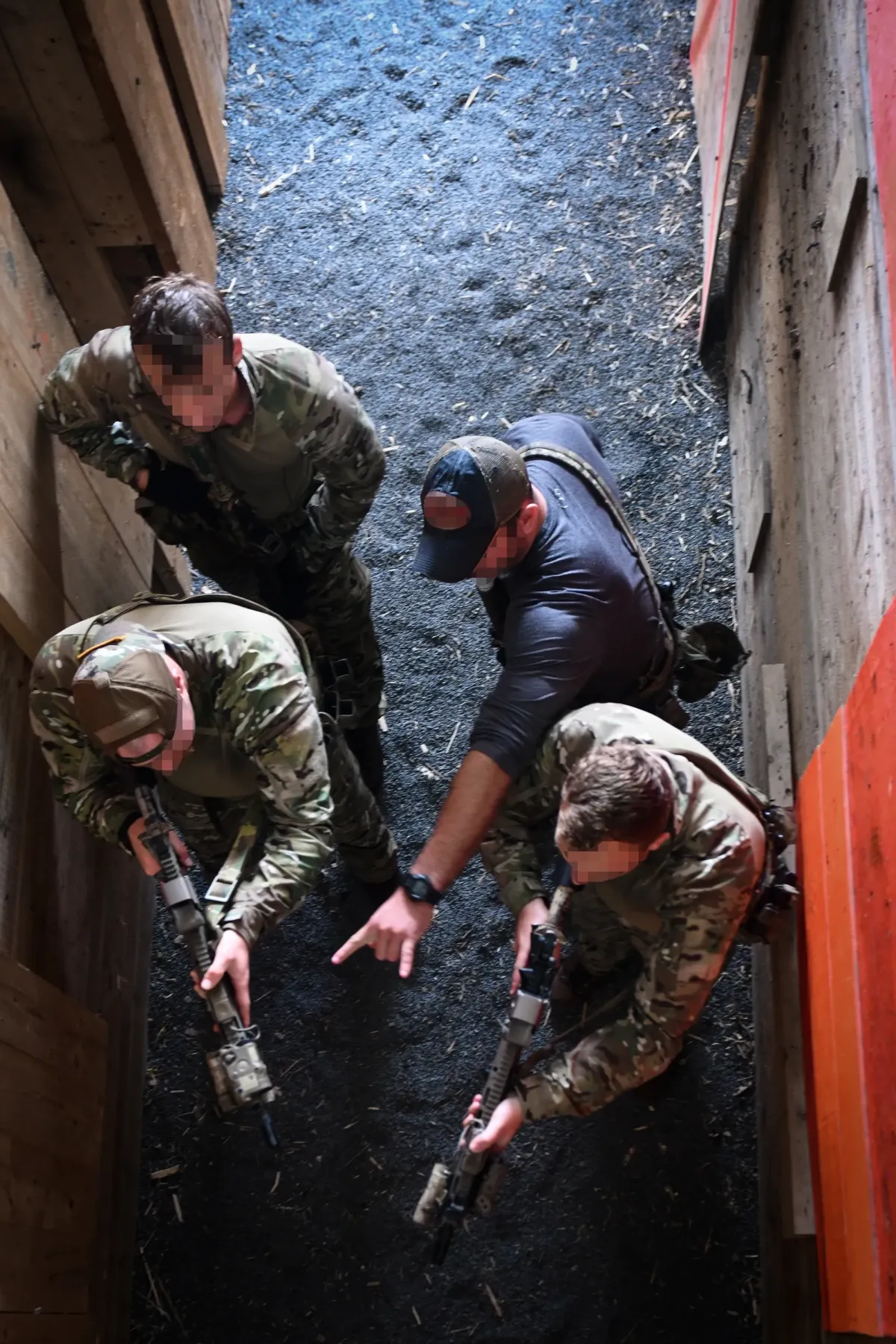
Consistency vs Intensity for Aging Tactical Athletes
Why Consistency Beats Intensity for Long-Term Tactical Performance
For aging tactical athletes, consistency vs intensity stops being a philosophy debate and becomes the deciding factor in long-term performance. It is also the principle that separates well-built military tactical fitness training programs from the do-more approach most operators default to.
Most operators are wired the same way:
Push harder
Train harder
Do more
That works early on.
But over time:
Intensity becomes a liability if it is not controlled
As you age, the equation changes.
The question is no longer:
How hard can you train?
It becomes:
How consistently can you train and still recover?
This is where most athletes fall apart. They chase intensity. They lose consistency and performance declines. You see the same divide when you compare a dedicated app versus social media workouts, where one is built to progress and recover while the other just piles on fatigue. And if you would rather have that structure handed to you, a tactical athlete coaching buying guide can help you choose the right coach for your stage.
This guide breaks down:
The difference between consistency and intensity
Why consistency becomes more important with age
How to balance both effectively
How to train for long-term performance
Consistency vs Intensity in Training
Consistency and intensity aren't enemies, but they draw from the same finite account. Every hard session you bank costs recovery you could have spent showing up again two days later. Early in a career, that account refills fast enough that you rarely feel the trade. With age, the refill slows, and the cost of each maximal effort shows up as a missed session, not just a sore morning. Understanding how the two compete, the heart of consistency versus intensity in training, is the foundation for everything that follows, because the goal isn't to pick one. It's to spend intensity in a way that protects consistency.
These are not opposing ideas. But they do compete.
Intensity
Intensity is:
High effort
High output
High stress
Examples:
Hard intervals
Max effort lifts
High-output conditioning
Consistency
Consistency is:
Frequency of training
Ability to sustain training over time
Reliability of execution
The Tradeoff
The tradeoff is mechanical, not motivational. A maximal-effort session imposes a recovery debt measured in days, and until that debt is paid, the next quality session either gets skipped or gets executed at a fraction of its intended quality. Stack two or three hard days in a week and the math turns against you: you've raised your average daily stress but lowered the number of productive sessions you actually complete. That's the quiet way intensity erodes consistency, not through one catastrophic injury, but through a slow leak of missed and degraded training days that never get counted.
High intensity increases:
Fatigue
Recovery demands
Which can reduce:
Training frequency
Overall consistency
Key Insight
Intensity drives adaptation.
Consistency determines how much adaptation you accumulate.
The Adaptive Capacity Ceiling
Think of adaptive capacity as the ceiling on how much training stress your body can absorb and turn into fitness within a given window. Below the ceiling, stress becomes adaptation: you get stronger, faster, more durable. Above it, the same stress becomes damage you carry into the next session. The ceiling isn't fixed, sleep, nutrition, and training history raise or lower it week to week, but its long-term trend bends downward with age. The practical consequence is blunt: a program that sat comfortably under your ceiling at 25 can quietly push past it at 45 without a single number on the page changing. Every athlete has a limit to how much stress they can adapt to.
What It Represents
Your adaptive capacity ceiling is:
The maximum amount of training stress you can recover from and benefit from
Aging Impact
As you age:
This ceiling lowers
What Happens If You Exceed It
Fatigue accumulates
Recovery is incomplete
Performance declines
Key Insight
More is not always better.
Better is what you can consistently recover from
Training Load Friction Model
Training never lands on a blank slate. It lands on top of sleep debt, a 12-hour shift, a deployment workup, or a newborn at home, and every one of those raises the friction your body fights to recover. This is where load management stops being abstract. Research on the acute:chronic workload ratio found that athletes who spike their training load rapidly relative to what they're conditioned for carry sharply higher injury risk than those who build load gradually (Gabbett, 2016). For the aging operator, friction is already elevated by default, so the room for a reckless spike is smaller. The same hard week that was survivable a decade ago now sits closer to the edge. Training stress is not applied in isolation.
It interacts with:
Sleep
Work stress
Life demands
Friction Explained
Friction is:
The resistance to recovery and adaptation
Aging Impact
With age:
Friction increases
This means:
The same training load creates more fatigue
Result
High intensity + high friction =
Reduced consistency
Increased injury risk
Key Insight
You must manage:
Training load
External stress
Not just intensity.
How Aging Affects Training Adaptation
None of this means adaptation stops, it means the terms change. The body still responds to a well-aimed stimulus at 50. It simply demands more recovery to convert that stimulus into fitness, which is why the recovery needs of aging athletes look nothing like a 25 year old's, and it punishes mistakes that a younger athlete would shrug off. Four shifts drive the change, and they compound rather than add: recovery slows, tolerance to repeated high intensity narrows, outside stress hits harder, and the margin for a bad week shrinks. Read together, they explain why the training identity that built you can quietly start dismantling you if it goes unrevised. The ability to adapt to training changes over time.
Key Changes
1. Slower Recovery
More time needed between sessions
2. Reduced Tolerance to Intensity
High-intensity work creates more fatigue
3. Greater Impact of Stress
External stress has a larger effect
4. Lower Margin for Error
Poor decisions have bigger consequences
Key Insight
As you age:
You cannot rely on intensity alone to drive progress
Performance Longevity Model
Tactical athlete longevity training isn't a softer version of hard training, it's a different optimization target. Instead of maximizing this month's peak, you're maximizing the number of productive training months you string together over years. Under that lens, the metric that matters most isn't your best session; it's your worst week, and how quickly you bounce back from it. Consistency is what compounds, recovery is what protects the compounding, and intelligent load management is what keeps both intact when life refuses to cooperate. Peak effort still has a seat at the table, it just stops running the meeting.
Long-term performance depends on:
Consistency
Recovery
Load management
Role of Consistency
Consistency allows:
Continuous adaptation
Sustainable progress
Role of Intensity
Intensity:
Provides stimulus
Must be used strategically
Aging Consideration
With age:
Consistency becomes the primary driver
Key Insight
Longevity is built on:
Sustainable training, not peak effort
Why Consistency Wins With Aging
The case for consistency isn't sentimental, it's arithmetic. An athlete who trains four solid days a week for fifty weeks banks far more total quality work than one who hammers six brutal days, breaks, and limps through three more. Across a year, the steady athlete wins on volume without ever touching the other's peak intensity. Consistency also keeps you on the safe side of the load curve: gradual, repeatable training avoids the sharp spikes most associated with elevated injury risk (Gabbett, 2016), and disciplined injury risk management for aging athletes means fewer forced layoffs, which is itself the largest hidden tax on long-term progress.
1. More Total Training Volume Over Time
Consistent training accumulates:
More work
More adaptation
2. Reduced Injury Risk
Less extreme loading reduces:
Stress spikes
Injury likelihood
3. Better Recovery Alignment
Consistent training:
Matches recovery capacity
4. Sustained Performance
Consistency maintains:
Strength
Conditioning
Readiness
Key Insight
The athlete who trains consistently:
Outperforms the athlete who trains intensely but inconsistently
The Role of Intensity
For all of that, intensity earns its keep when it's rationed. The endurance literature on training intensity distribution is instructive here: elite performers spend the large majority of their training at low intensity and reserve a smaller, deliberate fraction for genuinely hard work, rather than grinding in the moderate middle (Seiler & Kjerland, 2006). That polarized logic transfers cleanly to the aging tactical athlete. A high aerobic floor built from easy volume does the unglamorous work of recovery and durability, while one or two sharply targeted hard sessions a week supply the top-end stimulus you still need, without flooding the week with stress your recovery can no longer absorb. This is not anti-intensity. It is about using it correctly.
When Intensity Is Useful
Driving adaptation
Maintaining top-end performance
Preparing for specific demands
When Intensity Becomes a Problem
Used too frequently
Not supported by recovery
Not aligned with life stress
Guideline
Intensity should be:
Planned
Controlled
Limited
Key Insight
Intensity is a tool.
Not a default.
Practical Training Strategy
1. Build Around Consistency
Aim for:
Regular training frequency
Sustainable workload
2. Use Intensity Strategically
1–2 high-intensity sessions per week
Not daily
3. Prioritize Aerobic Work
Aerobic work is the most underrated longevity tool in a tactical athlete's program because it raises work capacity and accelerates recovery while costing almost nothing in fatigue. A broad base of easy-pace running, rucking, or low-intensity conditioning is what lets you absorb the occasional hard day and still show up two mornings later. This is the same principle the polarized model is built on: make the easy work genuinely easy and frequent, so the hard work can stay hard and rare. For the aging operator, that aerobic base is the difference between a program you can repeat for years and one that breaks you inside a season.
Supports:
Recovery
Durability
4. Adjust Based on Stress
Training should reflect:
Sleep
Workload
Fatigue
5. Monitor Fatigue
Signs of too much intensity:
Persistent soreness
Poor performance
Low motivation
Key Insight
Training should be:
Repeatable, not exhausting
Common Mistakes
1. Chasing Intensity
Leads to:
Burnout
Injury
2. Ignoring Recovery
Reduces:
Adaptation
Readiness
3. Inconsistent Training
Limits:
Progress
4. Not Adjusting With Age
Old strategies stop working.
5. Training Based on Ego
Not based on:
Capacity
Recovery
Tactical Application
For tactical professionals, this stops being theoretical. A soldier, officer, or firefighter doesn't get to peak for one meet and then rest, readiness is a standing requirement, demanded on no notice and often under sleep deprivation, stress, and accumulated fatigue. That makes consistency a job qualification, not a training preference. The operator whose fitness is reliable on an average Tuesday outperforms the one who is occasionally spectacular and frequently broken, because the mission never asks whether today was a good training day. Durability that shows up every shift is worth more than a personal record nobody was around to see.
Tactical athletes must:
Perform consistently
Handle repeated stress
Maintain readiness
Consistency ensures:
Ongoing capability
Reliable performance
Intensity alone:
Does not guarantee readiness
Final Takeaway
The shift from intensity to consistency isn't a retreat, it's an upgrade in how you measure success. You stop chasing the hardest session you can survive and start protecting the longest streak of useful sessions you can sustain. Intensity still has a role, but it becomes a precision tool you reach for deliberately, not a default setting you live in. Manage your load, respect your recovery, and let consistency do the compounding, and you extend the one thing that actually matters: the number of years you stay capable.
As you age:
Intensity becomes more costly
Recovery becomes more important
Consistency becomes the priority
If you:
Train consistently
Use intensity strategically
Manage load and recovery
You can:
Maintain performance
Reduce injury risk
Extend your operational lifespan
Because the goal is not to train the hardest.
The goal is to:
Train in a way that allows you to keep training
FAQ Section
Is intensity bad for older athletes?
No. It just needs to be used strategically and not excessively.
Why is consistency more important than intensity?
Because consistent training leads to greater long-term adaptation and lower injury risk.
How often should older athletes train intensely?
Typically 1–2 times per week, depending on recovery and workload.
Can you still improve with lower intensity?
Yes. Consistent, structured training leads to significant improvements over time.
What is the biggest mistake with aging athletes?
Trying to train the same way they did when they were younger.
How do you balance consistency and intensity?
By prioritizing regular training and using intensity as a controlled tool rather than the main focus.
References
Gabbett, T. J. (2016). The training - injury prevention paradox: should athletes be training smarter and harder? British Journal of Sports Medicine, 50(5), 273–280.
Seiler, S., & Kjerland, G. Ø. (2006). Quantifying training intensity distribution in elite endurance athletes: is there evidence for an "optimal" distribution? Scandinavian Journal of Medicine & Science in Sports, 16(1), 49–56.


