
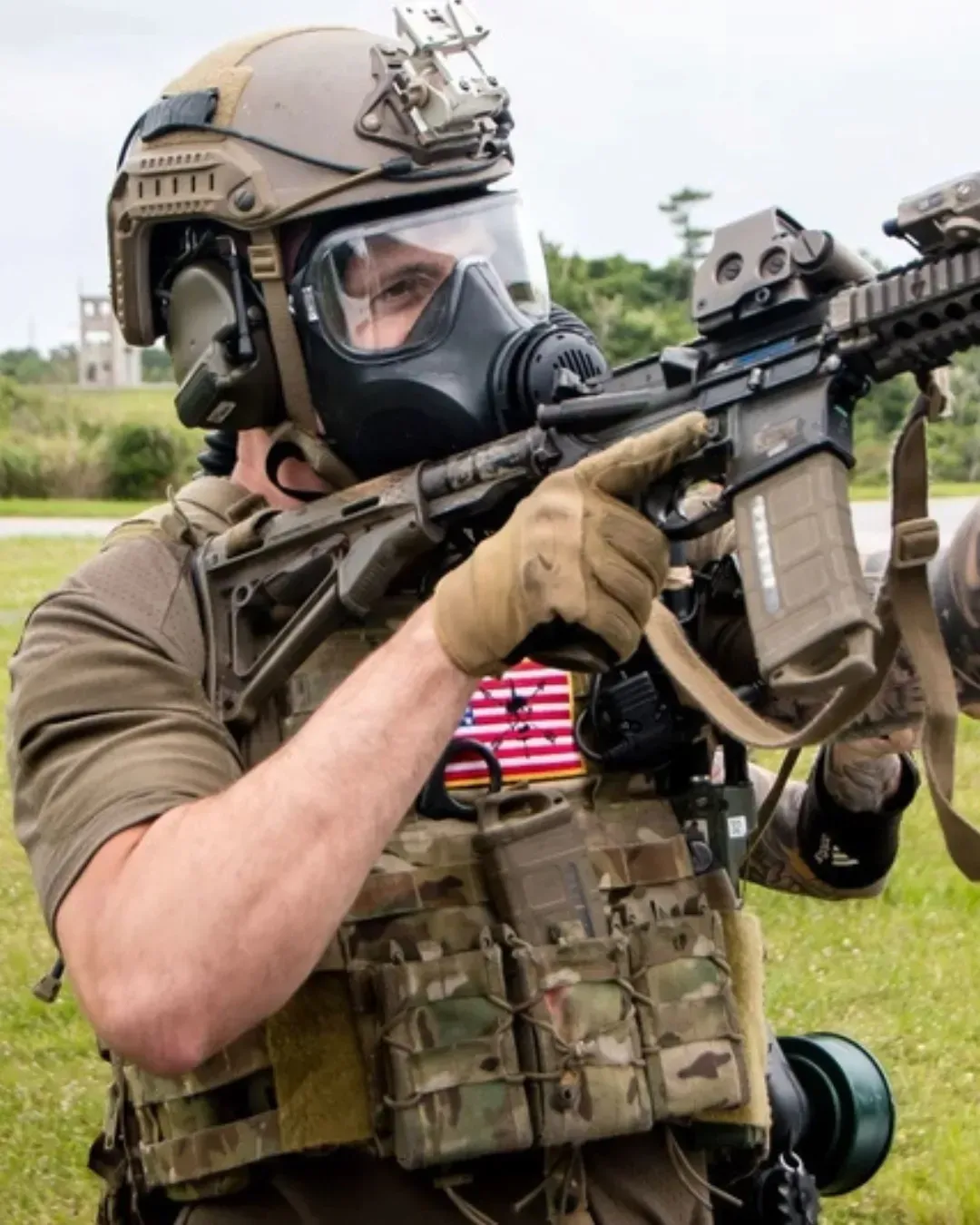
Recovery Needs of Aging Tactical Athletes (Complete Guide)
How Recovery Demands Change as Tactical Athletes Age
For aging tactical athletes, recovery, not strength or conditioning, becomes the true limiter of performance. You can still train hard and still improve well into your forties and beyond. What changes with age is how quickly your body absorbs hard training and adapts to it. Recovery capacity narrows, the margin for error shrinks, and a week of training that once felt routine now carries a higher cost. Managing that shift is what keeps a tactical athlete capable over the long haul. Well-built tactical athlete training programs treat that shift as a design constraint, programming recovery in from the start rather than leaving it to chance.
This is where most athletes get it wrong:
They keep training the same way
They ignore recovery signals
They accumulate fatigue faster than they can adapt
The result:
Performance stagnation
Increased injury risk
Long-term decline
This guide breaks down:
What recovery actually is
How fatigue accumulates
How aging changes recovery needs
How to adjust training to maintain performance over time
Why Recovery Becomes the Limiter With Age
Aging changes the raw materials recovery has to work with. After age 30, the body loses muscle mass at roughly 3 to 8 percent per decade, and that decline accelerates past 60. Strength fades even faster, a quantitative review by Mitchell and colleagues found it is lost two to five times more quickly than mass (Mitchell et al., 2012). For a tactical athlete, that means the same hard session now draws down a smaller, slower-rebuilding reserve. Recovery becomes the limiter not because you stopped working hard, but because the tissue doing the recovering has less margin to give.
Recovery is the process through which your body:
Repairs tissue
Restores energy systems
Rebalances the nervous system
Prepares for the next training stimulus
Recovery Is Not Passive
Recovery is influenced by:
Sleep
Nutrition
Hydration
Stress
Training structure
None of these inputs sits still as you age. Sleep shifts toward lighter stages, the gut becomes less efficient at turning protein into muscle, and the nervous system takes longer to downshift after a hard effort. The same eight hours in bed, the same post-session meal, the same rest day return less than they used to. That is why recovery in your forties and fifties is an active discipline, not a default the body quietly handles on its own.
Key Insight
Recovery is not what happens after training.
It is:
What allows training to work in the first place
Acute vs Chronic Fatigue in the Aging Athlete
Fatigue exists on a spectrum. Every athlete lives somewhere on that spectrum at all times, and the skill is knowing where. Acute fatigue is the productive kind, the price of a stimulus your body will adapt to if you let it. Chronic fatigue is what acute fatigue becomes when recovery never fully catches up, session after session. The danger for older tactical athletes is that the line between the two moves closer with age. What used to be Tuesday's soreness, gone by Thursday, now lingers into the weekend, and the buffer that kept hard weeks sustainable gets thinner.
Acute Fatigue
Short-term
Result of recent training
Necessary for adaptation
Examples:
After a hard run
After a strength session
After a long ruck
Chronic Fatigue
Accumulated over time
Result of insufficient recovery
Signs:
Persistent soreness
Decreased performance
Poor sleep
Increased effort for the same work
Aging Consideration
As you age:
Acute fatigue becomes harder to clear
Chronic fatigue accumulates faster
The mechanism is straightforward. Clearing acute fatigue depends on the same systems that slow with age, circulation, hormonal recovery signaling, and the deep sleep that drives tissue repair. When each runs a little slower, fatigue a younger athlete would flush out overnight carries into the next session. Stack a few of those incompletely-recovered sessions and acute quietly becomes chronic. This is why monitoring trends matters more than reacting to any single rough day.
Key Insight
The goal is not to eliminate fatigue.
The goal is to:
Prevent acute fatigue from becoming chronic
How Recovery Capacity Shifts With Age
Adaptation still occurs with age. But the process changes. The capacity to adapt does not disappear, plenty of athletes hit lifetime strength and engine numbers in their forties. What narrows is the window in which adaptation happens cleanly. The dose of training that drives progress and the dose that drives breakdown now sit closer together than they did at 25, so precision replaces brute volume as the deciding factor. That precision is exactly where honestly weighing app-based versus PDF programs stops being a cosmetic choice for an aging athlete. The four shifts below are not reasons to back off. They are the variables you now have to manage deliberately instead of getting away with ignoring.
Key Changes
1. Slower Recovery Between Sessions
More time needed between hard efforts
Greater fatigue accumulation
2. Reduced Tolerance to High Training Load
Lower margin for error
Increased sensitivity to volume and intensity
3. Increased Importance of Recovery Inputs
Sleep quality becomes more critical
Nutrition becomes more impactful
4. Greater Impact of Life Stress
External stress has a larger effect on performance
Key Insight
You do not lose the ability to improve.
You lose the ability to:
Recover from poor decisions
Total Load: Why Life Stress Costs More With Age
Recovery is not just about training. It is about total stress.
Sources of Friction
Sleep deprivation
Work stress
Family stress
Nutrition gaps
Environmental conditions
Picture two athletes running the identical program. One is twenty-four, single, sleeping nine hours. The other is forty-five, working rotating shifts, raising kids, and carrying a decade of accumulated mileage. The training stress on paper is the same; the total load is not close. For the patrol officer coming off a string of night shifts, the firefighter mid-tour on 24-hour rotations, or the senior NCO running a unit, life stress is not background noise, it is a direct tax on the recovery budget. For anyone spinning up for a rotation, that same tax is why pre-deployment readiness training has to be built around recovery, not just added volume. With age that tax compounds, and a program that ignores it will break the athlete it was supposed to build.
Impact on Recovery
As friction increases:
Recovery capacity decreases
The same training becomes more stressful
Aging Consideration
With age:
Friction has a larger impact
Recovery capacity is more sensitive
Key Insight
Recovery is not just about reducing training. It is about managing total life stress.
Where Recovery Fits in Long-Term Performance
Long-term performance depends on balancing:
Training load
Recovery
Durability
These three are not independent dials. Training load creates the demand, durability sets how much load the body can absorb without damage, and recovery is the bridge that converts one into the other. Push load while recovery lags and durability erodes, small niggles become real injuries, and the athlete spends more time rebuilding than progressing. Over a career, the athletes who stay capable are rarely the ones who trained hardest in any given month. They are the ones who protected recovery well enough to keep training consistently for years.
Role of Recovery
Recovery:
Enables adaptation
Reduces fatigue accumulation
Supports consistent training
Aging Consideration
As recovery capacity declines:
Recovery becomes the primary limiter of performance
Key Insight
Longevity is not built through more training.
It is built through:
Better recovery and smarter load management
Signs Your Recovery Is Not Sufficient
Physical Signs
Insufficient recovery rarely announces itself with a single dramatic failure. It leaks out across three channels at once, physical, performance, and psychological, and the early signs are easy to rationalize away as a bad week or a busy stretch at work. On the physical side the tell is often a slow creep in minor tweaks and strains, which is exactly why injury risk management belongs in the same conversation as recovery for older athletes. Reading them honestly is the difference between adjusting in time and digging a hole. Treat the signals below as a dashboard, not a checklist: one flag is noise, but several showing up together is the body telling you the recovery debt is real.
Persistent soreness
Increased injury frequency
Slower performance
Performance Signs
Declining output
Increased effort for the same work
Reduced consistency
Psychological Signs
Low motivation
Increased irritability
Mental fatigue
Key Insight
Recovery issues show up first as subtle signals. Ignoring them leads to larger problems.
Practical Recovery Strategies for Aging Tactical Athletes
1. Prioritize Sleep
Sleep is the highest impact recovery tool.
Focus on:
Consistency
Duration
Quality
Sleep earns the top spot because it is where the body does its heaviest repair work, and because it is the recovery tool that degrades most sharply with age. In a landmark study, deep slow-wave sleep fell from nearly 19 percent of the night in young adults to under 4 percent by midlife, with growth hormone release declining in step (Van Cauter et al., 2000). Since that deep-sleep window drives much of your tissue repair, protecting it is non-negotiable: a consistent schedule, a cool dark room, and hard limits on late caffeine and alcohol do more for an aging athlete than any supplement.
2. Manage Training Intensity
Use high intensity strategically, not excessively, which is the core of the consistency over intensity approach that keeps aging athletes progressing.
3. Increase Recovery Between Hard Sessions
Allow:
Full recovery
Reduced fatigue accumulation
4. Maintain Aerobic Capacity
Aerobic training:
Improves recovery
Reduces fatigue cost
Protecting aerobic capacity in aging athletes pays off twice, faster recovery between sessions and a lower fatigue cost for the same work.
5. Fuel for the Work Required
Ensure:
Adequate calories
Sufficient carbohydrates
Proper protein intake
Protein needs in particular climb with age because of anabolic resistance, older muscle responds less to a given dose. Moore and colleagues found that older men needed roughly 0.4 grams of protein per kilogram of body weight per meal to maximize muscle protein synthesis, substantially more than younger adults require (Moore et al., 2015). In practice, an aging tactical athlete should aim for 30 to 40 grams of quality protein per meal spread across the day, not one large dose at dinner, with total daily intake in the 1.2 to 1.6 g/kg range. Under-fueling here doesn't just stall progress; it accelerates the muscle loss aging is already driving.
6. Monitor Fatigue Trends
Track:
Performance
Perceived effort
Recovery quality
7. Adjust Based on Life Stress
Training must reflect:
Work demands
Sleep quality
Overall stress
Common Mistakes
1. Training Like Recovery Has Not Changed
Leads to:
Excess fatigue
Increased injury risk
2. Ignoring Early Fatigue Signals
Small issues compound over time.
3. Overusing High Intensity Training
Limits recovery capacity.
4. Neglecting Sleep
The most important recovery factor is often ignored.
5. Not Adjusting Training Load
Same load with reduced recovery leads to breakdown.
Tactical Application
Aging tactical athletes must:
Maintain readiness
Sustain performance
Manage increasing recovery demands
Recovery allows:
Continued training
Reduced injury risk
Long-term capability
Programs that ignore recovery:
Fail over time
For the tactical athlete, this is not an academic point. A soldier who breaks down at 40 doesn't just lose a PR, he loses deployability. An officer who is chronically under-recovered is slower, weaker, and more injury-prone in exactly the moments the job demands the most. The goal of recovery-aware training is not to train less; it is to keep the athlete in the fight across a 20- or 30-year career. That means building recovery into the plan as deliberately as the work itself, and adjusting load as the demands of the body, and the job, change.
Final Takeaway
Recovery is not optional.
It is the foundation of performance.
As you age:
Recovery becomes more important
Fatigue accumulates faster
Precision matters more
If you understand:
What recovery actually is
How fatigue accumulates
How aging affects adaptation
How to manage total stress
You can continue to improve and perform.
Because the goal is not just to train harder.
The goal is to:
Train in a way that allows you to keep training over time
FAQ Section
Why is recovery more important as you age?
Because recovery capacity decreases, making it harder to adapt to the same training load.
What is the difference between acute and chronic fatigue?
Acute fatigue is short-term and expected. Chronic fatigue accumulates over time and negatively impacts performance.
How can aging athletes improve recovery?
By prioritizing sleep, managing training load, maintaining aerobic capacity, and reducing unnecessary stress.
How much recovery do aging athletes need?
More than younger athletes, especially between high intensity sessions.
What is the biggest recovery mistake?
Ignoring fatigue signals and continuing to increase training load.
Can you still improve performance as you age?
Yes. With proper recovery and load management, performance can be maintained and even improved.
References
Mitchell, W. K., Williams, J., Atherton, P., Larvin, M., Lund, J., & Narici, M. (2012). Sarcopenia, dynapenia, and the impact of advancing age on human skeletal muscle size and strength: a quantitative review. Frontiers in Physiology, 3, 260
Moore, D. R., Churchward-Venne, T. A., Witard, O., Breen, L., Burd, N. A., Tipton, K. D., & Phillips, S. M. (2015). Protein ingestion to stimulate myofibrillar protein synthesis requires greater relative protein intakes in healthy older versus younger men. The Journals of Gerontology: Series A, 70(1), 57–62
Van Cauter, E., Leproult, R., & Plat, L. (2000). Age-related changes in slow wave sleep and REM sleep and relationship with growth hormone and cortisol levels in healthy men. JAMA, 284(7), 861–868


