
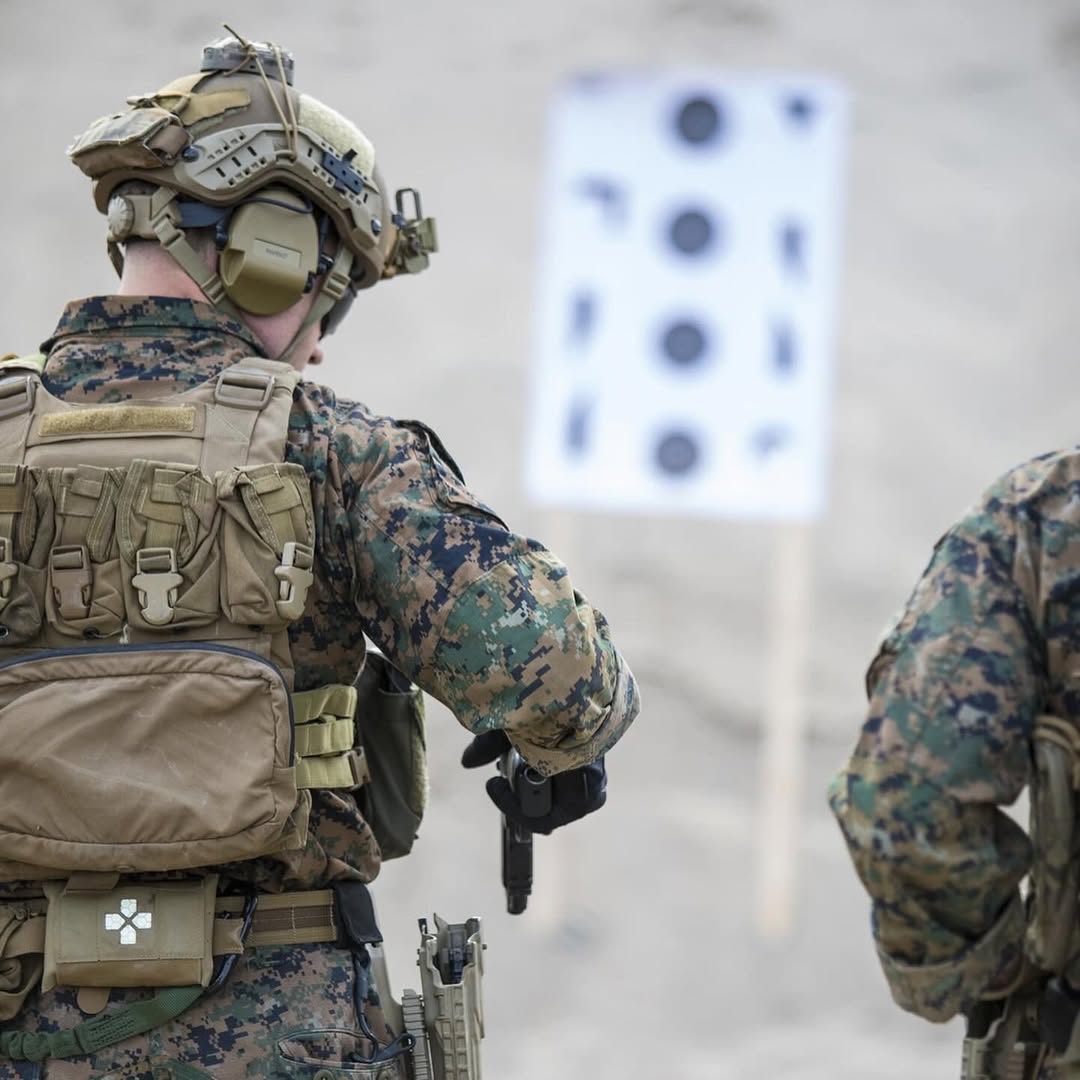
Combat Fitness Training App vs PDF Programs: Best for Tactical Athletes
How a Periodized Training App and a Static PDF Program Actually Differ
For years, tactical athletes in the military, law enforcement, and hybrid performance world have relied on PDF training programs, static documents that offer structure, simplicity, and low cost. But the choice today is rarely that simple. The real decision is a training app vs PDF programs question: stick with a fixed downloadable plan, or move to a periodized, app-based system that adapts as you do? For anyone serious about long-term readiness, the answer shapes years of progress.
But a new model has emerged: dynamic, app-based training systems built around periodization, progression, and real-time adaptability.
This creates a key decision point:
Should an athlete follow a static PDF program, or invest in a structured, evolving system like the Combat Fitness training app?
The answer depends on goals, experience level, and how seriously the athlete approaches long-term performance. This article breaks down the differences between Combat Fitness’ periodized infinite training system and traditional PDF/static programs, so athletes can make the right decision based on outcomes, not convenience.
What Is a PDF / Static Training Program?
A PDF training program is exactly what it sounds like: a fixed, pre-written plan delivered as a downloadable file.
These programs typically include:
A set number of weeks (4–12 weeks common)
Predefined workouts for each day
General instructions and sometimes scaling options
Minimal or no built-in progression adjustments
They are popular because they are:
Cheap or one-time purchases
Easy to distribute
Simple to follow
However, their biggest strength, simplicity, is also their biggest limitation. Once written, they do not change. For a beginner, or a deployed athlete with no coach, that fixed structure is genuinely useful: it removes decision fatigue and gets you training today. The problem surfaces over weeks, not days. A PDF cannot see that you missed two sessions on a 36-hour shift, pulled more than the sheet predicted, or showed up flat after a heavy ruck. It runs the same prescription regardless. For tactical athletes whose schedules and recovery swing week to week, that rigidity is exactly where progress quietly stalls.
What Is the Combat Fitness Periodized Infinite Training App?
The Combat Fitness training app represents a fundamentally different approach.
Instead of a fixed document, it delivers:
Structured, long-term periodization
Continuous progression (infinite programming)
Multiple training tracks (rucking, running, strength, hybrid)
Ongoing updates and evolving programming
Integrated coaching support and athlete feedback loops
Rather than asking:
“What’s my workout today?”
It answers:
“Where am I in my long-term performance progression, and what should I be doing next?”
This shift is critical for tactical athletes who are not training for a single event, but for ongoing readiness. In practice, "infinite" does not mean random. Each block is sequenced so the work you do this week sets up the adaptation you are chasing next month, then the system carries you into the following phase without a dead stop. Instead of finishing a 12-week file and asking what comes next, you progress continuously across accumulation, intensification, and recovery phases. For populations that have to stay ready year-round, that continuity is the entire point: training that maintains and builds capacity rather than resetting it every cycle.
Training Philosophy: Fixed Plans vs Adaptive Systems
PDF Programs: Linear and Static
Most PDF programs follow a simple structure:
Week 1 → Week 2 → Week 3 → Finish
While some include progression, it is predetermined and assumes:
Perfect adherence
No missed sessions
No injuries or schedule changes
There is no adjustment mechanism.
If an athlete falls behind, outpaces the program, or hits fatigue early—the program does not respond.
Combat Fitness: Periodized and Adaptive
Combat Fitness is built around long-term periodization, meaning:
Training is organized into phases (accumulation, intensification, etc.)
Load, intensity, and volume are systematically managed
Athletes progress based on exposure, not just time
More importantly, it is continuous:
No “end point” where the program stops
No need to restart or guess what comes next
This aligns far better with tactical performance, where:
There is no off-season
Readiness must be maintained year-round
Performance must evolve, not reset
This is not just a programming preference. A 2017 meta-analysis in Sports Medicine pooling the available research found that periodized resistance training produced greater maximal-strength gains than non-periodized plans (Williams et al., 2017). The effect is real if modest, and it compounds: organizing load and intensity into deliberate phases beats running the same prescription on repeat. A static PDF, by definition, cannot periodize around your actual training history. An adaptive system can read where you are and shape the next phase to match it.
Program Structure & Progression
PDF Programs
Typical structure:
4–12 week blocks
Fixed daily workouts
General progression (e.g., increase reps or distance weekly)
Limitations:
No auto-regulation
No performance tracking integration
No transition between phases after completion
Once the program ends, athletes often:
Repeat it
Buy another one
Or piece together their own training (often poorly)
Combat Fitness Training App
Structure is built around:
Infinite progression model
Program tracks (e.g., Dismount, Hybrid, Strength, Run-focused)
Layered development (strength + aerobic + tactical capacity)
Progression includes:
Structured increases in volume/intensity
Strategic deloads and recovery phases
Integration across multiple energy systems
This eliminates one of the biggest problems in fitness:
“What do I do after this program ends?”
With Combat Fitness, the answer is built in. The difference shows up in the details a fixed file cannot handle. Deloads land where your training says you need them, not on a generic week eight. Strength, aerobic, and tactical work are layered so they reinforce each other instead of competing for the same recovery. And the named tracks, rucking, hybrid, strength, run-focused, let you train the specific demand in front of you without abandoning the rest of your base. A PDF hands you a block; the system hands you a progression that knows what came before.
Coaching, Feedback, and Support
PDF Programs
Support is typically:
None
Or limited to a one-time instruction guide
Athletes are responsible for:
Interpreting workouts
Scaling appropriately
Managing fatigue and recovery
This works for advanced athletes, but most are not as self-sufficient as they think.
The Combat Fitness App
The app integrates:
Athlete support systems
Direct communication channels
Guidance on program selection and progression
This creates:
Accountability
Faster problem-solving
Better adherence
For tactical athletes balancing:
Work
Family
Operational demands
This support layer becomes a performance multiplier. Most athletes overestimate how self-sufficient they are. Reading a workout is easy; knowing when to push, when to pull back, and how to scale around a bad week is the hard part, and it is exactly where unsupported PDF users drift off plan. A direct line to coaching closes that gap fast: a quick answer on a substitution or a fatigue flag keeps you training instead of guessing. For someone juggling shift work, deployment, and family, that responsiveness is the difference between a program you finish and one you quietly abandon.
Specificity to Tactical Demands
PDF Programs
Most PDFs are:
General fitness programs
Or narrowly focused (e.g., strength only, running only)
They often lack:
Rucking integration
Load carriage considerations
Multi-domain fatigue management
The Combat Fitness App
Designed specifically for:
Military
Law enforcement
Tactical athletes
Programming includes:
Rucking progression
Hybrid endurance-strength work
Real-world performance carryover
It reflects the reality that tactical athletes don’t operate in isolated domains.
They must:
Run under fatigue
Carry load under stress
Perform repeatedly over time
Generic fitness rarely survives contact with the job. Carrying load under fatigue, moving fast after a ruck, and repeating that for hours is its own skill, and it has to be trained on purpose. That is why the programming separates tactical tracks rather than bolting cardio onto a lifting plan, dedicated rucking progressions, swim-based work for water selection pipelines, and dismounted run-and-lift blocks built for ground candidates. The aim is direct carryover to the standard you will actually be tested against, whether that is a fitness test, a selection course, or the next shift.
Data, Tracking, and Performance Feedback
PDF Programs
Tracking is:
Manual (if done at all)
Separate from the program itself
This creates friction:
Athletes don’t track consistently
Progress becomes unclear
Adjustments are guesswork
Combat Fitness App
The app integrates:
Training logs
Performance tracking
Progress visibility
This allows athletes to:
See improvements over time
Identify plateaus early
Stay engaged with the process
Data is not just collected, it is usable. When tracking lives inside the program instead of in a separate notebook, the loop actually closes. You log the session, the system sees the trend, and the next prescription reflects it, so a stalled lift or a slipping run pace gets caught early instead of three wasted weeks later. That visibility does something quieter but important, too: watching real numbers move keeps athletes engaged through the grind, when motivation alone runs thin. Progress you can see is progress you keep showing up for.
Scalability and Long-Term Development
PDF Programs
Best suited for:
Short-term goals
Beginners testing structure
Not ideal for:
Multi-year development
Progressive overload across phases
Career-long performance
The Combat Fitness App
Built for:
Long-term athletic development
Continuous progression
Multi-phase growth across years
This is critical for:
Selection pipelines (SFAS, Ranger, PJ, etc.)
Career tactical athletes
Hybrid competitors
Cost vs Value
PDF Programs
Pros:
Low cost ($10–$100 typical)
One-time purchase
Cons:
Limited lifespan
Often replaced frequently
No support or updates
The Combat Fitness App
Pros:
Ongoing programming
Coaching support
Continuous updates
Integrated system
Cons:
Monthly subscription
However, when viewed over time:
PDF users often buy multiple programs
Make mistakes in transitions
Lose progress between cycles
The app consolidates all of this into one system. It helps to put real numbers on it. A single PDF runs ten to a hundred dollars, but most athletes cycle through several a year, plus the progress lost re-learning each new system. A CF ONE subscription starts at $49 a month for the full program library, continuous programming, and athlete support: one system instead of a drawer of expired files. Whether that math favors a subscription depends on how long you plan to train seriously. For a career tactical athlete, the recurring cost usually buys far more than a stack of one-off downloads ever did.
Which One Is Better?
PDF Programs Are Better For:
Beginners testing structured training
Athletes on a tight budget
Short-term, single-goal preparation
Combat Fitness Is Better For:
Where the demand is ongoing rather than one-and-done, an adaptive system pulls clearly ahead:
Tactical athletes training year-round
Individuals preparing for selection
Athletes who want progression without guessing
Those who value structure, support, and long-term results
Final Comparison Summary
The difference is simple:
PDF programs deliver workouts
Combat Fitness delivers a system
Workouts alone can improve fitness.
But systems build performance.
For athletes whose careers, or goals, depend on their physical capability, that distinction matters.
FAQ Section
Is a PDF program enough for military or tactical training?
It can be enough in the short term, especially for beginners. However, most tactical athletes require long-term progression, multi-domain training, and adaptability, areas where PDF programs fall short.
Why are app-based programs becoming more popular?
Because they solve major limitations of static programs:
Lack of progression
No adaptability
No support system
Apps provide a more complete training ecosystem.
Are PDF programs cheaper?
Up front, yes. But over time, athletes often purchase multiple programs or lose progress between cycles, making them less cost-effective than they appear.
Does the Combat Fitness app replace the need for multiple programs?
Yes. It is designed as an infinite system, meaning athletes do not need to switch programs or restart cycles, it continuously evolves with them.
Is the Combat Fitness app only for military athletes?
No. While designed for tactical populations, it is also highly effective for:
Hybrid athletes
Endurance-strength competitors
Individuals seeking structured, long-term performance development
References
Williams, T.D., Tolusso, D.V., Fedewa, M.V., & Esco, M.R. (2017). Comparison of Periodized and Non-Periodized Resistance Training on Maximal Strength: A Meta-Analysis. Sports Medicine, 47(10), 2083–2100.


