Dumbbell Fly: Proper Form, Angles & Muscles | Combat Fitness
Dumbbell Fly: Proper Form, Angles & How to Build Your Chest
The dumbbell fly is a chest isolation exercise. Your arms sweep out in a wide arc and back together over your chest, which loads the pecs through a deep stretch without the triceps doing the pushing. The fly is not a max-strength lift, and our tactical fitness programs never treat it as one. It sits behind the heavy press as an accessory that adds chest volume at a lower joint cost.
This guide covers the muscles the fly trains and proper dumbbell fly form. It also covers how flat, incline, and decline angles change the work, how dumbbells compare with cables and machines, and where the fly belongs in your week.
Key Takeaways:
The dumbbell fly is an accessory, not a primary lift. Pressing builds the strength you get tested on, and the fly adds chest volume behind it.
Keep a fixed, slight elbow bend. Once the elbows bend and straighten, the fly turns into a sloppy press.
Bench angle shifts the emphasis. Incline biases the upper chest, flat biases the middle, and decline biases the lower fibers.
Moderate loads for 10 to 20 reps work because growth depends on effort near failure, not on the number stamped on the dumbbell.
Stretch only as deep as you can control. Going past your shoulder’s comfortable range adds risk, not results.
What Is a Dumbbell Fly?
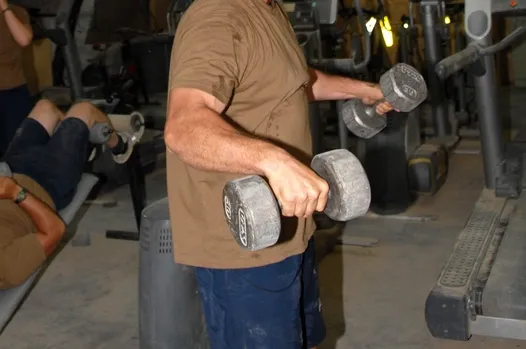
A dumbbell fly is a single-joint chest exercise. It is also written as dumbbell flye, flys, or flyes, and shortened to DB fly or db chest fly. You lie on a bench and hold dumbbells over your chest with a slight bend in the elbows. You open your arms in a wide arc until the chest stretches, then bring them back together along the same path.
The defining feature is that the elbow angle never changes. In a dumbbell press, the elbows bend and straighten, so the triceps share the work. In a dumbbell chest fly, the movement happens almost entirely at the shoulder, so the pecs do the job alone. That is why the chest fly dumbbell version feels so different from a press at the same weight.
Gravity shapes the lift. The dumbbells pull straight down, so resistance peaks when your arms are wide and falls close to zero as the weights meet over your chest. That one fact drives most of the form and programming decisions below.
What Muscles Does the Dumbbell Fly Work?
The dumbbell fly primarily trains the pectoralis major, including both the upper (clavicular) head and the larger lower (sternocostal) head. The front delt assists. The biceps hold the elbow angle. The rotator cuff and serratus anterior stabilize the shoulder through the arc.
The reason comes down to mechanics. The pec major’s main job is horizontal adduction, which means pulling your upper arm across the front of your body. A fly is horizontal adduction under load with nothing else in the way. A press is a multi-joint push that spreads the load across the triceps and front delts.
Pectoralis major (prime mover): drives the arms together from the stretched position.
Anterior deltoid (assistor): helps throughout the arc, and more so on an incline.
Biceps brachii (stabilizer): holds the fixed elbow bend. In trained men, the biceps showed much higher activity during dumbbell flyes than during the barbell bench press (Solstad et al., 2020).
Rotator cuff and serratus anterior (stabilizers): keep the shoulder joint centered and the shoulder blades positioned on the bench.
The fly does not train the triceps much. That is exactly why it works well after pressing: you can keep loading the chest after the triceps are fatigued.
Are Dumbbell Flys Good? Why and When to Use Them
Dumbbell flys make a good accessory and a poor primary lift. They add chest volume, train the pecs in a long, stretched position, and move training stress away from the elbows. They do not build the pushing strength that your fitness test and your job demand as well as pressing does.
The research supports that order. In a 2005 EMG study, the fly produced pec activation similar to barbell and dumbbell bench pressing, but for a shorter share of each rep. The authors concluded it fits best as an auxiliary lift (Welsch et al., 2005).
A 2020 study of trained men found that the barbell bench press produced greater pec, front-delt, and triceps activation across most of the lift (Solstad et al., 2020). Most of that gap appeared near the top of the movement, where the fly loses tension. The takeaway is simple: press heavy first, then fly.
The case for the fly
The benefits of dumbbell flyes come from the stretch. Training studies suggest that loading a muscle at long lengths is an effective growth stimulus, and in some cases it beats short-range work (Pedrosa et al., 2022; Wolf et al., 2023). The fly puts peak load on the pecs at that long length. A barbell press cannot do this, because the bar stops at your chest.
The fly is also a cheap way to add volume. Weekly set volume is one of the strongest drivers of muscle growth (Schoenfeld, Ogborn & Krieger, 2017). However, adding more heavy pressing sets wears on your elbows and shoulders, while a few sets of moderate flys add chest work without that cost.
Where the fly fits for a tactical athlete
Your occupational pushing demands are multi-joint efforts. They include the hand-release push-up on the Army Fitness Test, pushing up off the deck in a plate carrier, and forcing a door. Presses and push-up variations train those demands directly.
The fly earns its slot by building the chest tissue and shoulder resilience that support those efforts. That is the same principle behind functional strength for military performance: accessories serve the main lifts, never the reverse. If you are still working out how chest work fits alongside running and rucking, our guide to choosing a strength & endurance program explains what a complete hybrid plan needs.
How to Do a Dumbbell Fly With Proper Form
Proper dumbbell fly form comes down to one rule: keep the elbow angle fixed and move only at the shoulder. These steps are for the flat version, and the same sequence applies at any bench angle.
Set up. Sit on the end of a flat bench with the dumbbells on your thighs. Lie back and press them up over your chest, palms facing each other.
Build your base. Plant your feet. Pull your shoulder blades back and down into the bench, and keep a slight natural arch in your lower back.
Set the elbows. Unlock the elbows into a slight bend, as if you were hugging a large tree. Hold that angle for the entire set.
Lower in an arc. Take two to three seconds to open your arms out to the sides. Stop when you feel a strong stretch across your chest and your upper arms are roughly level with your torso.
Pause. Hold the stretch for a beat without bouncing. The pause removes momentum and keeps the load on the pecs.
Squeeze back up. Bring the dumbbells together along the same arc, then stop just before they touch, while the chest still carries tension.
Common dumbbell fly mistakes
Going too heavy. Heavy dumbbells force the elbows to bend and shift load onto the front of the shoulder in its most exposed position.
Pressing the weight up. If your elbows straighten on the way up, the triceps take over. Lighten the load and hold the elbow angle.
Chasing depth. Dropping the elbows far below the bench puts the pec tendon and the shoulder under heavy leverage. Go as deep as you can control, not as deep as gravity takes you.
Losing the shoulder blades. If your shoulders roll forward off the bench, the joint loses its stable base.
Clanking at the top. Tension is close to zero when the dumbbells meet, so the clank adds nothing.
A good fly workout with dumbbells looks unimpressive on paper: moderate weight, slow tempo, and a controlled stretch. That is exactly what makes it work.
Flat vs. Incline vs. Decline Dumbbell Fly
Bench angle changes which part of the chest takes the most load. An incline dumbbell fly biases the upper chest and front delts. A flat dumbbell fly loads the mid chest broadly. A decline dumbbell fly shifts emphasis toward the lower pec fibers. All three train the whole muscle; the angle only shifts where the emphasis lands.
Most of the angle research comes from pressing, but the fiber orientation is the same for flys. Upper-pec activity rises as the bench inclines, and front-delt involvement climbs at steeper angles (Lauver et al., 2016; Rodríguez-Ridao et al., 2020). Decline pressing raises activity in the lower fibers (Glass & Armstrong, 1997).
Bench angle quick guide:
Incline dumbbell fly (about 15 to 30 degrees): upper chest emphasis. This makes the best default, because the upper chest lags for most lifters. Keep incline dumbbell flyes at or below 30 degrees, since steeper angles hand more of the work to the front delts.
Flat dumbbell fly (0 degrees): mid-chest emphasis and the most balanced overall stimulus. The flat db fly is the version to learn first.
Decline dumbbell fly (slight decline): lower chest emphasis. It is useful but awkward to set up and exit safely, so it rarely needs to be your only fly.
Dumbbell Fly vs. Cable Fly vs. Machine: Which Should You Use?
Use dumbbells for the deepest loaded stretch, cables for constant tension, and a machine for the most stable option. None of them is strictly better. Each one loads the chest at a different point in the range.
Dumbbell fly: resistance peaks in the stretch and fades at the top. You only need a bench and a pair of dumbbells, which makes it the default for garage gyms and deployed setups.
Cable fly: the cable keeps tension on the pecs through the top, right where dumbbells go slack, and the pulley height changes the line of pull. We cover those options in our guide to cable chest exercises.
Machine fly (pec deck): the fixed path makes it the safest way to take sets close to failure, at the cost of the stabilizer work that dumbbells demand.
A practical approach is to rotate them across training blocks, or to pair a dumbbell fly for the stretch with a cable fly for the squeeze. If you train in a minimal gym, dumbbells cover the job.
How to Program the Dumbbell Fly
Program the dumbbell fly after your main pressing, for 2 to 4 sets of 10 to 20 reps. Stop 1 to 3 reps short of failure and rest 60 to 90 seconds between sets. One or two fly sessions per week on push or upper-body days is enough.
The rep range has a reason behind it. Lighter loads build comparable muscle to heavier loads when sets are taken close to failure (Schoenfeld et al., 2017; Lopez et al., 2021). For an isolation lift with an exposed end range, that makes higher reps the smart choice: the same growth with less joint stress.
Sample push-day placement
Main press: barbell bench press, 4 sets of 4 to 6.
Secondary press: standing overhead press or weighted push-ups, 3 sets of 6 to 10.
Chest accessory: incline dumbbell fly, 3 sets of 12 to 15.
Finisher: a triceps or upper-back accessory.
Splits such as the push pull workout give the fly a natural home on push day. For the broader view of how accessories sit around compound lifts, see a strength workout for athletes.
Progressing the fly
Add reps before you add weight. When every set reaches the top of your rep range with clean form, move up a dumbbell size and drop back to the bottom of the range. Dumbbell jumps are large relative to fly loads, so a slower lowering tempo or a longer pause in the stretch counts as valid progression (ACSM, 2009).
FAQ: Frequently Asked Questions
How do you do a dumbbell fly with proper form?
To do a dumbbell fly with proper form, lie on a bench with the dumbbells over your chest and your palms facing each other. Lock a slight bend into your elbows, then open your arms in a slow arc until your chest stretches. Squeeze the weights back together along the same path, and keep the elbow angle fixed the whole time.
Flat, incline, or decline dumbbell fly: what’s the difference?
The difference is emphasis. An incline fly biases the upper chest, a flat fly loads the mid chest most evenly, and a decline fly shifts work toward the lower fibers. All three train the entire pec. Start with flat, then make a 15 to 30 degree incline your default if your upper chest lags.
Is the dumbbell fly better than the bench press for chest?
No. For strength and overall chest activation, the bench press wins, and EMG research shows higher pec activity across most of the press (Solstad et al., 2020). The fly complements the press by adding volume and loading the pecs in a deep stretch. Press first, then fly.
Dumbbell fly vs. cable fly: which is better?
Neither one wins outright. Dumbbells load the chest hardest in the stretched position and need almost no equipment. Cables hold tension through the top of the movement and let you adjust the line of pull. Use dumbbells if you train with minimal gear, and rotate in cables when you have access to them.
How much weight should you use for dumbbell flys?
Use a weight you can control for 12 to 15 reps without bending and straightening your elbows. For most lifters, that load sits well below their dumbbell press weight. If the last reps turn into presses or you can’t hold the pause in the stretch, the weight is too heavy.
Are dumbbell flys bad for your shoulders?
Not when they are done with control. The risk comes from heavy loads and uncontrolled depth, which strain the front of the shoulder and the pec tendon. Most reported pec major tears happen during heavy bench pressing (ElMaraghy & Devereaux, 2012). Keep the weight moderate, stop the stretch where you control it, and keep your shoulder blades pinned.
The dumbbell fly has one job: add chest volume through a loaded stretch after the heavy pressing is done. Keep the elbows fixed, own the depth, choose the angle that matches your weak point, and stay in the higher rep ranges. Done that way, the fly builds the chest and shoulder resilience that keeps your presses and push-ups solid under load.
The next step is putting the fly inside a plan that sets how much, how often, and what comes first. A structured CF ONE program handles that for you, so every accessory set earns its place. Start your free trial and train with a plan.
References:
Solstad TEJ, Andersen V, Shaw M, Hoel EM, Vonheim A, Saeterbakken AH. A comparison of muscle activation between barbell bench press and dumbbell flyes in resistance-trained males. Journal of Sports Science and Medicine. 2020;19(4):645-651.
Welsch EA, Bird M, Mayhew JL. Electromyographic activity of the pectoralis major and anterior deltoid muscles during three upper-body lifts. Journal of Strength and Conditioning Research. 2005;19(2):449-452.
Glass SC, Armstrong T. Electromyographical activity of the pectoralis muscle during incline and decline bench presses. Journal of Strength and Conditioning Research. 1997;11(3):163-167.
Rodríguez-Ridao D, Antequera-Vique JA, Martín-Fuentes I, Muyor JM. Effect of five bench inclinations on the electromyographic activity of the pectoralis major, anterior deltoid, and triceps brachii during the bench press exercise. International Journal of Environmental Research and Public Health. 2020;17(19):7339.
Lauver JD, Cayot TE, Scheuermann BW. Influence of bench angle on upper extremity muscular activation during bench press exercise. European Journal of Sport Science. 2016;16(3):309-316.
Pedrosa GF, Lima FV, Schoenfeld BJ, et al. Partial range of motion training elicits favorable improvements in muscular adaptations when carried out at long muscle lengths. European Journal of Sport Science. 2022;22(8):1250-1260.
Wolf M, Androulakis-Korakakis P, Fisher J, Schoenfeld B, Steele J. Partial vs full range of motion resistance training: a systematic review and meta-analysis. International Journal of Strength and Conditioning. 2023;3(1).
Schoenfeld BJ, Ogborn D, Krieger JW. Dose-response relationship between weekly resistance training volume and increases in muscle mass: a systematic review and meta-analysis. Journal of Sports Sciences. 2017;35(11):1073-1082.
Schoenfeld BJ, Grgic J, Ogborn D, Krieger JW. Strength and hypertrophy adaptations between low- vs. high-load resistance training: a systematic review and meta-analysis. Journal of Strength and Conditioning Research. 2017;31(12):3508-3523.
Lopez P, Radaelli R, Taaffe DR, et al. Resistance training load effects on muscle hypertrophy and strength gain: systematic review and network meta-analysis. Medicine and Science in Sports and Exercise. 2021;53(6):1206-1216.
American College of Sports Medicine. Position stand: progression models in resistance training for healthy adults. Medicine and Science in Sports and Exercise. 2009;41(3):687-708.
Kraemer WJ, Ratamess NA. Fundamentals of resistance training: progression and exercise prescription. Medicine and Science in Sports and Exercise. 2004;36(4):674-688.
ElMaraghy AW, Devereaux MW. A systematic review and comprehensive classification of pectoralis major tears. Journal of Shoulder and Elbow Surgery. 2012;21(3):412-422.
Bak K, Cameron EA, Henderson IJ. Rupture of the pectoralis major: a meta-analysis of 112 cases. Knee Surgery, Sports Traumatology, Arthroscopy. 2000;8(2):113-119.
Headquarters, Department of the Army. FM 7-22: Holistic Health and Fitness. 2020.
U.S. Army. Army Fitness Test (AFT) event descriptions and standards. army.mil
Disclaimer: This article is for educational purposes only and is not medical advice. Consult a qualified healthcare provider before starting a new training program, especially if you have a current or past shoulder, elbow, or chest injury. Individual results vary, and no exercise guarantees a specific outcome.


