
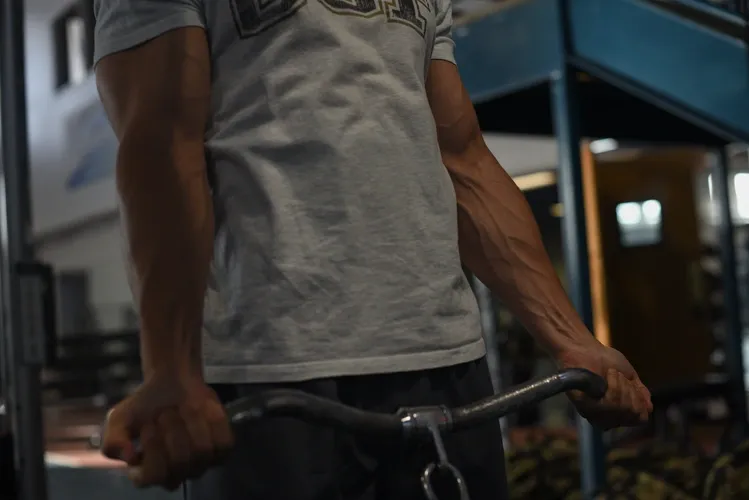
Cable Ab Workouts: 5 Best Core Exercises | Combat Fitness
Cable Ab Workouts: The Best Cable Exercises for a Stronger Core
Cable ab workouts build trunk strength that bodyweight crunches can’t, because a cable lets you load the core progressively and from any angle, including the rotational angles where real work happens. If you would rather have core work built into a complete plan than improvise it at the end of a session, our military fitness programs program it for you.
We write core programs for soldiers, police officers, and firefighters who brace under plate carriers, drag casualties, and carry uneven loads. That is why this roundup is organized by what each exercise trains, not by how it looks. You get the five best cable ab exercises across four functions (loaded flexion, anti-rotation, rotation, and lower-ab work), then a full cable core session and a plan for programming it.
Key Takeaways:
Cables add progressive overload to core training, which bodyweight ab work runs out of quickly.
The Pallof press and cable woodchop matter most for tactical athletes because they train bracing and rotational force transfer.
The kneeling cable crunch is the best loaded flexion move, as long as the abs do the work and the hips stay out of it.
A complete cable core session covers flexion, anti-rotation, and rotation in that priority order, with power first.
Two to three cable core sessions a week, as a finisher or a dedicated core day, is enough for most athletes.
Why Train Abs With Cables?
Cable ab exercises let you add resistance to the trunk in small, repeatable steps. That is the same progressive overload principle behind every other strength adaptation. A cable also keeps tension on the muscle through the full range, and you can pull from high, low, or the side, so the core learns to resist rotation as well as produce flexion.
Bodyweight ab work runs out of overload fast. Once you can do 50 crunches, more reps train muscular endurance, not strength. Resistance training guidelines from the American College of Sports Medicine are clear that strength gains depend on progressively heavier loading over time, and an ab workout on the cable machine is the simplest way to apply that to the trunk.
The tactical reason goes further. On the job, your core’s main role is to stiffen the trunk so force moves from your hips to your hands without leaking through a soft midsection. Research on core stability in athletic function describes the trunk as the link in that chain, and the load carriage literature shows how much spinal demand a soldier’s kit adds. The plank on the Army Fitness Test checks that stiffness in a static position. A casualty drag, an uneven ruck, or a struggling suspect tests it under rotation and off-center loading.
How We Chose These Cable Core Exercises
Each exercise had to earn its place by training one of four functions better than the alternatives:
Loaded flexion: curling the ribcage toward the pelvis against resistance.
Anti-rotation: keeping the spine stable while a load pulls you off-center.
Rotation and power: moving force from the hips through the trunk into the hands.
Lower-ab emphasis: curling the pelvis toward the ribcage.
Cable work is one part of a complete core plan, and it fits alongside the broader core exercises for men approach that covers planks, carries, and bodyweight progressions. If you are figuring out where core training goes in your full training block, our guide to choosing a strength & endurance program explains how the pieces fit together.
How Do You Do a Cable Crunch With Proper Form? (Exercise 1: Kneeling Cable Crunch)
The kneeling cable crunch is a loaded flexion exercise. You kneel under a high pulley, hold a rope beside your head, and curl your ribcage toward your pelvis against the weight. For most athletes it is the best cable exercise for abs, because it trains the rectus abdominis through its main action with load you can increase every week.
Attach a rope to a high pulley and kneel about two feet in front of the stack.
Hold the rope ends beside your ears or forehead, with your hips stacked over your knees.
Exhale and curl your ribs down toward your pelvis, rounding your spine one segment at a time.
Stop when your elbows reach mid-thigh, hold for one second, then return under control.
The most common fault is sitting back into the hips. When your butt drops toward your heels, the movement turns into a hip hinge and the lats and hip flexors take over the load. Keep your hips fixed and think “ribs to pelvis.” If you feel it in your hip flexors and not your abs, the weight is too heavy.
Load it for 8 to 15 reps and progress weight once you hit the top of the range with clean form. There is a real trade-off here: Stuart McGill’s spine research raises concerns about high volumes of repeated loaded spinal flexion. Keep cable crunch volume moderate, and if you have a history of back trouble, put more of your training into the anti-rotation work below.
Why Is the Pallof Press the Best Cable Anti-Rotation Exercise? (Exercise 2)
The Pallof press is a standing cable exercise. You hold a handle at your sternum, press it straight out, and keep the cable from pulling you into rotation. It trains anti-rotation, which is the trunk stiffness that keeps your spine stable when a load tries to twist you off-center. For tactical athletes, that makes it the most transferable cable core exercise there is.
Think about where rotation shows up on the job: a casualty dragged with one arm, a rifle held off your centerline, a door ram swung from one side, a suspect pulling you sideways. In each case the job is to not rotate while you produce force. Biomechanics research comparing abdominal bracing with hollowing found that bracing (stiffening the whole trunk wall) creates more spinal stability, and the Pallof press trains exactly that bracing pattern. That brace-first principle is central to functional strength for military performance, and it is the main reason we program this move.
Set the pulley at chest height and stand side-on to the stack, about an arm’s length away.
Hold the handle at your sternum with both hands, feet shoulder-width apart, knees soft.
Brace your trunk, then press the handle straight out until your arms are locked.
Hold for two seconds without letting your torso turn, then bring it back to your chest.
Progress it through stance before you add load: tall kneeling, then half-kneeling, then split stance, then standing with a lift to overhead at full extension. Each step reduces the base of support and makes the cable core stability demand harder. Work at 8 to 12 reps per side with a deliberate pause.
How Do You Do a Cable Woodchop for Rotational Power? (Exercises 3 and 4)
The cable woodchop is a rotational exercise. You pull a cable handle diagonally across your body, either from high to low or low to high, rotating through your hips and upper back. It trains the trunk to transfer force from the ground into your hands, which drives throwing, striking, and any task where you swing or twist a load.
Studies of throwing and striking athletes show that power moves from the legs through the trunk before it reaches the arm, and core training has been linked to throwing velocity in some research groups. Woodchops train that sequence under load. The arms act like straps that hold the handle in place; your hips and torso are what produce the movement.
High-to-Low Woodchop (Exercise 3)
Set the pulley high and stand side-on, feet wider than shoulders.
Grab the handle with both hands above your near shoulder, arms long.
Pivot your back foot and rotate your hips and chest as you pull the handle diagonally down to the outside of your opposite knee.
Reverse slowly to the start.
Low-to-High Woodchop (Exercise 4)
Set the pulley low and reverse the path, driving from the outside of your near knee up and across to above the opposite shoulder. This version emphasizes the hip drive and extension pattern you use when lifting and loading gear onto a truck.
Use light to moderate load and move fast on the way in, controlled on the way back. Six to eight crisp reps per side beats fifteen sloppy ones. If the weight forces your arms to bend and pull, it is too heavy for rotational cable core work.
How Do You Train Lower Abs on a Cable Machine? (Exercise 5)
A lower ab workout on a cable machine centers on the cable reverse crunch, which curls your pelvis toward your ribcage against resistance. The rectus abdominis is one muscle, so you can’t fully isolate the “lower abs,” but leading with the pelvis shifts the emphasis toward the lower portion and trains the posterior pelvic tilt that keeps your lower back neutral under load.
Attach ankle straps to a low pulley and lie on your back with your head facing away from the stack.
Bend your hips and knees to 90 degrees and press your lower back into the floor.
Exhale and curl your knees toward your chest, lifting your hips off the floor.
Lower under control until your hips touch down, without letting your lower back arch.
The fault is swinging your legs and using hip flexor momentum. The movement is small: your pelvis curls, your legs just come along. A kneeling cable knee drive, pulling the straps from a low pulley as you curl your pelvis under, is a reasonable alternative if lying on the floor isn’t possible in your gym. Work at 10 to 15 reps with a one-second squeeze at the top.
A Full Cable Ab Workout: Flexion, Anti-Rotation, and Rotation in One Session
This cable machine core workout combines all four functions into one 15 to 20 minute session. Run the moves in order and rest 45 to 60 seconds between sets.
High-to-low woodchop: 3 sets of 6 to 8 per side, fast and controlled.
Pallof press: 3 sets of 8 to 10 per side, two-second hold at full extension.
Kneeling cable crunch: 3 sets of 10 to 12, one-second hold at the bottom.
Cable reverse crunch: 2 sets of 10 to 15, one-second squeeze at the top.
The order matters. Rotational power goes first while your nervous system is fresh, because speed drops off sharply under fatigue. Anti-rotation comes second because it relies on bracing quality. Flexion and lower-ab work go last, since getting tired on these moves carries the lowest risk. Every one of these pulley exercises for abs needs only one cable column, so you can run the whole session at one station.
How Should You Program Cable Ab Workouts?
Program cable core work two to three times per week, in line with ACSM guidance for training a muscle group. Run it as a 10 to 15 minute finisher after your main strength work, or as a dedicated core day on a lighter training day. Progress by adding reps within the target range first, then load or stance difficulty.
As a cable ab finisher, pick one anti-rotation move and one flexion or rotation move and run 2 to 3 sets of each. Put the finisher at the end of a strength workout for athletes, never before it. Fatiguing the trunk before heavy squats or deadlifts weakens the brace those lifts depend on.
For the full session above, add a rep per set each week until you reach the top of every range, then increase the load by the smallest plate available and drop back to the bottom of the range. For the Pallof press, progress through stance and hold time before you add weight. During heavy ruck or selection-prep blocks, cut core volume to the finisher version so the trunk recovers for loaded movement.
Where Do Cable Abs Fit With Bodyweight Core Training?
Cable work doesn’t replace bodyweight core training. It adds load where bodyweight work stops progressing. Each of the common bodyweight moves still has a job.
Sit-Ups
Sit-ups still appear on many service fitness tests and agency entry tests, so if your test uses them you need to train them for that test. Cable crunches build the flexion strength underneath, while sit-up practice builds the pacing and endurance that the test measures.
Bicycle Crunches
Bicycle crunches combine flexion and rotation at bodyweight, which makes them a useful high-rep conditioning move. The cable woodchop covers the rotational part with real load, so use bicycle crunches for volume and woodchops for strength.
Supermans
Supermans train the spinal extensors, which cables in this roundup don’t target. A balanced core plan pairs anterior and rotational cable work with extensor work so the trunk is strong in every direction.
Ab Rollouts
Ab rollouts are the main anti-extension exercise: they train the trunk to resist arching. They fill the one gap a cable session leaves, so a complete week includes rollouts alongside the Pallof press.
FAQ: Frequently Asked Questions
What are the best cable ab exercises?
The best cable ab exercises are the kneeling cable crunch for loaded flexion, the Pallof press for anti-rotation, the high-to-low and low-to-high woodchop for rotational power, and the cable reverse crunch for lower-ab emphasis. Together they train every function of the trunk except anti-extension, which ab rollouts or planks cover.
What is a Pallof press and why does it matter?
The Pallof press is a standing cable exercise where you press a handle away from your chest while resisting the cable’s pull to rotate you. It matters because it trains anti-rotation bracing, the trunk stiffness that protects your spine when you carry, drag, or push loads that sit off your centerline.
How do you do a cable woodchop?
Stand side-on to the cable with a wide stance, hold the handle with both hands, and rotate your hips and chest as you pull diagonally across your body. Pivot your back foot, keep your arms long, and let your trunk drive the movement. Return slowly and repeat on both sides.
Can you train your whole core on a cable machine?
A cable machine covers flexion, anti-rotation, rotation, and lower-ab work, which is most of the core. It doesn’t train anti-extension or spinal extension well, so add ab rollouts or planks and an extensor move like supermans or back extensions to complete the week.
How do you hit the lower abs with cables?
Use the cable reverse crunch, which curls your pelvis toward your ribcage from a low pulley with ankle straps. Leading with the pelvis shifts emphasis toward the lower rectus abdominis. Keep the range small, avoid swinging your legs, and squeeze at the top of each rep.
How many cable ab exercises should a workout have?
A full cable core session works well with three or four exercises, one from each function, totaling 10 to 12 working sets. A finisher needs only two exercises and four to six sets. More exercises rarely add anything; better execution and progressive loading do.
Cable ab workouts earn their spot in a tactical program because they let you load the trunk progressively and train it the way the job uses it: braced against rotation, transferring force through rotation, and strong in flexion. Pick the session above, run it two to three times a week for the next six weeks, and track your loads the same way you track your squat. Start this week and you will feel the difference the next time you carry a lopsided load or drag a full-weight dummy.
References:
American College of Sports Medicine. Progression models in resistance training for healthy adults. Medicine & Science in Sports & Exercise. 2009;41(3):687-708.
Kraemer WJ, Ratamess NA. Fundamentals of resistance training: progression and exercise prescription. Medicine & Science in Sports & Exercise. 2004;36(4):674-688.
Kibler WB, Press J, Sciascia A. The role of core stability in athletic function. Sports Medicine. 2006;36(3):189-198.
Hibbs AE, Thompson KG, French D, Wrigley A, Spears I. Optimizing performance by improving core stability and core strength. Sports Medicine. 2008;38(12):995-1008.
McGill SM. Core training: evidence translating to better performance and injury prevention. Strength and Conditioning Journal. 2010;32(3):33-46.
Grenier SG, McGill SM. Quantification of lumbar stability by using 2 different abdominal activation strategies. Archives of Physical Medicine and Rehabilitation. 2007;88(1):54-62.
McGill SM, Karpowicz A. Exercises for spine stabilization: motion/motor patterns, stability progressions, and clinical technique. Archives of Physical Medicine and Rehabilitation. 2009;90(1):118-126.
Willardson JM. Core stability training: applications to sports conditioning programs. Journal of Strength and Conditioning Research. 2007;21(3):979-985.
Behm DG, Drinkwater EJ, Willardson JM, Cowley PM. The use of instability to train the core musculature. Applied Physiology, Nutrition, and Metabolism. 2010;35(1):91-108.
Escamilla RF, Babb E, DeWitt R, et al. Electromyographic analysis of traditional and nontraditional abdominal exercises: implications for rehabilitation and training. Physical Therapy. 2006;86(5):656-671.
Saeterbakken AH, van den Tillaar R, Seiler S. Effect of core stability training on throwing velocity in female handball players. Journal of Strength and Conditioning Research. 2011;25(3):712-718.
Knapik JJ, Reynolds KL, Harman E. Soldier load carriage: historical, physiological, biomechanical, and medical aspects. Military Medicine. 2004;169(1):45-56.
Lederman E. The myth of core stability. Journal of Bodywork and Movement Therapies. 2010;14(1):84-98.
Headquarters, Department of the Army. FM 7-22, Holistic Health and Fitness. October 2020.
U.S. Army. Army Fitness Test (AFT) event standards, effective June 2025. army.mil
Disclaimer: This article is for educational purposes only and is not medical advice. Consult a qualified healthcare provider before starting a new exercise program, especially if you have a history of back pain or injury. Individual results depend on training history, consistency, recovery, and other factors.


