
Mike Vining: Delta Force Legend, Explained | Combat Fitness
Who Is Mike Vining? The Delta Force Legend Explained
Mike Vining is the retired U.S. Army Sergeant Major who became the first explosive ordnance disposal technician ever assigned to Delta Force, and whose retirement photograph became the most widely shared meme in modern military culture. He enlisted in 1968, cleared bombs in Vietnam, survived the Desert One disaster in Iran, and was still operating through Grenada, Panama, and the Gulf before retiring in 1999. Most people meet him through a caption. His career is a case study in staying operational for three decades, which is the same problem our military fitness programs are built to solve.
Key Takeaways:
Mike Vining served in the U.S. Army from 1968 to 1999 and retired as a Sergeant Major, not a Command Sergeant Major and not a commissioned Major.
He volunteered for Delta Force in 1978 as the unit's first EOD specialist. He was a plank owner, not a founder.
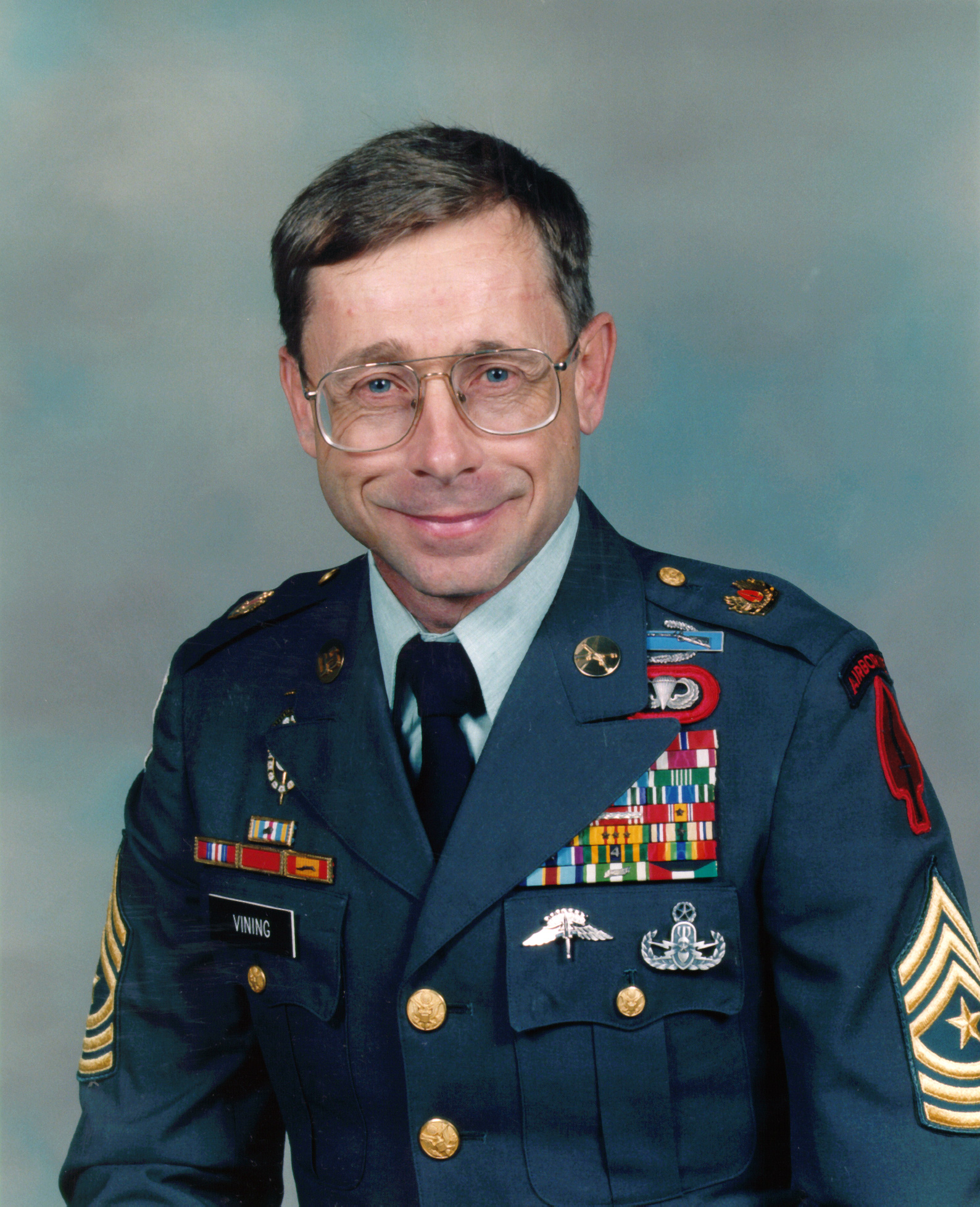
The meme comes from a real dress-uniform photograph taken around his 1999 retirement. The joke works because the decorations do not match the face.
No confirmed-kill figure exists for Mike Vining. The Department of Defense does not publish those numbers for Delta operators and he has never claimed one.
His memoir, Blasting Through, and his moral-injury advocacy are where the sourcing on his career now lives.
Who Is Mike Vining?
Mike Roger Vining is a retired United States Army Sergeant Major, an explosive ordnance disposal technician by trade, and one of the original volunteers for the 1st Special Forces Operational Detachment-Delta. He was born August 12, 1950, in Greenville, Michigan, enlisted in 1968 straight out of high school, and served thirty-one years before retiring in January 1999.
Records list him as Mike R. Vining and Mike Roger Vining. Searches for Mike Edward Vining return a different person.
What did Mike Vining do? He rendered safe unexploded ordnance and improvised devices for a living, first in a conventional Army EOD detachment, then for the nation's premier counterterrorism unit. He completed the Army's EOD program in 1968 and trained in ammunition renovation at Redstone Arsenal, Alabama, then in explosive ordnance and nuclear weapons disposal at Indian Head, Maryland, per his U.S. Army Ordnance Corps Hall of Fame citation.
Why Mike Vining Is Famous
Mike Vining is famous for two reasons that have almost nothing to do with each other. The first is legitimate: he was the first EOD specialist in Delta Force, and few soldiers have a career spanning Vietnam, Operation Eagle Claw, Grenada, Panama, and Desert Storm. The second is an internet accident: a photograph of him in dress uniform became a meme.
They reinforce each other because of the gap between them. The photo shows a mild-looking man in large clear-framed glasses. The chest under those glasses carries a Legion of Merit, a Bronze Star, a Combat Infantryman Badge, and the Master Explosive Ordnance Disposal Badge.
That is why Mike Vining is a legend rather than a punchline. The meme sent millions of people looking for the record, and the record held up. He was inducted into the Ordnance Corps Hall of Fame in 2018.
The Photo That Made Him a Meme
The Mike Vining meme comes from an official Army portrait taken around his 1999 retirement, showing him in dress uniform with his full rack of decorations and his eyeglasses. In the early 2000s someone added the caption "You don't operate, do you son?" and the image spread through deployed formations during the Global War on Terror.
Vining has said he does not know how the memes started, and that he was already retired when the first went viral. The image mutated the way images do. One version puts his face behind an American flag under the word "operate." There is a Mike Vining Pokemon card, which he learned about from a grandchild. Reddit threads carried it further.
Two corrections are worth making, because both circulate as fact:
Stolen valor accusations. When the photo first spread, people flagged what they read as uniform inconsistencies. Vining has publicly addressed this, noting that specifications changed after the 1990s and that his Combat Infantryman Badge was earned in an operator role.
The Sicario mix-up. Side-by-side posts pair Vining's photo with Jeffrey Donovan's bespectacled Delta character, Steve Forsing, from Sicario (2015). The character is widely described online as modeled on Vining, and Forsing is also the name of a real former operator. Treat the resemblance as an enthusiast reading, not a studio credit.
The respectful version of the joke is the accurate one. He looks like a retired schoolteacher because that is what three decades of quiet competence looks like from outside.
Rank and Career: EOD Technician to Sergeant Major
Mike Vining retired as a Sergeant Major (E-9). He was never a Command Sergeant Major and never a commissioned Major, which are the two errors that dominate searches for his name. He is correctly written as SGM Mike Vining or Sgt. Maj. Mike R. Vining.
Figure 1.1 - U.S. Army non-commissioned officer grades and what each one does. The Army's NCO ranks begin at E-4 with Corporal (CPL), described by the Army as the base of the non-commissioned officer ranks and serving as team leader of the smallest Army units. Specialist (SPC) holds the same E-4 pay grade but is not a non-commissioned officer. E-5 Sergeant (SGT) is the first-line leader, leading a team or section with the most direct daily impact on soldiers. E-6 Staff Sergeant (SSG) leads a squad of roughly 8 to 16 soldiers, enforcing standards and training MOS skills. E-7 Sergeant First Class (SFC) serves as platoon sergeant and key advisor to the platoon leader, typically with 10 to 15 years of service. At E-8, Master Sergeant (MSG) is the principal NCO at battalion level and above, while First Sergeant (1SG) is the senior enlisted soldier in a company, the same pay grade with a different job. At E-9, Sergeant Major (SGM) is the staff-level senior enlisted adviser to a primary staff officer at battalion or higher and the subject-matter authority in their field; this was Sergeant Major Mike Vining's retirement rank. Command Sergeant Major (CSM) holds the same E-9 pay grade but serves as the senior enlisted leader of an entire command rather than one staff section. Above both sits the Sergeant Major of the Army, also E-9, held by one soldier at a time as the service's senior enlisted adviser. Source: official U.S. Army rank descriptions (army.mil/ranks); Vining's retirement rank verified via the U.S. Army Ordnance Corps Hall of Fame. Verified July 25, 2026.
The distinction people miss: SGM and CSM are the same pay grade. CSM is a command position, not a higher rank. Vining's E-9 jobs were technical, which fits a man whose value was breaching and demolitions expertise rather than formation leadership.
The ladder underneath was long. He came up through conventional EOD detachments, joined the 543rd Ordnance Detachment (EOD) at Fort Leonard Wood, Missouri, in 1973, and was recognized for heroism during terrorist bombings in Quincy, Illinois. He later reclassified from EOD into Infantry, which is how a bomb technician ends up wearing a Combat Infantryman Badge. The Army's better-known road into special operations, the Green Beret training pathway, runs through a different door.
Mike Vining and Delta Force
Vining volunteered for the newly formed 1st Special Forces Operational Detachment-Delta in 1978, which makes him a plank owner rather than a founder. Colonel Charlie Beckwith built the unit. Vining answered the call and became its first explosive ordnance disposal specialist, per his Ordnance Corps Hall of Fame citation.
That distinction matters operationally. The unit needed someone who could defeat locks, doors, walls, and improvised devices under a clock, and no assaulter background produced that skill set. Vining brought it from a decade of EOD work behind him.
He served two tours with the unit, 1978 to 1985 and 1986 to 1992. In the second he held three jobs at the top of the enlisted structure: Chief EOD Technician, Research and Development Sergeant Major, and Breaching Sergeant Major. He wrote the breaching program, not just executed it.
Delta drew much of its early cadre out of Army Special Forces, so the culture he walked into was shaped by the team-level habits of the ODA team structure. He arrived from a different direction.
This post is about the man, not the organization. For the unit itself, its selection pipeline, and where it sits in the tier-one structure, see our full explainer on what Delta Force is.
Combat Service: Vietnam, Iran, Grenada, Panama
Vining deployed to the Republic of Vietnam in 1970 with the 99th Ordnance Detachment (EOD) and responded to roughly 380 EOD incidents in a single year, more than one per day, including tunnel and cache clearance. He was awarded the Bronze Star in 1971 for meritorious service in ground operations and EOD duty.
Figure 1.2 - Sergeant Major Mike R. Vining's combat and operational record, 1970–1999. In 1970–71 Vining served as an explosive ordnance disposal technician in the Republic of Vietnam with the 99th Ordnance Detachment (EOD), including tunnel and cache clearance, and was awarded the Bronze Star in 1971; he is reported to have responded to roughly 380 EOD incidents in a single year, a figure not confirmed in his official Army biography. In 1973 he was decorated for heroism as an EOD specialist responding to a series of terrorist bombings in Quincy, Illinois. In April 1980 he served as a Delta Force EOD specialist at the Desert One refuelling site during Operation Eagle Claw in Iran, where on 24 April an RH-53D helicopter struck the fuel-laden EC-130E carrying Vining and part of the assault force; eight service members, five U.S. Air Force airmen and three U.S. Marines, were killed and no hostages were recovered. In 1983 he took part in the Delta assault on Richmond Hill Prison during Operation Urgent Fury in Grenada. In 1987 he provided breaching support during Operation Pocket Planner at the federal prison riot in Atlanta. In 1989–90 he is reported in published accounts to have served in Delta EOD and breaching roles during Operation Just Cause in Panama, although Just Cause does not appear among the operations listed in his official Army biography. In 1991 he served as a Delta breaching and Research and Development Sergeant Major during Operation Desert Storm. In 1994 he served as a senior enlisted advisor during Operation Uphold Democracy in Haiti. In 1996 he served as Explosives Expert on the Downing Assessment Task Force investigating the Khobar Towers bombing in Saudi Arabia, while serving as Special Plans Sergeant Major at U.S. Special Operations Command. He retired in 1999 as a Sergeant Major after 31 years of service and was inducted into the U.S. Army Ordnance Corps Hall of Fame in 2018. Vining served two assignments with Delta Force, from 1978 to 1985 as the unit's first EOD specialist and from 1986 to 1992 as Chief EOD Technician, Research and Development Sergeant Major and Breaching Sergeant Major. Source: U.S. Army Ordnance Corps Hall of Fame biography; Airborne & Special Operations Museum for Operation Eagle Claw details. Verified July 25, 2026.
Eagle Claw is the one people ask about. At the Desert One refueling site in Iran in April 1980, a Navy helicopter struck the EC-130E carrying Vining and part of the assault force. The aircraft burned and eight service members were killed. He walked out of it. That is the explosion that surfaces in searches for his name.
Grenada in 1983 was its own education in friction. Delta's assault on Richmond Hill Prison ran into timing failures, tourist-grade maps, communications problems, and missing close air support. Seventeen Delta members were wounded and a pilot was killed.
His decorations reflect the span: Legion of Merit, Bronze Star Medal, Defense Meritorious Service Medal, Meritorious Service Medal, Army Commendation Medal, Combat Infantryman Badge, Master Explosive Ordnance Disposal Badge, and parachutist badges. None of it is glamorous from the inside, and the day-to-day version is covered in our piece on life as a special operator.
How Many Confirmed Kills Does Mike Vining Have?
There is no confirmed-kill figure for Mike Vining, and there is not going to be one. The Department of Defense does not publish confirmed-kill counts for Delta Force operators, the unit's records are classified, and Vining has never claimed a number publicly.
Every figure circulating on forums and video thumbnails is invented. Some of it carries hedging language like "reportedly" or "estimated," which does not make it sourced. It makes it laundered.
The question also misreads his career. Vining's job was explosive ordnance disposal, breaching, and demolitions. His measurable output was doors opened, walls dropped, and devices rendered safe so an assault element could reach a hostage or a target. A kill count would not describe what he was valued for even if the number existed.
Blasting Through: His Book, Interviews and Podcasts
Vining's memoir is titled Blasting Through. He has described it publicly as roughly 90,000 words across thirty chapters, built around leadership lessons and moral injury rather than operational detail, with release announced for August 2026. He posts under the same name, sharing EOD and Delta recollections along with material on moral injury and PTSD.
Moral injury is the thread he keeps returning to. In his framing it has been folded into the broad category of PTSD and needs separating out, because survivor's guilt and the weight of ethical decisions are a different injury from trauma exposure. He has pointed to elevated suicide rates in the EOD and special operations communities and argues the condition is treatable.
The rest of the sourcing sits in long-form interviews. He has appeared on SOFREP Radio, the Mike Drop podcast, and American Warrior Radio, and was profiled at length by Military.com. There is no standalone Mike Vining documentary as of this writing.
If listening to a career like his makes you wonder what the equivalent preparation looks like now, our SOF training FAQ answers the practical questions those interviews skip.
Height, Age, Family and Where He Is Today
Mike Vining is alive. Born August 12, 1950, he is 75 years old as of July 2026 and lives in South Fork, Colorado.
No verified height or weight appears in any official record or credible published profile, so we are not going to print one. The figures circulating online trace back to fan pages and aggregators with no sourcing. The impression that he is a small man comes from the photograph, and a photograph is not a measurement. His glasses, the clear frames in the meme, were standard-issue Army eyewear of the period.
He married Donna Ikenberry, a published outdoor writer and photographer, in January 1999, the same month he retired, and holds a Bachelor of Science in sociology from Excelsior University.
Today he works as a historian and advisor in the EOD community, including with the National EOD Association and the EOD Warrior Foundation, preserving the institutional memory of a career field that loses it fast. He has also written on naval postal history, a more accurate picture of the man than any meme.
What Tactical Athletes Can Take From His Career
Vining stayed operationally useful from 1968 to 1999. That is thirty-one years of being deployable, the hardest thing to replicate in a tactical career. Three things in his record are worth copying.
Lateral movement beats a single lane. He entered as an ordnance specialist and turned that into a seat in the Army's most selective unit, because the unit had a capability gap and he owned the capability. Depth in one technical skill opened a door general athleticism never would have.
Longevity is trained, not survived. Three decades of jumps, breaching charges, and load carriage do not happen by accident. They happen because the work is programmed around the joints and tissue that fail first. Training around a real job with real hours is its own discipline, which is why we wrote about maintaining readiness on a packed schedule.
Selection is a preparation problem. Vining volunteered for a unit less than a year old, with no pipeline and no published standard. You have the opposite problem: the standards are published and your competition trained for them. The modern route runs through assessment, and our SFAS training FAQ covers what that assessment measures and how candidates fail it. None of it is mystical. It is a training block with a date on it, so start with peaking for special ops selection and work backward from your report date.
FAQ: Frequently Asked Questions
Is Mike Vining still alive?
Yes. Mike Vining is alive and living in South Fork, Colorado. Born August 12, 1950, he is 75 as of July 2026. He remains publicly active, posting about EOD history and moral injury, advising in the EOD community, and preparing his memoir.
What rank did Mike Vining retire at?
Mike Vining retired as a Sergeant Major (E-9) in January 1999 after thirty-one years of service. He was not a Command Sergeant Major, which is the same pay grade in a command position, and he was not a commissioned Major. The correct form is SGM or Sgt. Maj. Mike R. Vining.
Did Mike Vining found Delta Force?
No. Colonel Charlie Beckwith founded the unit in 1977. Vining volunteered in 1978 and became its first explosive ordnance disposal specialist, which makes him a plank owner and original member rather than a founder. The distinction matters to the people who were there.
How tall is Mike Vining?
No verified height for Mike Vining is published in any official record or credible profile, so no figure should be quoted. The numbers circulating online are unsourced. The assumption that he is short comes from the meme photograph rather than any measurement, and photographs are unreliable for that.
Why is Mike Vining a meme?
His retirement-era portrait pairs a mild, bespectacled face with a chest full of combat decorations. In the early 2000s the caption "You don't operate, do you son?" was added and it spread through deployed units. The joke depends on the record being real, which it is.
What is Mike Vining doing now?
Vining works as a historian and advisor in the explosive ordnance disposal community, including with the National EOD Association and the EOD Warrior Foundation. He speaks and writes about moral injury in the special operations community, and his memoir Blasting Through is announced for August 2026.
Mike Vining is worth knowing about for the reason the meme accidentally got right. He did not look the part, and the part was never about looking. It was about being the one person in the building who could get a door open under a clock, for thirty-one years. Nobody can copy that path now, because it no longer exists. What carries over is durability, one deep technical skill, and a preparation plan with a date on it. Pick your standard, build the block, and go earn the seat.
References:
U.S. Army Ordnance Corps, "Sergeant Major Mike R. Vining, Ordnance Corps Hall of Fame Inductee 2018."
Military.com, "Delta Force Pioneer Survived Vietnam, Iran and Grenada. Here Are His Leadership Lessons."
Wikipedia, "Mike Vining."
Coffee or Die, "Living Legends: The Incredible True Stories Behind Three Iconic Photographs."
We Are The Mighty, "The career of Mike Vining, the internet's most badass military meme."
We Are The Mighty, "Mike Vining on Vietnam, Delta Force, and the sardines he never ate."
War History Online, "Mike Vining: The Incredible Career of the Delta Force Operator Behind the Famed Military Meme."
American Warrior Radio, "DELTA Force Original: Mike Vining" (May 2021).
SOFREP Radio, "Ep. 322: SGM Mike Vining, Delta Force legend."
Mike Drop Podcast, "From Vietnam EOD to Delta Force: Mike Vining's Path to Elite Operations," Ep. 277.
SGM Mike Vining, official "Blasting Through" account announcement of the memoir.
U.S. Army, enlisted rank structure (Sergeant Major and Command Sergeant Major, E-9).
Naval History and Heritage Command / U.S. Department of Defense records on Operation Eagle Claw, Desert One, April 1980.
U.S. Army Center of Military History, Operation Urgent Fury (Grenada, 1983) official history.
EOD Warrior Foundation, mission and advisory work in the EOD community.
The Mag Life, "Delta Force Sicario Border Scene: Are Those Guys CAG?"
Written by the Combat Fitness Team, coaches who program for active military, law enforcement, and first responders preparing for real occupational and selection standards.
Disclaimer: This article is biographical and informational. Combat Fitness is not affiliated with, endorsed by, or speaking on behalf of Mike Vining, the U.S. Army, the Department of Defense, or any special operations unit. Operational details of classified units are not published, and nothing here should be read as an official record. Training guidance is general in nature and is not medical advice. Consult a qualified medical professional before beginning any training program.


