
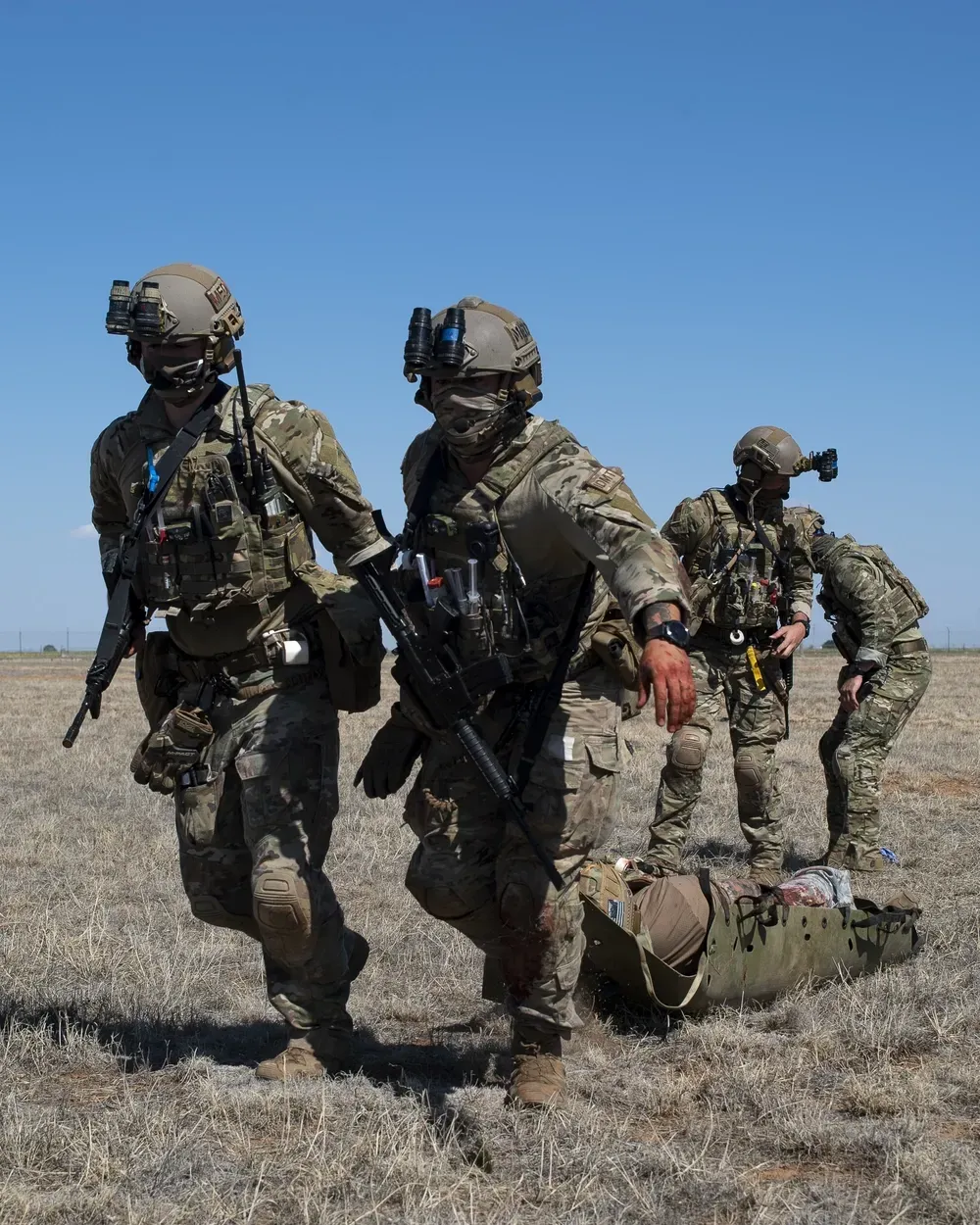
Workouts for Busy Professionals: Stay Lethal in 45 Min
Workouts for busy professionals get dismissed as a compromise, the watered-down version you settle for once you've "moved on" from real training. That's backwards. You aren't 22 anymore. You don't live in the barracks. You run a business, answer to a board, and have three kids and exactly 45 minutes between your last Zoom call and a dinner reservation. Most guys treat that as permission to get soft. They call it "a different season of life" and trade their edge for a dad bod and a golf handicap. That's a choice, not a sentence.
You can be sharp in the boardroom and dangerous in the gym at the same time, but only if you stop training like a bodybuilder with three hours to kill and start training like an executive operator with twenty minutes and a clear objective. The constraint isn't your enemy. Used right, a tight time budget forces the kind of focused, high-output work that actually builds capacity, the same logic that drives serious tactical training programs. Density is the new intensity, and the rest of this guide shows you exactly how to apply it.
Why Density Beats Duration
Most training time is wasted, not spent. Walk into any commercial gym and you'll watch people log ninety minutes while doing maybe twenty minutes of real work, the rest is scrolling, wandering, and resting far longer than the set demanded. It's the same trap that makes social media workout routines look productive while delivering almost nothing real. For a time-crunched professional, that ratio is the whole problem. Training density flips it. Density means doing more work in the same window, or the same work in a shorter one, by compressing rest and stacking movements that don't compete for the same muscles.
The payoff isn't only efficiency. Short rest periods keep your heart rate elevated, so a strength session doubles as conditioning, and the metabolic cost lingers for hours after you rack the last rep. You build work capacity, the ability to do more, recover faster, and repeat, which is the trait that separates a capable operator from a guy who only looks the part. None of this requires more time. It requires you to stop treating the clock as the variable and start treating output as the variable. Make that shift and forty-five minutes is plenty, twenty is often enough.
The EMOM Protocol: Density Training in Practice
"Every Minute on the Minute" is the simplest way to put density to work, and it's nearly impossible to cheat. You set a timer. At the top of each minute you do the prescribed work; whatever time is left is your rest. When the clock rolls over, you go again. The faster you move, the more rest you earn, so the format polices its own intensity without you thinking about it. For a busy professional, that's the point: you can't drift, you can't scroll Instagram between sets, and you can't pretend a ninety-second "quick check" of email didn't happen. The work is on the clock, and so are you. There's no half-watching a YouTube workout video to catch your breath either, the timer decides when you move, not you.
Here's a full-body EMOM you can run in a hotel gym, a garage, or a corporate fitness center with a single kettlebell, the Suit & Tie Torch:
Minute 1: 15 Kettlebell Swings.
Minute 2: 10 Burpees.
Minute 3: 12 Goblet Squats.
Minute 4: 45 Second Plank.
Repeat 5 times.
That's twenty minutes, start to finish. It trains strength, conditioning, and core in one block, and the short rest keeps your engine running the entire time. You'll be drenched. You'll be done, and you'll have banked more quality work than the guy who spent an hour supersetting his phone with the lat pulldown.
The Hotel Room Standard
Travel is where consistency goes to die. The hotel "gym" is three mismatched dumbbells and a treadmill flashing an error code, and it's the easiest excuse in the world to skip a day, then a week. So you need one workout that needs zero gear and almost zero space, ready to run the moment you drop your bag. If you have enough floor to do a push-up, you have enough to train. Keep it simple and brutal: a fixed rep count across five basic patterns, done for time. This is the express version, bodyweight-only travel training runs deep enough to deserve its own playbook, and we cover the full no-gear system in our complete guide to training with limited equipment.
For the road, the 500 Benchmark is all you need:
100 Pushups.
100 Air Squats.
100 Sit-ups (or Leg Raises).
100 Lunges (50 each leg).
100 Burpees.
Do it for time. It isn't complicated and it isn't comfortable, it's a repeatable benchmark you can hit in any room in any city, which is exactly what keeps you on track when you're stuck in a Holiday Inn in Cleveland at 10 p.m.
Superset Efficiency: Double the Work, Half the Clock
When you do make it to a real gym, the worst thing you can do is sit on a bench resting between sets of the same lift. Pair non-competing movements instead, exercises that work opposing or unrelated patterns so one recovers while the other works. Squat, then immediately press overhead: your legs rest while your shoulders fire, and your shoulders rest while your legs reload. You've removed dead time without removing recovery, which means you move roughly twice the volume in the same window. This is how an operator trains heavy on a tight schedule, not by rushing the lifts, but by cutting the standing-around that bloats most sessions. Supersets are just one expression of a bigger idea, and it pays to understand how training density actually works before you build your own stack.
Build your stack around the two patterns with the most transfer: a hinge and a press. A heavy, simple template looks like this:
A1: Trap Bar Deadlift (5 reps).
A2: Overhead Press (8 reps).
Rest: 90 seconds.
Repeat 4 rounds.
Run four rounds and you've trained the two most important movement patterns in roughly twelve minutes, with real load, not circuit-class fluff.
Building It Into a 60-Hour Week
A workout you do once is a hobby. A workout you do every week, no matter what the calendar throws at you, is a standard, and standards are what keep a tactical athlete capable past forty. The same standards run through density training for firefighters, where the job never asks how busy your week was before it demands the output. The professional's mistake is chasing the perfect program. You don't need perfect; you need repeatable. Three to four short sessions a week, anchored to fixed times you actually control, will outperform a flawless five-day split you abandon the first time Q4 gets loud. Treat training like any other non-negotiable on your calendar: block it, defend it, and lower the bar for what counts as "done." A twenty-minute EMOM before the first meeting counts. The 500 Benchmark in a hotel room counts. The goal isn't to maximize any single session, it's to never let the streak break, because the cost of restarting from zero, over and over, is what actually erodes your edge.
Here's what a realistic week looks like at sixty-plus hours: Monday, a twenty-minute EMOM before the inbox opens; Wednesday, a heavy superset session at lunch or after work; Friday, another EMOM or a conditioning block; and when you travel, the 500 Benchmark wherever you land. Four short sessions, none longer than half an hour, covering strength, conditioning, and core across the week. Miss one and you've still trained three times, three more than the guy waiting for his schedule to clear up. Consistency at sixty percent beats perfection at zero.
Recovery Is Part of the Job
The harder truth for the older operator is that you can't out-train poor recovery the way you could at 22. On five hours of sleep, skipped meals, and constant stress, more training isn't heroic, it's another withdrawal from an already overdrawn account. Density training helps here too, because shorter, sharper sessions are easier to recover from than marathon gym days you don't have the gas to absorb. It also settles a worry a lot of operators carry, whether you can maintain strength while building endurance once your training time shrinks.
But the session is only half of it. Sleep is the single highest-leverage recovery tool you have, and it's the first thing a busy professional sacrifices, protect it like a meeting with your biggest client. Eat enough protein to rebuild what you tore down. Manage stress on purpose instead of pretending it doesn't tax your body. Train hard, but recover deliberately, that's the difference between staying capable for decades and burning out before your next physical.
The Bottom Line
Time was never the real problem. Priority is. File fitness under "nice to have" and it's the first thing cut the moment your week gets heavy, and the weeks only get heavier from here. File it under "must have," the same tier as paying your taxes or showing up for your kids, and it gets done regardless of what the calendar looks like. You already know how to operate under constraint, that's how you built the career. Apply the same discipline to your training: pick the session that fits the time you've got, set the timer, and execute. Twenty focused minutes, done consistently, will keep you sharper than anyone making excuses about their "season of life." Set the timer. Do the work. Close the deal.


