
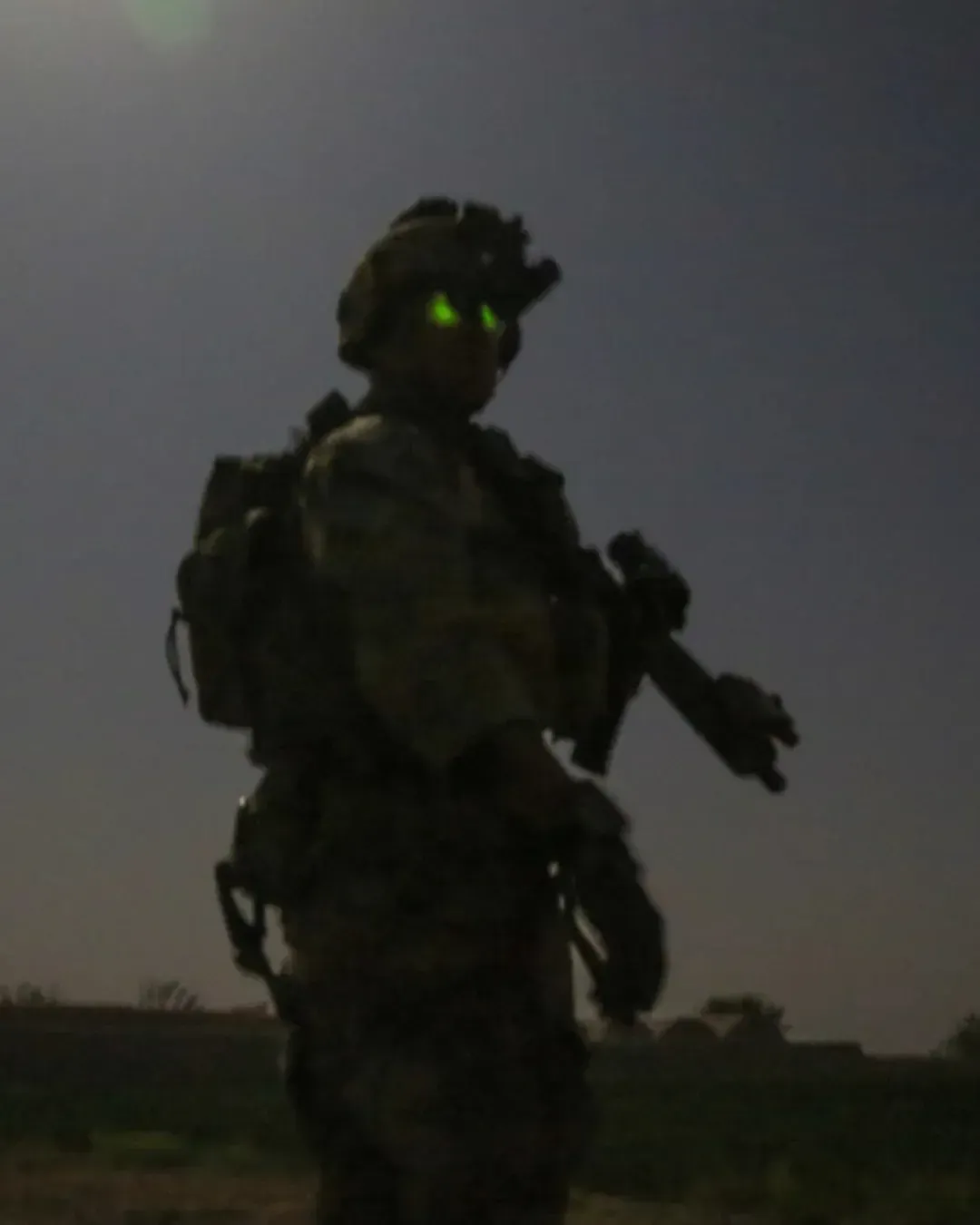
MOS 0317 Marine Scout Sniper: Role, Training & 0322 Transition
MOS 0317: The Marine Scout Sniper Role, Training, and 2023 Transition to MOS 0322
MOS 0317 was the Marine Corps secondary Military Occupational Specialty code for the Marine Scout Sniper, a small, elite community trained in long-range precision shooting, reconnaissance, and fieldcraft. The MOS existed from the early 2000s until December 15, 2023, when the final Scout Sniper Basic Course class graduated and the role was disbanded under Force Design 2030 and replaced by MOS 0322 Reconnaissance Sniper, housed within Marine Reconnaissance battalions. Understanding the 0317 role still matters: it shaped a century of Marine sniping doctrine, and the physical, mental, and tactical standards it set are the same standards that now define the 0322 pipeline. This guide covers the history of the 0317 MOS, the training Scout Snipers went through, the missions they ran, the transition from MOS 8541 to 0317, and what the role looks like today under the 0322 designation.
Candidates serious about building the physical foundation either the legacy 0317 standard or the current 0322 Reconnaissance Sniper pipeline demands, sustained aerobic capacity, rucking durability, repeatable strength under load, and the ability to stay precise when tired, can find purpose-built preparation through selection prep programs, structured specifically for candidates entering elite Marine and SOF pipelines.
When Did MOS 8541 Change to 0317? The History of the Marine Scout Sniper MOS Code
MOS 8541 changed to MOS 0317 in the early 2000s as part of a broader Marine Corps effort to streamline and modernize the secondary MOS coding system. The 8541 designation had been in use since the modern Scout Sniper program took shape in the post-Vietnam era, but the four-digit reclassification slotted Scout Snipers into a coding logic consistent with the rest of the infantry field (03-series). The 0317 designation also reflected an operational reality: by the early 2000s, specialized reconnaissance had become a far larger share of what Scout Sniper platoons were actually doing on the ground in Iraq and Afghanistan, and the new MOS code positioned the role inside that evolution. For candidates looking for the full range of structured tactical training options beyond selection prep, CF ONE training programs covers the complete program library.
The reclassification from 8541 to 0317 also marked a real shift in training and operational focus. Optics, ballistic computers, and digital range-finding equipment matured rapidly in the early 2000s, and Scout Sniper Basic Course curriculum at Marine Corps Base Quantico evolved alongside them to integrate the new technology with traditional fieldcraft, stalking, and concealment skills. The 0317 code consolidated all of this, sniper marksmanship, advanced reconnaissance, and intelligence reporting, under a single, clearly defined secondary MOS, replacing the ambiguity that had built up around the legacy 8541 designation.
MOS 0317 Training: The Scout Sniper Basic Course at Quantico
The path to the 0317 MOS was never open to fresh recruits straight out of boot camp, Scout Sniper was a secondary MOS, meaning candidates first had to serve as infantry Marines (or in Reconnaissance), reach the rank of Lance Corporal (E-3) or above, and post a General Technical (GT) ASVAB score of 100 or higher. Even then, candidates were first selected by their battalion to join the scout-sniper platoon, an internal vetting that filtered for physical readiness, marksmanship aptitude, and the temperament for long, isolated, high-stress reconnaissance work, before being sent to the formal 79-day Scout Sniper Basic Course at Marine Corps Base Quantico, Virginia. The course had a notoriously high attrition rate; many candidates who passed battalion selection still failed to graduate.
For candidates evaluating which SOF training program best fits their preparation timeline and goals, the Special Forces program buying guide walks through how to choose the right option for elite pipeline preparation, whether that's a Marine 0322 Reconnaissance Sniper pipeline or another service's equivalent.
The 0317 training pipeline was built around three skill pillars: marksmanship, fieldcraft, and reconnaissance. Marksmanship focused on the M40-series bolt-action rifle (most recently the M40A6) and the Mk13 Mod 7 in .300 Win Mag, with engagements out to 1,000+ meters and full ballistic accounting for wind, range, elevation, temperature, and humidity. Fieldcraft covered stalking, ghillie-suit construction, concealed hide-site construction, and undetected movement. tested in graded stalk lanes where candidates had to crawl into firing position, take a recorded shot, and exfiltrate without being spotted by trained observers. Reconnaissance instruction added KIM (Keep In Memory) games, terrain sketching, observation-post procedure, and structured intelligence reporting back to the battalion S-2.
The course graded candidates continuously across every pillar: live-fire scores on known-distance and unknown-distance ranges, stalk lane evaluations, KIM game accuracy, written examinations on ballistics and observation procedure, and instructor assessments on judgment, patience, and field discipline. A single weak area could end a candidate's pipeline. Marines who graduated were awarded the 0317 secondary MOS and slotted back into a battalion scout-sniper platoon, a destination that, until the 2023 disbandment, was one of the most respected billets in the Marine infantry community. For candidates with specific questions about SOF training program structure, selection standards, and what to expect during elite pipeline preparation, the Special Forces program FAQ covers the most common questions in one place.
Marksmanship: The Core of the 0317 Marine Scout Sniper Role
Marksmanship training for the 0317 MOS centered on the bolt-action sniper rifle, historically the M40 family, with the M40A6 as the final-generation variant, supplemented by the Mk13 Mod 7 chambered in .300 Winchester Magnum for longer-range engagements. Candidates trained across known-distance and unknown-distance ranges in varied weather, terrain, and lighting, learning to dope the rifle for wind, range, elevation, mirage, temperature, humidity, and barometric pressure. Standard engagement profile was a two-Marine team, a shooter and a spotter, with the spotter calling wind, observing impacts, and managing the data book.
Advanced shooting blocks added moving-target engagements, snap shots from improvised positions, multiple-target target-discrimination drills, and night-shooting using thermal and image-intensifier optics. Underpinning all of it was a strict standard for first-round hit probability — Scout Snipers were expected to put the first round on target, because a second round was often the round that gave away the hide site. The 0317 doctrine treated marksmanship not as a sport but as a force-multiplier discipline: one operator, one rifle, one well-placed round, capable of disrupting an entire enemy operation. Candidates who want to understand the hybrid physical demands this training pipeline places on the body should read hybrid training for military selection candidates, which addresses the specific strength and endurance balance required for extended, high-demand selection environments.
Fieldcraft: Stealth, Concealment, and Survival Skills
0317 fieldcraft instruction taught Marines to move undetected across varied terrain, build and wear ghillie suits matched to local foliage, construct concealed hide sites that could be occupied for days at a time, and execute stalks where a candidate had to cover hundreds of meters of open ground while remaining invisible to trained observers scanning with binoculars and spotting scopes. Graded stalk lanes, where candidates had to reach a firing position, take a recorded shot, and exfiltrate without being spotted, were one of the course's defining and most-failed evaluations.
Survival instruction covered water procurement and purification, expedient shelter, navigation by map and compass for day and night land movement, and tactical combat casualty care, non-negotiable for a two-Marine team operating beyond immediate reach of conventional support. Scout Snipers were routinely deployed into observation posts and hide sites with everything they would need for the duration of the mission on their backs, often for 48 to 72 hours or longer, which is why fieldcraft and survival training carried equal weight with marksmanship in the 0317 course design.
Reconnaissance: Scout Snipers as Battalion Intelligence Assets
Reconnaissance instruction covered observation-post procedure, terrain sketching, range estimation, KIM (Keep In Memory) games to build observation memory under time pressure, structured SALUTE-format intelligence reporting (Size, Activity, Location, Unit, Time, Equipment), and operation of optics and communications gear ranging from spotting scopes and laser rangefinders to encrypted radio sets. Scout Snipers reported directly to the battalion S-2 (intelligence section), often providing the only real-time eyes the battalion commander had on a given objective.
Advanced reconnaissance blocks layered in thermal imagers, night-vision devices, digital photography for target packets, and integration with drone and signals intelligence feeds, capabilities that grew significantly across the 2000s and 2010s as the Marine Corps modernized its reconnaissance technology stack. The doctrinal weight reconnaissance carried inside the 0317 role is the reason the surviving MOS 0322 designation explicitly leads with "Reconnaissance" rather than "Sniper": the modern Marine sniper is, first, a reconnaissance asset, and second, a precision-fire asset.
The Battlefield Role of the Marine Scout Sniper
Scout Snipers functioned as the eyes and ears of the infantry battalion, providing the kind of forward, on-the-ground intelligence that drones and overhead assets could not always deliver. Operating in two-Marine teams, often forward of friendly lines and outside the protective umbrella of supporting fires, they shaped operational decisions in three distinct ways: long-range precision fire against high-value targets, sustained reconnaissance and surveillance of enemy positions, and overwatch for ground maneuver elements during deliberate operations.
Precision Fire on High-Value Targets
A confirmed first-round hit at 800, 1,000, or even 1,500 meters can collapse an enemy operation before it begins. Scout Snipers historically targeted enemy leadership, crew-served weapons operators, radio operators, observers, messengers, and other high-value personnel, targets whose loss disproportionately degrades enemy capability, alongside select materiel targets such as command-and-control equipment, optics, and communications gear that precision rifle fire could neutralize without committing larger assets.
The effect extends well past the immediate tactical gain. The threat of accurate, unseen long-range fire forces enemy units to slow down, disperse, button up vehicles, restrict movement to night hours, and reduce the use of radios and other signature-creating equipment, all of which compounds into a serious operational tempo penalty over time. This denial effect, generated by a single two-Marine team, is one of the reasons sniper capability has historically delivered an outsized return on investment for the Marine Corps.
Reconnaissance and Surveillance Operations
Scout Sniper teams conducted close reconnaissance and sustained surveillance, observing enemy movements, route activity, defensive positions, and patterns of life across periods that could stretch from hours to several days. Reports were transmitted back to the battalion S-2 in structured formats, SALUTE for contact reports, SPOT reports for time-sensitive observations, allowing the intelligence section to build and update a coherent operational picture in near real time.
Because Scout Sniper teams were physically on the objective, their reporting carried context and nuance no overhead sensor could provide, the difference between a vehicle that was operational versus abandoned, a defensive position that was manned versus a decoy, a meeting that included one HVT or three. This human, on-the-ground interpretation is what made the 0317 role so heavily valued, and it is the same capability that defines the modern MOS 0322 Reconnaissance Sniper inside the new Force Design 2030 construct.
Overwatch and Direct Support for Ground Maneuver
In direct-support roles, Scout Snipers positioned themselves on terrain overlooking a planned objective and provided overwatch for friendly ground elements, detecting threats early, suppressing or neutralizing them with precision fire, and feeding real-time observations to the maneuver commander on the ground. The effect is that a rifle squad or platoon clearing an objective is not advancing blind: it is advancing under the eyes of a two-Marine team that sees angles the squad cannot.
Beyond overwatch, Scout Snipers regularly integrated into pre-mission planning with the supported unit, walked terrain models with the maneuver commander, and stayed tied into the supported unit's radio net throughout the operation. That integration is what separates effective sniper employment from sniper teams being treated as a stand-alone asset, and it is one of the doctrinal lessons the Marine Corps has explicitly carried forward into the 0322 Reconnaissance Sniper role under Force Design 2030.
Understanding Marine Corps MOS Codes
Every Marine carries a primary MOS, a four-digit code identifying their core military occupation. Primary MOS codes are organized into Occupational Fields (OccFlds): Field 03 (Infantry), Field 04 (Logistics), Field 18 (Tank/Assault Amphibian), Field 26 (Signals Intelligence/Ground Electronic Warfare), and so on across roughly 30 fields covering every job the Corps employs. The first two digits of any MOS identify the field; the last two identify the specific role inside it. MOS 0317, for example, sat inside Field 03 (Infantry), a secondary MOS layered on top of a primary infantry MOS such as 0311 Rifleman.
There are two layers worth understanding: primary MOS and secondary MOS. A primary MOS is awarded out of initial training (recruit training plus the relevant School of Infantry or formal-school course) and defines a Marine's core occupational identity. A secondary MOS, such as 0317 Scout Sniper, 0321 Reconnaissance Marine, or 8541 Scout Sniper (the pre-2000s designation), is earned later, on top of a primary MOS, after a Marine successfully completes a specific advanced course and meets the additional prerequisites. This is why Scout Sniper was never an entry-level role: candidates had to first prove themselves as infantry Marines before being eligible to even attempt the pipeline.
MOS codes also drive career progression: promotion boards, lateral moves into specialized pipelines, billet assignments, and even retention bonuses are all tied to a Marine's MOS history. For an infantry Marine considering Scout Sniper historically, or Reconnaissance Sniper today, the secondary MOS represented a significant career investment, and one that opened doors to future assignments in Marine Special Operations Command (MARSOC), instructor billets at formal schools, and broader specialized reconnaissance pathways across the Corps.
Life as a Marine Scout Sniper: Standards and Daily Reality
Day-to-day life inside a battalion scout-sniper platoon was a continuous cycle of physical training, range time, fieldcraft refresh, equipment maintenance, mission planning, and deployment workups. Standards were enforced internally as much as externally, the small-team culture of two-Marine teams operating in isolation meant every member of the platoon had to trust every other member's competence under live conditions, and that trust was earned and re-earned constantly. The 0317 badge was never just an MOS; inside the platoon, it was a standard you had to keep meeting.
Physical standards inside a scout-sniper platoon were significantly higher than the broader infantry baseline. Beyond Marine Corps Physical Fitness Test and Combat Fitness Test scores, candidates and platoon members were expected to ruck long distances under load (typically 60–80+ lb), maintain sustained aerobic capacity for extended observation-post insertions and exfiltrations, and develop the kind of strength endurance that holds up across multi-day field problems with limited sleep. Skill maintenance was equally relentless, live-fire range days, dry-fire repetitions, ballistic data book updates, and stalk practice all ran on continuous cycles.
Mental preparation was woven into the schedule as deliberately as range time. Teams ran after-action reviews on every training event, studied historical sniper engagements and adversary tradecraft, and rehearsed mission-specific scenarios on terrain models or sand tables before stepping off. Patience and emotional self-regulation were drilled as hard as marksmanship, a Scout Sniper team that breaks discipline in a hide site under fatigue, hunger, or boredom compromises the entire mission.
The cost was real. Long deployments, high-risk reconnaissance work forward of friendly lines, repeated exposure to combat stress, and the cumulative wear of operating with heavy loads in hostile environments all took a toll. So did the small-community culture itself: a Scout Sniper community of only a few hundred Marines across the Corps meant a tight, lifelong professional network, but also meant carrying the loss of any teammate personally. The reward was the work itself, the standard it held you to, and a small-community professional identity that the Scout Sniper community carried with notable intensity right up to its 2023 disbandment. Understanding what is tactical conditioning gives every candidate the foundational physical framework behind what this demanding lifestyle is built on, and why the fitness qualities developed in preparation for this role must be sustainable across a full career.
The skill set built inside the 0317 pipeline, long-range marksmanship, advanced fieldcraft, structured intelligence reporting, calm decision-making under fatigue and threat, carried significant value well beyond the Marine Corps. Former 0317 Marines have moved into Marine Special Operations Command (MARSOC), federal law enforcement tactical units, military contracting, instructor billets, and a wide range of leadership roles that draw on the same composure-under-pressure mindset the pipeline was built to forge. Understanding what is a tactical athlete gives this identity its full professional definition, describing precisely the kind of operator the 0317 pipeline was designed to produce and sustain.
The Legacy of the 0317 MOS and the Future of Marine Sniping
Between 1943 and the final Scout Sniper Basic Course graduation on December 15, 2023, Marine Scout Snipers, first under MOS 8541 and from the early 2000s onward under MOS 0317, built and carried a sniping tradition that became one of the most respected in the U.S. military. The contribution was outsized: a small community, never more than a few hundred active Marines at any time, delivering battlefield effects that consistently shaped operations far above their headcount.
The disbandment of MOS 0317 under Force Design 2030 closed a chapter but did not eliminate Marine sniping capability. MOS 0322 Reconnaissance Sniper now carries the core mission forward inside Marine Reconnaissance battalions, with longer pipelines, a higher prerequisite floor (candidates must first qualify as 0321 Reconnaissance Marines via the Basic Reconnaissance Course), and tighter integration with both reconnaissance and Marine Special Operations Command. For any candidate considering the modern equivalent of the 0317 path, the physical foundation is non-negotiable: sustained aerobic capacity, ruck durability, repeatable strength under load, and the ability to perform precise work when fatigued and under pressure. That foundation is built before the pipeline, not during it.
Q&A
Question: What is the 0317 MOS, and how do Marine Scout Snipers influence missions?
The 0317 MOS designates Marine Corps Scout Snipers, elite Marines trained in both precision shooting and reconnaissance. They act as the battalion’s eyes and ears, gathering detailed, real-time intelligence that shapes operational decisions. Beyond neutralizing high-value targets with long-range, pinpoint accuracy, they operate independently or in small teams, often deep behind enemy lines, providing overwatch, identifying threats early, and enabling friendly forces to maneuver more safely and effectively. Their strategic planning and on-the-spot decision-making can directly influence the outcome of entire missions.
Question: When did MOS 8541 change to 0317, and why was the change made?
The change from 8541 to 0317 occurred in the early 2000s as part of a broader Marine Corps effort to modernize and refine occupational specialties. This reclassification wasn’t just administrative, it reflected evolving military strategies, the growing importance of specialized reconnaissance, and the incorporation of new technologies and methods. The 0317 designation provided clearer specificity about Scout Snipers’ skills and duties, aligning training and operational focus with contemporary battlefield requirements.
Question: What does 0317 training include, and why is it considered so demanding?
Training for MOS 0317 is among the most rigorous in the military, combining marksmanship, fieldcraft, and reconnaissance. Marines master precision shooting across varied conditions, calculating wind, distance, and elevation, and learn to engage moving and multiple targets quickly. Fieldcraft covers stealth, camouflage, survival skills, shelter construction, and first aid, crucial for operating undetected in isolated, hostile environments. Reconnaissance instruction spans observation, reporting, and the use of modern surveillance equipment. Continuous evaluation and realistic scenarios push candidates to their limits, ensuring only those who meet elite standards earn the 0317 designation.
Question: What is day-to-day life like for a Marine Scout Sniper, and what qualities are essential?
Life as a Scout Sniper demands professionalism, discipline, and resilience. Marines maintain peak physical fitness, practice marksmanship regularly, and stay current on tactics and technology. Equally important is mental preparation, studying past missions, analyzing scenarios, and planning for future operations. They must remain calm and focused under pressure in hostile environments. Though challenging, the role offers significant rewards: pride in elite service, strong camaraderie, and skills that provide both personal growth and professional value within and beyond the Marine Corps.
Question: What are MOS codes, and why are they important in the Marine Corps?
MOS codes categorize and identify specific jobs across the Marine Corps, aligning Marines' skills, training, and responsibilities with operational needs. This structured system ensures the right people are placed in the right roles, from infantry to intelligence, enhancing unit effectiveness. MOS codes also guide training pipelines and career progression, helping Marines build the expertise and experience needed to advance while strengthening the Corps' overall capability. Candidates preparing for the 0317 pipeline should understand that the aerobic foundation this role demands is non-negotiable; aerobic capacity for military selection explains exactly why sustained cardiovascular output is a baseline requirement for any elite selection environment. For candidates already in a preparation block, the durability debt in military training guide addresses how accumulated training stress must be managed to arrive at selection intact rather than broken down.


