
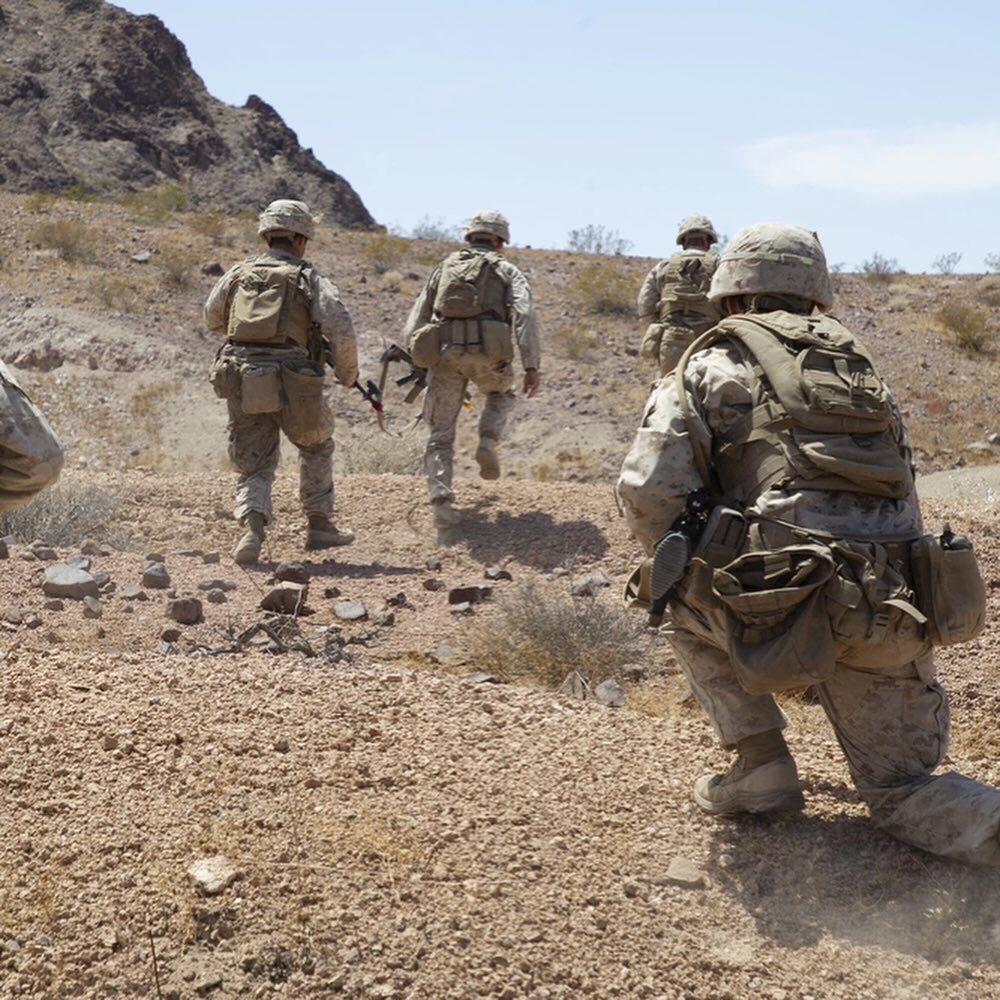
Durability Debt in Military Training (Complete Guide)
Why You Break Before You're Ready
Most candidates don't fail military training for lack of effort. They fail because their body can no longer tolerate the load, and the cause is durability debt. You build strength, conditioning, and speed, but neglect durability, and stress quietly accumulates faster than you adapt. You feel fit. You're hitting your numbers. Underneath, the debt compounds, until tightness becomes pain, and pain becomes a forced timeline reset. This guide breaks down what durability debt is in military training, how training load and friction accelerate breakdown, and how to manage injury risk before it sidelines you. It also points you toward the kind of tactical training programs that build durability in from day one, instead of bolting it on after something breaks.
This guide breaks down:
What durability actually means
What durability debt is and how it builds
How training load and friction accelerate breakdown
How to manage injury risk before it becomes a problem
What Is Durability in Performance Training?
Durability is the quiet quality that decides whether your fitness survives contact with a real training pipeline. It is not a single attribute you can max out in the gym; it is the combined capacity of your tendons, joints, connective tissue, and recovery systems to absorb repeated stress and keep functioning. A candidate with a 500-pound deadlift and a sub-13-minute two-mile can still wash out in week three if his tissues cannot tolerate back-to-back loaded movement.
Durability is the ability to:
Withstand repeated physical stress without breakdown
This includes:
Tissue resilience
Joint integrity
Movement consistency under fatigue
Recovery capacity
Durability vs Fitness
Fitness is what you can do. Durability is what you can continue to do without getting injured.
The distinction matters because selection does not test you once. It tests you on day one, again on day two with no recovery, then again on day three while you are under slept and underfed. Programming built specifically for selection prep programming is designed around exactly this back-to-back demand, not a single fresh-morning effort.
Fitness wins a single event. Durability wins the week. Two candidates can post identical PT scores on a fresh morning, but the durable one is still moving cleanly on day five while the other is hiding a limp from a stress reaction he picked up on day two.
You can be:
Strong
Fast
Well-conditioned
And still not durable.
Tactical Reality
Military environments demand:
High volume
Repeated load carriage
Limited recovery
Extended time under stress
Load carriage is the clearest example of why this matters. Knapik, Reynolds, and Harman (2004), reviewing soldier load carriage for Military Medicine, documented that the weight carried by infantry has climbed steadily for centuries, from under 15 kg before the 18th century to combat loads that now routinely exceed 45 kg, and that this loading is a primary driver of lower-extremity and back overuse injury. Every repeated step under load is a small deposit into durability debt if your tissues are not prepared for it.
Durability is what allows you to:
Survive training
Maintain performance
Avoid breakdown
What Is Durability Debt?
Durability debt is:
The accumulated gap between the stress you place on your body and your ability to tolerate it
Every hard session writes a check against your recovery capacity. Pay it back with sleep, fuel, and sensible progression, and the debt clears. Skip the payment often enough and the balance compounds silently in the background, invisible on your PT scores until the day it isn't.
How It Builds
Durability debt accumulates when:
Training load increases faster than adaptation
Recovery is insufficient
Movement quality degrades
Small issues are ignored
The first item is the one most candidates get wrong, and the research is specific about it. Gabbett (2016), in the British Journal of Sports Medicine, described the acute-to-chronic workload ratio: your recent week of training measured against the rolling average you have built up over the previous month. When the acute spike runs roughly 1.5 times or more above your chronic base, injury risk in the following week climbs two to four times. The protective range, what he called the sweet spot, sits near 0.8 to 1.3. Durability debt is, in practical terms, what you accumulate every time you blow past that ceiling.
At first, it is invisible. Then it shows up as:
Tightness
Persistent soreness
Minor pain
Eventually:
Injury
Forced time off
Performance regression
Key Insight
Durability debt does not show up immediately. It compounds over time.
The Role of Training Load
Durability is directly tied to how you manage load.
Load is not just the weight on the bar or the miles on your legs. It is the total stress of every input across a week stacked together: lifting volume, running mileage, ruck distance and weight, intensity, and frequency. Weighing programs against that full-week definition is exactly what a clear-eyed military fitness program buying guide is built to do. Let it drift up by feel, an extra ruck here, a harder interval session there, and you lose the one variable that governs whether durability builds or debt accumulates.
Training Load Friction Model
Training stress does not exist in isolation.
Friction includes:
Sleep deprivation
Life stress
Nutrition gaps
Environmental conditions
Load carriage
Friction is everything that makes a given workload cost more than it should. The same five-mile ruck is a controlled stimulus on eight hours of sleep and a full stomach. Run it on five hours of sleep, a skipped meal, and cold rain, and the physiological price climbs while your capacity to recover from it drops.
As friction increases:
Your ability to recover decreases
The same workload creates more stress
Impact on Durability Debt
When friction is high:
Adaptation slows
Fatigue accumulates faster
Tissue tolerance decreases
Which means:
Durability debt accumulates faster than you expect
The Compounding Effect
Durability debt is rarely caused by one event.
It is caused by:
Repeated small overloads
Incomplete recovery
Poor adjustments
There is no single session you can point to as the cause. Each week looks reasonable in isolation; the damage is in the stacking, one slightly hard week after another, never quite bad enough to force a change, until the cumulative load finally outruns your tissue tolerance and something gives.
Example
Here is how it looks in real numbers. Say your chronic base is around 20 miles of running and two loaded rucks a week, comfortably inside the protective workload range.
Week 1:
Slight increase in volume
Mild soreness
Week 2:
Continued increase
Tightness
Week 3:
No deload
Pain begins
Week 4:
Performance drops
Injury occurs
Key Insight
Most injuries are not sudden. They are the result of accumulated durability debt.
A Framework for Injury Risk Management
Injury risk is not random. It can be managed through structured decision-making.
The good news is that durability debt is measurable and therefore manageable. You do not need a lab, just an honest read on a handful of inputs and the discipline to respond. A lot of the questions tactical athletes ask come down to this exact monitoring habit, which is why the tactical training program FAQ keeps returning to load and recovery. The six steps below are a decision loop, not a one-time checklist.
Step 1: Monitor Load Trends
Track:
Weekly volume
Intensity
Frequency
Avoid sudden spikes.
Step 2: Monitor Fatigue Signals
Watch for:
Persistent soreness
Decreased performance
Poor sleep
Elevated effort for the same output
Step 3: Assess Movement Quality
Fatigue often leads to:
Poor mechanics
Compensation patterns
This increases injury risk.
Step 4: Evaluate Recovery Capacity
Ask:
Am I sleeping enough?
Am I fueling adequately?
Is stress elevated?
Step 5: Adjust Proactively
Options:
Reduce volume
Reduce intensity
Increase recovery
Modify movement patterns
Step 6: Rebuild Gradually
If issues arise:
Do not jump back immediately
Rebuild capacity progressively
Where Most Candidates Go Wrong
1. Chasing Performance at the Expense of Durability
They focus on:
Faster times
Heavier lifts
While ignoring:
Tissue tolerance
Recovery capacity
This is the heart of the durability and performance tradeoff: the numbers that look best today are often the ones quietly tomorrow capacity.
2. Ignoring Early Warning Signs
Small issues are dismissed:
Tightness
Minor pain
These are early indicators of durability debt. Reading those signals as data rather than noise is where durability versus injury prevention part ways, since building capacity beats simply dodging the next tweak.
3. No Long-Term Structure
Random programming leads to:
Inconsistent load
Poor progression
Increased risk
Structured conditioning is part of the fix, and the case for how conditioning improves durability explains why a steady state aerobic and work-capacity base makes every other quality more repeatable.
4. Overtraining Before Selection
Candidates arrive:
Fatigued
Injured
Already carrying durability debt
This last mistake is the most common and the most avoidable. In the final weeks before a course, the instinct is to train harder to feel ready. The science says the opposite. Meeusen and colleagues (2013), in the joint consensus statement of the European College of Sport Science and the American College of Sports Medicine, laid out a continuum from functional overreaching, short-term overload that improves performance after recovery, to non-functional overreaching and, eventually, overtraining syndrome, where performance stalls for weeks or months. Arrive at selection on the wrong end of that continuum and you have spent your durability before the course even begins. Getting the final block right is its own skill, which is why deliberate load management during selection prep matters as much as the training itself.
Building Durability Instead of Debt
Building durability instead of debt starts from a clear sense of durability in performance training, then turns that understanding into daily decisions.
1. Progress Load Gradually
Increase:
Volume
Intensity
Density
Over time, not all at once. Gradual is not vague. In practice it means keeping weekly jumps modest, generally no more than about 10% week to week, and holding training inside that protective workload range rather than chasing the biggest session you can survive. Let your chronic base rise steadily and your ceiling rises with it.
2. Build Tissue Tolerance
Include:
Progressive loading
Controlled exposure to stress
Consistent training
3. Maintain Movement Quality
Focus on:
Efficient mechanics
Controlled execution
Stability under fatigue
4. Integrate Recovery
Recovery is part of training. Not separate from it.
Recovery is where adaptation actually happens. The session is the stimulus; sleep, fuel, and easy days are when the body rebuilds stronger. Treat recovery as optional and you run the stimulus without the adaptation, all cost, no return. The candidates who stay healthy through a hard cycle are not the ones who train the most, but the ones who recover hard enough to keep absorbing the work.
5. Use Deloads
Reduce load periodically to:
Allow adaptation
Reduce accumulated stress
6. Train for Specific Demands
Military tasks include:
Rucking
Running
Load carriage
Repeated efforts
Durability must match these demands.
Durability and Performance Are Linked
Durability is not separate from performance. It enables it.
Durability is the platform performance is built on, and missing that is the misread that sinks people. It overlaps heavily with physical resilience, the broader capacity to absorb stress and keep functioning under it.
Every week you stay healthy is a week of uninterrupted adaptation, and that compounds, producing far more over a long cycle than the athlete who surges and stalls, surges and stalls.
Without Durability
Training is inconsistent
Injuries interrupt progress
Performance plateaus
With Durability
Training is consistent
Adaptation accumulates
Performance improves over time
Key Insight
Consistency beats intensity over the long term
Tactical Application
Military athletes must operate in environments with:
High load
High frequency
Limited recovery
This is the difference between a sport athlete and a tactical one. A competitive runner can taper, peak, and rest around a race date. You do not get to pick when the demand arrives, and you rarely recover fully before the next one. That makes durability a non-negotiable performance variable. A program that delivers peak numbers but cannot be repeated under operational conditions has solved the wrong problem.
This means:
Durability is a primary performance variable
Not an afterthought
Programs that ignore durability:
Fail under real-world demands
Final Takeaway
Durability debt is not obvious until it is too late.
It builds quietly:
Through small overloads
Through missed recovery
Through poor decisions
If you understand:
What durability is
How durability debt accumulates
How load and friction interact
How to manage injury risk
If you understand what durability is, how durability debt accumulates, how load and friction interact, and how to manage injury risk, you gain control over your long-term performance. Because the goal is not just to perform once.
The goal is to:
Train, adapt, and perform consistently without breaking
FAQ Section
What is durability in military training?
Durability is the ability to withstand repeated physical stress without injury or breakdown.
What is durability debt?
Durability debt is the accumulation of stress that exceeds your body’s ability to adapt, leading to increased injury risk over time.
How do you know if you have durability debt?
Signs include persistent soreness, tightness, declining performance, and recurring minor injuries.
How can you reduce durability debt?
By managing training load, improving recovery, maintaining movement quality, and progressing gradually.
Why do most injuries happen in training?
Most injuries are caused by accumulated stress and poor load management rather than a single event.
What is the biggest mistake athletes make?
Ignoring early warning signs and continuing to increase training load without adjusting for fatigue and recovery.
References
Gabbett, T. J. (2016). The training–injury prevention paradox: should athletes be training smarter and harder? British Journal of Sports Medicine, 50(5), 273–280.
Knapik, J. J., Reynolds, K. L., & Harman, E. (2004). Soldier load carriage: historical, physiological, biomechanical, and medical aspects. Military Medicine, 169(1), 45–56.
Meeusen, R., Duclos, M., Foster, C., Fry, A., Gleeson, M., Nieman, D., Raglin, J., Rietjens, G., Steinacker, J., & Urhausen, A. (2013). Prevention, diagnosis and treatment of the overtraining syndrome: joint consensus statement of the European College of Sport Science (ECSS) and the American College of Sports Medicine (ACSM). Medicine & Science in Sports & Exercise, 45(1), 186–205.


