
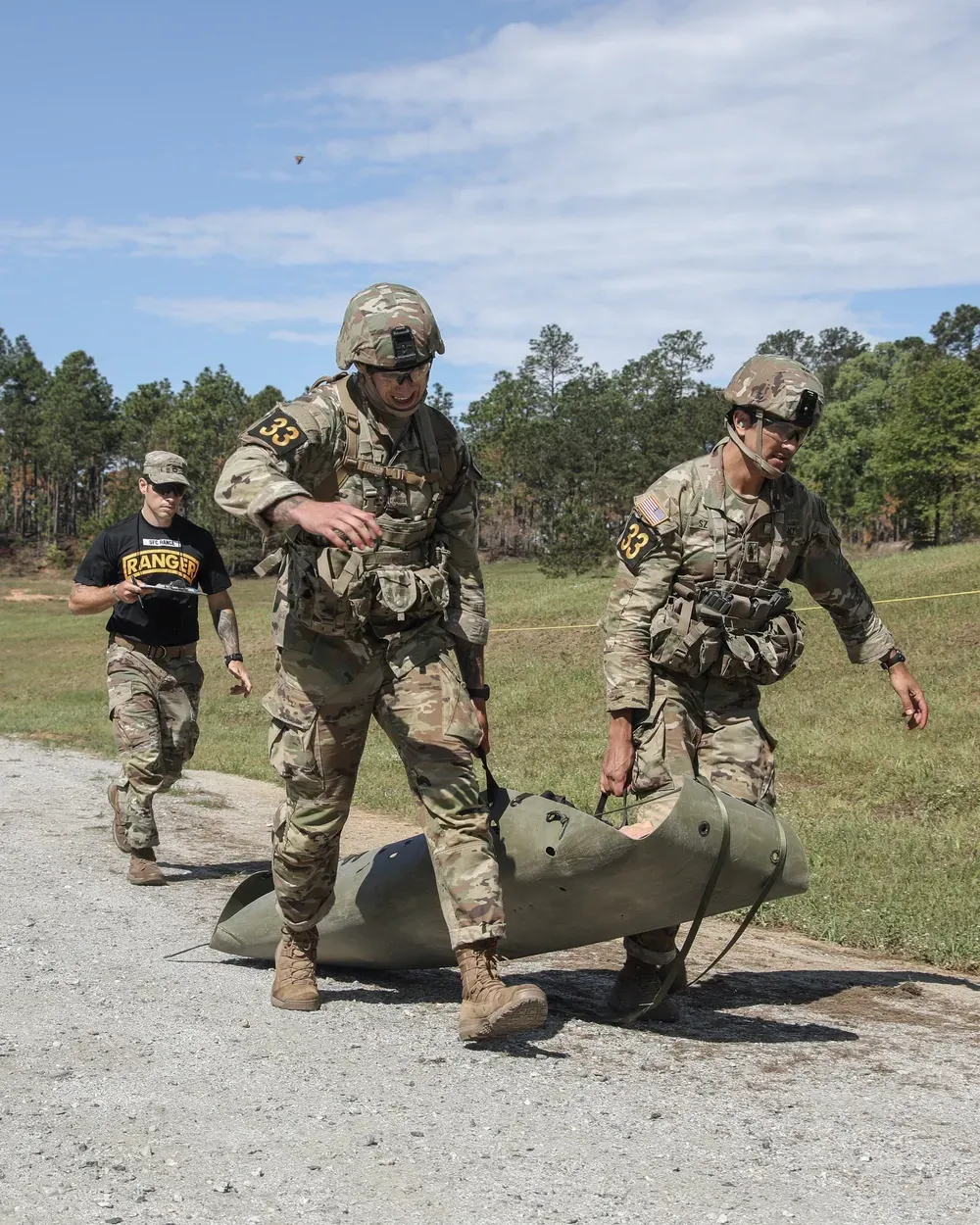
Aerobic Capacity for Military Selection: Build the Engine
Why Aerobic Capacity Matters in Military Selection
Aerobic capacity for military selection is arguably the single most decisive physical quality a candidate can build, because it determines how efficiently your body delivers and uses oxygen to fuel sustained effort. On a selection course that translates directly into how long you keep moving under load, how fast you recover between graded events, and how well you resist the fatigue that breaks most candidates long before the final cut. Speed and strength get noticed on day one; aerobic capacity is what keeps you in the fight on day five.
Military selection courses place unique demands on the body. You are not just running or just lifting weights. You are performing physically under load, in unpredictable conditions, and often under sleep restriction or external stress. Candidates serious about building this foundation can explore our CF ONE military selection programs. Aerobic capacity underpins many of these tasks and helps you recover between high intensity efforts. Understanding what aerobic capacity is, how it develops, and how to train it specifically for military selection gives candidates a clear edge in preparation, performance, and resilience.
What Aerobic Capacity Is
Aerobic capacity refers to your body's ability to deliver and use oxygen during sustained exercise. It is often measured as VO2 max, but it also involves efficiency of energy systems, pulmonary and circulatory adaptation, and muscular endurance. Think of VO2 max as the size of your engine and the surrounding adaptations as the fuel system and cooling that let that engine run hard without overheating. For a selection candidate, a bigger, more efficient engine is what turns a brutal ruck or a graded run from a maximal effort into a manageable, repeatable one.
Strong aerobic capacity allows you to:
Maintain effort for longer durations without excessive fatigue
Recover more quickly between high intensity bouts
Sustain efficient movement under load
Support other qualities like work capacity and strength endurance
Aerobic capacity is not the same as raw speed. Someone can run fast for short periods but still lack the aerobic conditioning to sustain repeated or prolonged efforts required in selection environments. A full breakdown of what aerobic capacity is and how it functions as a performance foundation covers the physiological context every selection candidate needs to understand.
Aerobic Capacity Is a Foundation, Not a Specialty
In the context of military selection, aerobic capacity is not an isolated skill that only matters on run days. It is a foundational physical quality that supports multiple performance domains, and it shows up in tasks that look nothing like a track workout. A candidate with a weak aerobic base does not just run slower; he buries himself early, then carries that oxygen debt into every land-navigation leg, every team event, and every graded movement that follows. The base is what lets the rest of your fitness actually show up when it counts.
For example:
Long distance ruck marches depend on efficient energy use
Interval runs on selection courses require fast recovery between efforts
Multi-day events rely on the ability to sustain performance over hours
Obstacle courses demand repeated bursts of effort with short rest periods
There's a second reason the base matters more on a selection course than it does anywhere else, and it has to do with sleep. Selection deliberately strips it. Everything sharp degrades fast under sleep debt, reaction time, decision quality, technical skill, the ability to produce a maximal effort on demand. What degrades least is steady aerobic output. The candidate who has spent months building a deep base still moves reasonably well on four hours of sleep, because that capacity doesn't depend on being sharp. It depends on having built the machinery.
The candidate who arrived on peaked speed and a recent PR does not get to keep those things past day two. Build for the version of yourself who is tired, cold, and behind schedule, because that is the version selection actually grades. All of these tasks require a robust aerobic base. Building aerobic capacity allows other fitness qualities to function without collapsing under fatigue. For candidates preparing for SFAS specifically, the SFAS program buying guide walks through how to evaluate and select a training program that prioritizes this foundation.
How Aerobic Capacity Adapts During Selection Prep
Aerobic adaptation is a gradual process that rewards consistency over heroics. Over weeks of progressive training, endurance work drives measurable changes at several physiological levels, changes first documented by exercise physiologist John Holloszy in 1967 and expanded by decades of work since. His original findings are worth knowing in detail, because the magnitudes explain why this takes months rather than weeks. Training rats on a strenuous treadmill program, Holloszy found the capacity of their muscle mitochondria to oxidize pyruvate doubled. Succinate dehydrogenase and cytochrome oxidase, the enzymes that do the actual work of aerobic energy production, increased approximately two-fold. Cytochrome c concentration also doubled. Total mitochondrial protein rose by roughly 60% (Holloszy, 1967).
Those are not adjustments. That's the muscle rebuilding its aerobic machinery from the inside, and it is not a thing that happens in a taper week. For a candidate, the practical takeaway is simple: these changes are built in the months before selection, not in a final-week panic block.
The relevant adaptations include:
Increased mitochondrial density inside muscle cells
Improved capillary networks that deliver oxygen
Enhanced stroke volume and cardiac output
Greater efficiency in metabolic pathways
These adaptations do not happen in a single workout. They accrue over weeks and months of consistent, progressive training. Aerobic training also improves recovery ability. The better your aerobic conditioning, the faster your heart rate normalizes after hard efforts and the quicker your breathing resets between intervals. For candidates preparing for Ranger Assessment and Selection, the RASP program buying guide covers how to structure aerobic development within a complete Ranger prep plan. For military selection candidates, this means being ready for the next task sooner instead of being mentally and physically drained.
The Difference Between Aerobic Fitness and Endurance
While aerobic fitness and endurance are related, they are not the exact same thing. Aerobic fitness refers to the body’s physiological capacity to use oxygen effectively. Endurance refers to the ability to sustain exertion over time. Aerobic capacity supports endurance, but endurance also depends on:
Muscle fiber efficiency
Metabolic flexibility
Movement economy
Muscle stamina under load
In other words, aerobic capacity gives you the engine, and endurance determines how well you can keep that engine running under various conditions. For answers to common questions about how to prepare for special forces selection, the Special Forces program FAQ addresses the most important training variables to understand before beginning a selection prep block.
How to Train Aerobic Capacity for Military Selection
Improving aerobic capacity requires targeted stimulus with progression, variety, and recovery. Training should be purposeful, measurable, and aligned with the demands of selection tasks.
Here are key training methods:
Continuous Endurance Runs
These are longer runs at a moderate intensity that build the aerobic base. They improve the body’s ability to utilize oxygen efficiently and support recovery between high intensity efforts.
A typical base run might be 30 to 60 minutes at a pace where conversation is possible but effort is steady.
Interval Training
Interval workouts involve alternating periods of higher intensity work with periods of lower intensity effort or rest. These sessions drive adaptation in both aerobic and anaerobic systems.
Examples include:
3 minutes hard, 2 minutes easy
5 x 800 m at tempo pace with rest intervals
Fartlek runs with varied paces
Interval sessions teach the body to recover quickly from hard efforts, a key skill in military selection environments. For candidates who want a complete phase-by-phase approach to peaking for selection, the pre-selection training phase guide outlines how aerobic development fits within the full preparation timeline.
Tempo and Threshold Work
These workouts place the athlete at or near the upper end of their aerobic capacity, right around the lactate threshold where effort becomes hard to sustain. Tempo and threshold runs train the body to clear fatigue byproducts faster and hold a strong pace for longer before it accumulates. For selection, that threshold is exactly the gear you operate in during a graded run or a fast tactical movement, which is why this work transfers so directly. An example might be 20 to 40 minutes at a challenging but controlled pace, or broken into 2 to 3 longer intervals at threshold with short recoveries.
Mixed Modality Conditioning
Some sessions combine running with strength circuits or functional movements to build conditioning that reflects selection tasks. For example:
Run 400 m, followed by bodyweight circuits
Row or bike intervals mixed with runs
Shuttle runs interspersed with carries
These integrated workouts improve aerobic capacity while building resilience under multi-system stress.
Rucking: The Method That Decides Selection
Aerobic capacity can also be developed under load, and for selection candidates this is non-negotiable rather than optional. Rucking or loaded marching at moderate paces challenges the cardiovascular system and muscular endurance simultaneously, building the specific work capacity that pure running never quite replicates. Because selection events are almost always conducted under a loaded ruck, training your aerobic base with weight on your back closes the gap between gym fitness and graded-event performance. These sessions carry the strongest direct transfer to real tactical demands of any aerobic method on this list.
What matters more than the citation is the training implication, and it is not intuitive: rucking capacity does not come from running. A candidate with a fast five-mile time and no time under a pack will still fall apart at mile eight of a twelve-mile movement, because the limiting factors are different. Running is limited by aerobic power and running economy. Rucking is limited by those plus load tolerance in the hips, shoulders, feet and low back, plus the specific muscular endurance of moving a heavy object at a fixed cadence for hours. You build that by carrying things.
Three rules govern loaded aerobic work.
Progress load and distance separately. Add weight or add distance, not both in the same week. Adding both is the fastest way to arrive at selection carrying an injury instead of a base.
Most of it should be slow. Long, steady, boring rucks at a conversational effort build the tissue tolerance and the aerobic machinery. Fast rucking has a place, but it's the seasoning, not the meal.
Frequency beats intensity. One long ruck per week plus one shorter mid-week ruck develops more usable capacity than a single heroic effort every fortnight. Tissue adapts to repeated exposure, not to occasional punishment.
The specifics, how much weight, how far, how fast, depend entirely on which course you're preparing for and where you're starting from. Find your target course's published standards and work backward from them. Where those aren't public, the honest answer is to build toward comfortably exceeding the longest, heaviest graded movement your course is known to run, well before you arrive.
A word on the footwear and the feet, because this is where most ruck preparation actually fails: break in the boots you'll wear, on the surfaces you'll cover, before you need them. Blisters end more selection attempts than fitness does.
And one line worth stating plainly: loaded carriage is the highest-injury-risk training on this list. Ramp it gradually, and if you develop persistent foot, shin, hip or back pain that doesn't settle with rest, get it assessed by a physician or a qualified sports medicine professional rather than rucking through it. A stress fracture found in prep is an inconvenience. Found at selection, it's the end of the attempt.
How to Progress Aerobic Training
Progressive overload is important for adaptation. Aerobic training can be progressed by:
Increasing duration in small increments
Increasing intensity while maintaining recovery
Reducing rest between intervals
Adding volume gradually over weeks
Progress should be measurable. Tracking pace, time, distance, heart rate response, or subjective effort helps gauge how training impacts aerobic capacity. Managing the total load across a selection prep block is covered in the guide to training load management during selection prep, essential reading for candidates who want to avoid breaking down before they even arrive.
How to Know Where You Actually Stand
"Build your aerobic base" is useless without a number attached. Here's how to get one without a lab.
You don't need VO₂ testing. A gas-analysis treadmill test gives you the real figure, and almost no candidate has access to one, and more importantly, the number wouldn't change what you do next. Field tests tell you what you need to know.
Retest every six to eight weeks. Same course, same conditions, same load. A single result is a data point; the trend across three of them is information.
On standards specifically: get them from your target course, not from a blog. Published requirements vary by selection, by service, and over time, and the number that matters is the one your course actually uses. Where a course doesn't publish its standards, train to comfortably exceed the longest and heaviest graded movement it's known to run. Comfortably is the operative word, arriving able to just meet a standard on a good day means failing it on a bad one, and selection is engineered to produce bad days.
Common Mistakes to Avoid
Several training errors can undermine aerobic development:
Training only at easy paces
This builds a base but does not challenge adaptation limits.
Training only high intensity
This leads to burnout, chronic fatigue, and diminishing returns.
Ignoring recovery
Aerobic training sessions require recovery just like strength sessions.
Neglecting load-bearing conditioning
Selection environments often require performance with gear, not just running.
Avoid these mistakes by planning progressive variations, balancing harder and easier sessions, and respecting recovery windows. The candidates who fail selection on the aerobic side rarely lack effort, they lack structure, hammering hard runs daily until they arrive overtrained and brittle. A simple weekly split of mostly easy aerobic volume with one or two harder quality sessions outperforms relentless intensity almost every time.
Why Aerobic Capacity Matters in the Long Term
Aerobic capacity is not only a selection preparation quality. It supports overall longevity, resilience, and performance durability. Athletes with strong aerobic capacity:
Recover faster between training sessions
Maintain performance longer in unpredictable conditions
Are less prone to early fatigue in strength or power tasks
Can adapt more quickly to multi-modal physical demands
These benefits extend beyond selection courses into everyday performance, tactical careers, and long term fitness.
The Takeaway
Aerobic capacity is foundational for military selection performance. It supports endurance, recovery, load tolerance under stress, and resilience across demanding tasks. It develops through steady, progressive, targeted training and is measurable over time.
Train with intention
Progress with purpose
Adapt with consistency
This is how aerobic capacity becomes not just a number, but a lasting performance asset. The sibling post on hybrid training for military selection candidates builds directly on this foundation, covering how to develop strength and conditioning simultaneously without one undermining the other during prep.
Frequently Asked Questions
How long does it take to improve aerobic capacity?
For a selection candidate, noticeable aerobic improvements can begin in 4 to 6 weeks of consistent, progressive training, but the durable base that holds up across a multi-day course is built over a full prep block of 8 to 12 weeks or longer. The earlier you start relative to your selection date, the more headroom you give those adaptations to compound.
Can strength training improve aerobic capacity?
Indirectly it can. Strength training improves movement economy, muscular efficiency, and force application, which support aerobic tasks. But it should complement, not replace, aerobic training.
Should I do aerobic work every day?
Not necessarily. Aerobic sessions should be planned so that quality and recovery are balanced. Too much day to day can lead to fatigue accumulation.
Is aerobic capacity more important than strength for selection?
Both matter. Aerobic capacity determines how long you can sustain effort and recover between tasks. Strength determines how well you handle load and force application. The best candidates exhibit both.
Should I run more or ruck more for selection?
Ruck more than you currently do, and don't stop running. Rucking capacity doesn't transfer backward from running, a fast five-mile time won't carry you through mile eight of a loaded movement, because load tolerance in the hips, feet and shoulders is a separate adaptation. Running still builds the aerobic engine that rucking draws on. You need both, weighted increasingly toward the ruck as your date approaches.
How far out should I start training for selection?
Six to twelve months if you have the choice. The adaptations that matter, mitochondrial density, capillary networks, cardiac output, are structural remodeling on a months-long timeline, and no amount of weekly intensity speeds that up. If you're inside three months, build what you can and prioritize arriving healthy over arriving maximally fit.
Do I need a VO₂ max test?
No. It's the most precise measure of aerobic capacity and it's the least useful one for a candidate, because knowing the number doesn't change the training. A timed two-mile, a timed five-mile, and a timed loaded ruck, repeated every six to eight weeks on the same course, tell you everything you'll act on.
References
Holloszy, J. O. (1967). Biochemical adaptations in muscle: Effects of exercise on mitochondrial oxygen uptake and respiratory enzyme activity in skeletal muscle. Journal of Biological Chemistry
Farina et al. (2019), Physiology & Behavior


